
Pepsi: The Recycling Rethink

Pepsi: The Recycling Rethink

Sustainability marketing breaks when the system stays the same

Most sustainability marketing fails when the operating reality does not change, and the message asks consumers to do more while leaving the friction, reward, and moment of action unchanged.

That is exactly the problem here. Special Australia says two out of every three plastic and aluminium containers in Australia still do not get recycled, and Pepsi’s promotion in New South Wales (NSW) only worked because it added a materially better incentive to an existing 10c deposit system in a promotion that ran until 22 November 2025.

The Pepsi example is one of the stronger sustainability ideas in recent memory because it changes the behaviour system, not just the brand message. It also won a Gold Spike in Creative Commerce at Spikes Asia 2026.

Pepsi moved the incentive into the machine

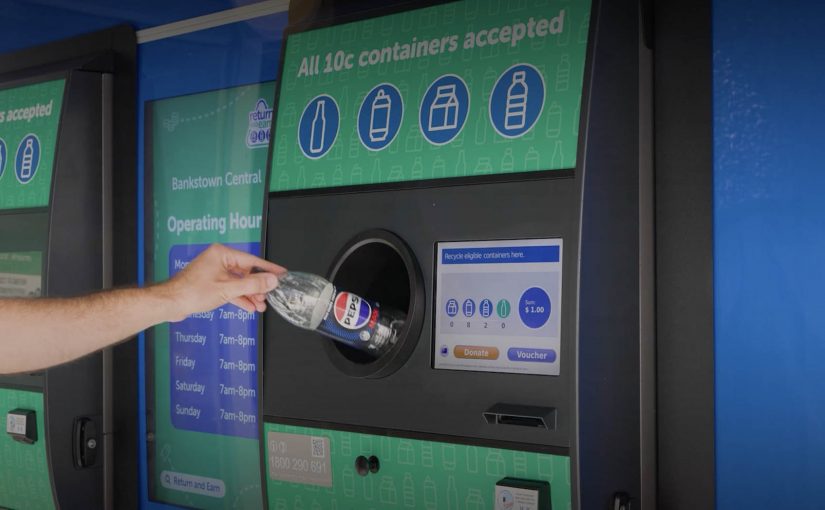
Pepsi worked with TOMRA and the NSW Government-run Return and Earn program to add new code to existing reverse vending machines. A reverse vending machine is an automated kiosk that identifies eligible drink containers and issues the deposit refund. The updated flow let a Pepsi barcode trigger an additional voucher and QR journey on top of the standard 10c return, turning a fixed refund mechanic into a live, brand-specific incentive layer inside an existing public recycling system. Alongside the standard 10c refund, the program also added an A$100,000 bonus prize pool, with rewards ranging from A$100 to A$50,000 for eligible Pepsi containers returned through voucher-printing machines in New South Wales.

In operating terms, this is a physical touchpoint workflow redesign, not a media idea bolted onto recycling.

That distinction matters. The innovation was not the poster, the social edit, or the sustainability language. It was the decision to move the brand intervention into the verified transaction itself, where intent, identity, reward, and action already meet.

The real question is not whether consumers care about recycling. It is whether the system makes the desired action feel worth doing right now.

Because the reward is triggered inside the act itself, the behaviour no longer depends on recall or guilt. It depends on immediate reinforcement.

Why this lands beyond one Pepsi promotion

Award-entry materials published on Lions platform The Work say Pepsi container recycling rose 16% in the first week, that 242,000 people participated after eight weeks, and that the initiative delivered a claimed 37% increase in ROI. The same materials say the code was built for broader rollout, while TOMRA says its reverse vending footprint exceeds 87,000 installations in more than 60 markets.

That is the commercially interesting part. The scarce asset here is not ad inventory. It is installed infrastructure that already sits inside a trusted public behaviour loop.

The lesson for enterprise teams is familiar. You usually get more lift by redesigning the moment architecture than by layering one more awareness burst on top of an unchanged flow.

This is why the idea reads like business-tech translation rather than campaign theatre. Pepsi translated a brand objective into machine logic, barcode recognition, partner coordination, and operational rollout across an existing public system.

It is not infinitely portable. Scale would still depend on program operators, machine access, software control, barcode governance, regulatory approval, fraud prevention, and economics that still work after the novelty wears off.

What enterprise teams should take from Pepsi’s recycling redesign

If you want behaviour change, start by auditing the live touchpoint, not the comms plan. Find the moment where the action is verified, identify what data the system already sees, and then ask whether that data can trigger a better reward, message, or next step without rebuilding the whole stack. What Pepsi and its partners changed was not consumer intent. They changed the structure around the decision.

The takeaway is straightforward: when a habit is stuck, stop spending all your energy on persuasion and redesign the transaction layer where the behaviour actually happens.


A few fast answers before you act

What did Pepsi actually change?

Pepsi did not just run recycling creative around the program. It worked with TOMRA and the Return and Earn system to make Pepsi barcodes trigger an additional voucher and QR-based reward flow inside existing reverse vending machines.

Why is this stronger than a normal sustainability ad?

A normal ad leaves the recycling action unchanged. This idea changed the reward logic at the point of verified behaviour, which gives it more operating value than another awareness message.

Could other brands copy the model?

In principle, yes. Special says the functionality is compatible with TOMRA’s broader machine network, and TOMRA says its reverse vending footprint spans more than 60 markets. Whether another brand could actually deploy it would depend on local program requirements, operator permissions, and commercial logic.

What would stop it scaling?

The main blockers are governance and economics, not creativity. A rollout would need machine access, software control, regulatory approval, barcode integrity, fraud safeguards, and a reward model that still makes sense once expanded.

Did it produce measurable results?

Award-entry materials published on Lions platform The Work say Pepsi container recycling rose 16% in the first week, that 242,000 people participated after eight weeks, and that the initiative delivered a claimed 37% increase in ROI.
Cheetos Mix-Ups: Cheetahpult Dual-Screen Game

Cheetos Mix-Ups: Cheetahpult Dual-Screen Game

In March I had written about how Google had inspired developers to convert mobile phones and tablets into remote controls for desktop browsers via a simple mobile URL. Now Cheetos, an American brand of cheese-flavored puffed cornmeal snacks, has successfully tapped this technology to engage with viewers as they watch a regular TV commercial on YouTube.

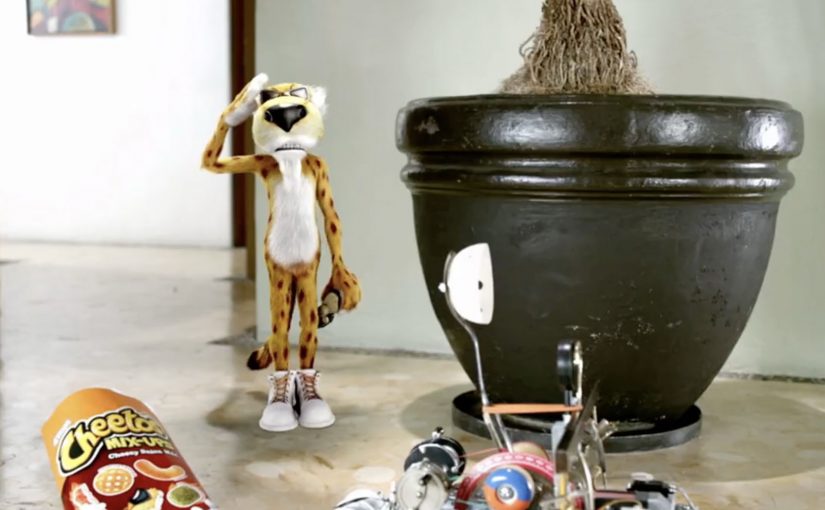
Viewers watching the Cheetos Mix-Ups ad on YouTube get a dual-screen experience. They can fling the new Cheetos Mix-Ups snacks from their phone into a video playing on their desktop. The campaign creates a new way to engage with the ad, and to get to know the product’s new shapes and colors through play.

At this point, the video is reported to have reached 8.5 million views on YouTube. People who played the game are reported to have stayed for an average of 7 minutes and 17 seconds, and flung an average of 56 Cheetos per game.

A YouTube ad that behaves like a game

The trick is simple and surprisingly scalable. Your desktop stays on YouTube, playing the film. Your phone becomes the controller via a lightweight URL experience, so interaction happens in your hand while the “world” of the ad stays on the big screen.

How the dual-screen catapult works

Instead of treating the mobile device as a companion banner, the experience treats it as an input device. You aim, fling, and see the result immediately in the desktop video frame, which turns passive viewing into a loop of action, feedback, and repeat.

In global FMCG launches, second-screen interactivity works best when it turns product attributes into gameplay, and makes “learning the product” feel like time well spent.

Why this lands while people are “just watching YouTube”

It hijacks a familiar behavior. People already watch ads on desktop while their phone is in hand. Cheetahpult converts that split attention into viewer control, and uses physics and repetition to teach what Mix-Ups actually is, in a way a standard product shot cannot. The real question is whether the interaction helps people understand Mix-Ups faster than a normal product shot would. In this case, it does, because the mechanic turns product variety into something people learn by doing.

Extractable takeaway: If your product is hard to describe in one sentence, let people handle it. Build a micro-game where the mechanic is the product benefit, and the reward is comprehension.

What Cheetos is really buying here

This is product education disguised as entertainment. The intent is to turn a new SKU with multiple shapes and flavors into something memorable, then associate that memory with the brand, so the next shelf moment feels familiar.

What Cheetos teaches about interactive video

  • Design for the device people already hold. Dual-screen works when the phone is the controller, not an afterthought.
  • Make the mechanic teach the product. If the game can be reskinned for any brand, it is not specific enough.
  • Keep the loop short and replayable. Fast rounds create “just one more try” behavior, which is where learning happens.
  • Use the main video as the stage. The desktop frame should feel like the real world, and the phone should feel like the tool.

A few fast answers before you act

What is Cheetahpult?

Cheetahpult is a dual-screen YouTube experience that turns a Cheetos Mix-Ups video into a simple physics-style game, with the phone acting as the controller and the desktop video acting as the playfield.

Why does second-screen interaction help an ad?

It converts passive reach into active time. When people interact, they process product details more deeply, and the ad becomes something they did, not just something they saw.

What makes this different from a typical “interactive ad”?

The interaction is not layered on top as buttons. The phone becomes a controller, and the main video becomes the environment, so the ad and the game feel like one system.

When should a brand use this pattern?

When a launch needs fast product education, and when the product has attributes that benefit from repetition, variation, and play, like shapes, combinations, flavors, or configurations.

What should a brand avoid when copying this idea?

Avoid mechanics that are fun but unrelated to the product. If the interaction does not teach something specific about the item being launched, the brand gets playtime but not product understanding.

Coca Cola Friendship Machine

Coca Cola Friendship Machine

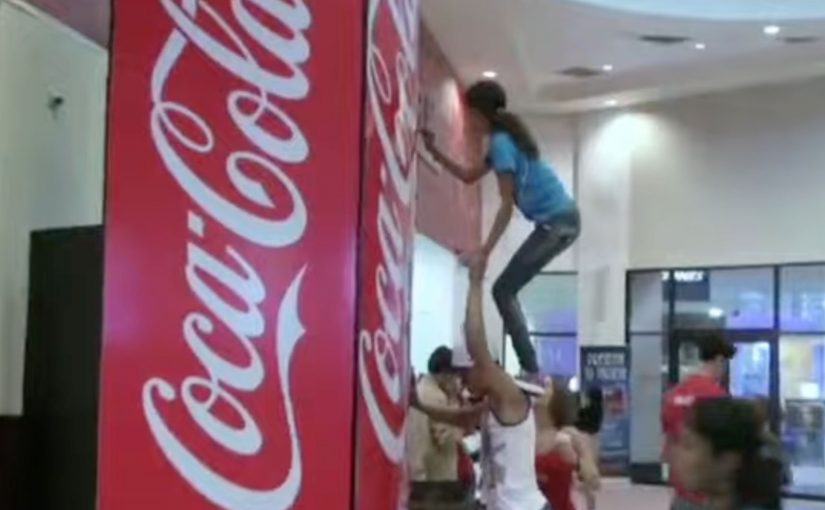
You walk up to a Coke machine that is about 12 feet tall. You cannot reach it alone. You ask a buddy for a boost. When you finally press the button, the machine rewards the teamwork by dispensing two Cokes instead of one.

What Coca-Cola is doing with the “Friendship Machine”

The game of vending machine one-upsmanship between Coca-Cola and PepsiCo continues with Coke’s “Friendship Machine”. To celebrate International Friendship Day, Coca-Cola in Argentina plants machines that appear to be about 12 feet tall and require that you ask a buddy for a boost to use it. As a reward, the Coke machine dispenses two Cokes instead of one.

In consumer brands running physical activations in public spaces, engineered constraints can be the simplest way to force a real-world social moment.

Why the Friendship Machine lands

Because the machine is too tall to use alone, it makes asking for help the trigger, which is why the second Coke feels like earned, shared generosity rather than a giveaway. Here, “friction” means a deliberate extra step that creates a specific behavior before the reward.

Extractable takeaway: If you want sharing to happen, design the mechanic so cooperation is required to unlock the value, not merely suggested after the fact.

The real question is whether your activation can make cooperation the trigger for the reward, instead of bolting “share” onto the end.

This is a stronger pattern than generic “share to win” mechanics because the social interaction is visible, immediate, and hard to skip.

The idea builds on Coke’s “Happiness Machine” viral video, where a machine keeps surprising students with free extras like soda and pizza. Coke also updates that generosity pattern with a “Happiness Truck” video, where a truck gives out Cokes alongside summer gear like surfboards, beach toys, and sunglasses.

PepsiCo responds with its own “Social Vending Machine” that lets you gift free Pepsi’s to friends and strangers via a text message.

How to steal this mechanic without copying it

  • Make teamwork the unlock. Ensure the reward only happens after a small, observable act of cooperation.
  • Design “fair friction”. The obstacle should feel purposeful, not annoying, and it should clearly connect to the reward.
  • Pay out in shared value. Give a two-person reward so the help feels reciprocated, not exploited.
  • Anchor to a moment people recognize. A simple calendar hook (like Friendship Day) makes the story easier to retell.

A few fast answers before you act

What is the Coca-Cola Friendship Machine?

It is a Coke machine designed to be too tall to use alone, so you need a friend’s help. When you do it together, it dispenses two Cokes as the reward.

Why make the machine intentionally difficult to use?

Because the friction creates the point. It forces a social interaction first, then makes the reward feel earned and shared, not just handed out.

How do the Happiness Machine and Happiness Truck relate?

They establish the “unexpected generosity” pattern. The Friendship Machine applies the same idea, but makes cooperation the trigger instead of surprise alone.

What makes this different from a typical “share to win” campaign?

The social action happens before the reward and in public. The mechanic makes cooperation unavoidable, instead of asking people to share after they already got the value.

How does this compare to PepsiCo’s Social Vending Machine?

Pepsi’s approach makes gifting the feature via text. Coke’s approach makes in-person collaboration the feature by requiring help at the machine itself.