
Heineken: UEFA Giveaway

Heineken: UEFA Giveaway

Here are two campaigns that Heineken created in Europe to give away seats for the UEFA Champions League finals in London last month.

Heineken: The Negotiation

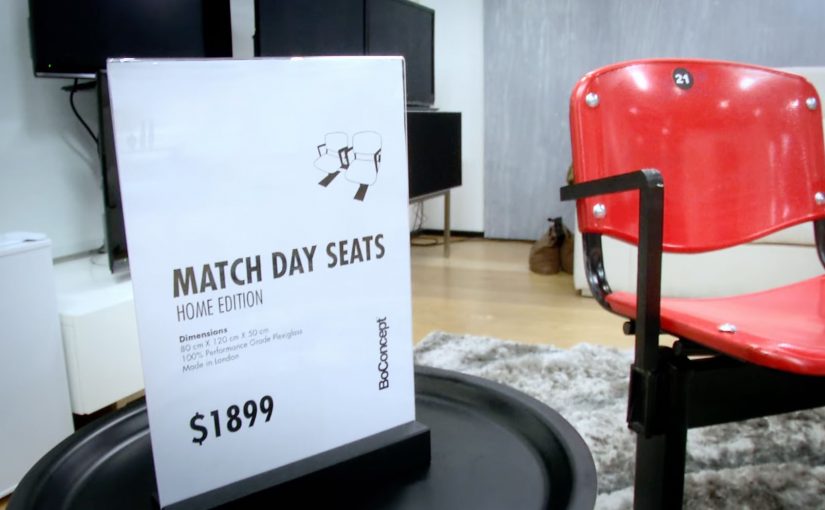
Heineken challenged football fans at a furniture store in the Netherlands to convince their ladies to buy a $1899 set of plastic stadium chairs for their home. If they managed to pull it off, they would win a trip to the final. The result:

Heineken: The Seat

In Italy, Heineken hid 20 tickets under 20 Wembley seats and spread them around Rome and Milan. Fans then had only one hour to find them and secure their place at the final. The result:

Two different mechanics, one sponsorship objective

Both ideas do the same strategic job. They make the sponsorship feel like something you can play, not just something you watch. Here, a mechanic is the simple set of rules that turns a giveaway into a game.

In European consumer brands, the cleanest giveaway mechanics turn sponsorship into something fans do, not just something they see.

The real question is how you turn a scarce prize into a story people repeat without you paying for distribution.

In European football sponsorship, ticket scarcity is a powerful emotion. Brands win when they turn that emotion into participation that fans can retell in one breath.

Why these promos travel so easily

Both promos travel because the giveaway is inseparable from the story. You do not share “I won tickets”. You share the rule that made winning possible.

Extractable takeaway: If the prize is scarce, design the giveaway so the mechanic is the headline, and the brand is the quiet sponsor of the moment.

The Negotiation works because it stages a recognisable domestic conflict and turns it into a public challenge. You do not have to care about Heineken to enjoy the tension. You just need to recognise the situation.

The Seat works because it feels like a real-world game with an unfair advantage for the most alert fans. A one-hour window and a physical search turns “tickets” into a quest, and the city becomes the interface.

Giveaway mechanics worth copying

  • Do not just “give away”. Build a mechanic that proves fandom or commitment in a fun way.
  • Make it legible in five seconds. If people cannot explain the rules instantly, the idea will not spread.
  • Use time pressure carefully. A short window creates urgency, but it must still feel fair.
  • Let the prize stay pure. The reward is the story. The brand should be the enabler, not the gatekeeper.

A few fast answers before you act

What is the core mechanic in Heineken’s Negotiation?

A persuasion challenge staged in a real retail environment. The couple dynamic is the entertainment engine, and the prize converts the tension into a payoff.

Why does a scavenger hunt work for high-demand tickets?

Because it turns passive desire into active effort. The search itself becomes the content, and the winners feel like they earned the prize rather than being randomly selected.

What is the main sponsorship benefit of campaigns like these?

They convert a sponsorship from branding to experience. The brand becomes part of how fans remember the final, not just a logo around it.

What is the biggest risk with “race” mechanics?

Perceived unfairness. By “race mechanics” here, I mean time-boxed contests where speed and timing determine winners. If the rules, locations, or timing feel stacked, the conversation flips from excitement to frustration.

What should you measure beyond video views?

Look for participation rate, speed of uptake, earned media pickup, and how often people retell the mechanic in social posts. Those indicate whether the idea actually travelled.
Heineken Ignite

Heineken Ignite

Last year I had written about StartCap, the world’s first digitally enabled bottle top. Now, Heineken has created LED based “smart bottles” that put serious tech into drinking beer.

These interactive bottles are designed to react to the gestures that already define a night out. Cheer and clink bottles together and the LEDs flash. Drink and the light pattern speeds up. Put the bottle down and it shifts into an idle “breathing” mode. Here, “breathing” means the LEDs pulse slowly when the bottle is stationary. The concept also includes software control so bottles can synchronize to music cues for a coordinated light show.

Heineken Ignite is a prototype bottle module that combines LEDs, motion sensing, and wireless synchronization so the bottle becomes part of the club experience, not just the drink in your hand.

Why it lands. When the bottle becomes the signal

What separates this from a gimmick is the engineering story. Coverage around the prototype describes an Arduino based circuit board housed in a reusable 3D printed casing that clips onto the bottom of a standard bottle. The electronics include multiple LEDs, a motion sensor to detect cheers and drinking, and wireless connectivity so the “party” effect can spread across a room. Wireless synchronization matters because it scales the effect from one person’s bottle to a room level cue that people can notice together. This is not a gimmick.

Extractable takeaway: If you want a brand experience to spread in a venue, instrument the object people already hold so natural gestures trigger visible, shared feedback.

This is also why the commercial challenge is real. In prototype form, the tech sits in an external module. To reach a mass market use case, the experience needs to be cheaper, smaller, and embedded, not attached. The real question is whether the connected layer can be made cheap and embedded enough that the bottle ships as the interface, not an accessory.

In European nightlife culture, the most effective brand innovation is the kind that turns the product itself into a social signal.

Why it was shown at Milan Design Week

The concept was unveiled during Milan Design Week as part of Heineken’s future of nightlife exploration. That matters because it frames the bottle as design plus experience, not only packaging. It is a statement about how brands might use connected objects to shape atmosphere in shared spaces.

Recognition and why it matters

Heineken later reported that its Ignite bottle earned a Silver Lion at Cannes Lions 2013 for Exhibitions or Live Events, as part of a broader set of design and innovation activations. Awards do not make a product viable, but they do validate that the idea is legible as a new format for brand experience.

Steal the pattern: product-led nightlife cues

  • Use the product as the interface. When the object in hand is the experience, you do not need to fight for attention elsewhere.
  • Design for social gestures. “Cheers” is a better trigger than any forced interaction because people already do it.
  • Make synchronization the payoff. One glowing bottle is a toy. A room that reacts together is a moment.
  • Prototype in public. Early demonstrations can generate press and learning long before the supply chain is ready.

A few fast answers before you act

What is Heineken Ignite?

Heineken Ignite is a prototype “smart bottle” concept that uses LEDs, motion sensing, and wireless synchronization so the bottle lights up in response to cheers, drinking gestures, and music cues in club environments.

How does the prototype work technically?

Reporting describes a clip-on module under the bottle that houses an Arduino based circuit board, LEDs, motion sensing, and wireless connectivity. The module detects motion patterns and can coordinate lighting across multiple bottles.

Why is syncing to music the key feature?

Because it turns individual behavior into shared atmosphere. Synchronization makes the experience visible at a crowd level, which is what creates talkability and makes the brand feel “in the room”.

What is the biggest barrier to commercializing a concept like this?

Miniaturization and cost. A clip-on prototype can prove the idea, but mass market use needs the tech to be smaller, cheaper, and more seamlessly integrated into production packaging.

What is the main marketing lesson here?

If you want to own a nightlife moment, design around existing social rituals. When the trigger is already natural, the experience feels additive instead of forced.

Heineken: The Real Master of Intuition

Heineken: The Real Master of Intuition

Just last week I wrote about the Heineken Star Player app, designed to let fans interact in real time with the nail-biting action of the UEFA Champions League.

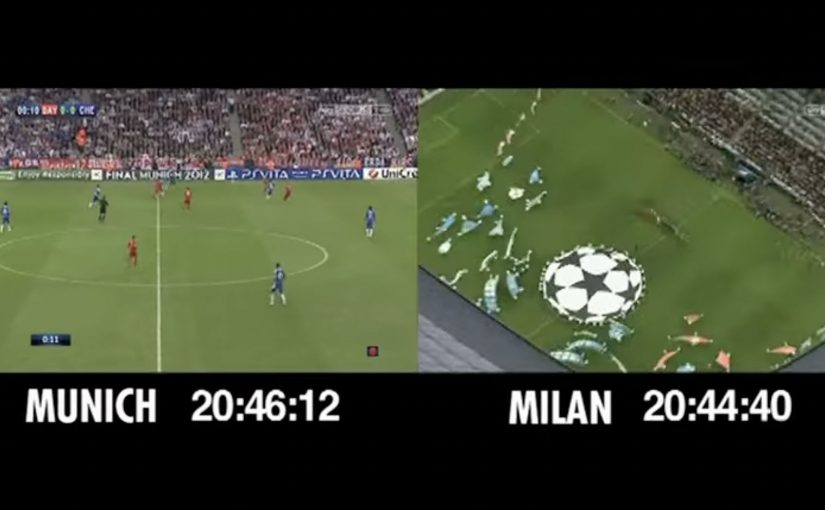
To promote the same Star Player app in Italy, Heineken decides to prank a famous sports bar in Milan, with Italian football legends Billy Costacurta and José Altafini providing live commentary on the UEFA Champions League final. What nobody in the pub knows is that Heineken has hidden cameras everywhere, and the match broadcast is delayed by two minutes, so people in the audience can upstage the legends by calling shots before they are even made.

A prank built on timing and social proof

The mechanism is simple and ruthless. Put credible legends in the room. Keep the crowd confident and loud. Then create a small information advantage by delaying the broadcast, so “intuition” looks like supernatural match-reading instead of a technical trick.

In European football marketing, second-screen ideas work best when they turn match tension into something people can perform together, not just watch.

Why it lands

This works because it weaponizes the most contagious thing in a sports bar: certainty. When one person confidently predicts a moment, everyone else starts scanning for the next prediction. The prank uses that energy to make the app’s promise, real-time interaction, feel like a natural extension of how fans already behave during big matches.

Extractable takeaway: If you want to demonstrate “real time” as a benefit, do not explain it. Create a live situation where the audience experiences the advantage socially, in front of other people, with instant feedback.

What the brand is really proving

This is not only entertainment. It is a credibility transfer. By that, I mean the authority of the commentators spills over onto the app experience and makes the real-time feature feel legitimate inside football culture.

The real question is whether Heineken can make real-time interactivity feel credible enough to belong in serious match culture.

By putting famous voices in the room, Heineken frames Star Player as something that belongs in serious match culture, while the hidden-camera format makes the proof shareable beyond the bar.

How to dramatize real-time advantage

  • Demonstrate the benefit under pressure. Big-match stakes make the mechanic feel meaningful.
  • Use a believable setting. A sports bar is already a “live commentary” environment.
  • Design for group contagion. The best moments are the ones other people in the room amplify.
  • Make the reveal the product story. The twist is the proof of what “real time” can do.

A few fast answers before you act

What is “The Real Master of Intuition”?

It is a Heineken hidden-camera prank in a Milan sports bar where a delayed match broadcast makes fans appear to predict plays before two football legends do, to promote the Star Player app.

Why delay the broadcast?

Because a small timing advantage is enough to create the illusion of extraordinary intuition, and it produces a strong, repeatable demonstration moment on camera.

What does this have to do with a second-screen app?

It dramatizes the idea of being “ahead of the action” and turns real-time interaction into a story people can feel, not just understand.

What makes the idea shareable?

Public embarrassment and surprise, plus a clear “how did that happen?” mystery that gets answered by the reveal.

What is the transferable lesson for marketers?

Create a live scenario where the audience experiences your product advantage socially, with immediate feedback, rather than relying on feature explanation.