
Klépierre: Inspiration Corridor

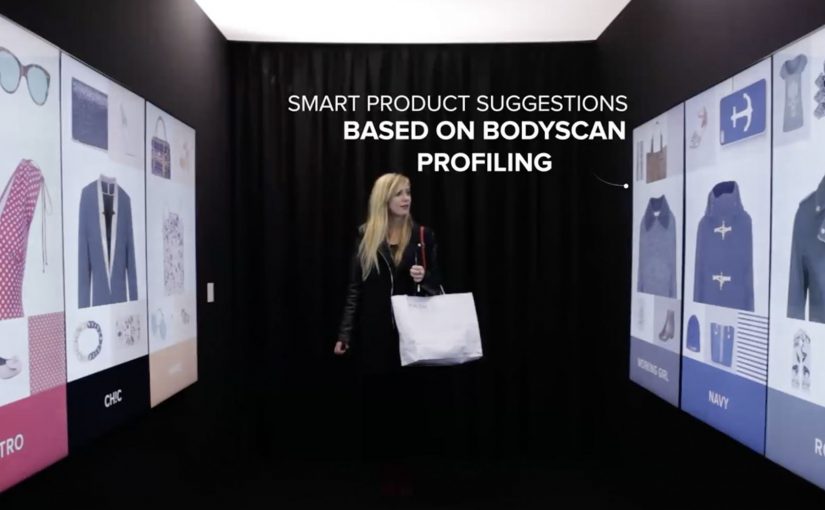
One of the biggest problems brick-and-mortar retailers face is that many consumers prefer the convenience of shopping online. So Klépierre, a European specialist in shopping center properties, decides to give customers a unique and personal window shopping experience that simultaneously advertises multiple brands available in its shopping center.

How the corridor turns browsing into a saved journey

The mechanism is a walk-in “inspiration corridor” that is described as using an infrared camera and live detection to adapt the interface to the visitor. The walls then show a curated set of products pulled from real-time inventory, and the visitor can tap items to add them to a personal shopping list. At the end, the selection syncs to the Klépierre mobile app, which then helps locate the chosen products in the mall.

Here, live detection means the corridor reads the visitor in the moment and adjusts what appears on the walls accordingly.

In European shopping centers, the winning retail experiences blend discovery and convenience, giving visitors a reason to browse physically while keeping the efficiency people associate with online shopping.

The result is a browse-first experience that keeps discovery and wayfinding in one flow.

Why this beats “more screens”

This lands because it does not ask shoppers to learn a new behavior. It upgrades a familiar one. Window shopping. The corridor simply makes browsing feel personal and actionable, then removes the “I’ll never find it again” friction by saving the picks and turning them into a navigable list. The stronger move is not to add more screens, but to make physical browsing easier to finish. That works because discovery, selection, and store-finding happen in one continuous interaction.

Extractable takeaway: If your category is losing visits to online convenience, do not fight browsing. Instrument it. Let people browse with their body language and taps, then hand them a saved list that makes the rest of the journey feel effortless.

The quiet business intent

The real question is whether one shared experience can turn mall-level discovery into measurable value for multiple tenants at once.

Klépierre is not only showcasing technology. It is selling a multi-brand promise. One interaction can route a shopper to several tenants, lift discovery across stores, and create measurable signals of interest without needing a single retailer to run the whole experience alone.

What mall operators should borrow

  • Curate across brands. A mall operator can create value by packaging discovery in a way individual stores cannot do alone.
  • Connect to live stock. Recommendations feel credible when they map to what is actually available right now.
  • Make saving the default. “Tap to add” is the key bridge from inspiration to purchase intent.
  • Close the loop with wayfinding. The experience should end with “here’s where to get it”, not just “wasn’t that cool”.
  • Design for low friction. The corridor should work in seconds, even for someone who did not plan to engage.

A few fast answers before you act

What is Klépierre’s Inspiration Corridor?

It is an in-mall interactive experience that personalizes product recommendations on surrounding walls and lets visitors tap to save items to a shopping list that syncs to the mall’s app.

How does the personalization work?

It is described as using live detection, for example via an infrared camera, to adapt recommendations and the interface to the visitor in the moment.

What problem does this solve versus standard mall advertising?

It turns passive promotion into active selection. Instead of only seeing brand messages, shoppers leave with a saved list and a practical path to find products.

What is the main metric to watch?

Saved items per session, app sync rates, store visit lift for featured tenants, and conversion from saved lists to purchases where measurement is possible.

What should you be careful about when deploying live detection?

Be explicit about what is being detected and why, keep the experience usable without any personal account setup, and avoid language that implies storing identities or profiling.
Knorr physical retargeting: iBeacon soup truck

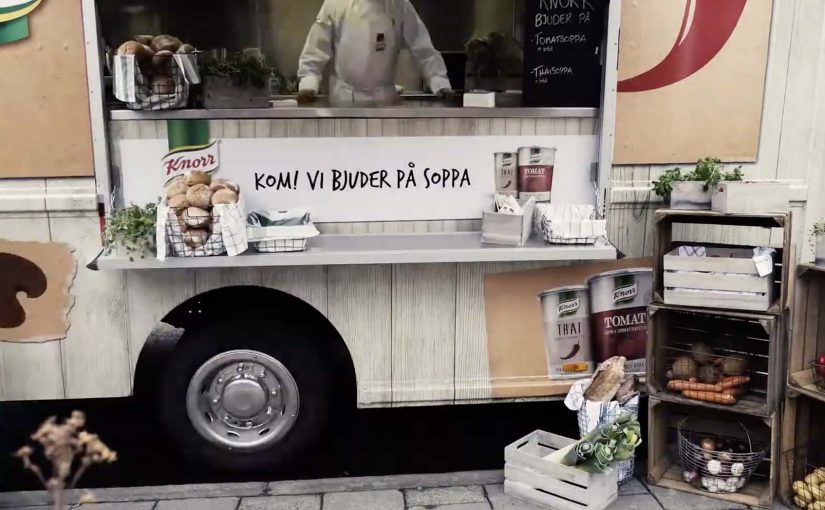
In November, a Knorr food truck in chilly Stockholm offers free warm samples of the brand’s tomato and Thai soups. Visitors can eat it on the spot or take home the samples.

To ensure visitors can also be retargeted through relevant mobile ads, Knorr equips the truck and the sampling team with battery-powered iBeacons. Through these beacons, visitors who already have the Swedish newspaper Aftonbladet app installed are registered as having been there. Instead of pushing a coupon immediately, the campaign waits until the next time the user opens the Aftonbladet app, then serves the offer as a mobile ad on the start screen.

Physical retargeting is the practice of using a real-world visit as the trigger for a later digital message, so the follow-up feels connected to what the person actually did offline.

Why the timing choice matters more than the beacon

In FMCG sampling, delayed retargeting works best when the message arrives in a natural “open app” moment, not as an intrusive push at the street corner. The iBeacons are the plumbing, but the experience design is the restraint. The campaign avoids interrupting the sampling moment and instead chooses a later point of attention when the person is already browsing content. That shift makes the offer feel more like a relevant reminder than a forced conversion attempt. Brands should treat iBeacons as infrastructure and invest the real effort in timing and creative that respects the sampling moment.

Extractable takeaway: Treat the offline moment as the relationship builder, then use the next self-initiated “open app” moment as the conversion window.

What the campaign proves, beyond “we can target”

The real question is whether your follow-up arrives at a moment of attention the user has already chosen. Sampling often struggles with attribution. This approach creates a cleaner bridge between the street interaction and a measurable mobile impression, without requiring a QR scan or a form fill at the truck.

A repeatable offline-to-mobile loop

  • Separate experience from conversion. Let the street moment stay human, then follow up later in a calmer context.
  • Use a trigger the user already understands. “When I open the app, I see it” is easier than “enable Bluetooth, accept three prompts”.
  • Keep the reward aligned. A soup sample followed by a soup coupon is a coherent loop.
  • Design for opt-in environments. The cleanest versions of this pattern run inside existing app ecosystems where ads are already expected.

A few fast answers before you act

What is Knorr “physical retargeting” in this example?

It is an offline-to-online marketing loop where visiting the soup truck becomes the trigger for receiving a relevant offer later inside a mobile app.

Why not show the coupon immediately at the truck?

Because immediate prompting can feel invasive and can disrupt the sampling experience. Waiting until the next app open delivers the offer in a more natural attention moment.

What role does the Aftonbladet app play?

It is the environment where the follow-up ad appears. People who already have the app installed can be recognized as having visited and later see the offer when they reopen the app.

What is the core benefit for the brand?

It links a real-world sampling touchpoint to a measurable, relevant mobile follow-up, improving recall and making conversion more likely.

What is the biggest failure mode for this tactic?

If the follow-up arrives too late or feels unrelated, it reads as generic targeting. The timing and message match are what make it feel earned.

Grolsch: The Movie Unlocker

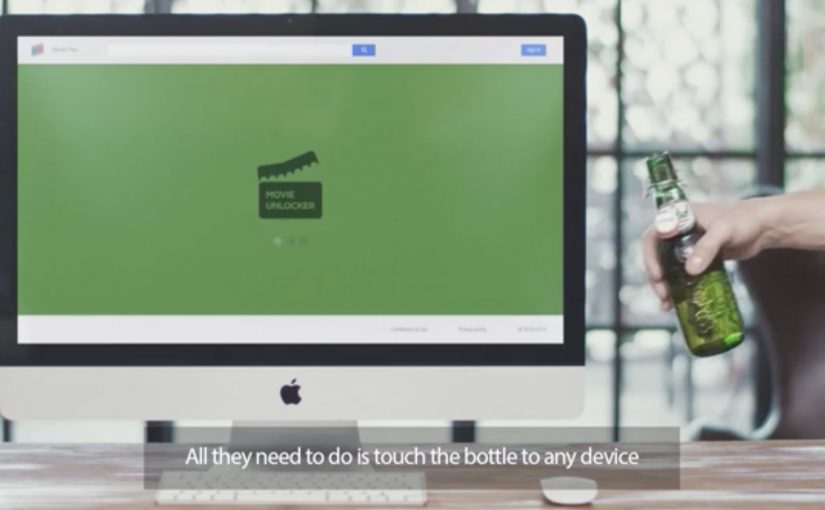
Paying for movies with a credit card is framed as yesterday’s behaviour. Grolsch positions a new alternative as “Movie Unlocker” technology, letting consumers use the beer bottle itself as the key to watch movies online.

The bottles are described as being fitted with custom Bluetooth beacons that transmit a unique code when brought close to a laptop or smartphone with Bluetooth Low Energy, or BLE, enabled. That code verifies the user and unlocks access to the chosen movie.

How the bottle becomes the checkout

The mechanism is a proximity-based redemption flow. Open the beer. Bring the bottle near your phone or laptop. The beacon transmits an identifier. The partner website receives it, validates it, and then grants access.

Functionally, it’s the same “code under the cap” idea, but moved from manual entry to a one-touch interaction triggered by distance and Bluetooth.

In consumer promotions, frictionless redemption mechanics often outperform bigger media spend because they turn the product into the access token.

Why “bottle-as-ticket” works

This lands because the value exchange is immediate and physical. The bottle is proof-of-purchase, and the unlock moment happens in the same context as consumption. At-home. On-device. With minimal steps. That makes the reward feel like a feature of the product, not a separate campaign hoop.

Extractable takeaway: If you want high participation in a reward mechanic, eliminate typing and logins where possible. Use a physical trigger that makes redemption feel like a natural extension of the product ritual.

What the brand is really optimizing

The real question is how to make purchase verification feel like part of the product experience rather than a separate redemption step.

Beyond “cool tech,” this is about repeat preference. It attaches a digital entertainment benefit to a beer purchase, creating a reason to choose Grolsch again the next time someone is deciding in-store.

What to steal from bottle-as-ticket

  • Turn proof-of-purchase into a trigger. Let the product initiate the unlock, not a coupon field.
  • Design for the living room moment. Redemption should work where consumption happens.
  • Keep the exchange legible. “Beer near device equals movie” is easy to explain.
  • Make authentication invisible. Users should feel the magic, not the plumbing.

A few fast answers before you act

What is Grolsch Movie Unlocker?

It’s a promotion mechanic where a beer bottle transmits a unique Bluetooth Low Energy code to help unlock a movie online.

What does BLE do here?

BLE enables low-power proximity communication so a nearby bottle can pass an identifier to a phone or laptop without pairing like a normal accessory.

Is this replacing payment or replacing a promo code?

It functions like replacing the promo code step with a proximity trigger. The “payment” is effectively the purchase of the beer tied to the unlock.

Why is this better than typing a code?

It reduces friction. Fewer steps usually means higher completion and less drop-off in promotional redemptions.

What’s the biggest practical risk?

Reliability and onboarding. If Bluetooth is off, compatibility is unclear, or the unlock flow is confusing, the perceived magic disappears fast.