
IKEA Beröra

To launch the iPad version of the IKEA catalogue in Norway, ad agency SMFB created a brand new IKEA product called “Beröra”.

“Beröra” is a sewing kit with a special conductive thread that you sew into the index finger of your favourite gloves. Once the operation is done, the gloves work on a touch screen.

The idea in one clean sentence: Beröra turns any winter glove into a touchscreen glove, so the IKEA catalogue app fits the reality of how people live and move.

A launch mechanic that feels like a product, not a campaign

The smart move is that the “ad” looks and behaves like an IKEA item. A needle, instructions, and conductive thread. Simple enough to DIY (do it yourself), tangible enough to talk about, and useful enough to keep around after the novelty fades.

Extractable takeaway: When a digital launch depends on in-the-moment behavior, ship a small physical fix that removes the biggest usage friction so trial becomes effortless.

Conductive thread matters because most touch screens register conductive contact. So the kit essentially makes a glove fingertip “readable” to the device without forcing people to buy specialised tech gloves. By solving the glove-on touchscreen problem up front, the kit makes the first app interaction frictionless, which is what turns curiosity into downloads.

In cold-climate retail markets, the fastest way to accelerate digital adoption is to remove the tiny physical frictions that stop people trying it in the moment.

The real question is whether your launch removes the first real-world barrier to trial, or just asks people to work around it.

Solve the barrier first, then market the now-easier behavior.

Results and recognition

The promotion generated a lot of interest. As reported at the time, 12,000 kits went in roughly two weeks, and the IKEA Norway iPad catalogue app broke download records.

The work later picked up awards-circuit recognition, including a One Show merit award, and gold at the Festival of Media in Montreux in the Best Launch Campaign category.

What to steal for your next app launch

  • Turn the barrier into the giveaway. Do not “explain” the friction. Remove it with something people can hold.
  • Make the object shareable offline. A physical product travels through homes, offices, and friend groups faster than a banner ever will.
  • Keep the installation simple. If the user needs a tutorial longer than a minute, the drop-off kills word of mouth.
  • Let the product demonstrate the promise. When the benefit is self-evident, belief comes for free.

A few fast answers before you act

What is Beröra, in plain terms?

Beröra is a DIY conductive-thread sewing kit created for IKEA Norway. You sew the thread into a glove fingertip so it works on touchscreen devices, supporting the launch of IKEA’s iPad catalogue.

Why does a physical kit help launch a digital catalogue?

Because it removes a real-world usage barrier. If people cannot comfortably use a phone or tablet in winter conditions, they will not build the habit. The kit makes the app feel practical, not theoretical.

What makes this a strong “earned media” idea?

It creates a story that is easy to repeat. IKEA made a product that solves a modern annoyance, and it is tied directly to the app being promoted. That combination tends to travel well as earned media, meaning unpaid coverage and sharing.

What is the key mechanism that drives engagement here?

Utility creates trial. Trial creates talk. Talk creates downloads. The kit is the trigger that makes the catalogue experience easier, then social sharing does the distribution work.

What should you measure if you do something similar?

Track speed of redemption, install lift during the distribution window, and repeat usage of the app. If you have it, add branded search lift and share-of-voice during the launch period.
IKEA: Catch the Swedish Light

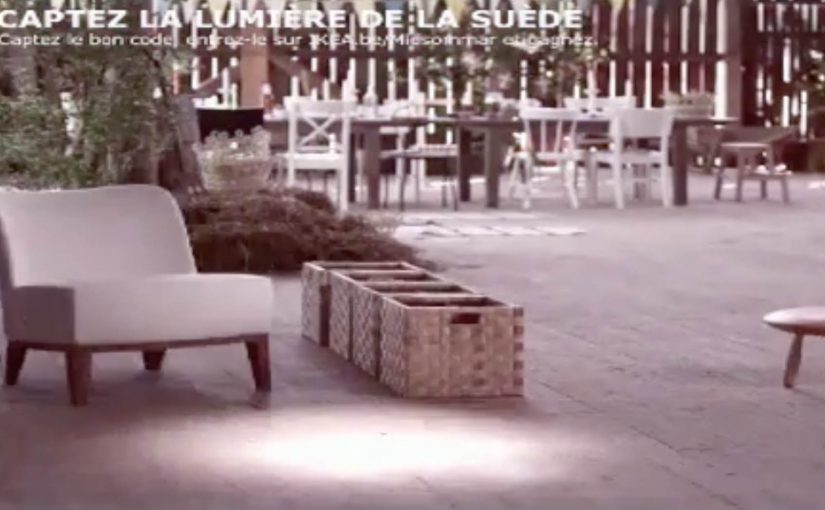
Summer is usually a slow period for IKEA in Belgium, and IKEA wanted to change that. Instead of running traditional advertising for summer offers, they built an interactive YouTube game that challenged viewers to “catch the Swedish light.”

Click here to watch the case video on the AdsSpot website.

A YouTube mechanic that turns attention into speed

The game used a set of 48 different ads. Viewers had to pause the spot at the exact moment a beam of light hit a product. In that unique frame, a yellow code appeared in the top right corner. The first person to validate the code on the summer microsite won the product instantly.

In seasonal retail marketing, this kind of mechanic works best when it converts passive viewing into an action that is both simple and time-sensitive.

Why this is a smart use of YouTube’s constraints

The neat twist is that the limitation becomes the hook. Because YouTube is not designed for frame-perfect browsing, the challenge feels like a real skill moment rather than a basic form-fill. That “I nailed it” feeling is the reward even before the prize lands.

Extractable takeaway: If you want people to pay full attention to video ads, give them a single, clear reason to watch closely, and make the payoff depend on timing rather than effort.

What IKEA is really optimizing for

Yes, it is a prize mechanic. But the deeper objective is to turn summer browsing into a competitive habit. Viewers must watch actively, replay, and react quickly, which increases recall of products and offers without relying on heavier messaging. The real question is whether you want your summer promo to be remembered as an offer, or as a skill moment people choose to replay. This is a stronger play than a standard summer-offers spot, as long as the validation race feels fair across devices.

What to steal from Catch the Swedish Light

  • Make the win condition visual. A light beam hitting a product is instantly understandable.
  • Keep the action atomic. Pause at the right moment. Capture code. Validate. Done.
  • Use scarcity properly. “First to validate wins” creates urgency without extra complexity.
  • Scale through variations. Multiple ads keep the game fresh and reduce repetition fatigue.
  • Protect fairness. If latency (the delay between a code submission and server confirmation) or site load affects outcomes, communicate rules clearly and log validation times reliably.

A few fast answers before you act

What is “Catch the Swedish Light” in one sentence?

It is an IKEA Belgium YouTube-based game where viewers pause ads at the exact moment light hits a product to reveal a code, then validate fastest to win instantly.

Why does “pause at the right frame” drive engagement?

Because it forces active viewing. People stop multitasking, replay moments, and concentrate to hit the timing.

What makes this better than a standard prize draw?

The outcome feels earned. Speed and attention decide the winner, which makes participation more exciting and shareable.

What is the biggest execution risk?

Perceived unfairness. If buffering, device differences, or slow microsite performance decide winners, sentiment can flip fast.

What should you measure beyond views?

Replay rate, average time spent per viewer, code validation volume, site conversion rate, and whether product interest rises during the slow summer window.

IKEA Manland

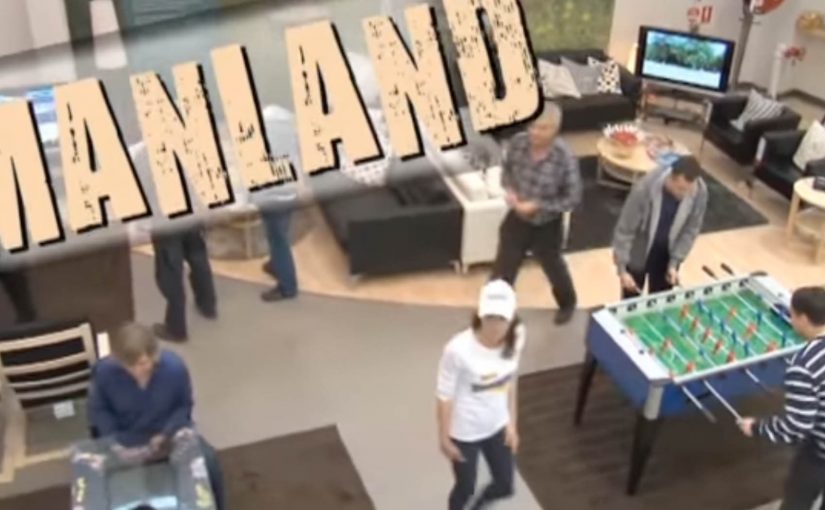
Last month IKEA in Sydney, Australia ran a four-day trial of Manland. They created a dedicated area in the store which men with short retail attention spans could use to escape the pains of weekend shopping at IKEA. In simple words, it was day-care for husbands and boyfriends who wanted to take a break from the shopping.

The store offered free hot dogs, Xbox consoles, pinball machines and nonstop sports action on TV. IKEA even handed out buzzers so women would get reminded to come back and pick up their men after a short session.

Turning “waiting time” into a branded service

Manland works because it is not pretending men suddenly love shopping. It acknowledges the reality. Some people will be there for the relationship, not the retail. So IKEA reframes the pain point as a service, the same way Småland turns “kids are restless” into a solved problem.

The mechanism is deliberately low-effort. You do not need an app, a QR code, or an explanation. You just drop in, decompress, and rejoin the trip with less friction and fewer arguments.

In big-box retail, weekend shopping is often a couple activity, and boredom is a conversion killer for the accompanying partner.

Why this becomes press, not just a gimmick

It is instantly legible. A “day-care for men” is a headline. The imagery does the distribution work. Consoles, sports, hot dogs, and a buzzer are all recognisable symbols, so the concept travels across cultures even if you have never been to an IKEA.

Extractable takeaway: If you want earned media from an in-store experience, design one idea that reads in a single photo and a single sentence.

It is also slightly provocative, which helps. People argue about whether it is funny, patronising, or brilliant. That debate is oxygen for earned media.

The business intent: protect dwell time and reduce walk-outs

The practical goal is simple. Keep groups in-store longer, reduce the urge for someone to storm out, and make the trip feel easier, especially on peak weekend traffic. The PR upside is a bonus. But the operational benefit is the real value.

The real question is whether you can remove that boredom without turning the idea into a stereotype.

If your store relies on group shopping, design for the bored companion as deliberately as you design for the primary buyer.

Steal the companion-lounge playbook

  • Solve a real friction. If it does not remove pain, it will not spread.
  • Make the rules obvious. The best retail ideas need zero onboarding.
  • Build a “photo truth”. If the experience photographs well, it earns its own distribution.
  • Use time limits to keep it fair. A short session keeps it accessible and stops it becoming a hangout that blocks capacity.

A few fast answers before you act

What was IKEA Manland?

Manland was a short trial inside an IKEA store in Sydney. It offered a staffed, game-and-sports lounge where men could take a break while their partners shopped.

Why did the buzzer matter?

The buzzer turned “come back later” into a simple timing system. It made pickup predictable and helped manage capacity without complicated queueing.

Is this primarily an ad idea or an operations idea?

Both. It is an operations idea that creates PR. The experience removes friction inside the store, then the simplicity of the concept turns it into a shareable story.

What makes this kind of activation risky?

Stereotypes. If the tone feels insulting or dated, the press flips from amused to critical. The safest version is to frame it as optional decompression, not a judgment.

What should you measure if you do something similar?

Dwell time, drop-off rates, and satisfaction in exit feedback. For comms, track earned pickup and social sharing, but only after the in-store metrics look healthy.