IAA 2013: Walk of Innovations

The 65th Internationale Automobil Ausstellung (IAA) has been running in Frankfurt am Main for the past two weeks. So on Saturday I decided to go for the motor show to catch up on the latest cars and also see first hand the much anticipated Nissan Nismo Watch.

Most of the car makers in this year’s show were also present in IAA 2011. In fact they were even located in the same stands as 2011, with the same high tech touch displays to promote their cars. The difference was that their 2013 car models were now more hybrid and or electric only, for example this new four seater Smart.
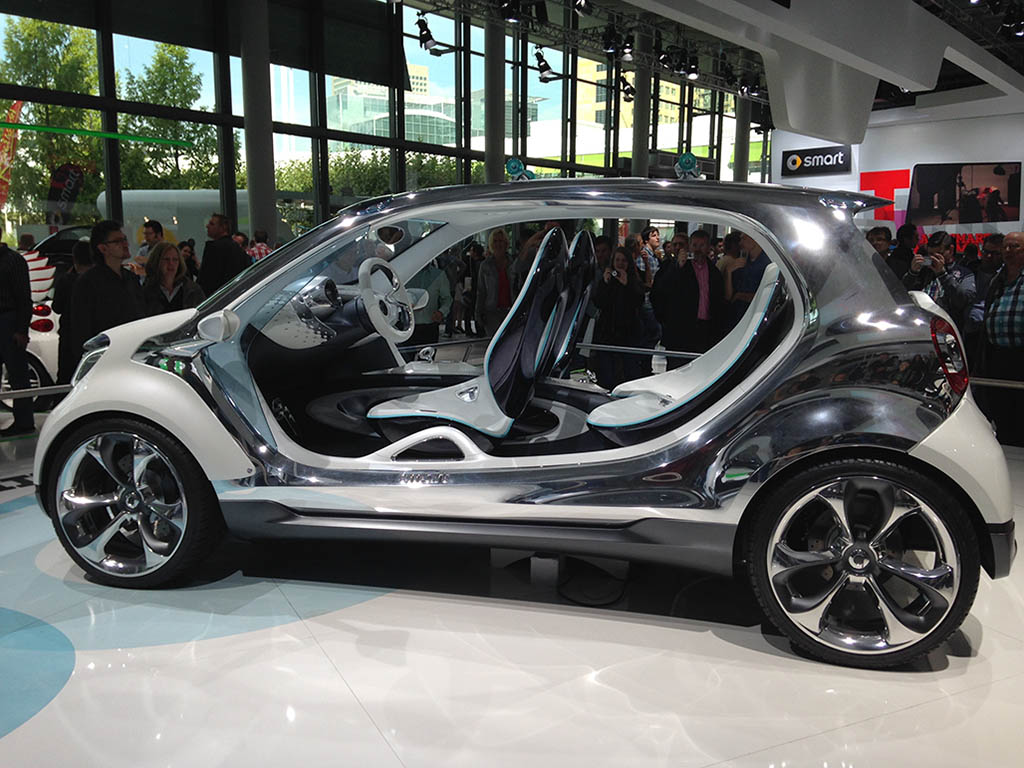
Mercedes four seater Smart

What changed on the floor

While I walked around and looked for changes vis-à-vis what was shown in IAA 2011, I noticed that apart from the now expected large screens and touch displays, car makers were using all kinds of social media to engage with their visitors.

Engagement snapshots by brand

Here is a quick photo report of my engagement experiences with the various car makers.

Audi
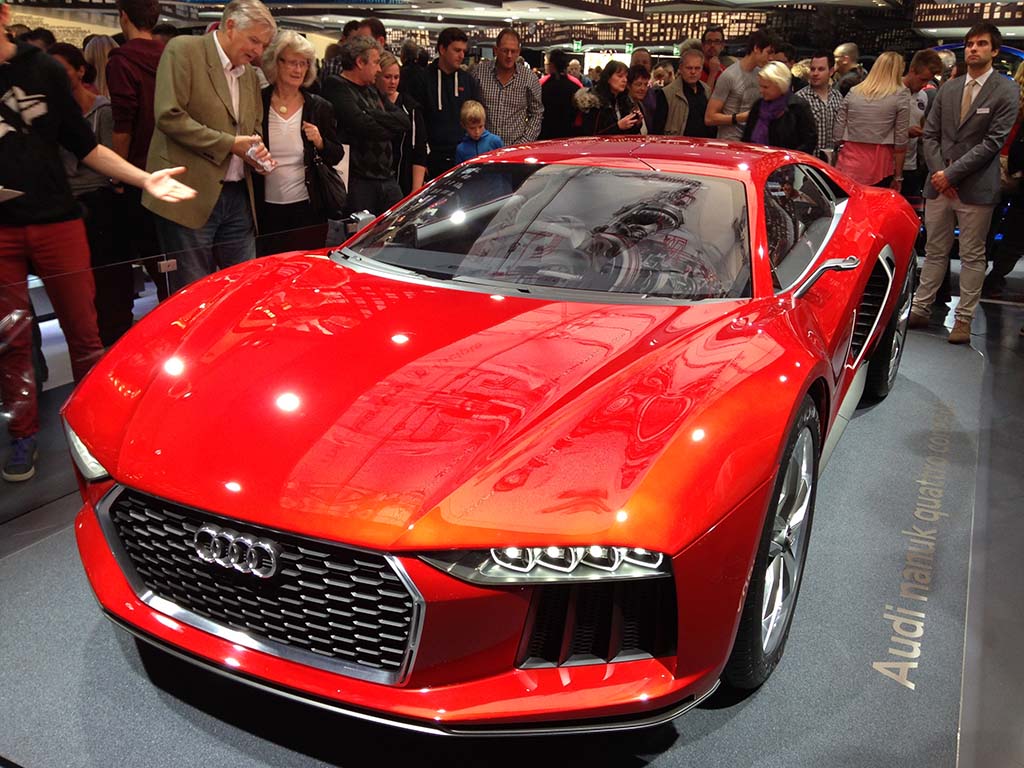
Audi Quattro Concept

To make sure I did not miss Audi this year due to 200+ people standing in line to get into the Audi stand, I decided to visit very early in the morning. The line was short, but there were already hundreds of people inside. On walking in, I noticed that the concept for the stand was taken straight out of the Hollywood movie “Upside Down”.
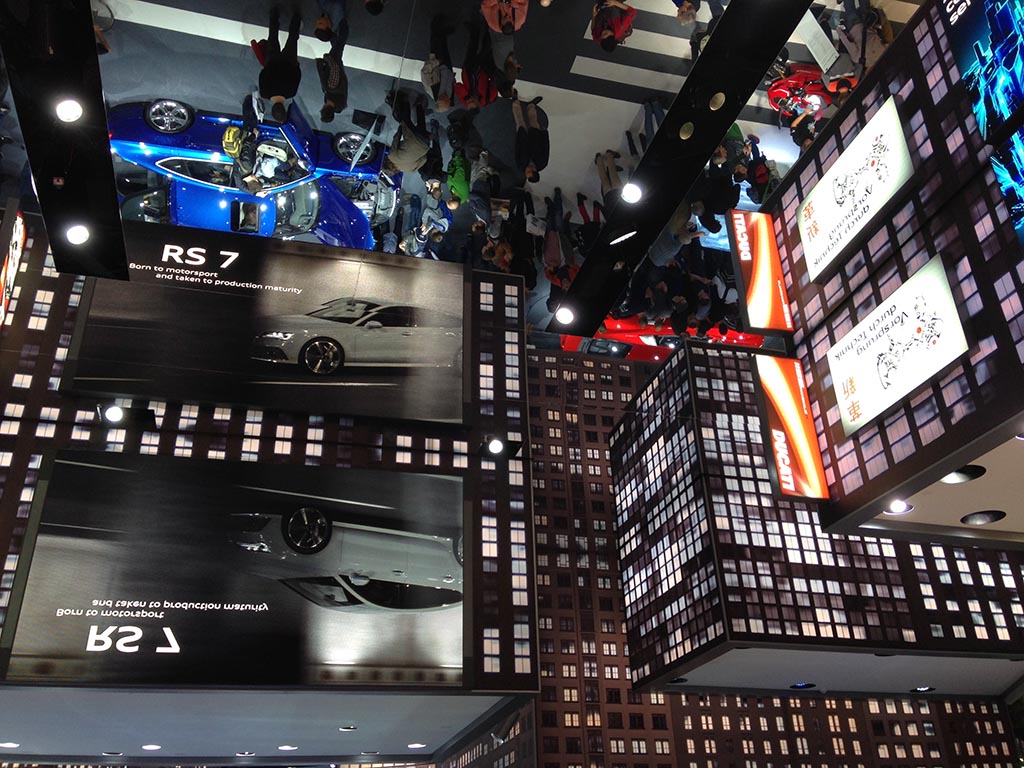
Audi Upside Down

Visitor engagement at the stand was driven through a special photo booth. While people waited in line they got an iPad to play a game and answer three questions about Audi. Winners got custom giveaways like keychains, gummy bears, etc. After that, visitors were ushered into the photo booth which superimposed the photos onto custom Audi backgrounds. Visitors could take home a printed copy and later also download soft copies from www.audiphotoautomat.com.

Mercedes

Next stop was the Mercedes stand which was also impossible to get into in 2011. From the below picture you can see why.
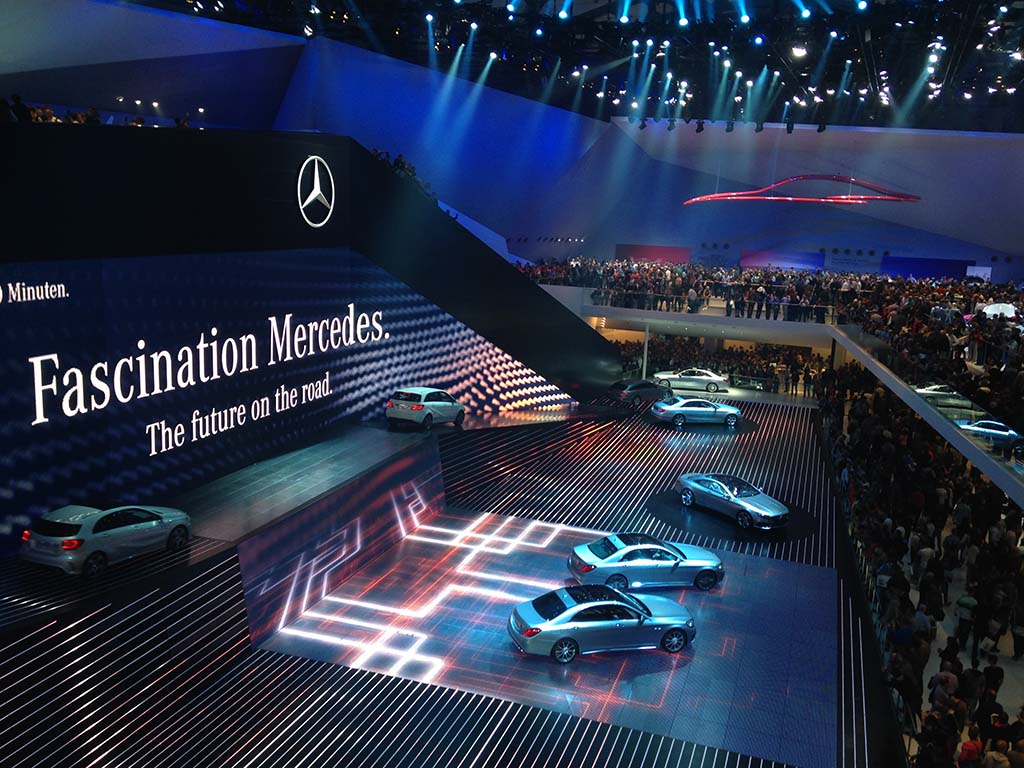
Fascination Mercedes

Mercedes put up a huge multi-sensory show that went on for over 20 minutes, while thousands of people just stopped and watched. Children visiting the stand were kept busy with car simulators.
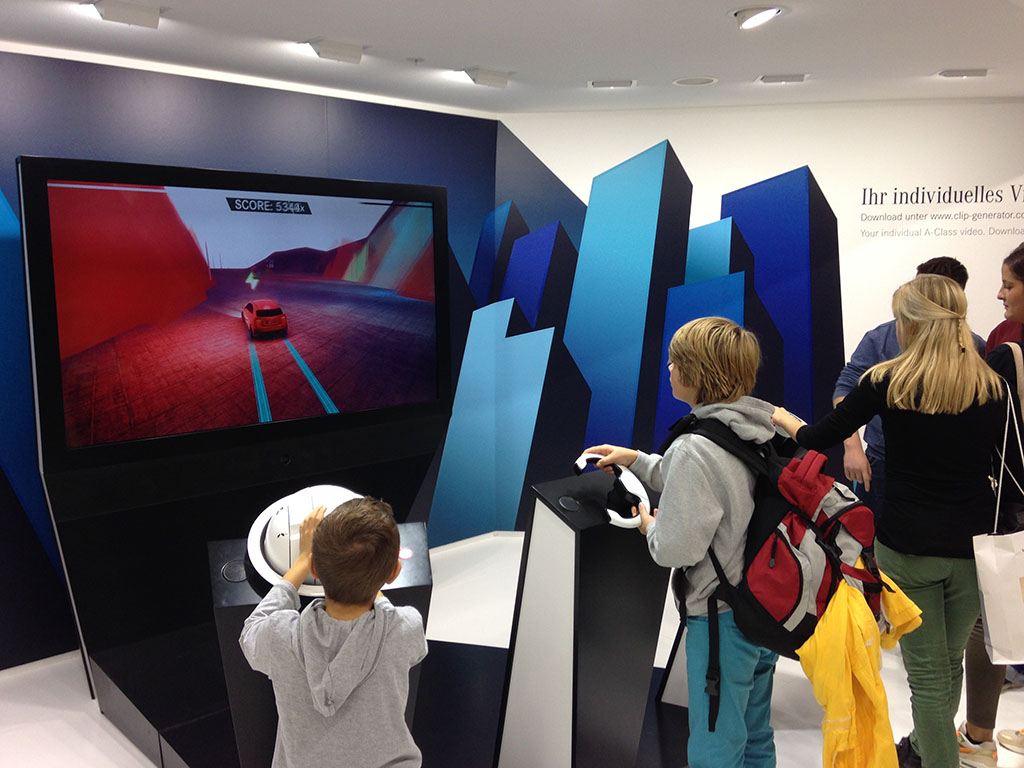
Mercedes Car Simulator

Outside the stand one could test drive the Mercedes off-road jeeps with the help of trained drivers.
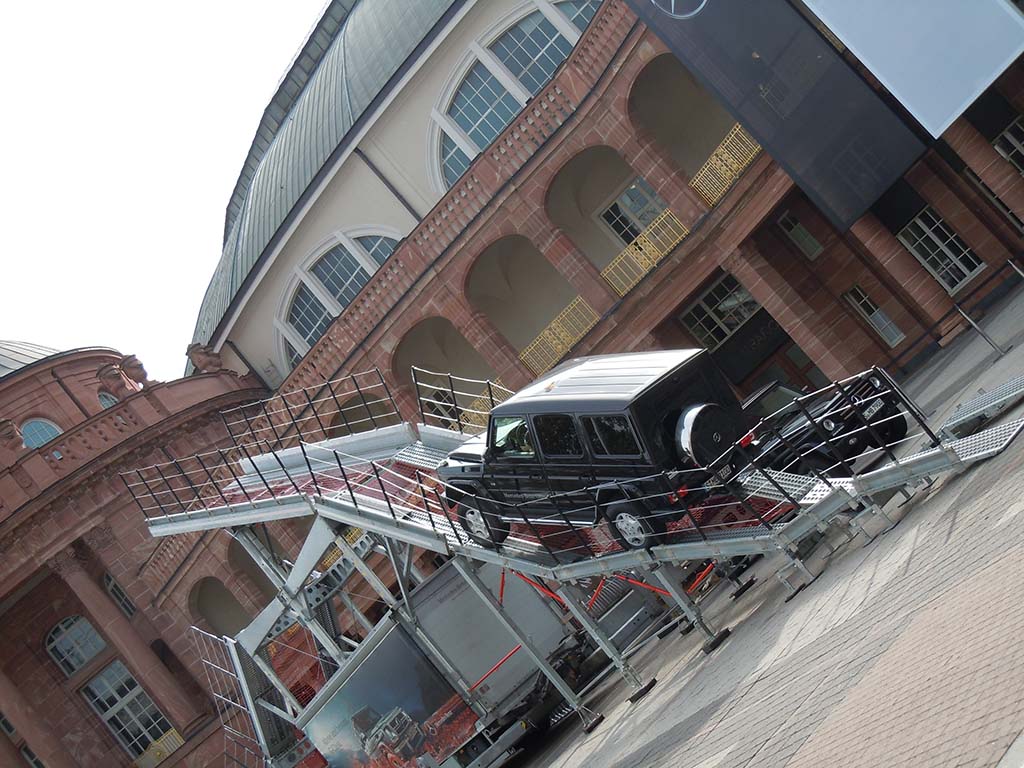
Mercedes Offroad Test Drive

Hyundai

Hyundai was the first car brand I came across that was using the event to generate Facebook fans. For liking the Hyundai Facebook page, fans at IAA could win a Hyundai i30.

Hyundai Like Us Pillar

The rear windscreen of the i30 was converted into a touchscreen which people could use to instantly “Like” the brand’s Facebook page or choose to receive the fan page link via email.
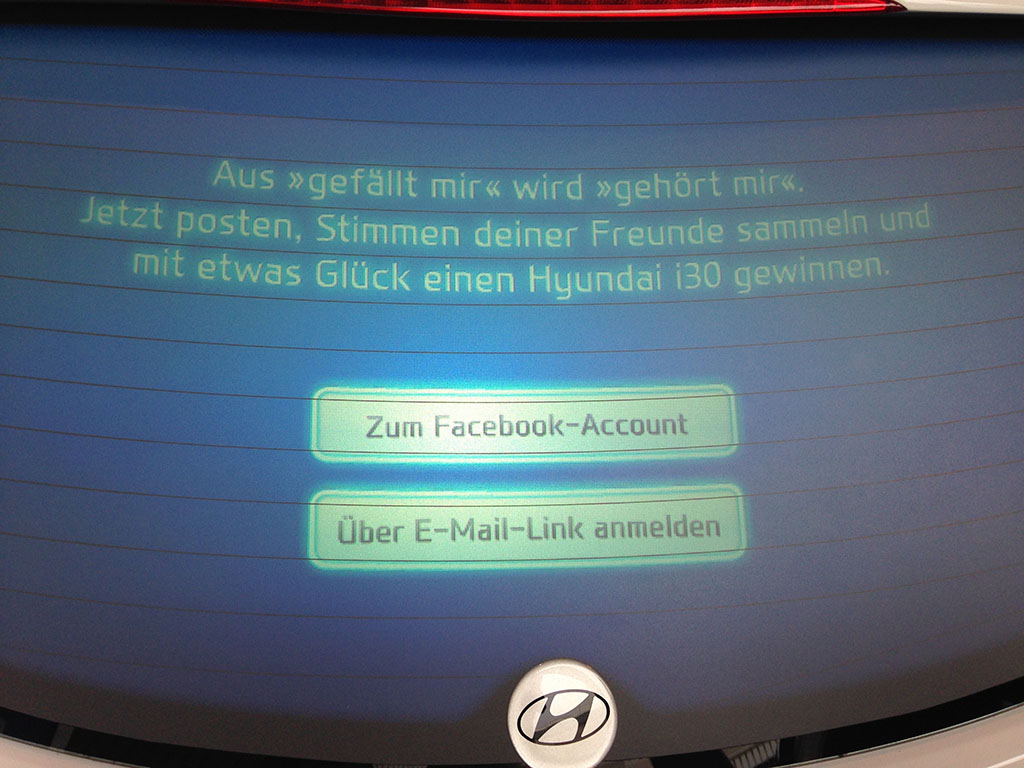
Hyundai i30 rear window

At the stand Hyundai also displayed a touchable music seat for hearing impaired drivers which vibrated as per the music being played. This was still in concept phase and the test seats were being developed out of Korea.
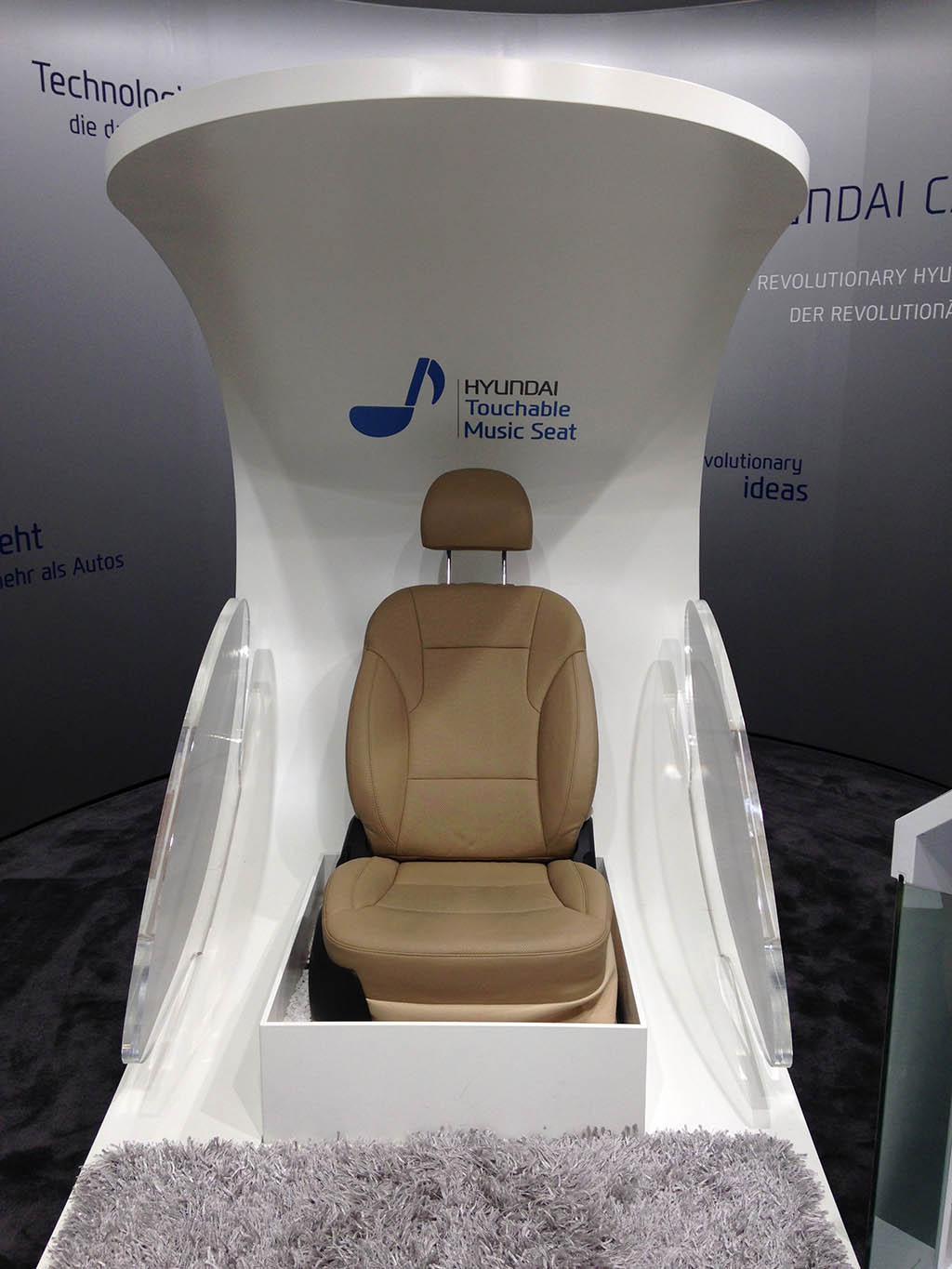
Hyundai Touchable music seat

Volkswagen

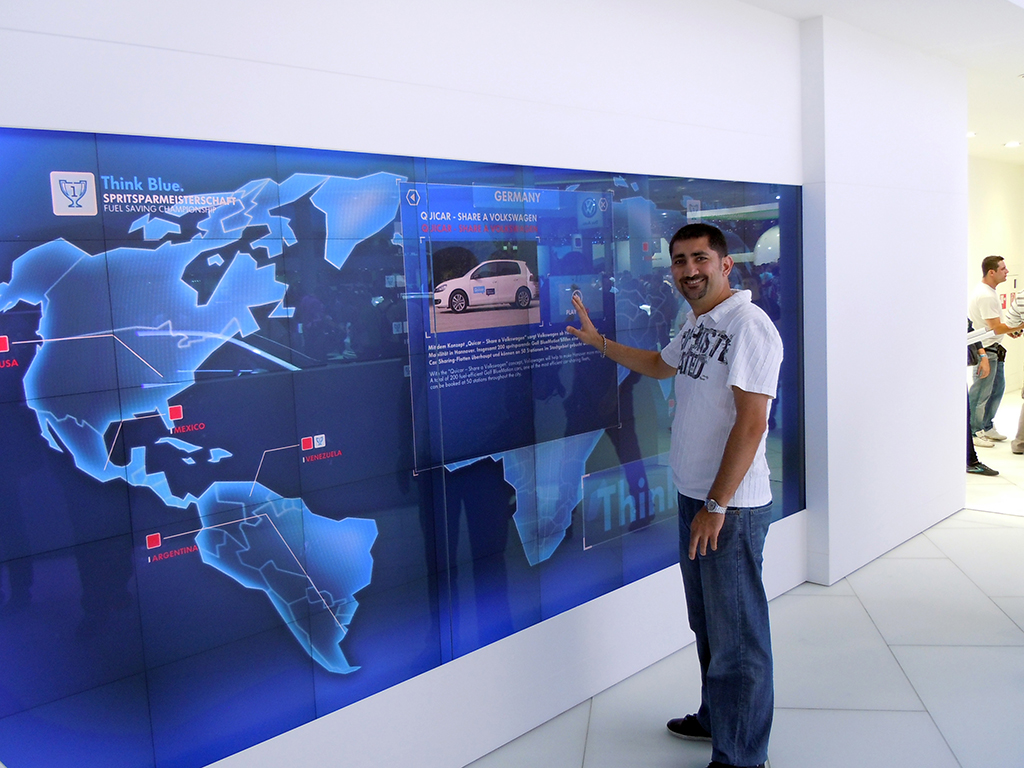
The Volkswagen “Think Blue” initiative was presented via an interactive augmented reality layer that was activated through the provided iPads.
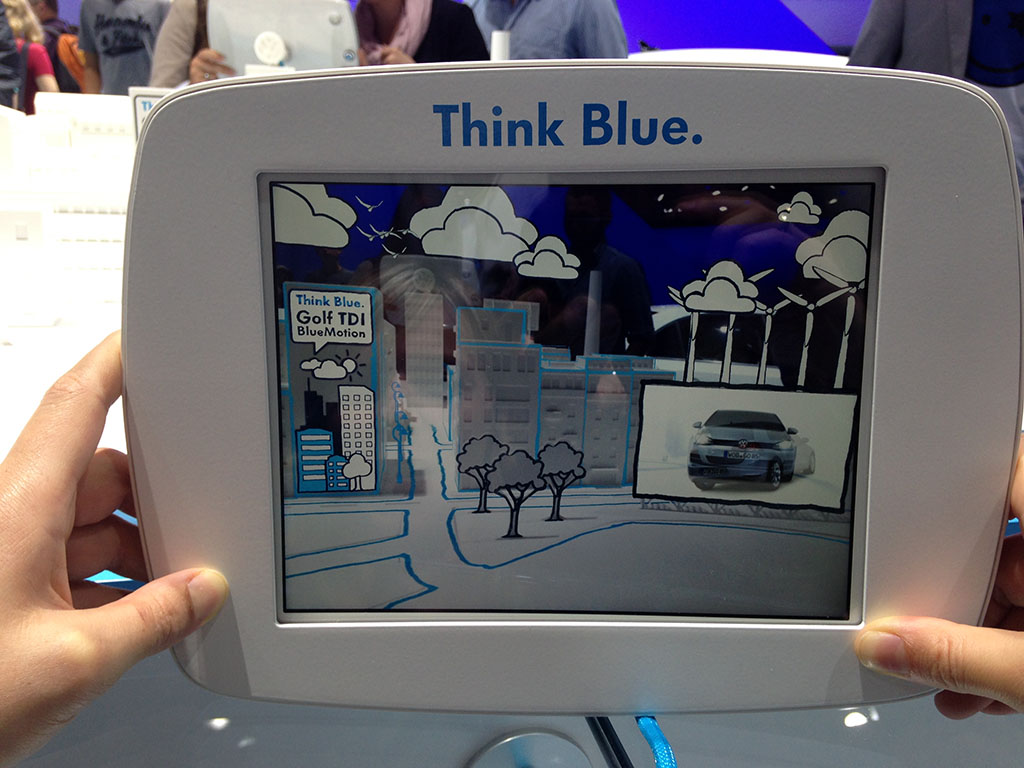
Volkswagen Think Blue

Skoda

Skoda explained their Green Line initiative via a wooden toy car that was supported by the animations in the embedded touch screens.
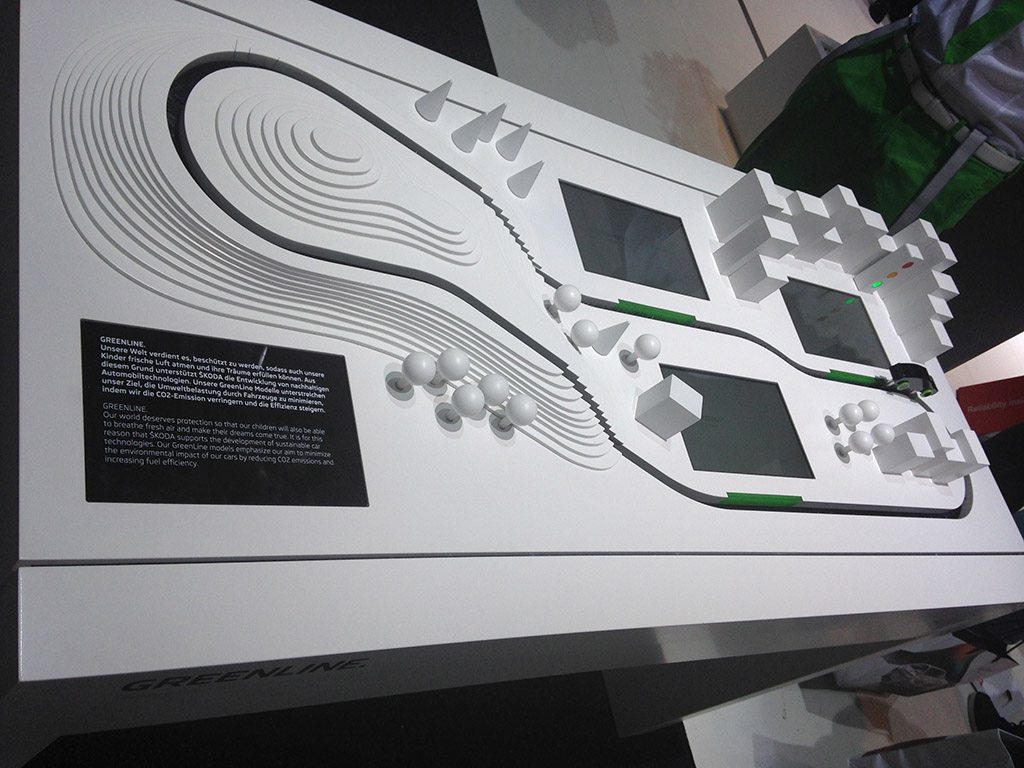
Skoda Green Line

At the neighbouring table kids were engaged with games around the Green Line initiative.
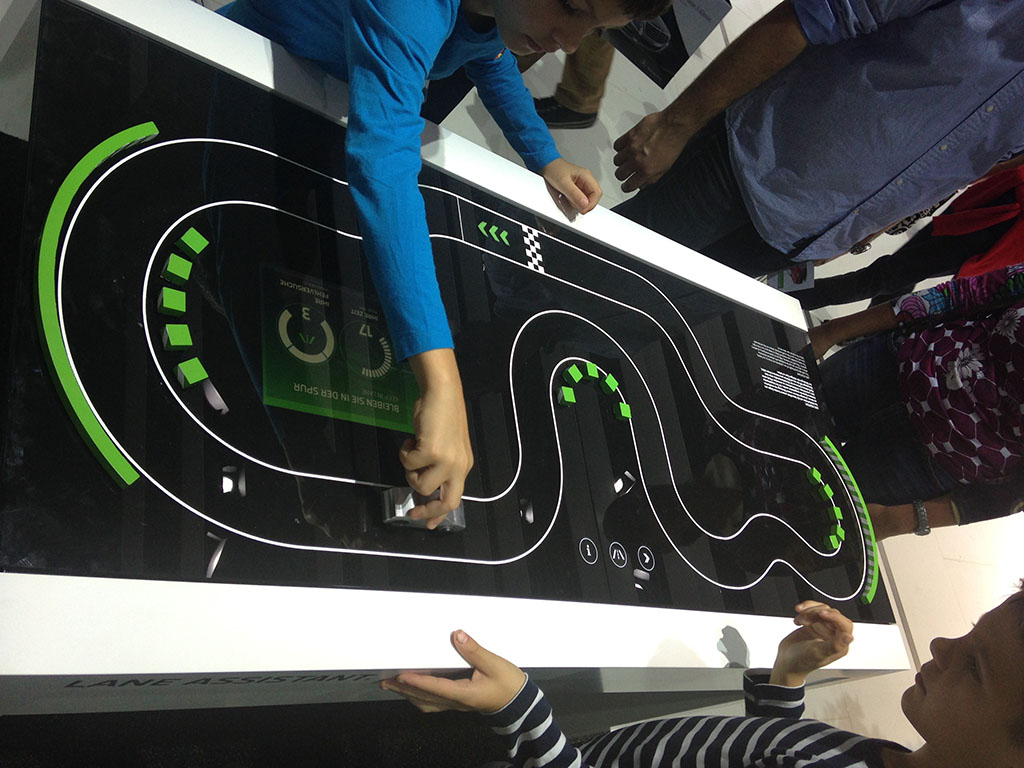
Skoda Green Line Game

Michelin

At the Michelin stand, visitors could take pictures with a virtual Michelin mascot and have the pictures emailed to themselves instantly.
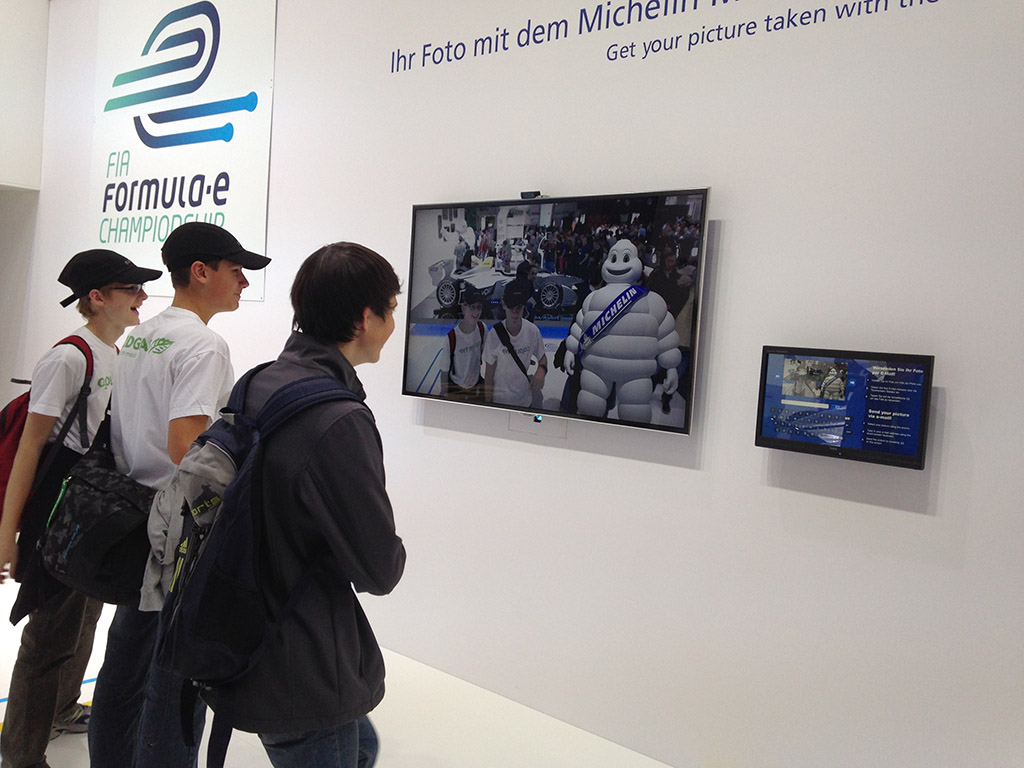
Michelin Mascot

Nissan

After having written about the Nissan Nismo Watch last week, I could not wait to see the real watch in action. But to my disappointment the watch was not there as announced. There was only a plastic dummy on display.
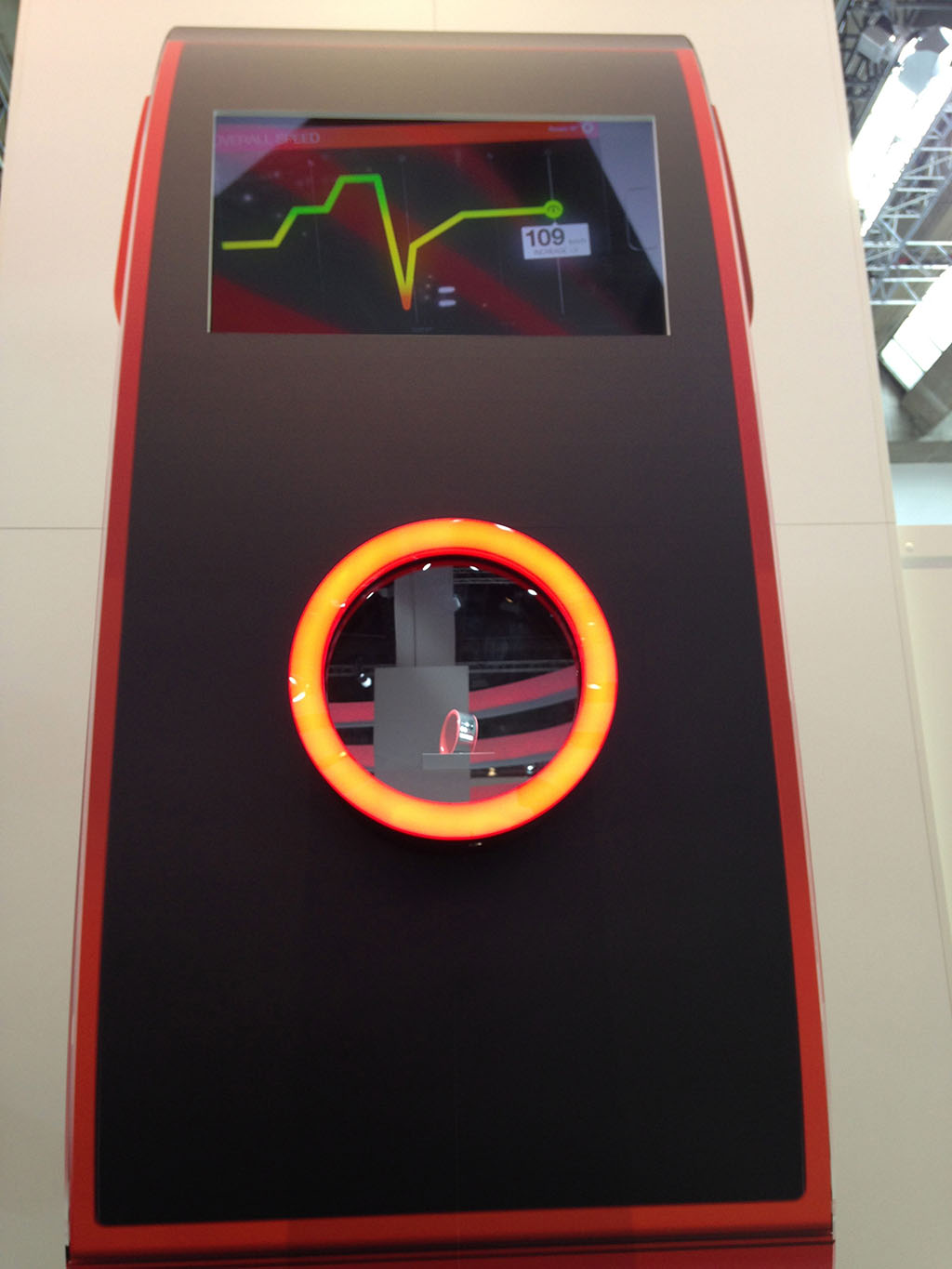
Nissan Nismo Watch

But I did take Nissan’s version of real life “Likes” for a spin (first spotted at the Renault stand in the 2011 Amsterdam Motor Show).
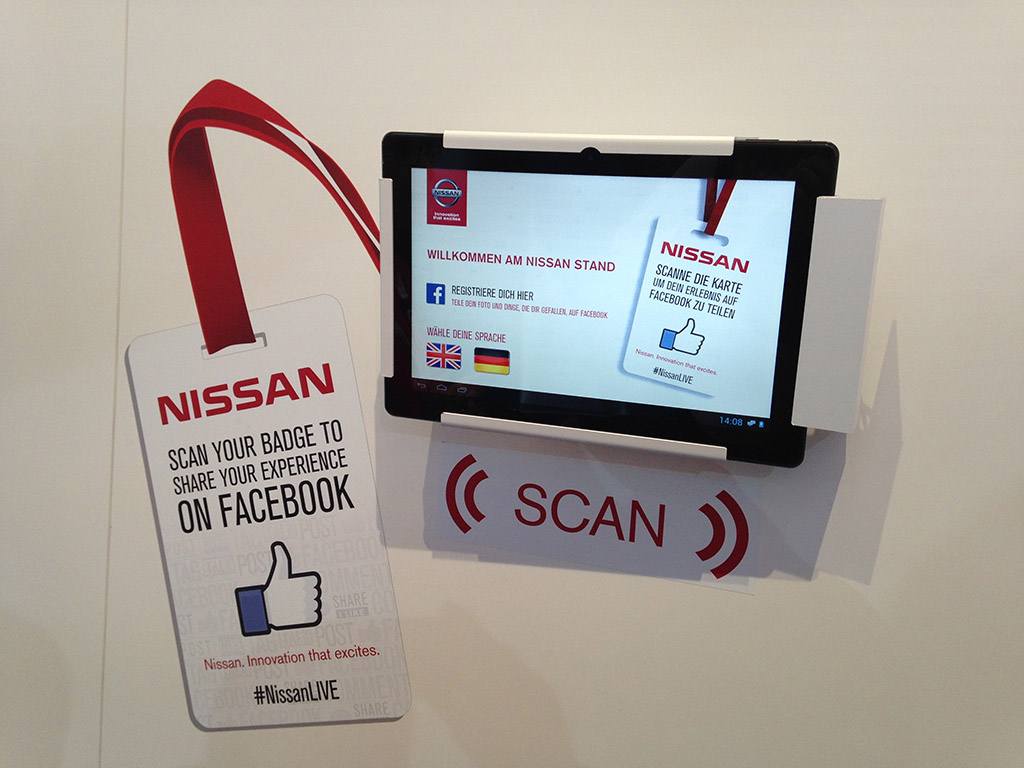
Nissan Real Life Likes

The RFID badges allowed visitors to post custom Nissan branded pictures of themselves onto Facebook.
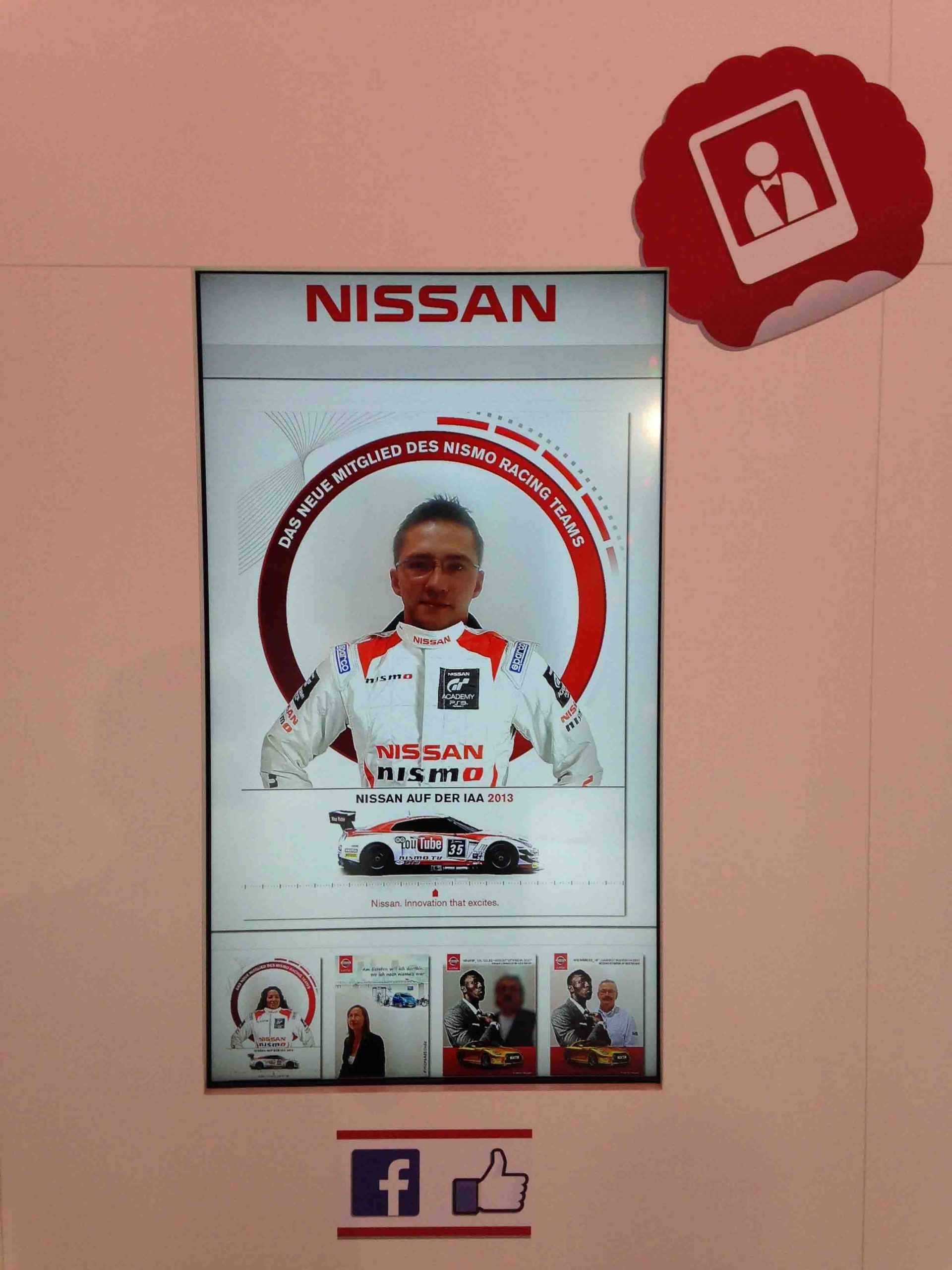
Nissan Facebook Pillar

Visitors were also given the option to share the cars they like on Facebook via special Like buttons built into the car info pillars.
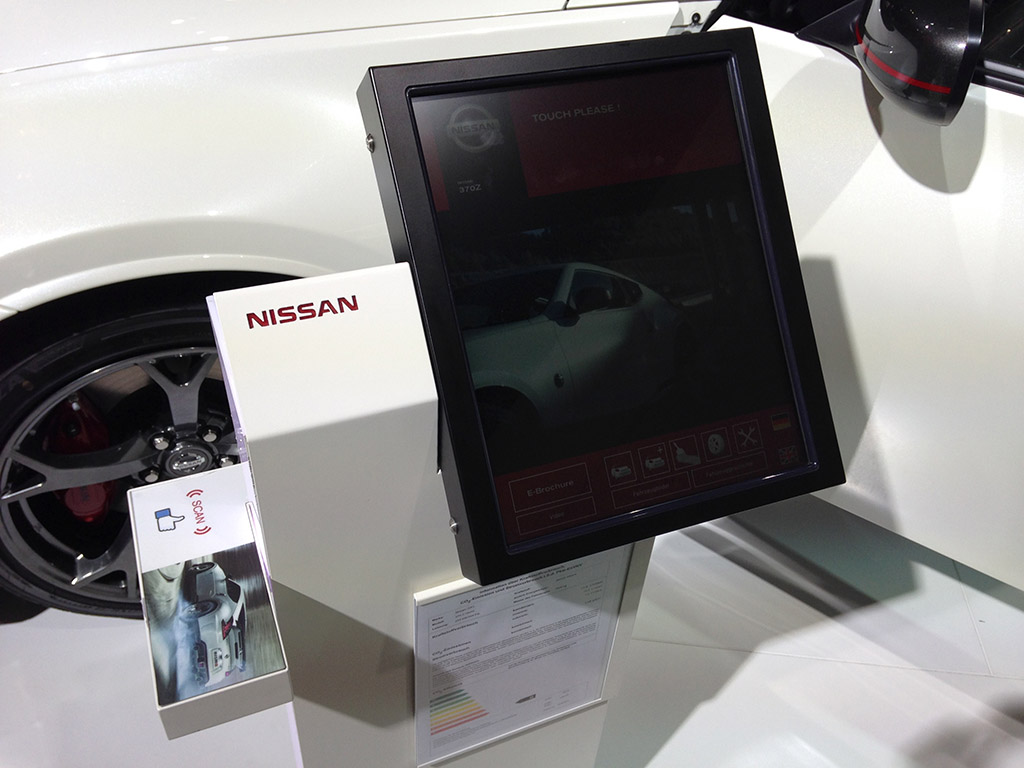
Nissan like a car button

Ford

At the Ford stand this year visitors were given head and shoulder massages.
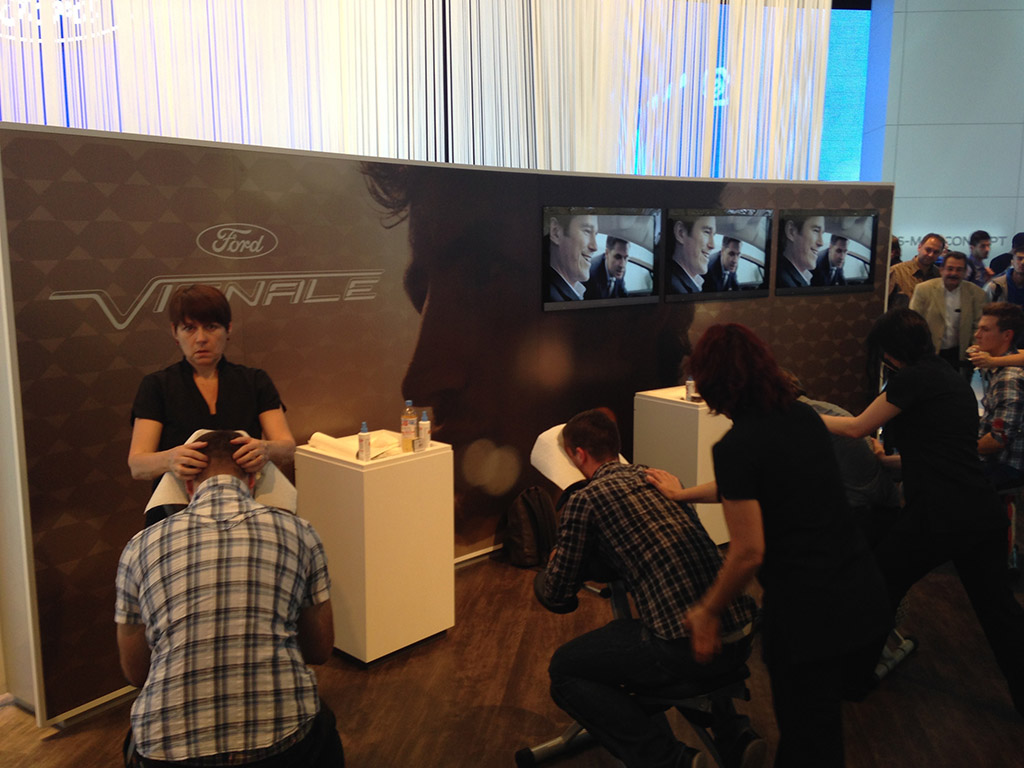
Ford head and shoulder massages

Then to experience the Ford EcoBoost, visitors were put in front of a leaf blower and their reactions captured and uploaded on the Ford Flickr channel.

And for the more social visitors, Ford had a Twitter based contest running.
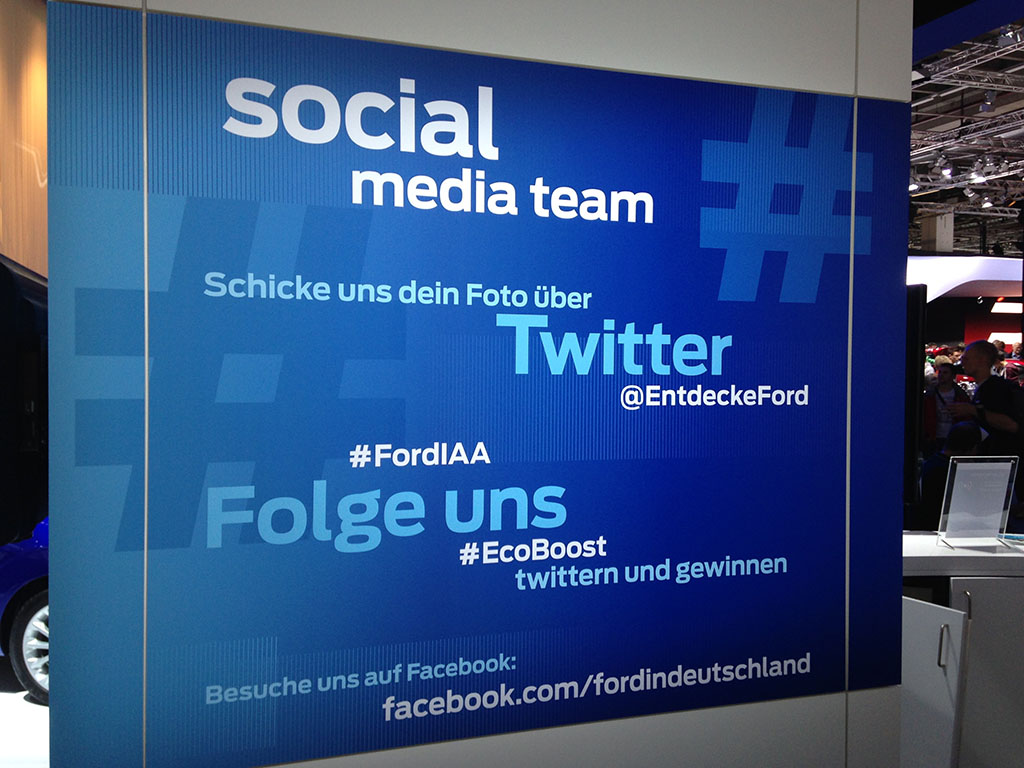
Ford IAA Twitter Contest

Kia

At Kia, visitors could superimpose their heads onto a football player and then have the custom postcard sent to their email IDs.
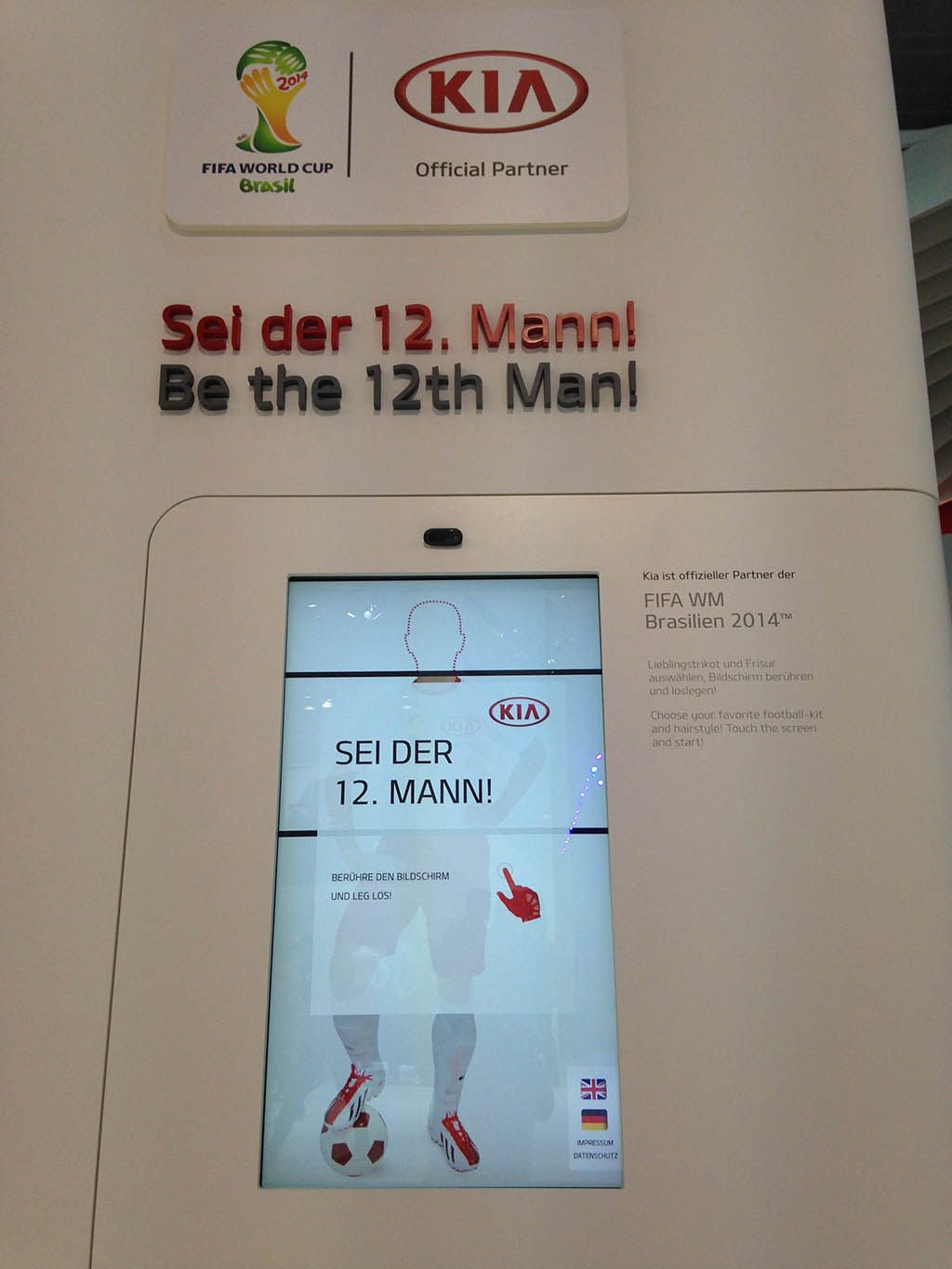
Kia 12th Man

Chevrolet

Visitors at the stand could make small flipbooks of themselves doing funny dances in front of the main character of the Hollywood film “Turbo”.
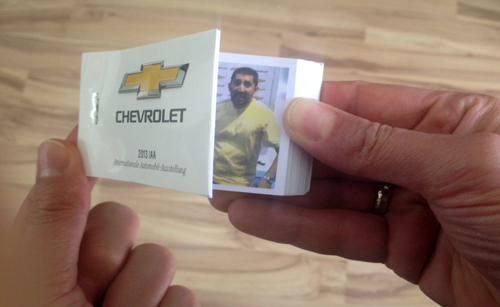
Chevrolet Flipbook

Or they could write special messages to their loved ones on a piece of paper and the team at Chevrolet would instantly convert them into wearable badges.
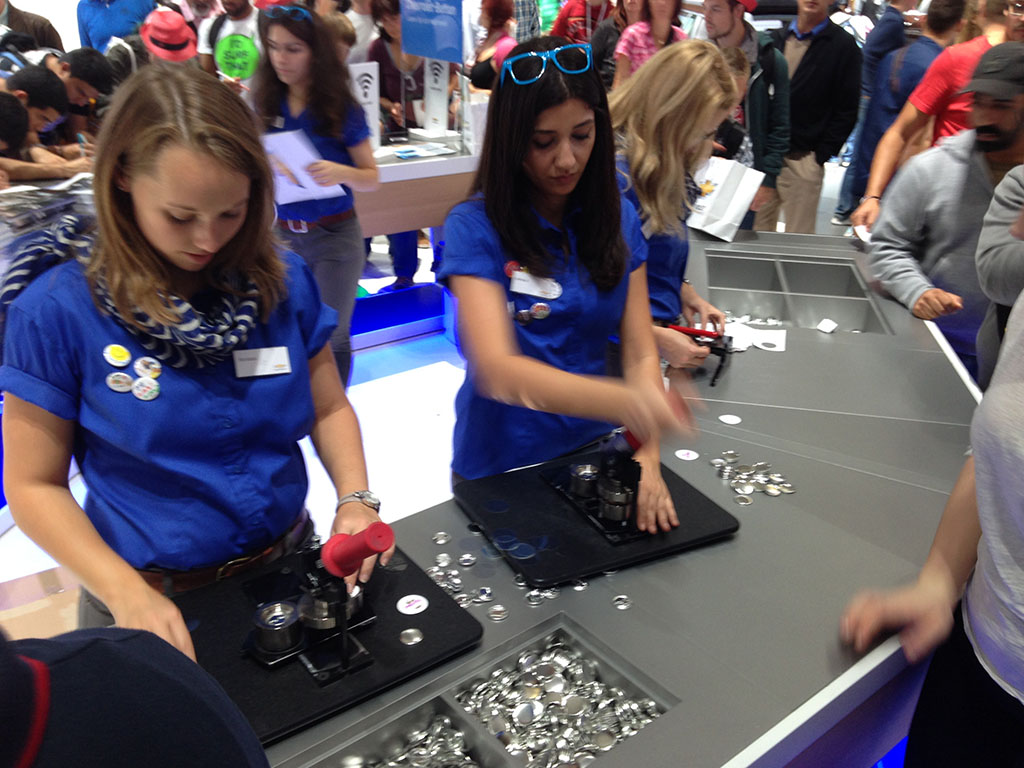
Chevrolet Badges

Chevrolet was also the only car maker at the IAA who was using Foursquare to offer discounts on their show merchandise.

Chevrolet Foursquare Check-in Special

Mini

Mini this year gave visitors the option to body paint their cars and email the photos to themselves.
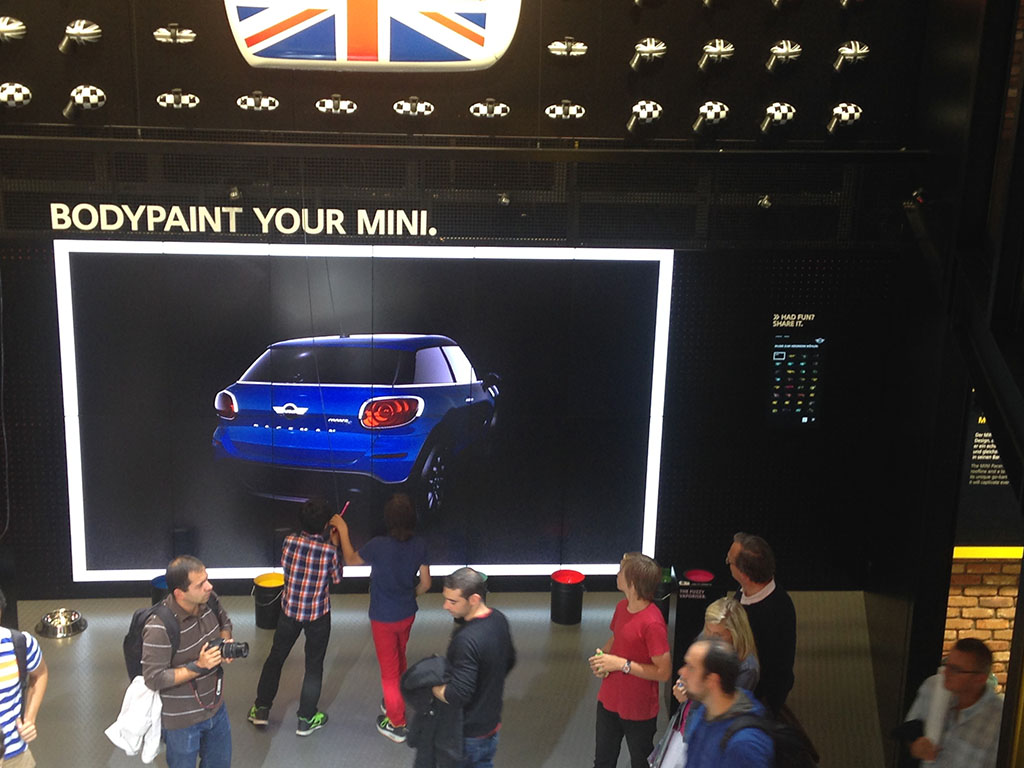
Bodypaint your Mini

Visitors could also slide down a specially created tunnel at record speeds that were also photographed and displayed on a large overhead digital screen.
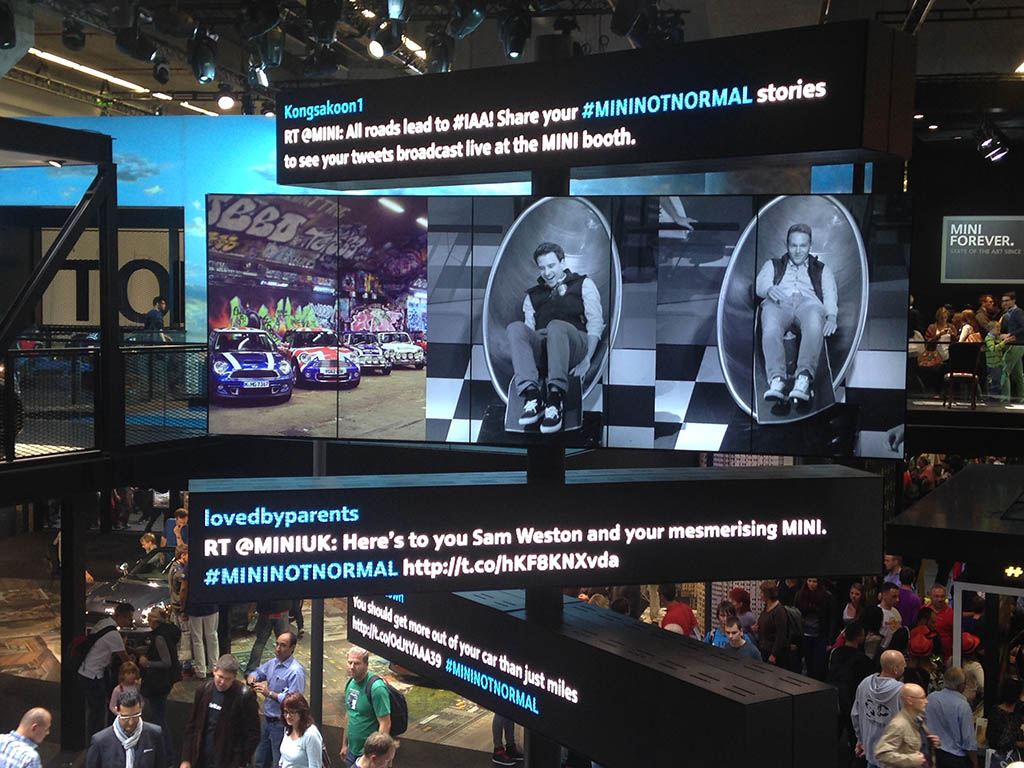
Mini Slide

BMW

BMW, like Mercedes, put up a multi-sensory show at their stand. But compared to Mercedes it was short and not as extravagant. Still pretty impressive.

BMW X5

Kumho Tyres

On the way out I spotted Kumho Tyres giving away various petrol and tyre related coupons. To win the coupons visitors had to catch them while being closed inside a wind cabin.
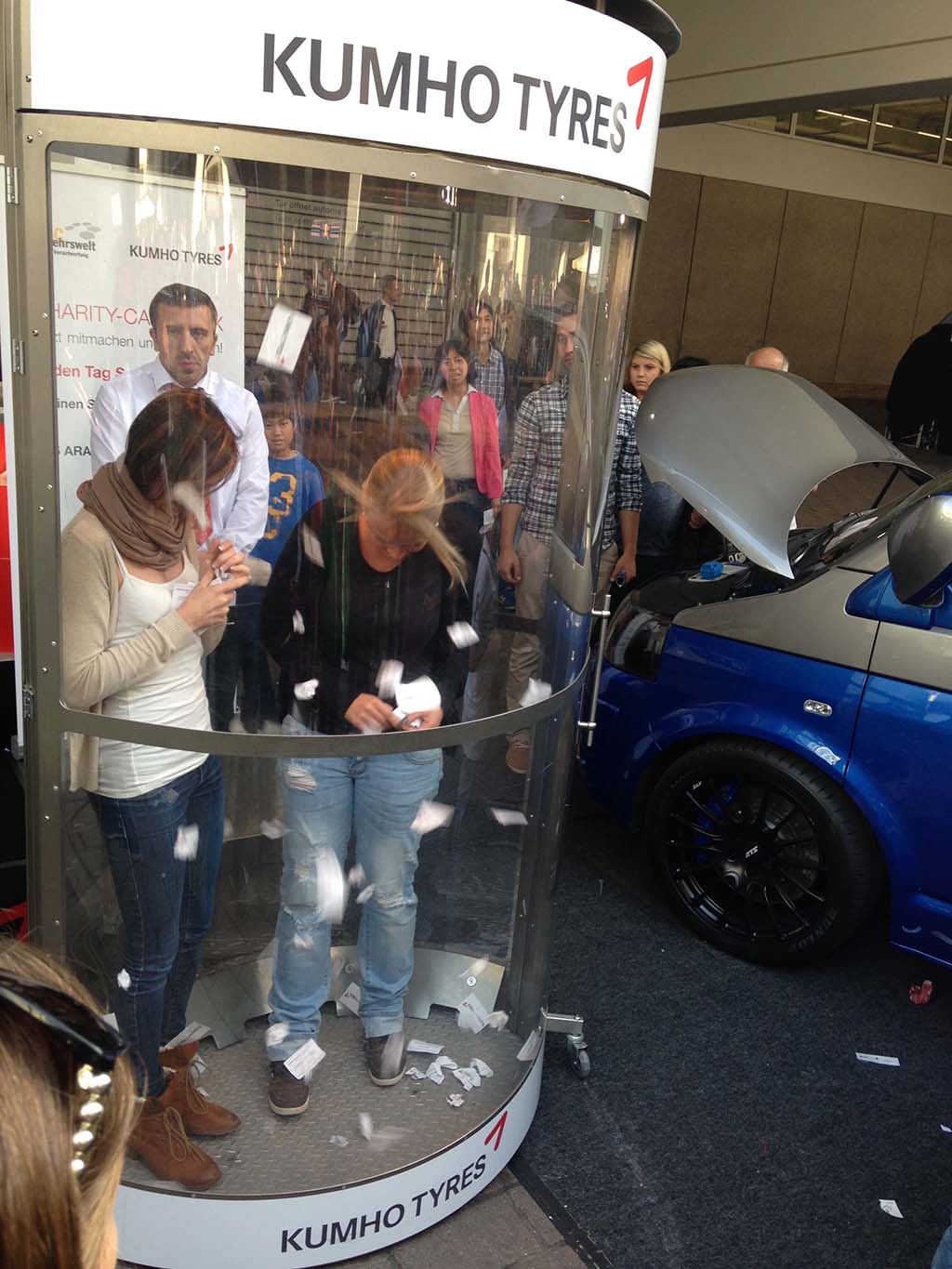
Kumo Tyres Coupons

Why this direction matters

Across the stands, the consistent pattern is not “more screens”. It is more reasons to create something. A photo. A badge. A flipbook. A posted image. A public interaction that becomes proof you were there. The stand stops being a catalogue, and starts behaving like a content studio that rewards participation. The real question is how a stand turns a visitor into a willing participant and publisher. The strongest stands here are the ones that give people something to make, not just something to look at. That works because visitors are more likely to remember, share, and talk about an experience when they leave with something they helped create.

Extractable takeaway: If you are designing for an event, do not start with channels. Start with a social object, meaning a photo, badge, flipbook, or other shareable artifact people can take away, share, or replay. Then build the simplest capture and distribution loop around it.

In large European trade shows, brands increasingly treat the stand as a live media channel where every interaction can become a shareable moment.

And that was a quick overview of what I experienced at the 65th Internationale Automobil Ausstellung. (To read about my experience at the 2011 show, click here.)

Until the next show in 2 years. This is Sunil signing off from IAA 2013.

What to steal from IAA 2013 for your next show

  • Queue utility. If people must wait, give them something to do that feeds the experience (Audi’s iPad game and questions).
  • Instant takeaways. Printed photos, emailed images, and small artifacts create memory and sharing triggers.
  • Low-friction publishing. RFID, built-in Like buttons, and email delivery reduce the “I’ll do it later” drop-off.
  • Make participation visible. Leaderboards, overhead screens, or public displays turn individual actions into crowd energy.
  • Match the mechanic to the brand truth. Eco themes paired with AR explainers, performance themes paired with physical challenges.

A few fast answers before you act

What is this IAA 2013 “walk of innovations” about?

It is a photo report from the IAA show floor in Frankfurt, focused on how different car brands used interactive touchpoints and social mechanics to engage visitors.

What is the main shift versus earlier shows?

Beyond large screens and touch displays, more stands are designed around capture and sharing, photo booths, RFID check-ins, instant email delivery, and social prompts.

Which engagement mechanics show up repeatedly?

Instant content creation (photos, flipbooks), low-friction sharing (RFID, embedded Like buttons), and public spectacle (multi-sensory shows, overhead displays).

What is the practical lesson for event marketers?

Design one clear participatory moment that produces a social object, then remove friction from capture and delivery so visitors can share immediately.

How do you keep these activations from feeling gimmicky?

Anchor the mechanic to a brand truth, and make the output useful or delightful for the visitor, not only promotional for the brand.
IAA 2011: Walk of Innovations

I was at the IAA 2011 this Saturday, and I got a glimpse of our automobile future. It felt awe-inspiring. Almost all electric. Fully computerized. Interactive dashboards and even window displays.

But while I looked at the cars with amazement, I kept a close look out for innovative implementations of “today’s” cutting-edge technologies. I was curious to see how car makers use touch displays, social media, QR codes, and augmented reality to engage visitors at such a massive event.

Here, augmented reality means a phone-triggered digital layer added on top of a physical object or display.

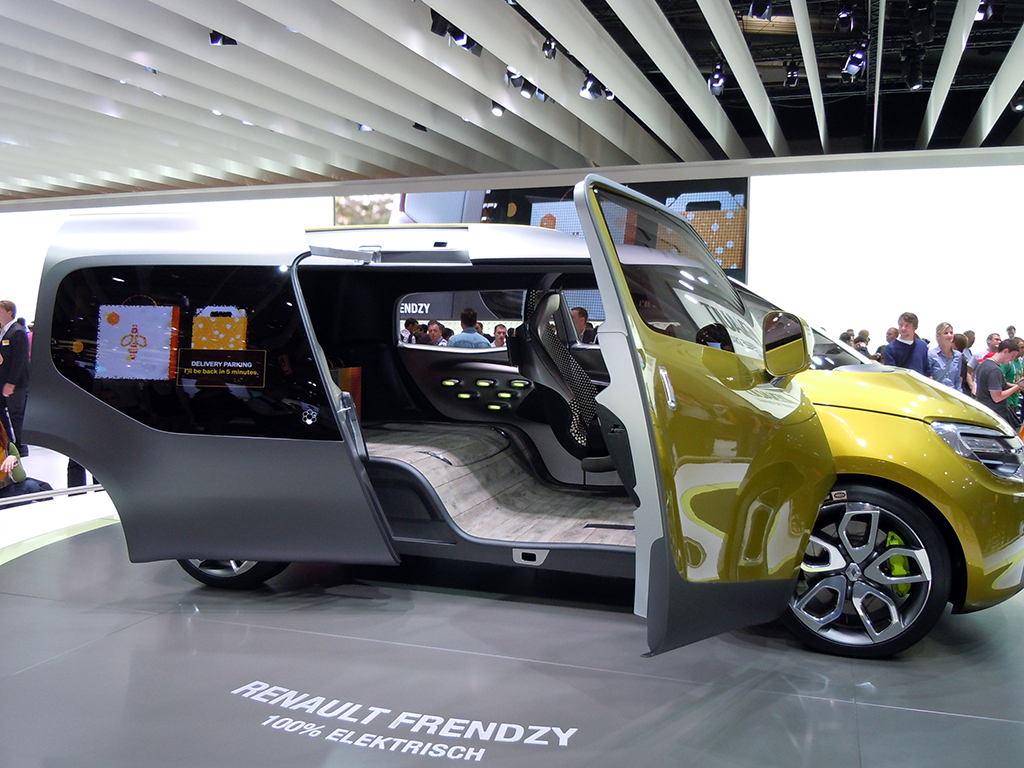
Renault Frendzy. 100% Electric

Here is a quick photo report of what I found interesting and innovative at the show.

Volkswagen

Volkswagen Interactive Motion Display

The Volkswagen BlueMotion technology was presented through a huge motion-based interactive display. Visitors did not need to touch the display. They used various gestures to navigate through the menu options.

Renault

Renault Twingo

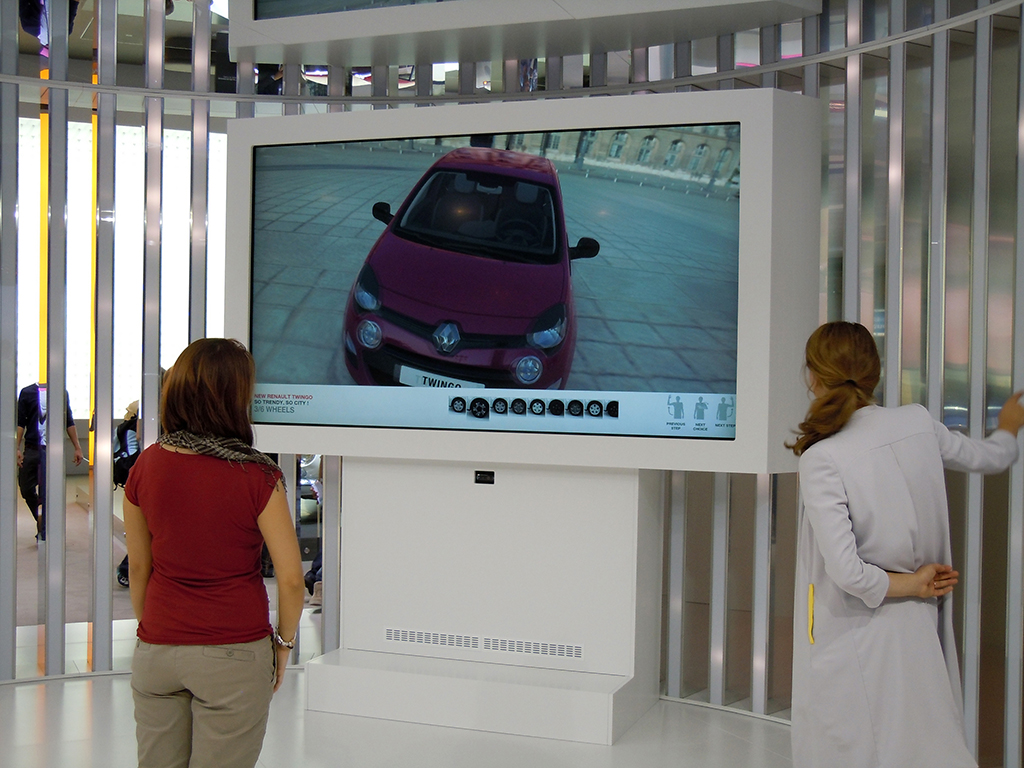
Visitors used the motion-based interactive display to learn more about the Renault Twingo. They could also change the colors of the model and watch demo videos.

Hyundai

Dream of Sand

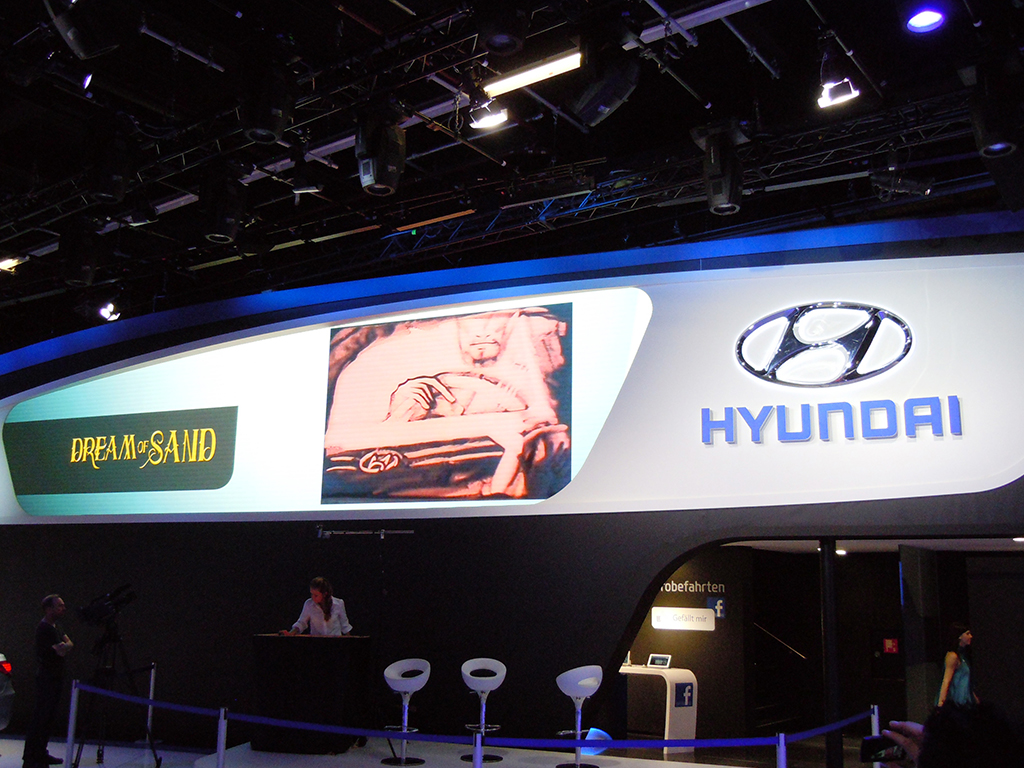
The main draw at the Hyundai stall was the “Dream of Sand” show by Svetlana Goncharenko and Natalya Netselya, who created vivid pictures in real time using sand.

Hyundai was also one of the only car brands trying to connect the stand with Facebook. Visitors needed to “Like” the Facebook page in order to be part of a lucky draw that gave them a chance to drive a Hyundai dream car. Important details like the fan page URL and contest information were not visible, or not easily accessible.

Skoda

Skoda Augmented Reality Pins

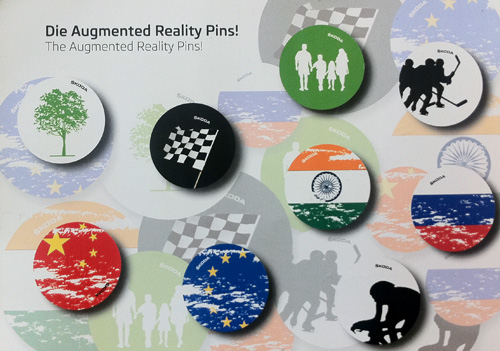
Skoda gave visitors augmented reality pins. The Junaio AR app was used to scan the pin and activate the augmented reality. Most of the pins were gone by the time I got there, so I scanned the info card instead. It did not trigger the 3D surprises that the pins would, but it did offer a set of regional videos.

Citroën

Citroen Eco Drive

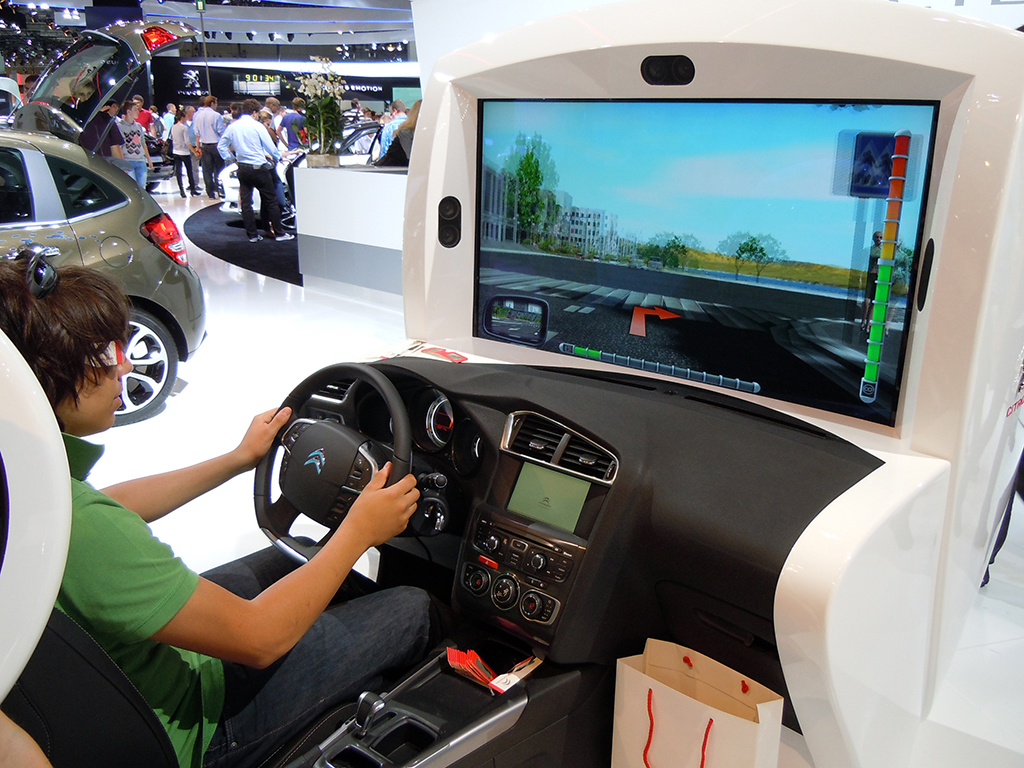
At the Citroën Eco Drive simulator, visitors could take the car for a 3D test drive.

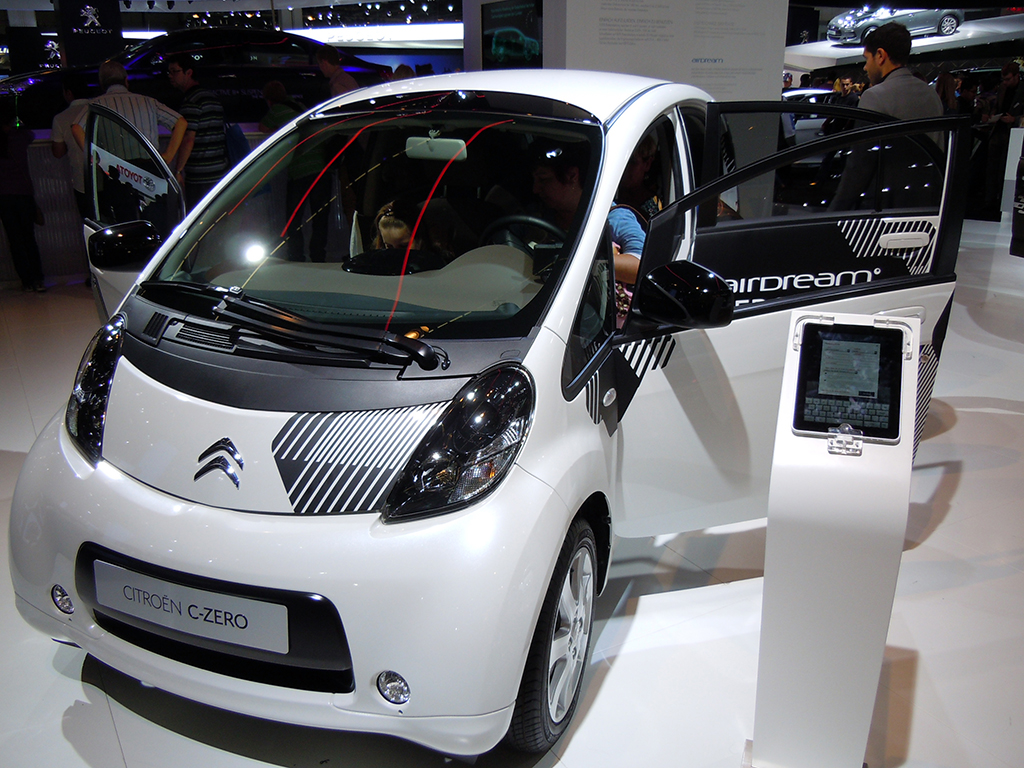
Citroen C-Zero

iPads were used by many car manufacturers to interactively share model specifications, videos, brochures, and to take automated enquiries from high-potential buyers.

Opel

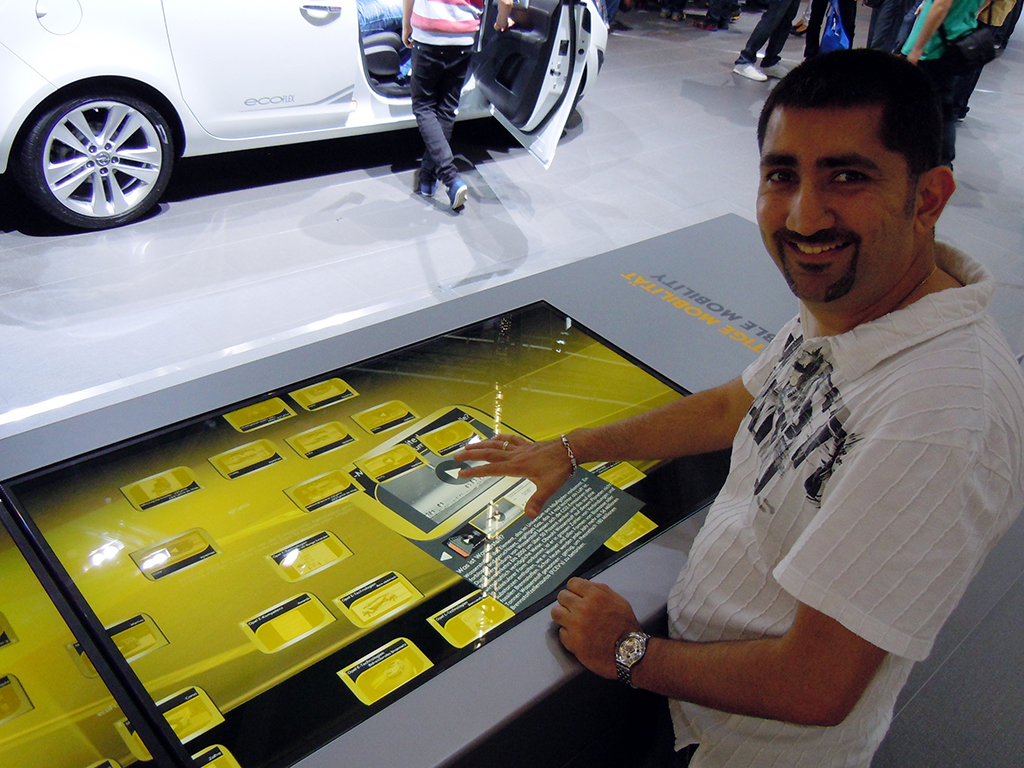
Opel Microsoft Surface setup

Opel used Microsoft Surface technology to share information about its cars. This was my first live experience with Surface. It worked much like the Apple touch interface, even though it did not feel as sensitive and smooth.

Ford

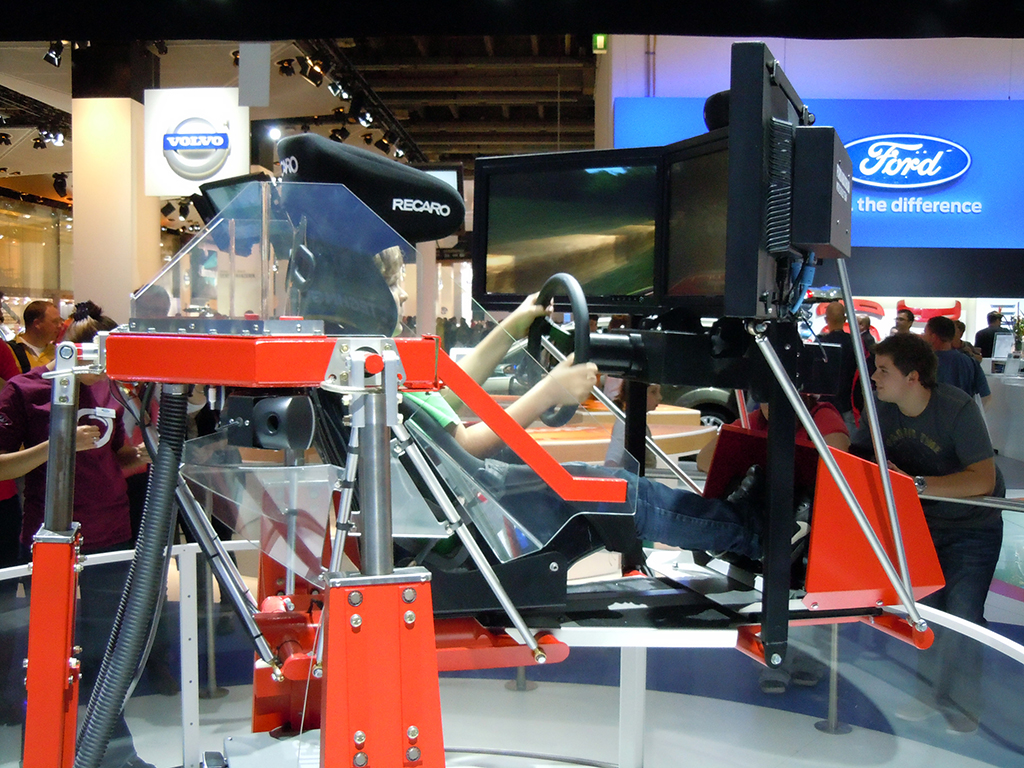
Ford Simulator

Ford, like Citroen and Volvo, set up a car simulator at its stand.

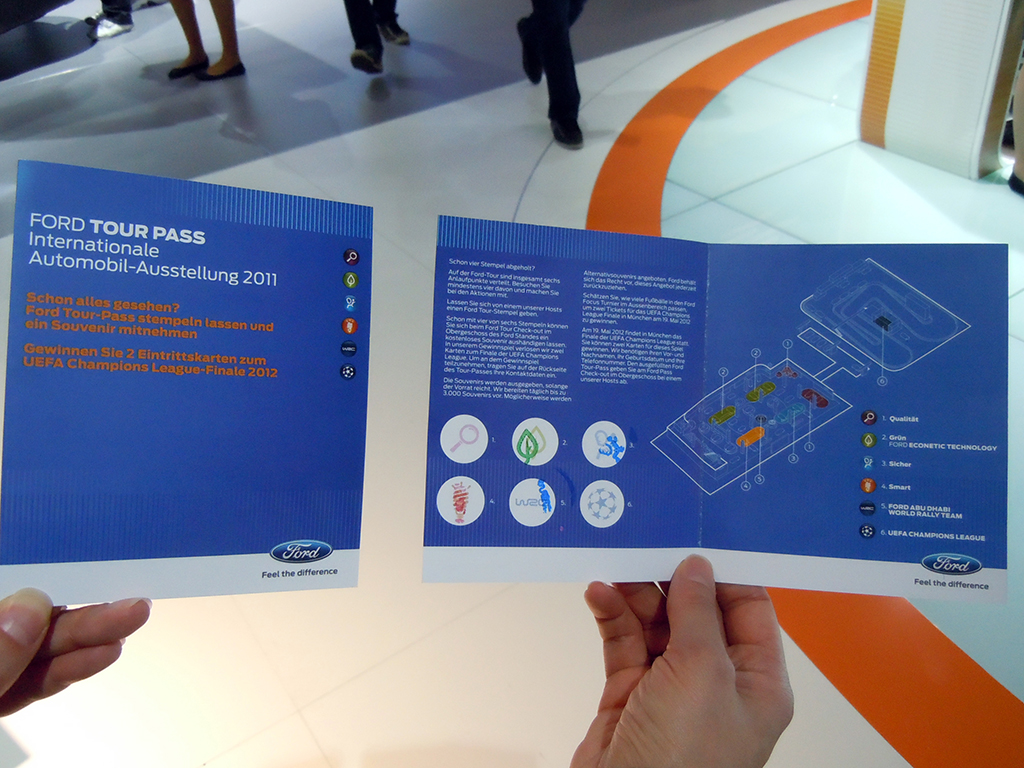
Ford Stamps

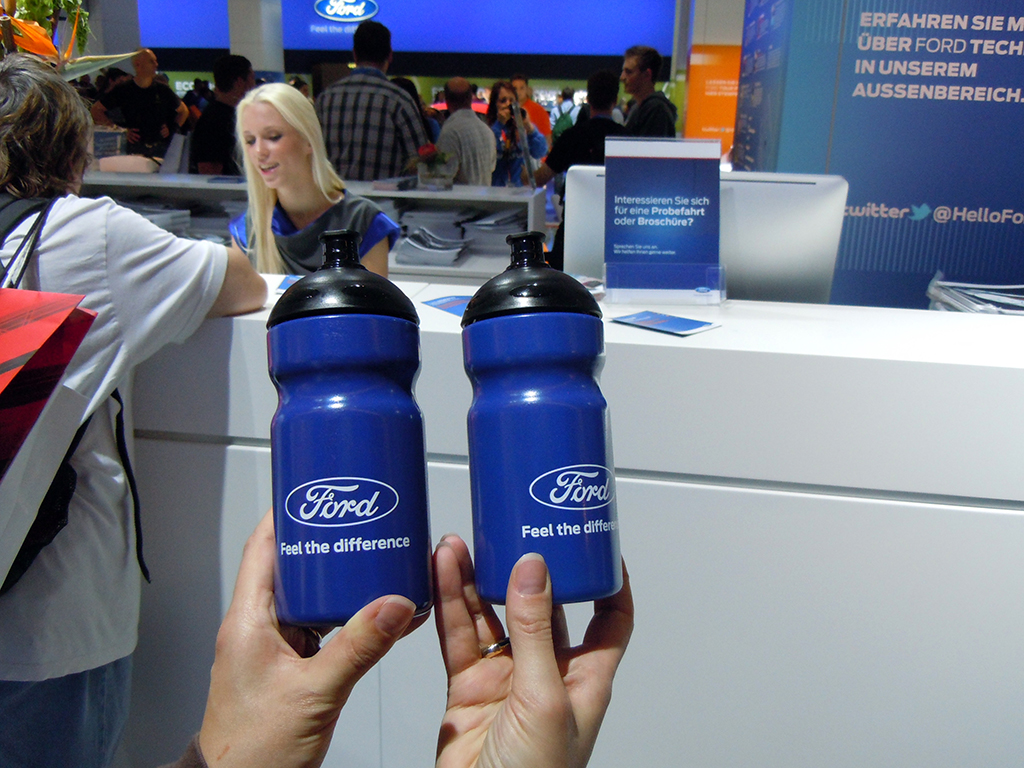
They also engaged visitors with a small “collect the stamps” game. The game made visitors go to each section of the Ford stand, correctly answer some easy questions related to the car and technology, collect the stamps, and get Ford-branded water bottles. Visitors could also play further and win two tickets for the UEFA Champions League Final in 2012.

Ford Bottles

Chevrolet

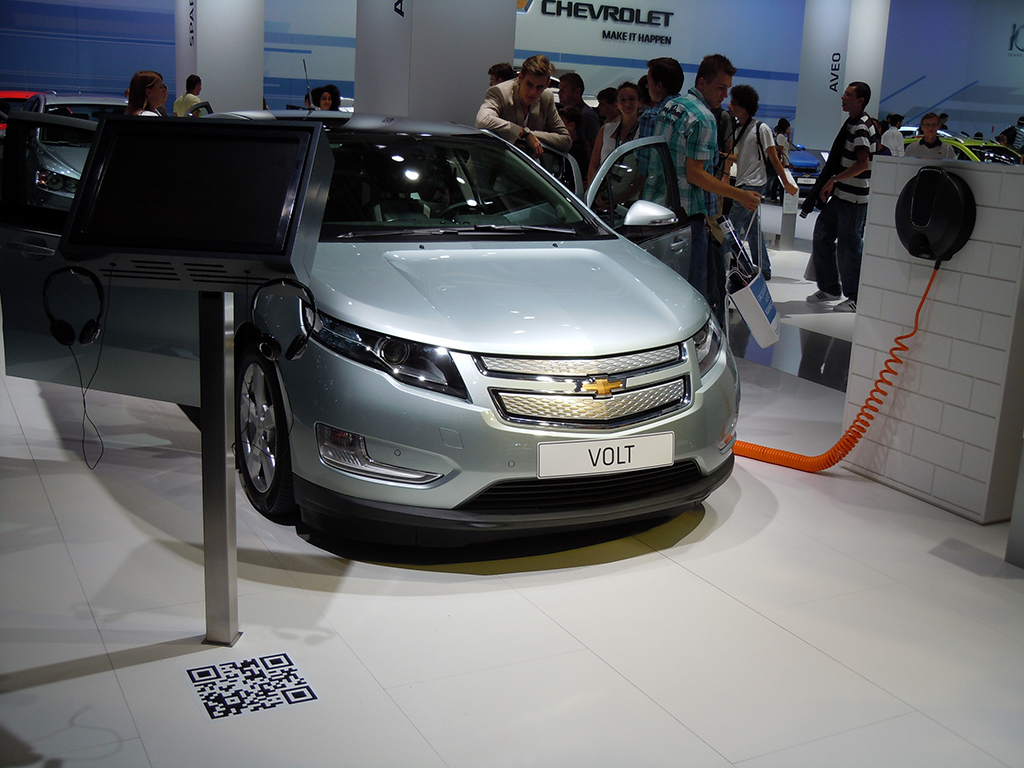
Chevrolet Volt

Visitors could scan the QR code on the floor to view a short Chevrolet Volt specs video.

Volvo

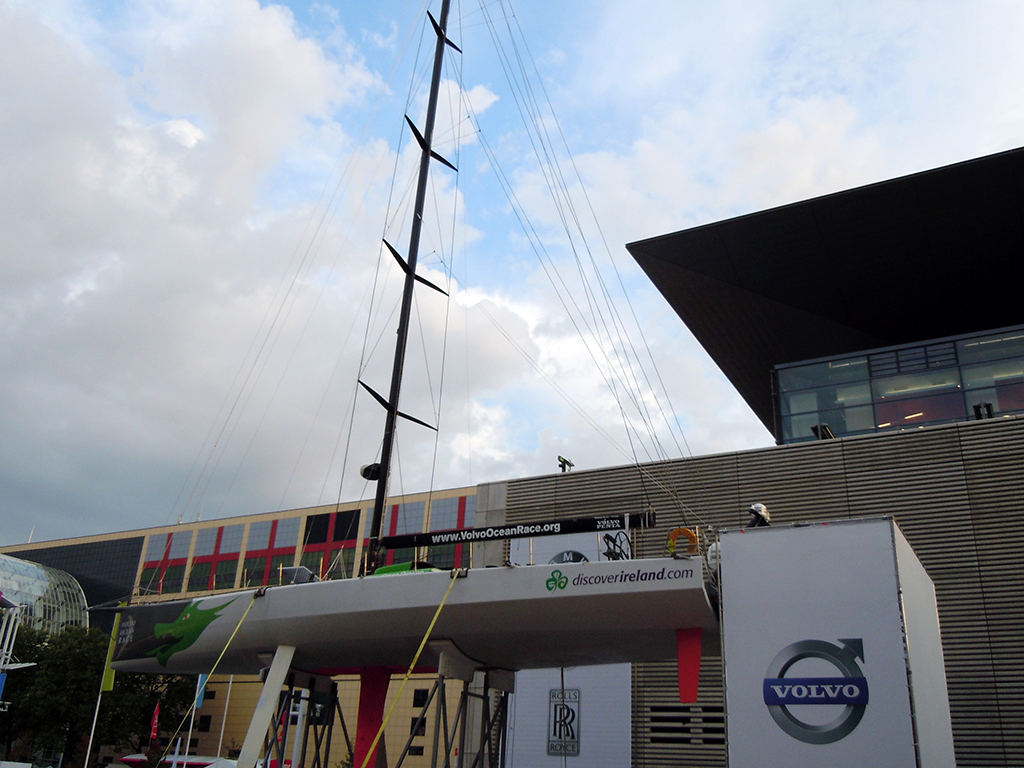
Volvo Sailing

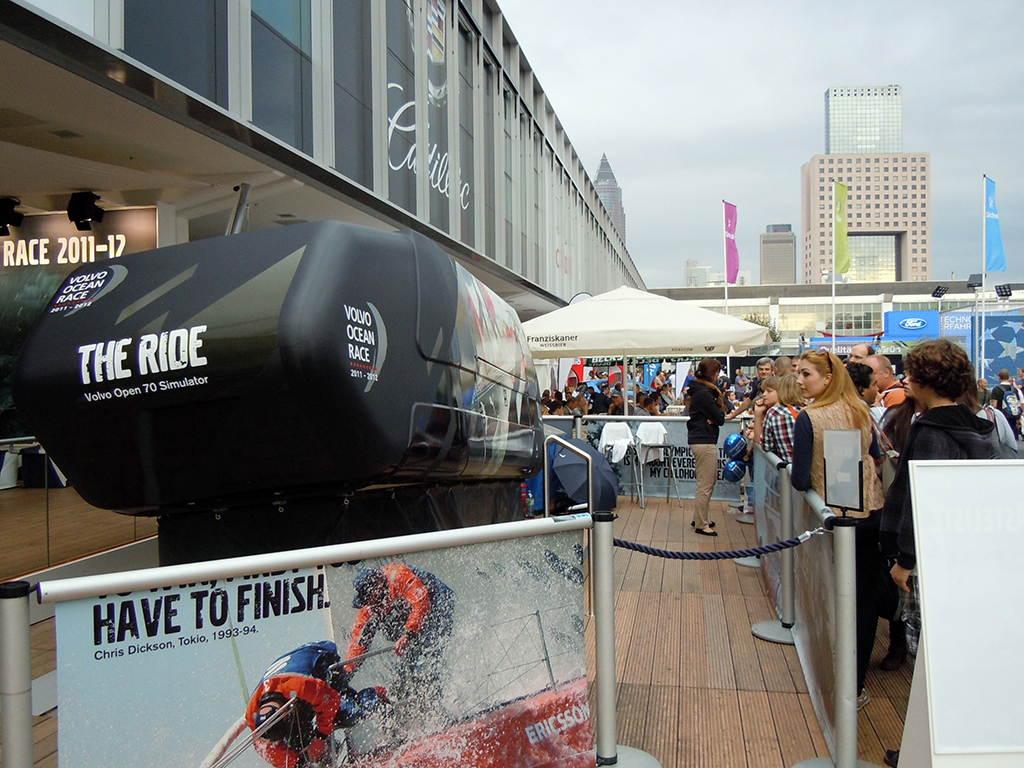
The Volvo Open 70 Simulator gave visitors a first-hand experience of what the Volvo sailing team goes through when they go sailing in the ocean.

Volvo Sailing Simulator

On taking the ride I slid steeply from left to right on the seat. There was also non-stop wind blowing on my head, with regular splashes of water. It created a strong 4D-style experience. By 4D-style, I mean the simulator added physical effects like motion, wind, and water to the visual ride.

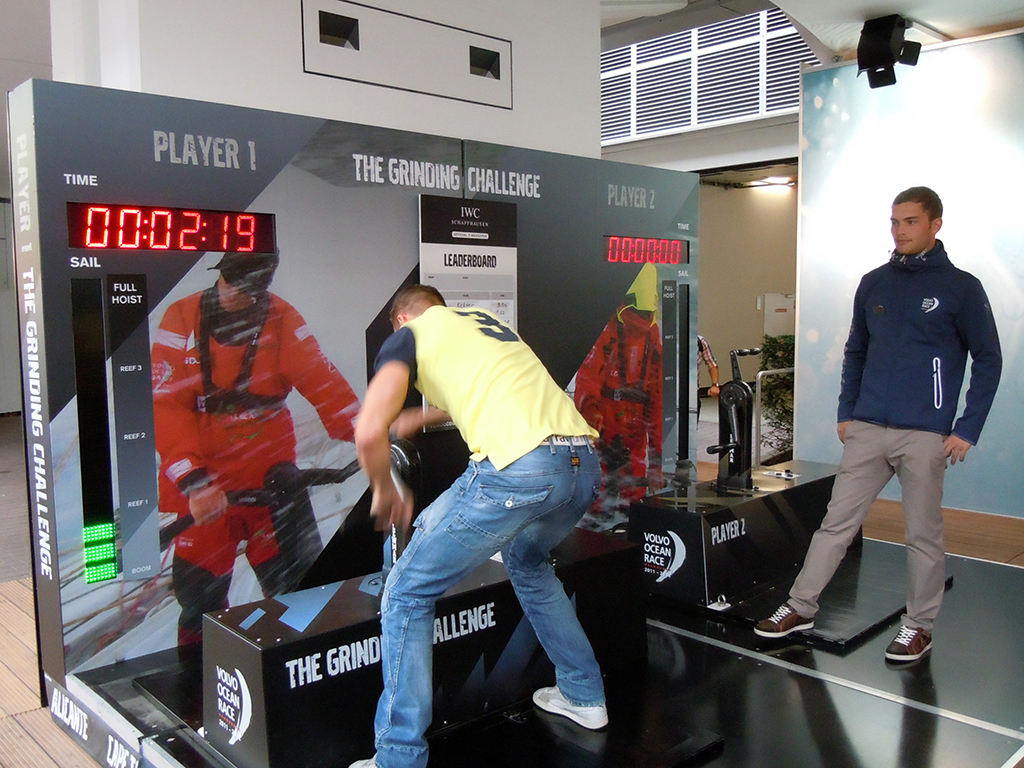
Visitors could also try to hoist a virtual sail. On my second attempt I hoisted the sail in 12.3 seconds. The current record was set at 9.03 seconds by one of the previous visitors.

Volvo Sail Hoisting

Mini Cooper

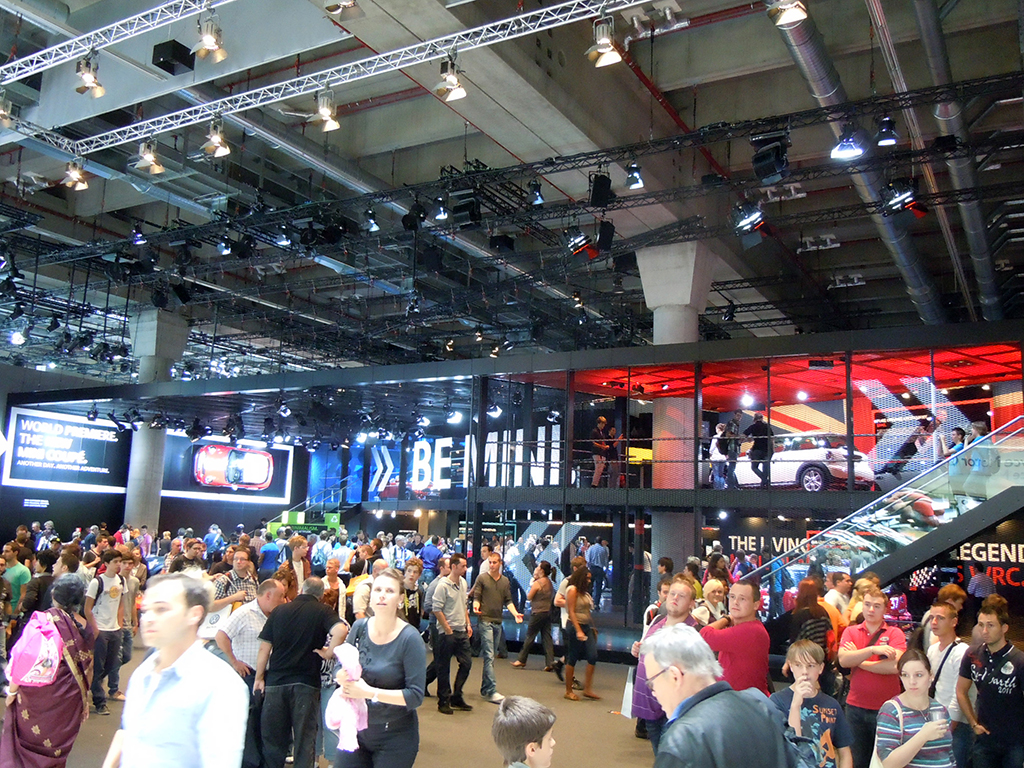
Mini Cooper stand overview

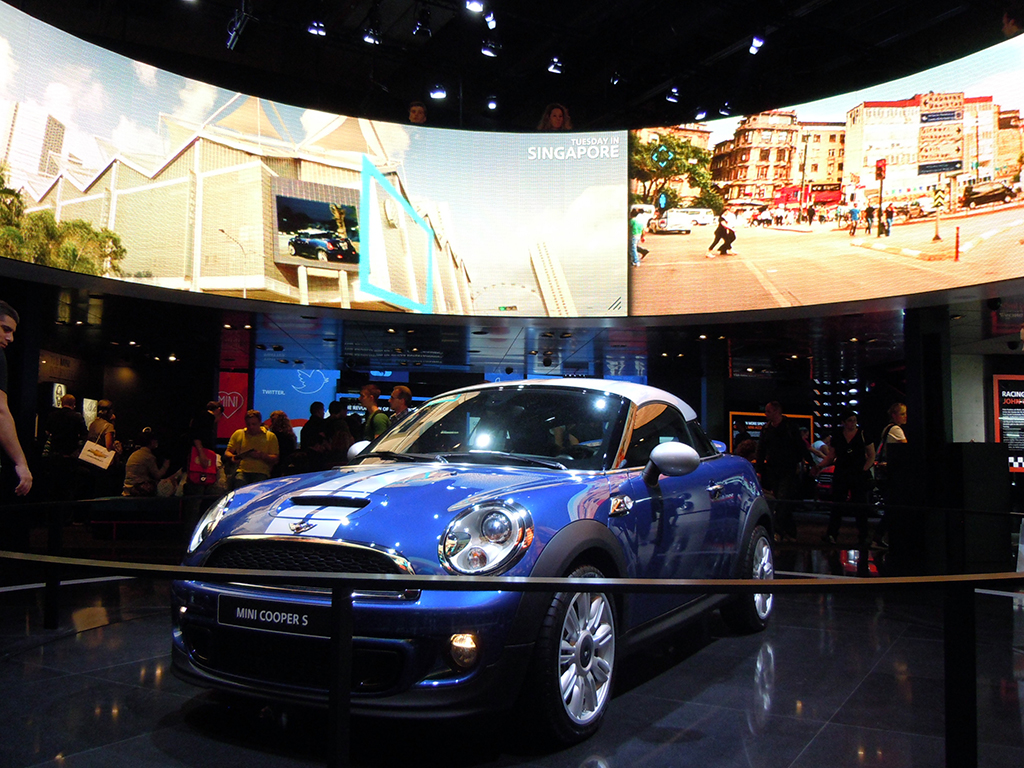
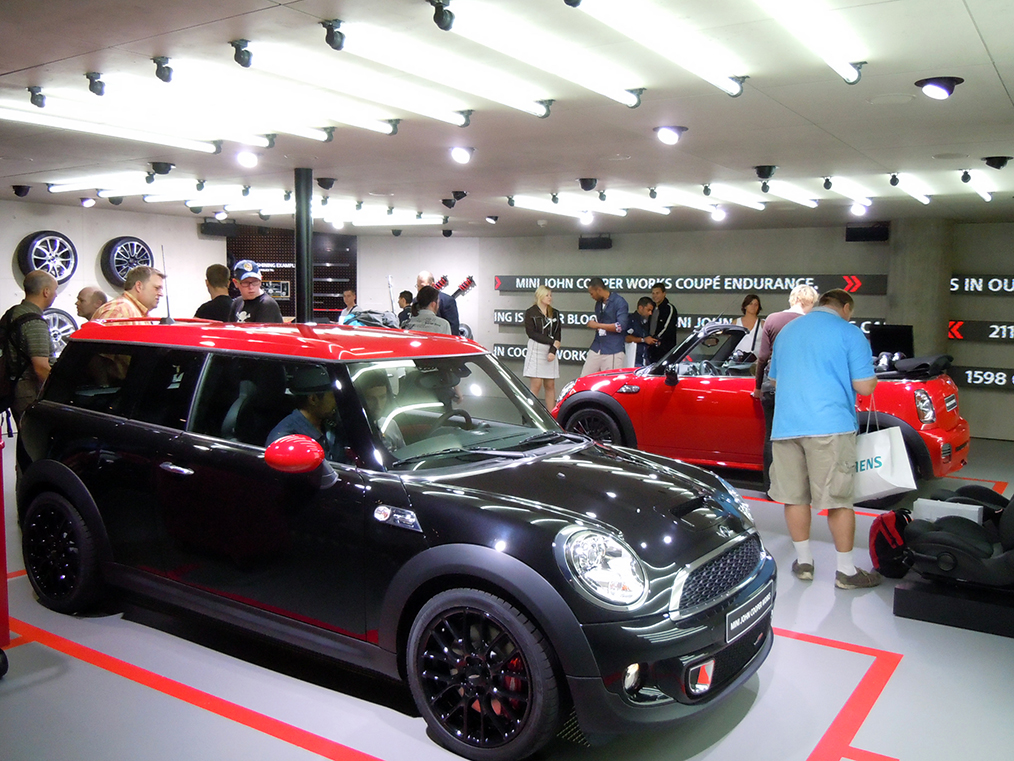
I really enjoyed visiting the Mini Cooper stand. The displays were amazing. A beautiful Mini surrounded by a bright circular display appeared as one entered the stand.

Mini Display

Minis in multiple colors were on display with various digital displays across the walls.

Mini Cooper multiple cars and wall displays

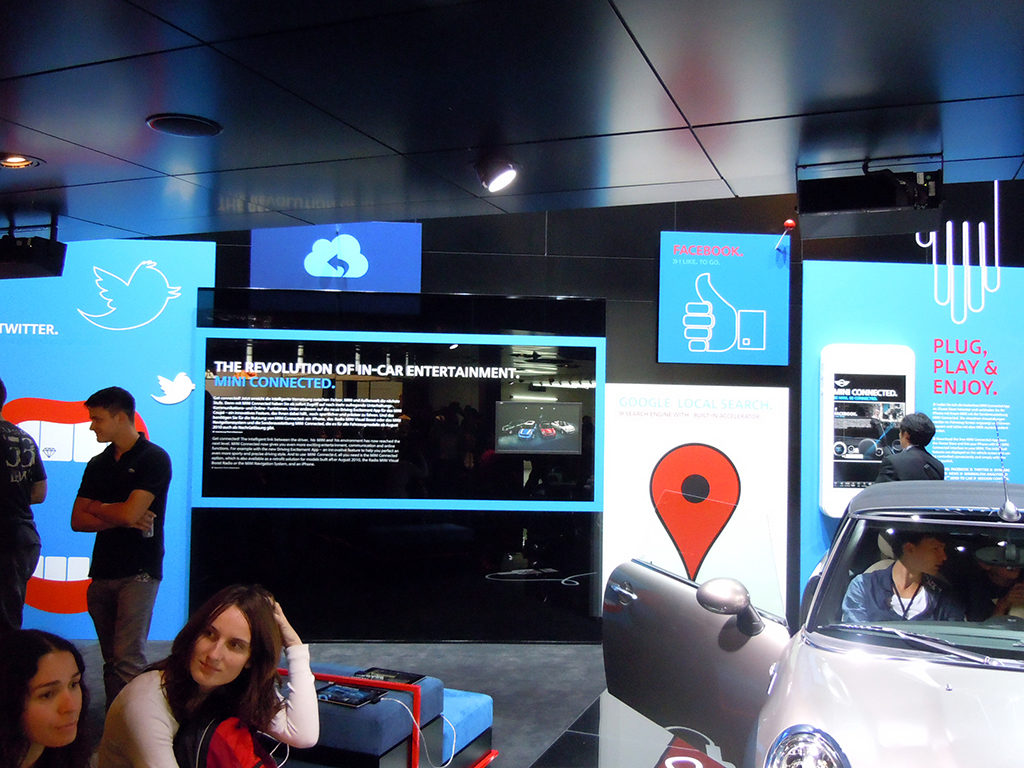
They also showcased their new iPhone app for the car, positioned as the intelligent link between the driver and the Mini. The app claimed to help the driver perfect a more sporty and precise driving style.

Mini iPhone App

I also spotted Lancia, Fiat, and Alfa Romeo promoting their iPhone apps via simple leaflets.

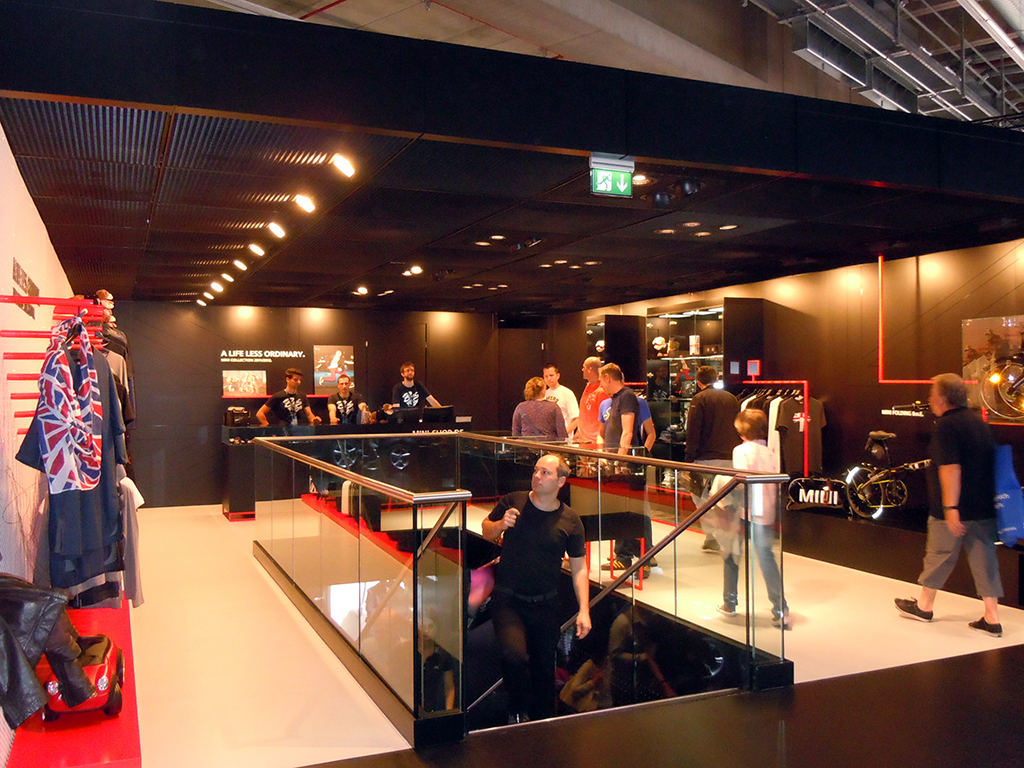
Mini Souvenirs

A souvenirs section greeted visitors on the first floor of the stand.

Got my Mini

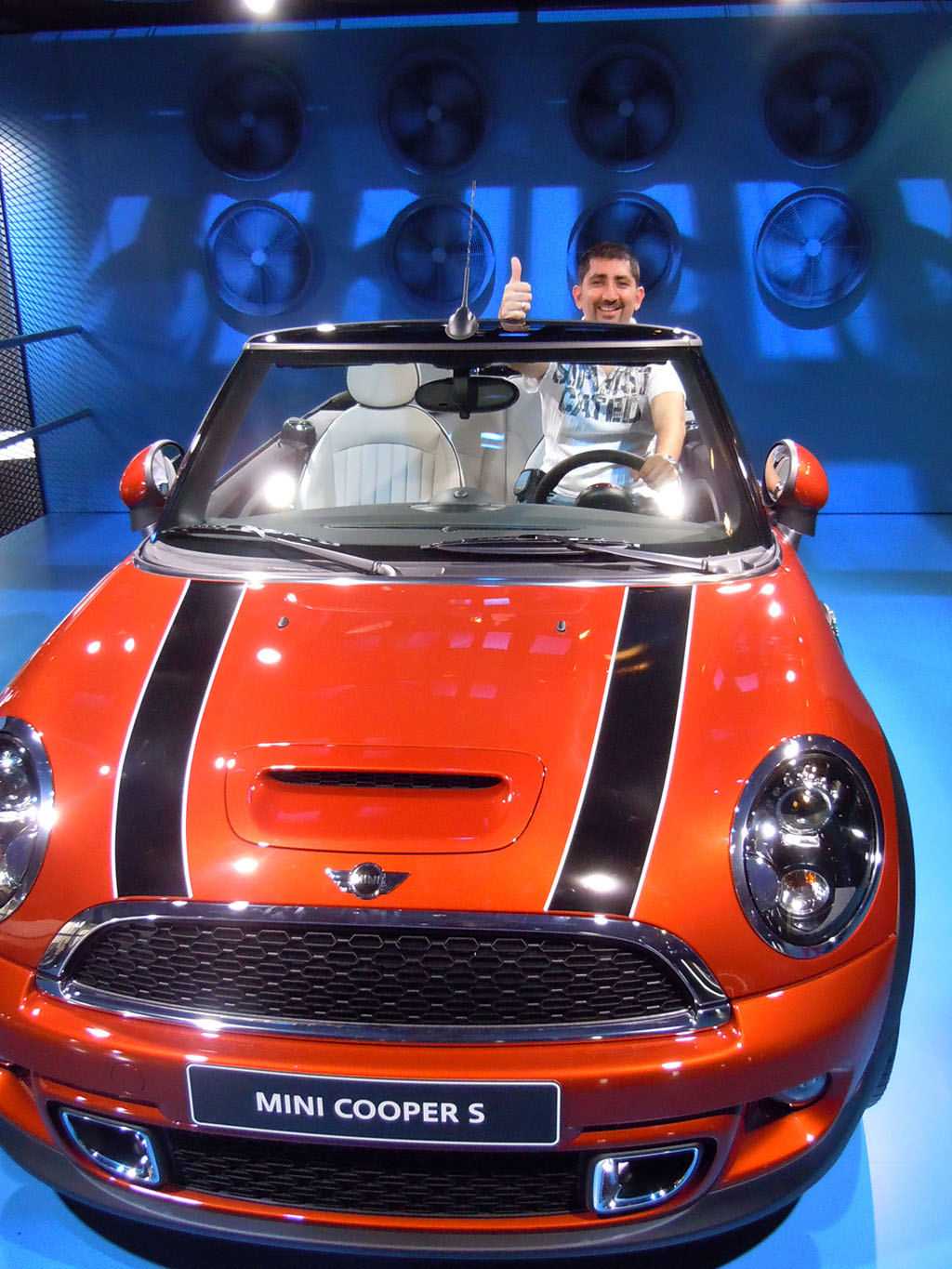
In the end I got to drive my own Mini!

BMW

BMW. Mission Impossible Ghost Protocol car

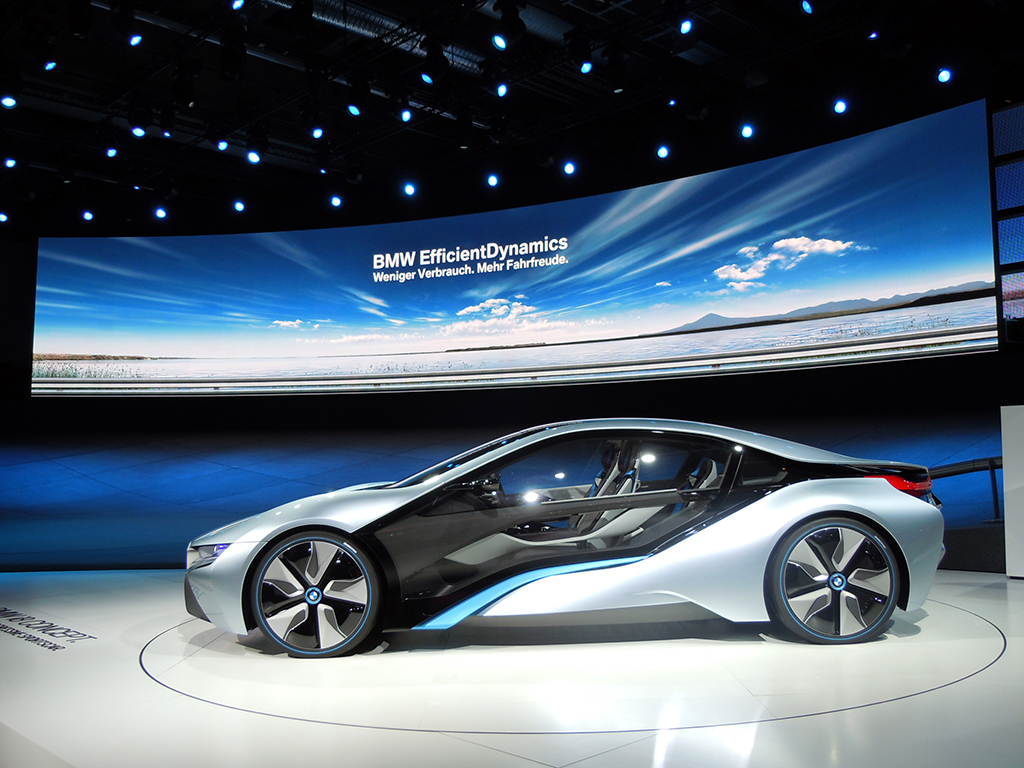
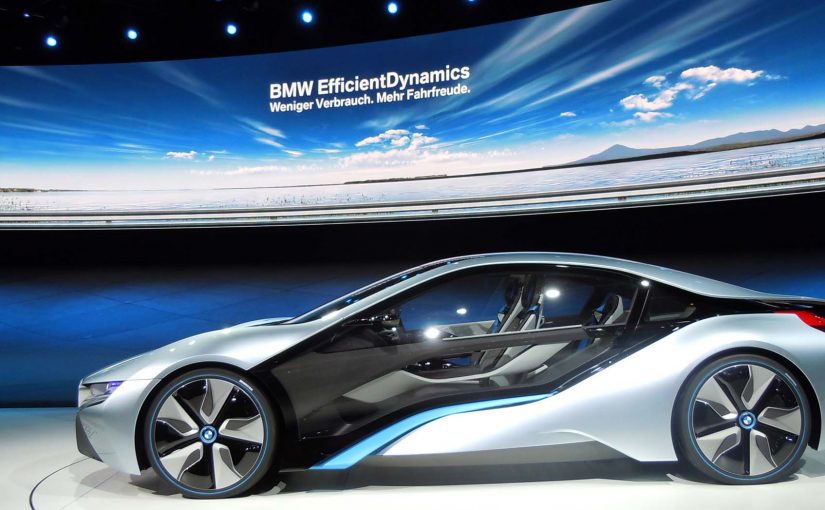
The BMW stand was the biggest in terms of size and digital displays. Two of the most stunning concept cars from IAA were here. The car from the photo above appears in the Hollywood blockbuster “Mission Impossible: Ghost Protocol.”

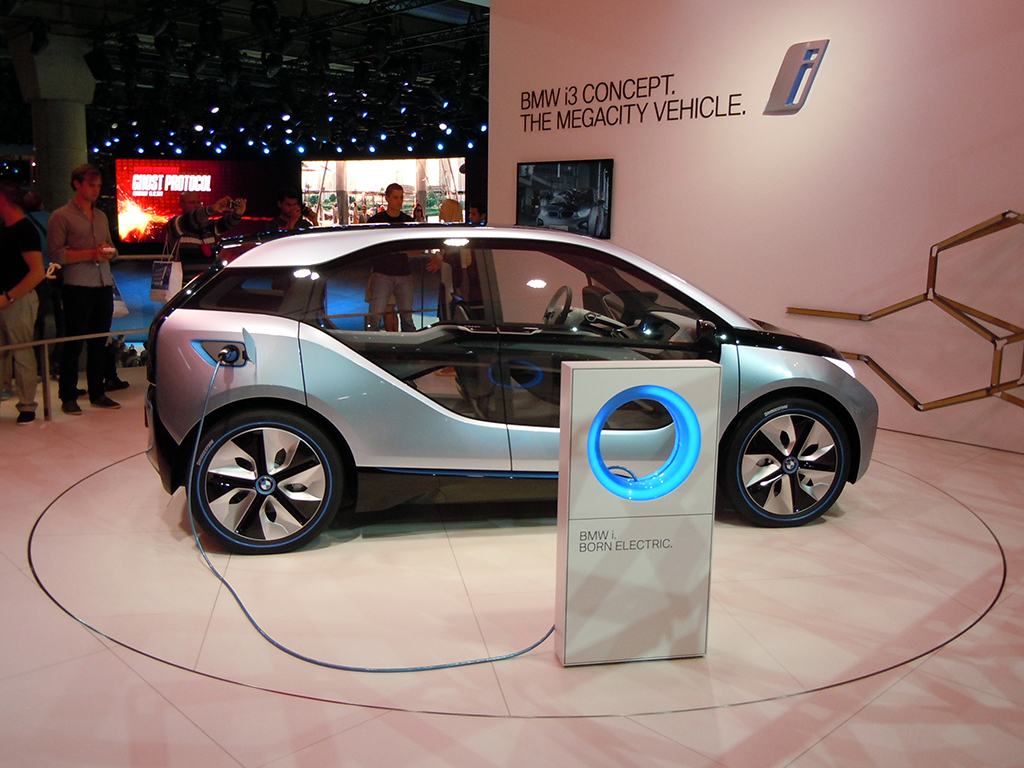
BMW i3 Concept

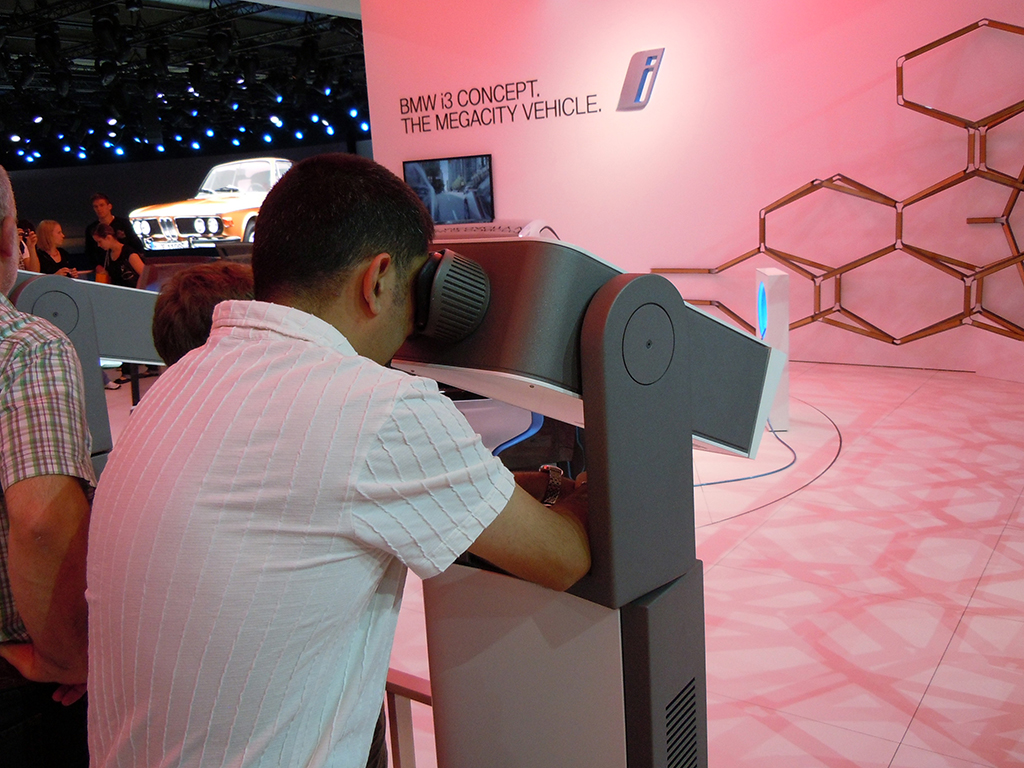
At the BMW i3 Concept city car area, I found an interactive telescope through which I could watch videos and product demos. To select a video, I had to move the telescope around and point it at what I wanted to play.

BMW i3 Concept Presentation via Interactive Telescope

Why the most memorable stands worked

The strongest activations turned product messaging into something visitors could do, not just watch. That worked because a gesture, a simulator ride, a scan, or a simple challenge gave the innovation a clearer mental hook and made the brand easier to remember after the show.

Extractable takeaway: At live events, technology earns its keep when it simplifies the story into one obvious action that visitors can try for themselves.

At large automotive trade shows, brands win attention by turning passive footfall into small, guided acts of participation.

The real question is not whether a stand looks futuristic, but whether the technology gives visitors a clear reason to interact, learn, and remember.

The best stands used technology as participation, not decoration.

Closing note from the show floor

I spent seven hours at IAA. It was totally awesome. The only car stalls I could not visit were those of Mercedes and Audi. There were simply too many people crowding those stands, and if I had waited, I would have missed at least half of what else I saw during my time there.

I look forward to the next Internationale Automobil Ausstellung in two years. Till then, this is Sunil signing off from IAA 2011.

What event teams can steal from IAA 2011

  • Make innovation physical. The strongest stands gave visitors something to do, whether that meant gesturing at a screen, taking a simulator ride, scanning a code, or testing a device.
  • Reward exploration. Ford’s stamp mechanic turned stand navigation into a simple game with a visible payoff.
  • Remove friction from participation. When key details are hard to find, as with Hyundai’s Facebook activation, the idea loses force.

A few fast answers before you act

What is this post?

A photo report of IAA 2011, focused on practical uses of touch, motion control, social mechanics, QR codes, and augmented reality on brand stands.

What is the single strongest engagement pattern across stands?

Interactive interfaces that pull visitors into exploration. Motion-based screens, simulators, and hands-on experiences that create a reason to stay.

Which activations stand out most?

Volkswagen’s gesture-based BlueMotion display. Volvo’s Open 70 sailing simulator with wind and water. Ford’s stamp-collection game that drives exploration.

Where does mobile show up most clearly?

Brands promote iPhone apps via leaflets and app demos, plus iPads used widely for specs, videos, and lead capture.

What is the practical takeaway for event experience design?

If you want people to engage at scale, make the interaction obvious, physical, and rewarding. Then make the next step easy to find.