The real master of intuition

Just last week I wrote about the Heineken Star Player app that has been designed to let fans interact in real time with the nail biting action of the UEFA Champions League.

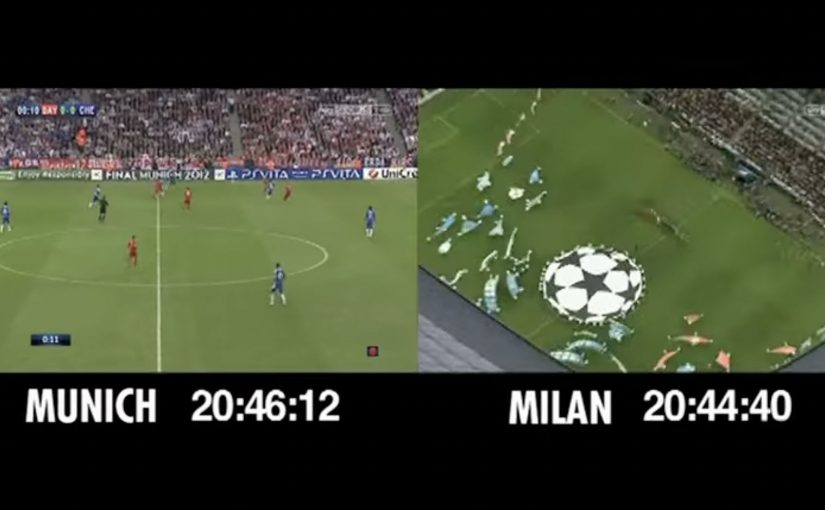
To promote the same Star Player app in Italy, Heineken decided to prank a famous sports bar in Milan which had Italian football legends Billy Costacurta and José Altafini giving live commentary on the UEFA Champions League final match. What nobody in the pub knew was that Heineken had hidden cameras everywhere and that they had delayed the match broadcast by two minutes just so that people in the audience could upstage the legends by calling shots before they were even made. 😎

Carrefour: Escaping shopping carts

A shopping cart appears where it should not be. It is spotted racing through neighbourhood streets, then turning up abandoned in unlikely corners of Rome. People start talking because the “protagonist” is absurdly familiar. The cart is the symbol of value, and now it is behaving like it has a mind of its own.

Saatchi & Saatchi Milan built this mystery for Carrefour Italia to support the rollout of 106 new Carrefour Markets in Lazio, grounded in the brand’s “Positive every day” positioning. The creative idea is simple. Value for money is an appeal people struggle to resist. So the carts become the carriers of that temptation.

The activation is designed as a two-phase integrated campaign. First, it seeds sightings and curiosity across multiple channels at the same time. Then it resolves the story by revealing where all those carts are heading.

In large-scale retail launches, integrated campaigns work best when one story can travel from street to screen to store without changing its meaning.

A teaser built like a local urban legend

The first phase plays like breaking news. A live-feeling street presence. Transit placements. News-style content. Online video. Each touchpoint adds another “sighting” so the mystery grows without needing complex explanation.

The choice of protagonist matters. A shopping cart is instantly readable, and it already carries the promise of savings. When you animate that object, you turn a pricing message into a narrative people retell.

Solving the mystery without breaking the spell

The second phase keeps the same media system but shifts the objective. It moves from “have you seen it” to “here is where it is going.” The reveal connects the runaway-cart story to the new Carrefour Market openings, so the attention converts into a clear destination and a clear reason.

Why this lands for a retailer

This is value communication that does not feel like a leaflet. It uses curiosity, pattern recognition, and a small dose of humour to make people look twice. The pricing promise stays present, but it arrives through a chase, not a claim.

What to steal for your next multi-location rollout

  • Choose a protagonist that already means something. Everyday objects can carry brand meaning faster than mascots.
  • Design a two-step rhythm. Tease first, then resolve. Mystery creates attention. Resolution creates direction.
  • Let every channel play a specific role. Street for credibility. Transit for frequency. Online for amplification. Press for legitimacy.
  • Make the reveal point somewhere real. The story must end at the store door, not inside the ad unit.

A few fast answers before you act

What is “The Mystery of the Escaping Shopping Carts”?

It is an integrated Carrefour Italia campaign where shopping carts are staged as “escaping” across Rome to build curiosity, then the story resolves by linking the carts to new Carrefour Market openings in Lazio.

Why use shopping carts as the protagonists?

Shopping carts are universal retail symbols and naturally connected to value for money. Turning them into characters makes the savings message feel like a story rather than a promotion.

What does “integrated” mean in this campaign?

It means multiple media channels run in parallel and reinforce the same narrative. Each channel adds sightings, social proof, or explanation, so the mystery grows consistently across the city.

Why does a teaser-and-reveal structure work for retail openings?

Because it builds attention before asking for action. The teaser creates talk and curiosity. The reveal converts that attention into a clear destination, which fits the goal of driving visits to new locations.

What is the main risk with mystery-led retail campaigns?

If the reveal is weak or delayed, people feel tricked. The payoff has to be satisfying, and it must clearly connect the story to a real store or offer.

Volkswagen: Instant Christmas Recycler

A Christmas recycler that turns responsibility into a reward

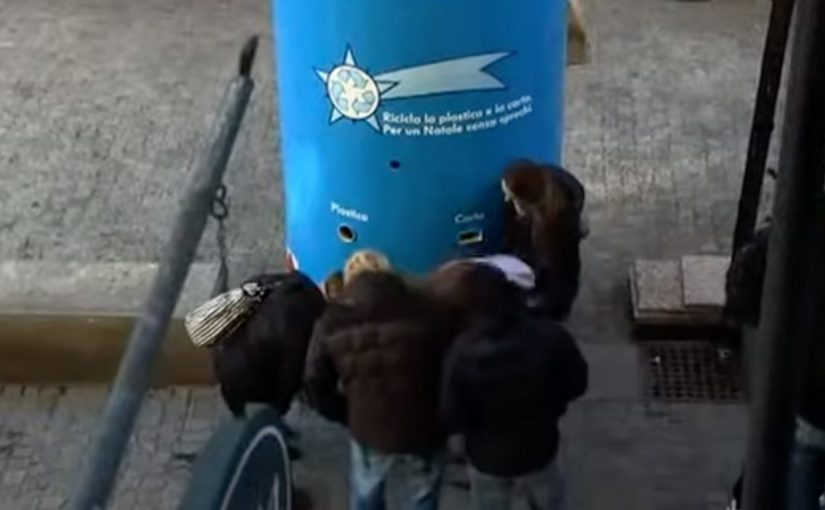
Volkswagen in Italy wanted to convince people to be more responsible towards the environment. So with the help of ad agency Now Available they created an engaging ambient ad called the “Instant Christmas Recycler”.

How the Instant Christmas Recycler works as an ambient activation

The idea is simple: put a recycling station where people are already moving, then make the “right” action feel immediately worthwhile. As described in campaign write-ups, each time someone disposed of rubbish correctly, the machine responded with an instant Christmas-themed reward. That instant feedback is the mechanism.

In retail-adjacent public environments, ambient installations can make sustainability tangible by turning small actions into visible, immediate consequences.

Why it lands: it replaces guilt with a small win

Environmental messaging often asks for sacrifice. This flips the emotional contract. It rewards the behavior on the spot, so the action feels like a game you want to complete rather than a lecture you want to avoid.

The Christmas framing matters too. It gives the act of recycling a seasonal “ritual” feel, which makes participation socially acceptable and easy to repeat.

The business intent behind the charm

This is brand reputation building with a behavioral nudge attached. Volkswagen gets to show up as a constructive actor in everyday life, while testing a simple truth: if you want people to change behavior, reduce friction and make the payoff immediate.

What to steal for your next sustainability activation

  • Reward the action, not the intention. People follow loops they can feel instantly.
  • Place it where behavior already happens. Footfall beats persuasion.
  • Make the feedback public. Visible participation normalizes the act for bystanders.
  • Keep the rules obvious. One action. One response. No instructions needed.

A few fast answers before you act

What is the “Instant Christmas Recycler”?

It is an ambient activation for Volkswagen in Italy that uses a branded recycling station to encourage responsible disposal by giving immediate feedback and reward.

What is the key mechanism that makes it work?

Instant reinforcement. When someone recycles correctly, the installation responds immediately, making the right behavior feel easy and worth repeating.

Why use an ambient installation for an environmental message?

Because it reaches people in the moment of action. It turns sustainability from a slogan into a behavior you can perform right now.

What should a brand be careful about with reward-based nudges?

If the reward is unclear, delayed, or inconsistent, the loop collapses. The response has to feel reliable and directly tied to the action.

How do you scale an idea like this beyond one location?

Standardize the behavior loop and vary the context. Same simple action and response, different placements and seasonal skins that fit local routines.