
13th Street: Last Call Interactive Horror

Last year Lacta Chocolates came up with a web-based interactive love story called Love at first site. Now Jung von Matt and Film Deluxe take the same “viewer participation” impulse into a darker genre with an interactive horror experience designed for cinemas. Here, viewer participation means the audience can influence what happens on screen instead of only reacting to it.

The movie is called Last Call by 13th Street, and it is billed as the first interactive horror movie in the world.

How the film turns a screening into a live conversation

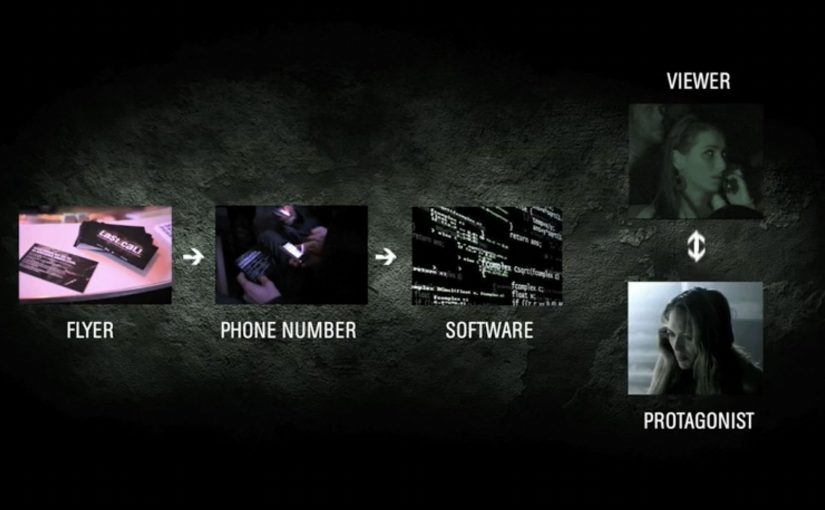
The core mechanic is simple and high-stakes. The audience can communicate with the protagonist through specially developed speech recognition that turns one participant’s answers, delivered via mobile phone, into on-screen instructions.

Instead of passively watching a character make bad decisions, one viewer gets pulled into the story and has to direct what happens next, under pressure, in front of a room full of people.

In European entertainment marketing, the strongest channel ideas are the ones that turn passive viewing into a shared physical experience.

Why it lands: it converts fear into responsibility

Horror is already interactive in your head. You are constantly thinking “don’t go in there” or “run”. Last Call makes that internal commentary explicit, then gives the viewer control at exactly the moment when tension is highest. That works because it turns private fear into public responsibility, which intensifies tension instead of interrupting it.

Extractable takeaway: If you want interactivity to feel meaningful, make the choice time-critical and socially visible. When a whole room watches one person decide, even simple branching choices feel heavier.

The intent: make a channel brand feel like an event

This is not interactivity for its own sake. It is a positioning play. The real question is whether the interaction makes 13th Street feel like the only place this kind of horror experience could happen.

The phone call is the hook, but the real product is the shared story people retell afterwards: “someone in our screening got the call”.

What to steal for your own interactive storytelling

  • Choose one decisive moment: interactivity works best when it happens at a peak, not throughout.
  • Keep the command vocabulary tight: yes or no, left or right, stay or flee. Clarity beats cleverness.
  • Make the interaction legible to spectators: the audience should understand what the caller chose without needing explanation.
  • Design for group emotion: the collective tension and reaction is part of the value.
  • Build the “retellable” sentence: “the character called an audience member” is stronger than any tagline.

A few fast answers before you act

What makes Last Call “interactive”?

A participant receives a mobile phone call and speaks choices that are translated via speech recognition into commands, which trigger different follow-up scenes.

Why use a phone call instead of a web interface?

A phone call feels personal and urgent, which matches horror. It also keeps the participant’s hands free and the interaction fast enough for a live screening.

Is this a real branching film or a gimmick?

It works like a branching structure with pre-produced scenes, selected based on a small set of recognized commands. The novelty is the live calling mechanic in a cinema context.

What is the biggest risk when copying this format?

Latency and ambiguity. If recognition is slow or choices are unclear, tension collapses. The interaction has to feel instantaneous and unmissable.

What is the transferable principle beyond horror?

Put the audience in a single, decisive role at a high-emotion peak. One clear decision, delivered fast, can create a stronger memory than many shallow interactions.

Eichborn: Flyvertising at the Frankfurt Book Fair

Jung von Matt just redefined advertising for their client Eichborn at the Frankfurt Book Fair by attaching tiny banners to 200 flies and setting them loose as miniature “sky ads” around the halls. The idea was coined Flyvertising, or “Fliegenbanner”.

A stunt that makes the logo literal

Eichborn’s brand mark is a fly. So instead of printing the fly on a poster and hoping people notice, the campaign turns the fly into the medium and lets it wander through the crowd, uninvited, and impossible to fully ignore.

The weight of the banner itself, attached with a string and some sticky stuff that allowed it to eventually fall off without harming the fly, was so that the fly could fly with it, but not very high and they kept landing on visitors.

How Flyvertising works

The execution uses ultralight banners attached with a string and a sticky material described as designed to let the banner fall off later without harming the fly. The extra weight keeps the insects from flying high, which means they repeatedly land on visitors and surfaces. In a crowded fair, that turns a wandering fly into a moving pointer that creates attention and helps people find the Eichborn stand.

In European trade-show marketing, a stunt wins when it turns wayfinding into a story people cannot ignore in a crowded hall.

Why this lands

The campaign exploits a simple truth about exhibitions. People are overloaded with signage and trained to filter it out, but an interruption that breaks the “expected media” pattern cuts through instantly. Here, the interruption also feels on-brand, because the fly is not a random prop. It is the identity asset brought to life.

Extractable takeaway: If your brand owns a distinctive symbol, find a way to make that symbol behave like media in the real environment where attention is hardest to earn, and let the medium carry the message.

What Eichborn is really buying

The real question is whether a trade-show stunt can turn a hard-to-find stand into the story people repeat across the hall. This is smart exhibition marketing because it fuses wayfinding with a brand asset people will talk about. This is not about explaining a book list. It is about generating foot traffic, conversation, and memorability around a stand number in a hall full of publishers. The flies do the work of a promoter, and the story spreads faster than any brochure.

What to steal for your next event activation

  • Let the identity asset drive the idea. The closer the stunt is to the brand symbol, the less it feels like random noise.
  • Design for physical proximity. A trade show is won at arm’s length. Make the experience land close enough to be felt.
  • Build a “tellable” moment. If a visitor can summarize it in one sentence, it travels through the venue for you.
  • Plan the ethics and the optics. If living things are involved, the “no harm” claim needs to be credible and easy to defend.

A few fast answers before you act

What is Flyvertising?

Flyvertising is an ambient trade-show stunt where Eichborn released flies carrying ultralight mini-banners, turning the insects into moving ads that drew attention and guided visitors toward the publisher’s stand.

Why does this kind of “living media” cut through at exhibitions?

Because visitors are conditioned to ignore static signage. A moving, unpredictable interruption breaks that filter, especially when it happens in personal space.

What makes it feel on-brand rather than a generic stunt?

Eichborn’s identity includes a fly, so the medium directly expresses the brand symbol. That alignment makes the execution easier to remember and retell.

What is the transferable principle behind Flyvertising?

The transferable move is to turn a brand-owned symbol into the delivery system for attention in the exact environment where people normally ignore messages.

What are the risks with this pattern?

Ethics, hygiene perception, and venue rules. If people feel the stunt is harmful or unhygienic, the attention flips from curiosity to backlash.