
NIVEA Creme: Second Skin Project

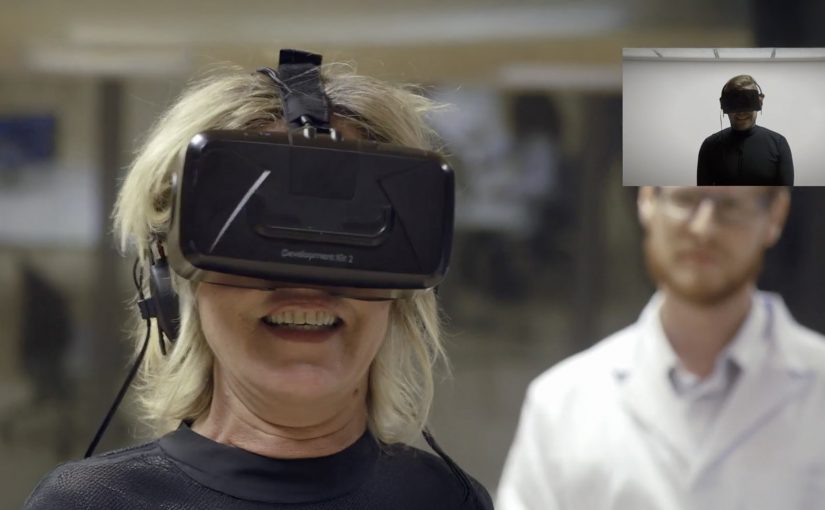
A mother puts on a headset and a skin-like suit. Her son does the same, thousands of kilometres away. The promise is simple. If they cannot be together for Christmas, technology will let them feel a hug anyway.

That is the set-up in NIVEA Creme’s “Second Skin Project” with Leo Burnett Madrid. The film introduces Laura in Madrid and her son Pablo, who is away volunteering in Paraguay. They are invited to test a “Second Skin” garment that is presented as a high-tech fabric designed to simulate human skin and transmit the sensation of touch at distance, paired with virtual reality headsets.

The story then pivots. What looks like a tech demo is used to make a point about touch, not technology. The most persuasive moment is not the suit. It is the human reunion that follows, designed to underline NIVEA Creme’s belief that nothing beats skin-to-skin contact.

The “Second Skin” mechanism that pulls you in

The film borrows credibility from advanced-sounding materials and VR. That framing creates anticipation, because the viewer wants to know whether the experiment can actually work. The suit and headset are the narrative engine that earns attention for long enough to land the real message.

In global consumer brands where heritage products compete with endless alternatives, emotional proof often carries more weight than functional claims.

The real question is whether the tech is the story, or whether it is just a credible pretext for the brand to own the value of touch.

The twist that protects the brand meaning

There is a risk with tech-led emotion. The technology can become the hero and the brand becomes a sponsor. This script avoids that by using the tech as a decoy. The reveal shifts the spotlight back to the product truth. A hug is still the best “gift” and NIVEA Creme wants to be associated with that intimacy.

Extractable takeaway: When you borrow a shiny mechanism to earn attention, make the emotional payoff explicitly restate what the brand believes, or the gadget takes the credit.

How to use “purpose + tech” without losing the human truth

  • Use technology as the hook, not the conclusion. Let it earn attention, then pay it off with a human truth.
  • Make the brand stance explicit. Here the stance is clear. Technology can be amazing, but touch matters more.
  • Cast real stakes. Distance, holidays, and family history make the outcome feel earned.
  • Keep the product role emotional, not technical. NIVEA Creme is not “the innovation”. It is the comfort cue that frames the story.

A few fast answers before you act

What is the NIVEA Creme Second Skin Project?

It is a Christmas-season film and experiment setup where a mother and son test a VR-led “Second Skin” suit that is presented as transmitting the feeling of touch at distance, then the story reveals the value of real human contact.

Why does the campaign use VR and a “second skin” suit?

Because it creates a believable question the audience wants answered. Can technology replicate a hug? That curiosity holds attention long enough for the campaign’s real point to land.

What is the core message NIVEA Creme is trying to own?

That skin-to-skin contact matters. The work uses technology to highlight that, even in a world of advanced tools, nothing replaces human touch.

What makes this more than a generic emotional video?

The narrative structure. It starts as a tech experiment, then pivots into a human reunion. That contrast makes the conclusion feel stronger than a straight sentimental story.

What is the biggest risk with “tech-as-story” campaigns?

Audience misattribution. People remember the gadget and forget the brand meaning. The fix is to ensure the emotional payoff clearly belongs to the brand stance, not the device.

Fundación Altius: Message in a Bottle

Fundación Altius (Altius Foundation) runs education support for children in Latin America, and Leo Burnett Iberia builds a fundraising action around a simple, loaded object. A bottle that carries a message.

The case film frames it as a direct marketing idea where the bottle itself becomes the medium. It turns “support education” from an abstract appeal into a tangible artifact people can notice, hold, and pass along.

How Message in a Bottle turns packaging into fundraising

The mechanism is presented as promotional packaging used as a donation trigger. Instead of relying on a poster or a banner to explain the need, the action uses a familiar container and a clear message to pull attention toward the cause, then convert that attention into money for education.

In European cause and charity communications, physical objects still outperform pure awareness copy when the goal is to move someone from empathy to action.

Why it lands

A bottle is instantly readable. It signals “take me”, “open me”, “share me”. That makes it a natural carrier for a cause message because it invites interaction without asking for it. When the fundraising mechanism is embedded in a physical cue, people do not feel like they are entering a campaign. They feel like they are responding to something human.

Extractable takeaway: If you need donations, compress the story into a single object with one clear behavior attached to it. The object becomes both the message and the moment of conversion.

What this kind of action is optimized for

This is designed to work in the messy middle of everyday life, where people do not stop for “awareness”. Here, the messy middle means the in-between moments where people are busy, distracted, and not actively looking for a cause to support. A direct marketing action that lives on an object can travel further than its media buy, because the object itself carries the pitch into new contexts.

The real question is whether your cause can be reduced to one object and one behavior without losing meaning. For donation-driven work, object-led asks are stronger than awareness-led messaging when the job is immediate response.

What to steal for your own nonprofit or CSR work

  • Attach the ask to something people already touch. Physical interaction reduces friction compared with “go to a site and read”.
  • Keep the message single-minded. One object. One message. One intended next step.
  • Make the object do the explaining. If you need a paragraph to understand the mechanic, it will not scale.
  • Build for redistribution. The best fundraising artifacts are easy to pass on, not just easy to notice.

A few fast answers before you act

What is Message in a Bottle in one sentence?

A fundraising action for Fundación Altius where a bottle and its message act as the direct marketing device that nudges people to donate toward children’s education.

Why use packaging or a physical artifact for a charity ask?

Because objects create a natural pause. They are handled, noticed, and shared, which can move people from passive sympathy to a concrete action faster than awareness media.

What makes this different from a standard donation campaign?

The medium is also the mechanism. The object carries the story and cues the behavior, so the “how to help” is not separate from the “why to help”.

What is the main risk in copying this approach?

If the object is clever but the donation pathway is unclear, attention gets spent without conversion. The artifact must lead cleanly to giving.

When does this approach work best?

It works best when the cause can be expressed through one obvious object and one obvious next step. If people need too much explanation before they understand what to do, the artifact loses its power.