
KLM Connecting Seats

KLM Connecting Seats

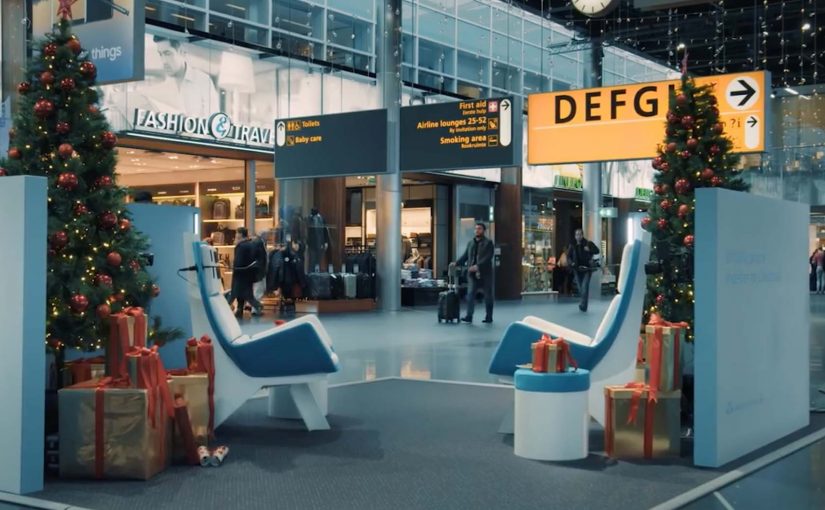
Airports are crowded with people from different backgrounds. This Christmas, KLM brings them together with Connecting Seats. Two seats that translate every language in real time, so people with different cultures, world views, and languages can understand each other.

The experience design move

KLM does not try to tell a holiday message. It creates a small, human interaction in a high-friction environment. You sit down. You speak normally. The barrier between strangers is reduced by the seat itself.

By turning translation into the interface, the seat makes the first move feel low-risk, which is why the interaction reads as human rather than branded.

The real question is how you turn a crowded, anonymous moment into a safe reason for two strangers to interact.

In global travel hubs, social friction, not language, is what keeps strangers from talking.

Why this works as a Christmas idea

Christmas campaigns often rely on film and sentiment. This one uses participation. Here, participation means travelers completing the message by talking with a stranger, not passively watching a story. That is a stronger holiday move than another sentimental film. It makes connection visible and gives the brand a role that feels practical rather than promotional.

Extractable takeaway: If you want a brand to stand for connection, design a micro-interaction that reduces first-move risk, and let participants create the meaning.

The pattern to steal

If you want to create brand meaning in public spaces, this is a strong structure:

  • Start with tension. Pick a real-world tension people already feel (crowded, anonymous, culturally mixed spaces).
  • Add a simple intervention. Introduce a small change that shifts behaviour in the moment.
  • Let interaction carry the message. Let the interaction do the work, not a slogan.

A few fast answers before you act

What are KLM Connecting Seats?

Two seats designed to translate language in real time, so strangers can understand each other.

Where does this idea make sense operationally?

In airports and other transient spaces where people from different backgrounds sit near each other but rarely interact.

What is the core brand outcome?

A memorable, lived proof of “bringing people together,” delivered through an experience rather than a claim.

What makes this different from a typical holiday film?

It shifts the message from storytelling to doing. The brand creates the conditions for connection, then travelers complete the meaning through the interaction.

How can a non-airline brand use the same structure?

Find a public setting where strangers share waiting time, introduce a simple prompt that lowers the first-move risk, and let the interaction carry the message.
KLM’s Bonding Buffet

KLM’s Bonding Buffet

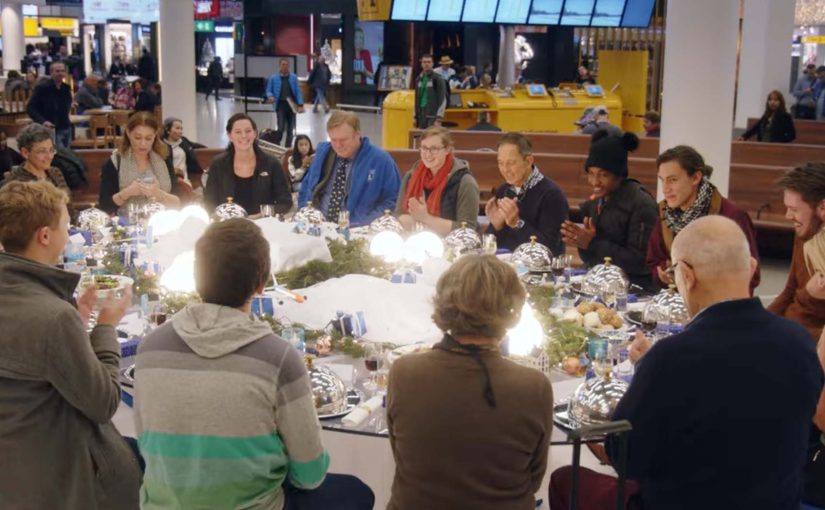
Airports can be lonely places, but Christmas is all about being together. So KLM sets up the Bonding Buffet at Amsterdam Airport Schiphol. A table with a full Christmas dinner sits 4.5 metres above the ground, clearly out of reach. The only way to bring it down is to cooperate.

The mechanic is beautifully simple. Travelers sit on the stools around the table. Each occupied seat lowers the table a little. When every seat is taken, the table is fully lowered and dinner can start. Here, “mechanic” means the rule that links each person sitting down to the table lowering.

In international airports, the fastest way to create togetherness is to make cooperation the only route to a shared reward.

As a result, people from over 20 different countries bond with each other, and the table injects some much-needed Christmas spirit into a busy airport.

The real question is how you design cooperation that feels natural in a place where everyone expects to keep to themselves.

Why this activation works so well

KLM does not “tell” people to connect. It designs a shared outcome that can only be achieved together, because the table only lowers when every seat is taken. The campaign turns a common airport truth. Waiting alone. Into a social moment with a clear reward. Engineered cooperation beats feel-good messaging every time.

Extractable takeaway: If you want strangers to connect, design a visible constraint that can only be resolved through cooperation, then reward the group immediately when they commit.

There are three tight design choices that make it land:

  • A visible constraint. The meal is there, but unreachable.
  • A cooperative mechanic. Everyone has a role. One seat at a time.
  • A shared payoff. The dinner only happens when the group commits.

The brand story is embedded in the experience

This is brand storytelling through behavior, not messaging. KLM positions itself as the airline that understands what travel feels like. Disconnected. Transitional. Sometimes lonely. Then it engineers a moment that flips the emotional state from isolation to togetherness.

The experience is also culturally portable. You do not need language to understand it. Sit down. Help lower the table. Eat together.

What to steal from this if you build live experiences

The transferable lesson is not “build a giant table.” The lesson is how to design bonding:

  • Make the goal obvious.
  • Make the mechanic collaborative, not competitive.
  • Make the payoff immediate and human.
  • Make it impossible to complete alone.

When those conditions are true, the social outcome becomes the content.


A few fast answers before you act

What is KLM’s Bonding Buffet?

It is a Christmas activation at Amsterdam Airport Schiphol where a dinner table starts 4.5 metres high and only lowers when travelers sit together on all seats.

How does the table come down?

Each person who sits on a stool lowers the table a bit. When every seat is taken, the table fully lowers and dinner begins.

Where does it take place?

KLM staged the Bonding Buffet at Amsterdam Airport Schiphol.

What human outcome is KLM designing for?

The activation is designed to help strangers bond, turning lonely transfer time into a shared Christmas moment.

Why is this a strong brand move?

KLM expresses its brand through an engineered experience that changes traveler behavior, not through slogans.

NIVEA Creme: Second Skin Project

NIVEA Creme: Second Skin Project

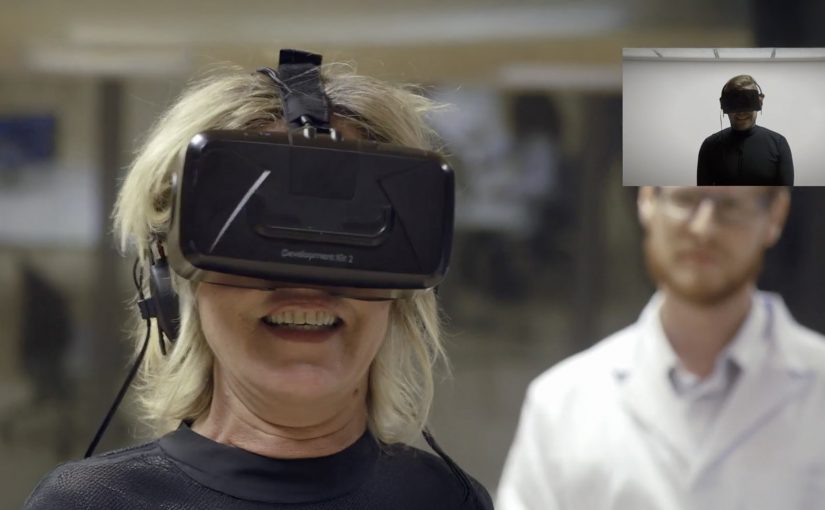
A mother puts on a headset and a skin-like suit. Her son does the same, thousands of kilometres away. The promise is simple. If they cannot be together for Christmas, technology will let them feel a hug anyway.

That is the set-up in NIVEA Creme’s “Second Skin Project” with Leo Burnett Madrid. The film introduces Laura in Madrid and her son Pablo, who is away volunteering in Paraguay. They are invited to test a “Second Skin” garment that is presented as a high-tech fabric designed to simulate human skin and transmit the sensation of touch at distance, paired with virtual reality headsets.

The story then pivots. What looks like a tech demo is used to make a point about touch, not technology. The most persuasive moment is not the suit. It is the human reunion that follows, designed to underline NIVEA Creme’s belief that nothing beats skin-to-skin contact.

The “Second Skin” mechanism that pulls you in

The film borrows credibility from advanced-sounding materials and VR. That framing creates anticipation, because the viewer wants to know whether the experiment can actually work. The suit and headset are the narrative engine that earns attention for long enough to land the real message.

In global consumer brands where heritage products compete with endless alternatives, emotional proof often carries more weight than functional claims.

The real question is whether the tech is the story, or whether it is just a credible pretext for the brand to own the value of touch.

The twist that protects the brand meaning

There is a risk with tech-led emotion. The technology can become the hero and the brand becomes a sponsor. This script avoids that by using the tech as a decoy. The reveal shifts the spotlight back to the product truth. A hug is still the best “gift” and NIVEA Creme wants to be associated with that intimacy.

Extractable takeaway: When you borrow a shiny mechanism to earn attention, make the emotional payoff explicitly restate what the brand believes, or the gadget takes the credit.

How to use “purpose + tech” without losing the human truth

  • Use technology as the hook, not the conclusion. Let it earn attention, then pay it off with a human truth.
  • Make the brand stance explicit. Here the stance is clear. Technology can be amazing, but touch matters more.
  • Cast real stakes. Distance, holidays, and family history make the outcome feel earned.
  • Keep the product role emotional, not technical. NIVEA Creme is not “the innovation”. It is the comfort cue that frames the story.

A few fast answers before you act

What is the NIVEA Creme Second Skin Project?

It is a Christmas-season film and experiment setup where a mother and son test a VR-led “Second Skin” suit that is presented as transmitting the feeling of touch at distance, then the story reveals the value of real human contact.

Why does the campaign use VR and a “second skin” suit?

Because it creates a believable question the audience wants answered. Can technology replicate a hug? That curiosity holds attention long enough for the campaign’s real point to land.

What is the core message NIVEA Creme is trying to own?

That skin-to-skin contact matters. The work uses technology to highlight that, even in a world of advanced tools, nothing replaces human touch.

What makes this more than a generic emotional video?

The narrative structure. It starts as a tech experiment, then pivots into a human reunion. That contrast makes the conclusion feel stronger than a straight sentimental story.

What is the biggest risk with “tech-as-story” campaigns?

Audience misattribution. People remember the gadget and forget the brand meaning. The fix is to ensure the emotional payoff clearly belongs to the brand stance, not the device.