
KLM: Disney’s Planes Pre-Screening on a Plane

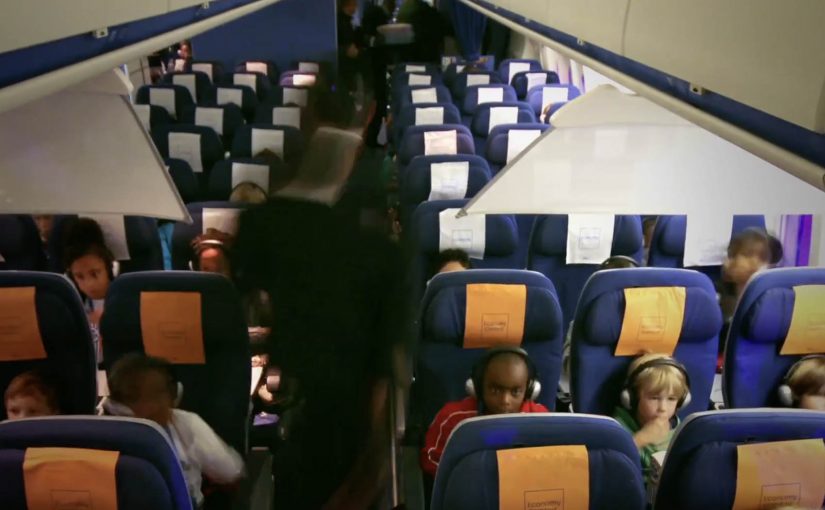
On October 2, KLM gave 300 kids an experience of a lifetime. The lucky kids were invited to a spectacular pre-screening of the new Disney film Planes.

To make the event unforgettable, KLM held the pre-screening on an actual airplane, then used timed special effects to recreate the world of Planes in a live setting around the aircraft. KLM described it as the world’s first movie experience in and around a plane.

A movie theatre that already has wings

The clever bit is not “screening a film on a plane”. That is normal. The clever bit is synchronizing the environment with the story so the audience feels like the film has leaked into real life.

In airline and travel brands, immersive launches work best when the setting is native to the promise you sell.

The real question is whether your launch idea could only happen in the world your brand already owns.

This is worth copying because it makes the brand story feel inevitable rather than advertised.

The most memorable launches turn passive viewing into a physical moment that people can retell in one sentence.

Why it sticks

It sticks because the story, the setting, and the timed effects all reinforce the same feeling, and the audience experiences it rather than just watching it.

Extractable takeaway: Immersive brand experiences land when the environment is part of the content. If you can make the setting behave like the story, you create a memory people repeat for you.

It collapses brand and story into one setting. An airline is already a stage for travel narratives. Parking a film about aircraft inside a real aircraft makes the connection immediate.

It treats immersion as service, not spectacle. The effects are not there to show off production budget. They are there to make the kids feel looked after and included in something that cannot be repeated at home.

It earns conversation because the headline is simple. “They screened Planes on a plane” is a line anyone can pass on. The live effects turn that line into a story worth sharing.

Steal the sync-moment playbook

  • Pick a venue that makes your message inevitable. The location should do half the explaining before a single word is said.
  • Design “sync moments”. By “sync moments” I mean timed physical cues that match a few key beats so people feel the story, not just watch it.
  • Optimize for retellability. If the concept cannot be summarized in one sentence, it will not travel as earned media.
  • Make the audience the hero. For kids especially, the emotional memory is the product. The brand benefit follows.

A few fast answers before you act

What did KLM actually do here?

They hosted a pre-screening of Disney’s Planes for 300 kids inside a real aircraft and staged timed effects around the plane to mirror moments from the film.

Why is the airplane venue more than a gimmick?

Because it is native to both the brand and the story. It makes the experience feel “only possible with KLM”, which is the point of experiential work.

What makes this different from a normal premiere?

The environment is synchronized to the content, creating immersion. It is closer to live theatre than to a standard screening.

What is the business intent behind an event like this?

To build brand affinity and memorability, especially with families, by creating a high-emotion story people associate with the airline.

What is the most transferable lesson?

Choose a setting that embodies the message, then add a few well-timed sensory cues that turn viewing into a felt experience.
smart: eBall interactive ping pong duel

At the Frankfurt Motor Show (IAA) in 2011, Daimler promoted the third generation smart fortwo electric drive with a special interactive game event. Berlin-based Proximity BBDO designed a game called eBall that translates the joy of a highly responsive car into something visitors can play.

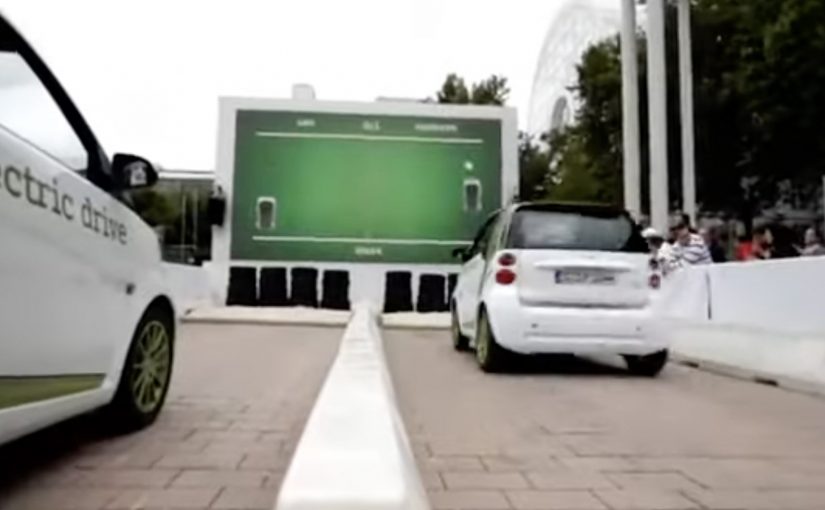
Visitors sign up with their driver’s license, get quick instructions on forward and reverse, and then step into a live ping pong duel. Instead of a controller, they use the car itself. Driving forward and back moves the “paddle,” with measurement technology tracking the rally on a large display.

When “responsive” becomes the gameplay

Electric drive messaging often struggles because it is full of abstractions. Efficiency, torque, responsiveness. eBall makes one of those claims physical. The faster and more precisely you control forward and reverse, the better you play. That is a rare alignment. The product behaviour is the mechanic.

Extractable takeaway: If your product promise is about control, speed, or precision, build an experience where performance is visible to a crowd and felt by the participant in under a minute.

In European automotive launches, live interaction works best when it turns a technical attribute into a simple skill people can feel and repeat.

The real question is whether your interaction turns the claim into a repeatable skill, not a slogan.

The tech trick is invisible on purpose

As described in coverage of the installation, the paddles on the LED wall are controlled by two real smart fortwo electric drive cars using laser measurement and transmission technology. The important detail is not the hardware. It is the immediacy. When the wall responds instantly, the player trusts the cause-and-effect and stays in the duel.

Why the driver’s license step matters

The license check does two jobs. It manages safety and liability, and it creates a small “this is real” threshold. You are not playing a simulator. You are operating a vehicle in a branded arena. That seriousness increases attention, and it makes the win feel earned.

What smart is really selling here

eBall does not try to convince you with specs. It frames the car as a fun, responsive object that behaves like a sports device in the hands of the driver. The subtext is clear. If it can play ping pong with precision, it will feel effortless in tight city driving too.

Moves worth copying in event mechanics

  • Translate one attribute into one action. “Responsive” becomes “hit the ball back.” No extra storytelling required.
  • Design for spectators. The LED wall makes the game readable from distance, so the crowd becomes the amplifier.
  • Keep the control model binary. Forward and reverse is legible, teachable, and low-cognitive-load.
  • Make the feedback immediate. Interactivity only feels truthful when response is fast.
  • Engineer the queue. A duel format naturally builds anticipation and repeat attempts.

A few fast answers before you act

What is smart eBall?

It is a live event game where visitors play a ping pong style duel by driving a smart fortwo electric drive forward and backward to control a digital paddle on a large screen.

Why does ping pong fit an electric city car story?

Because it is a precision game. It makes responsiveness and control visible in a way a brochure cannot, and it fits the “small, agile, quick” associations smart wants to own.

What makes this different from a normal driving simulator?

The controller is the vehicle, and the outcome is public. That changes the psychology from private play to performance, which increases energy, memorability, and word of mouth.

What is the biggest operational risk with this kind of activation?

Latency, safety, and throughput. If the system lags, people stop trusting the interaction. If safety or queue management fails, the experience becomes stressful instead of fun.

What should brands measure in a “playable product demo” like this?

Participation rate, average dwell time, repeat plays, audience size over time, and how many people capture and share the experience, plus any downstream test-drive or lead signals.

Daffy’s: The Undressing Room

You are walking past a Daffy’s store window in Manhattan and it looks like a fashion show has moved onto the street. Models are inside the display. A crowd is outside. And the public is controlling what happens by text message.

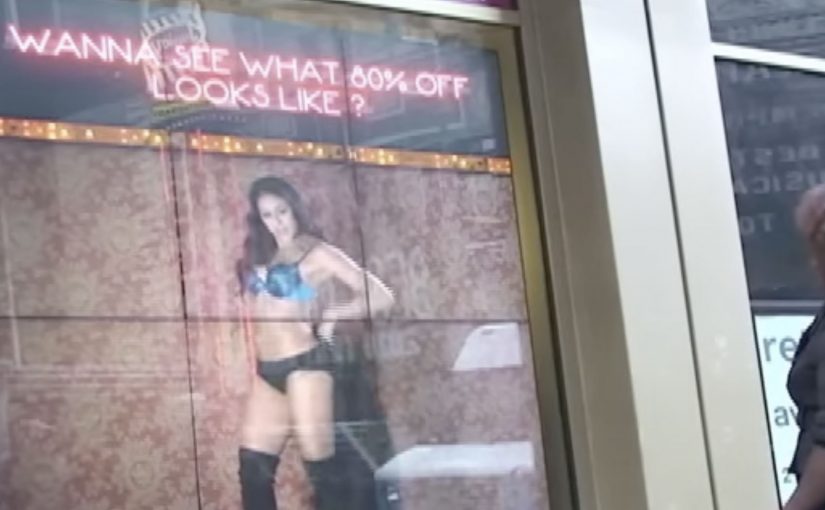
Daffy’s is a fashion retailer from NYC. For their fall fashion launch, they created a street-level event that blended window shopping, a fashion show, and an interactive peep show, meaning passers-by could text outfit requests to models inside while the exchange played out publicly on the glass, to create live interaction from hundreds of passers-by for an entire day and night.

The idea was simple. Put great-looking models in the window with items from the new range. Ask the public at street level to text a special number for each model, requesting specific items to try on and then change out of. Each message was projected onto the store window, letting the crowd follow the conversation, while the models used phones to interact with people on the street.

That shift from window to stage is what turns a shopfront into a live media channel when footfall competes with endless distractions.

Why the mechanism pulls a crowd

The mechanism is a tight loop. You text. Your message appears publicly. The model responds with an immediate, visible action. That creates instant feedback, plus social proof, because everyone can see that participation changes the experience.

Extractable takeaway: When participation is public and the response is immediate, bystanders become an audience because they can see cause and effect in real time.

It also turns fashion into a game with a scoreboard you can read. The projected message stream makes the crowd feel like a single audience, not scattered individuals passing by.

In high-traffic retail corridors, the format works best when the interaction loop is visible to everyone, not just the person who texts.

What Daffy’s is really buying

This is not just “engagement” for its own sake. It is earned attention at street level, then a shareable story that travels beyond the location. The activation is designed to make people stop, watch, talk, and tell others to come over.

The real question is whether you are designing for fast, visible participation that creates social proof, or just staging a spectacle.

This pattern is worth copying only when you can keep the loop tight and keep people safe once the crowd forms.

According to Daffy’s communications, more than 1,500 text messages were received between 6:00 p.m. and 9:30 p.m., and the event was suspended twice by NYC police due to crowd overflow impacting pedestrian and vehicle traffic.

Practical takeaways for interactive storefronts

  • Make the audience the controller. Participation should change something real, not just “send a message”.
  • Project the input publicly. Visibility creates social proof and gives bystanders a reason to join.
  • Design for fast feedback. The shorter the gap between action and response, the bigger the crowd gets.
  • Let the store be the medium. If the window is already the brand’s stage, use it as one.

A few fast answers before you act

What was Daffy’s “Undressing Room”?

A storefront window event where passers-by texted requests to models inside the window, and the messages were displayed publicly so the crowd could follow along in real time.

Why does projecting messages onto the window matter?

It turns private participation into a public feed. People see that the experience is live, and that others are actively shaping it, which increases curiosity and crowd growth.

What’s the core interaction design pattern here?

Public input plus immediate physical response. The text is the trigger. The window action is the payoff.

What makes this more effective than a normal fashion show?

Viewer control. People do not just watch. They influence what happens, and that makes them more likely to stay, share, and bring others.

What’s the biggest operational risk with this kind of activation?

Crowd control. If the moment works, it attracts more people than a normal storefront can safely handle, so permits and on-site management matter.