
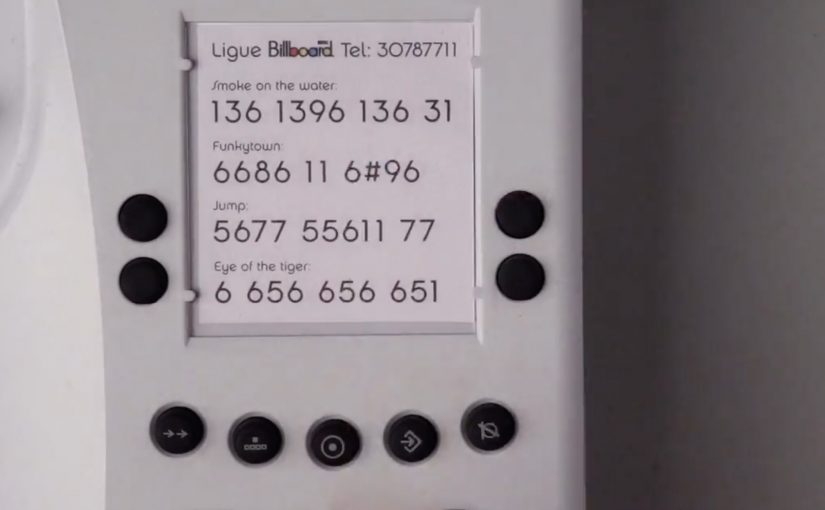
You call a magazine subscription line and get put on hold. Instead of elevator music, you get a prompt that turns your phone keypad into an instrument, so you can jam along while you wait.
Turning hold time into play time
Billboard Magazine features the best of pop music and entertainment in Brazil and, as they frame it, waiting on hold is one of the most boring music moments ever. So their ad agency AlmapBBDO creates the “On Hold Jam Session”, which makes the moment into a fun interactive experience and reflects the magazine’s concept of music and entertainment.
To make the magazine subscribers aware of this new on-hold feature, they send direct mail explaining how one could jam along with their phone buttons when they are put on hold at Billboard Magazine.
Why the mechanic is so effective
The mechanism is simple. Use the tones behind the phone keypad to trigger musical parts, so every button press feels like progress. It replaces passive waiting with viewer control, meaning the caller can shape what they hear in real time. That changes the emotional quality of the same time slice.
Extractable takeaway: If you cannot remove a wait, give people one simple action that produces immediate feedback, so the time feels shorter and more personal.
Definition-tightening: this works because phone buttons generate distinct audio tones that can be mapped to beats, riffs, or samples. The caller does not need instructions beyond “press keys to play”.
In subscription media and entertainment brands, turning unavoidable waiting into a participatory moment is a direct way to make the brand feel lived, not just consumed.
What Billboard is really buying
This is not a content campaign in the usual sense. It is a brand behavior demonstration. If Billboard is about music culture, the brand should show up even in the most unmusical moment, customer service hold time. The real question is whether your brand shows up when the customer is stuck, not only when the customer is browsing.
It also reframes a service weakness into a memorable touchpoint. The caller is more likely to tolerate the wait, and more likely to talk about the experience afterward.
Patterns for turning dead time into play
- Target dead time. Waiting, queuing, loading, and holding are underused attention windows.
- Make the first interaction obvious. One prompt, one action, instant feedback.
- Turn friction into a feature. If the wait cannot be removed, redesign what the wait feels like.
- Promote it with a physical cue. Direct mail works here because it sets expectation before the call happens.
A few fast answers before you act
What is the “On Hold Jam Session” idea?
It turns phone hold time into a playable music moment by letting callers create beats or melodies using their keypad while they wait.
Why does interactivity matter when someone is on hold?
Because it converts passive waiting into active participation, which reduces boredom and makes the time feel shorter.
How do phone buttons become a music controller?
Each keypad press produces a distinct tone that can be mapped to sounds. The system listens for the tones and triggers matching audio parts.
What is the business benefit beyond “fun”?
A better service experience, higher memorability, and a stronger brand association, plus increased word of mouth because the moment is easy to describe.
What is the main execution risk?
If the audio feedback is delayed or confusing, callers will abandon the interaction and it becomes just another frustrating hold.
