
Ralph Lauren: Polo 4D

In September 2012, Hugo Boss live streamed its Boss Black Fall Winter 2012 fashion show directly in 3D. Now fast forward to 2014 and Ralph Lauren launches their Polo for Women Spring 2015 collection via a cinematic 4D experience. Here, “4D” means a physical projection experience that uses water, light, film, and live atmosphere to create depth and immersion.

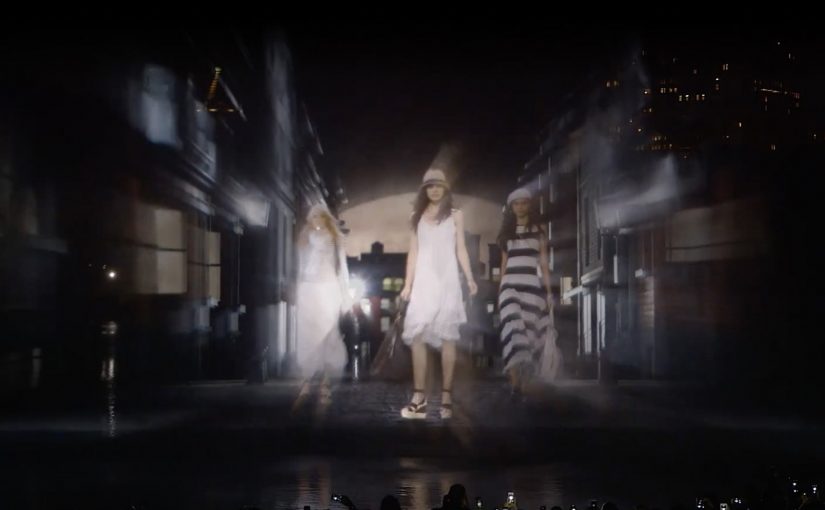
On the evening of September 8th, during New York Fashion Week, Ralph Lauren turns the idea of a runway into a 60-foot-tall water-screen projection that towers above Manhattan’s Central Park, fusing fashion, art, and technology.

A runway made of water, light, and film

The mechanism is a projection-mapped water screen that functions like a living canvas. High-resolution scenes and “models” are projected onto a fan-shaped spray of water, creating the effect of figures moving across a surface that reads as a runway, even though it is literally water.

In global fashion marketing, immersive show formats are used to signal modernity and earn attention beyond the invited audience.

Why it lands

This works because it treats the collection launch as a public cultural moment, not a closed industry ritual. The scale is instantly legible. The format borrows from cinema. The setting adds myth. Central Park at night turns the presentation into something people talk about even if they cannot describe the garments in detail. Because the water-screen illusion reduces the show to one instantly retellable image, the experience travels beyond the guests who were physically there.

Extractable takeaway: When your category is saturated with beautiful imagery, compete on format. If the show itself becomes the story, the brand gets disproportionate reach without relying on louder messaging.

What Ralph Lauren is really doing

The real question is whether the launch format can make Polo for Women feel more culturally current than a conventional runway could. Ralph Lauren is using spectacle less to explain the collection than to position Polo as a modern media brand. The 4D framing functions as a brand statement. It positions Polo for Women as contemporary and city-native, and it uses spectacle to bridge runway tradition with a media behavior that is already screen-first.

What brand launch teams can borrow

  • Choose a “native stage”. A location with cultural meaning can do as much work as the production itself.
  • Make scale part of the idea. If it reads in one glance, it travels faster in photos, recaps, and retellings.
  • Build a film, not a documentation. When the content is cinematic by design, it holds up outside the event moment.
  • Let tech serve a single clear illusion. “Models walking on water” is the story. Everything else supports that.

A few fast answers before you act

What is Ralph Lauren Polo 4D?

It is a New York Fashion Week presentation that uses a projection-mapped water screen in Central Park to stage a cinematic runway-style experience for Polo for Women Spring 2015.

Why call it “4D”?

Coverage describes it as “4D” because the visuals are engineered to feel more immersive than a flat projection, with the water spray and depth effects contributing to the illusion.

How big was the water screen?

Reporting describes a water screen around 60 feet tall and 150 feet wide.

What makes this different from a normal runway show?

It blends film, set design, and projection mapping so the “runway” becomes an environment and a story, not just a walk-and-look format.

What is the transferable lesson for brand launches?

If you want a launch to travel, design for one clear, repeatable illusion that audiences can describe in a sentence.
O2: Be More Dog

A cat decides it has had enough of being indifferent. It chases, leaps, splashes, and generally behaves like a dog. O2 UK uses that simple flip to ask people to do the same with technology. Less “meh”. More curious.

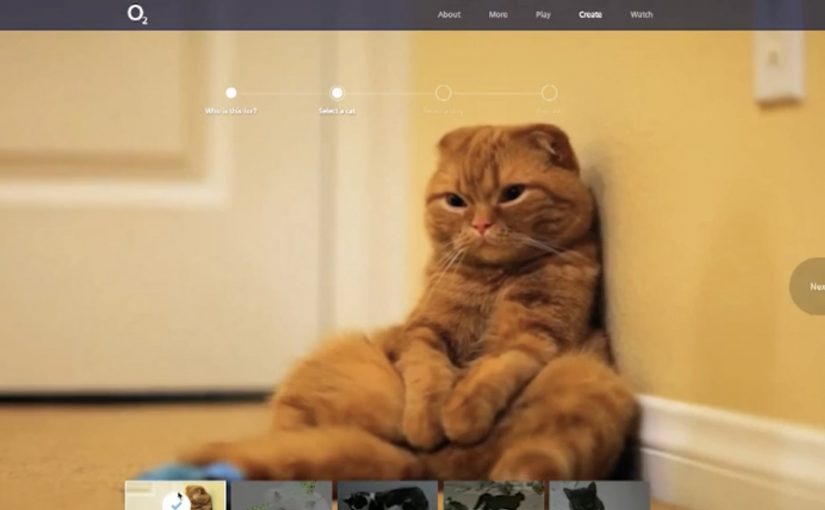
With VCCP and the Moving Picture Company, the campaign extends beyond the TV spot into a participation layer. That participation layer means the idea does not stop at the film but gives people something to do and share. On visiting www.bemoredog.com, people are greeted by a cat that acts more like a dog, then pulled into interactive play through a dual-screen HTML5 Frisbee game and a set of customisable cat videos designed for sharing.

How the integration is designed

The mechanism is a clean handoff. TV creates the character and the phrase. Mobile turns into the controller for a dual-screen game. Social carries the customisable video layer so people can pull friends into the same joke and the same attitude shift.

In UK consumer telecoms, where functional claims blur quickly, a memorable behavioural metaphor can do more positioning work than another round of feature talk.

Why it lands

It works because it uses a familiar truth. The cat-to-dog flip works because it turns an abstract behaviour change into a visual joke people understand in seconds. Cats look cool and detached. Dogs look curious and all-in. That contrast is instantly readable, and it translates directly into what O2 wants from people. Try the new thing. Explore. Stop acting like technology is background noise.

Extractable takeaway: If you want people to reframe a category, give them a single, sticky metaphor and one simple interaction that lets them experience the new attitude, not just hear about it.

What O2 is really trying to shift

This is brand positioning dressed as entertainment. The real question is how to make curiosity about new technology feel socially easy and emotionally attractive, not technically demanding. O2 is steering perception toward optimism and exploration, and using connected play to make “embracing the new” feel easy, not technical. In context, the timing also supports a broader push into newer network experiences, including 4G-era behaviour change.

What brand teams can steal from Be More Dog

  • Use one character as the bridge. The cat carries TV, site, game and shareables without needing extra explanation.
  • Make mobile do a job. Second-screen control is more convincing than a generic “download our app” prompt.
  • Build sharing into the format. Customisable videos give people a reason to tag or send, not just watch.
  • Keep the interaction lightweight. Quick play beats complicated onboarding when the goal is broad participation.

A few fast answers before you act

What is “Be More Dog”?

It is an O2 UK brand campaign that uses a cat acting like a dog as a metaphor for being more curious and enthusiastic about new technology, supported by second-screen and shareable digital experiences.

What is the core digital mechanic?

A dual-screen HTML5 Frisbee game that uses a phone as the controller, plus customisable cat videos designed for social sharing.

Why does the cat versus dog metaphor work so well?

It compresses a complex ask into a simple behavioural contrast people instantly understand, then turns that contrast into a repeatable line and a repeatable action.

What makes this an integrated campaign rather than “TV plus a website”?

The channels do different jobs that depend on each other. TV creates meaning. Mobile enables interaction. Social distributes personalised variants that pull others back into the idea.

What is the biggest way this pattern fails?

If the digital layer feels bolted on. The interaction has to express the same promise as the film, otherwise it becomes a novelty that does not move perception.