The Movie Unlocker

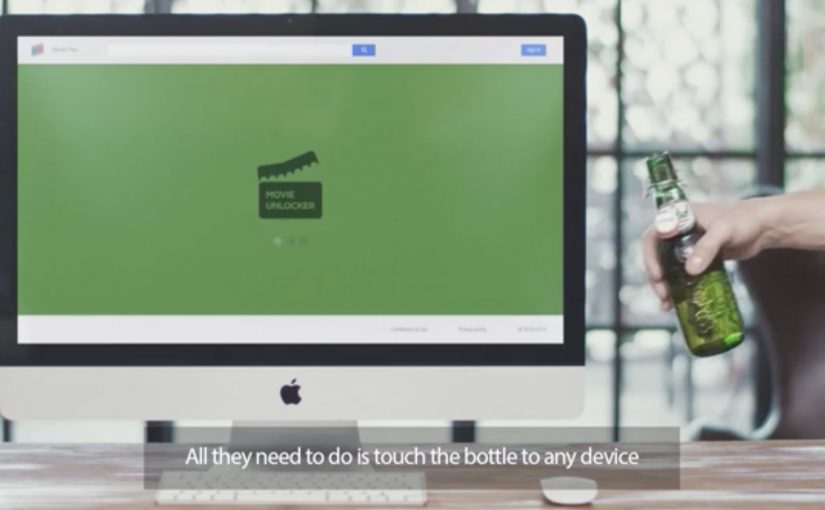
Paying for movies via credit cards are a thing of the past. Grolsch Beer from Netherlands has developed a first of its kind ‘Movie Unlocker’ technology that their consumers can use to pay for watching movies online.

Their beer bottles now come fitted with special custom made Bluetooth beacons that transmit a unique code to the movie partner website when the bottle is brought close to a laptop or smartphone that has BLE (low-energy Bluetooth) enabled. The unique code helps verify the user and gives them access to the chosen movie. 😎

T-Mobile Netherlands: The Rematch

A tiny final that deserved a real crowd

In European telco marketing, the strongest brand stories often make connectivity feel human: it is not about coverage maps, it is about helping people reconnect what mattered.

Martijn, a 39-year old carpenter, attempted to bring back his football team from 1997 for a rematch of a 13-year old championship final that was then witnessed by a grand crowd of three people.

This time, he wanted his entire village to be there to see him win. A dream enabled by T-Mobile Netherlands.

How the rematch premise worked

The mechanism was classic. Take an unfinished personal story, add a clear goal, then remove the practical barriers that made it impossible before.

Reuniting a team after 13 years is not just a scheduling challenge. It is a social one. Finding people, persuading them, coordinating them, and turning “we should” into “we did.” T-Mobile positioned itself as the enabler that made that coordination real.

Why the story lands emotionally

The psychological pull is simple: redemption.

The original match mattered deeply to the people who lived it, but it happened almost unnoticed. Three spectators is not a crowd. It is practically private. The rematch reframed the same sporting moment as something the whole village could witness, validate, and share.

It also taps into identity. A village team is not just sport. It is belonging. Bringing everyone back together turns an individual need into a community event.

The business intent behind enabling the dream

T-Mobile was not selling minutes or data here.

The intent was to associate the brand with making real-life reconnection possible. Helping people organize, mobilize, and show up. In a category where offers are easy to copy, emotional ownership is the differentiator.

What to steal for your next brand film

  • Start with a concrete, human objective. A rematch with a real stake beats any abstract message.
  • Make the “before” painfully small. Three spectators sets up a powerful contrast for the payoff.
  • Let the brand enable, not star. The hero is the person. The brand removes friction.
  • Scale the moment socially. A private memory becomes a public event. That is where shareability comes from.

A few fast answers before you act

What is T-Mobile Netherlands’ The Rematch about?

A 39-year old carpenter reunites his 1997 football team for a rematch of a 13-year old championship final that only three people watched at the time.

What is the core mechanism of the idea?

Identify an unfinished personal story, then use the brand to remove coordination barriers so the dream can happen at scale.

Why does it resonate with viewers?

It is a redemption story with community payoff. The same moment gets the crowd and recognition it never had.

What business goal does this serve for a telco?

Owning the emotional territory of reconnection and coordination, rather than competing only on interchangeable plans and pricing.

What is the main transferable takeaway?

Make the brand the enabler of a human goal, and build the narrative around contrast: what it was then versus what it becomes now.

Heineken: Walk-in Fridge

Heineken’s “Walk-in Fridge” starts with a familiar house-tour setup. A woman shows her new place to a group of female friends while her partner gives his own tour to a group of male friends. The women reach the bedroom and open doors to reveal a spectacular walk-in closet, and they erupt.

Then everyone hears an even louder scream from down the hall. The men have just been shown the ultimate kitchen appliance. A huge walk-in refrigerator completely stocked with Heineken.

In global FMCG marketing, the most durable humor is the kind that delivers a one-frame payoff you can understand with the sound off.

Why the twist works so well

The craft is all in the parallel structure. Two tours. Two reveals. Two reactions. The spot lets you predict the rhythm, then it flips the meaning. The women are thrilled by luxury storage. The men are ecstatic about cold beer on tap, at home, forever.

It is also engineered for social retelling. You can describe it in one sentence, and the punchline lands before you even press play.

What the ad is really saying about the brand

The fridge is not a product feature. It is a fantasy object. Heineken becomes the thing worth screaming for. That is premium positioning done through comedy, not copy lines.

It also uses the home as a stage for status. The walk-in closet signals taste. The walk-in fridge signals desire. Heineken wants to sit in that second category.

Distribution behavior built into the idea

This film is designed to travel online because the reaction is the asset. You do not need a celebrity. You do not need context. You just need the reveal and the scream.

That matters because the spot can earn attention in the exact environments where people skip ads, by being the kind of clip people choose to send each other.

What to steal

  • Write for a single reveal. If the payoff is clean, the audience does the distribution.
  • Use symmetry. Parallel structure makes the twist feel inevitable, then surprising.
  • Make the reaction the headline. When the reaction is the story, you get replay value.
  • Build “one-sentence retellability”. If someone can pitch it instantly, it will spread.

A few fast answers before you act

What is the core idea of Heineken’s Walk-in Fridge?

It is a parallel-reveal comedy spot. Women celebrate a walk-in closet, then men celebrate a walk-in fridge stocked with Heineken, with the men’s reaction intentionally bigger.

Why does the parallel structure matter?

Because it creates rhythm and expectation. When the second reveal hits, the audience instantly understands the joke and the contrast without explanation.

What makes this feel “premium” rather than “cheap humor”?

The fantasy object is aspirational. The walk-in fridge is framed like a luxury upgrade, not a slapstick prop, so the brand inherits desirability from the setting.

What is the biggest risk in using gender-role jokes?

They can age badly. The safest way to use them is to keep the tone playful and the insight broad, and avoid implying that one group is smarter or better than the other.

What should you measure for a film built to travel online?

Accurate retellability, completion rate, and voluntary shares. If people can repeat the premise correctly and still want to send it, the mechanic is working.