
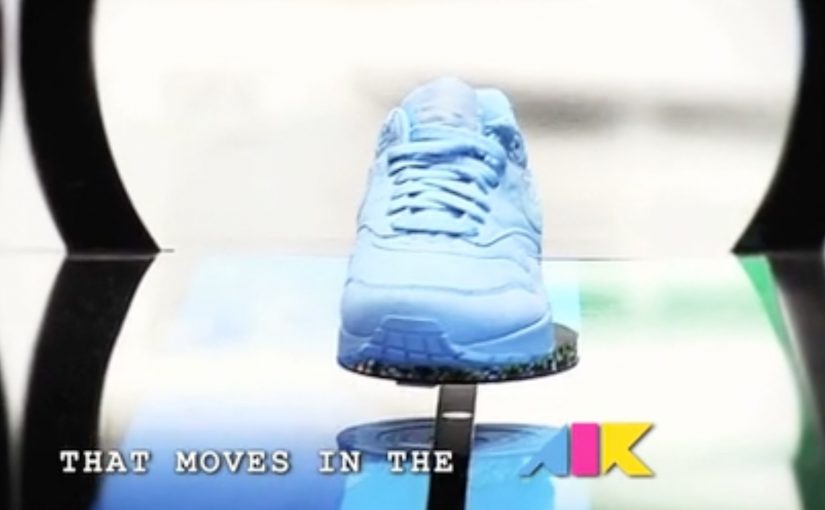
Nike Air Digital Installation

A Nike Air shoe hovers above a levitating platform in-store. The installation makes “Air” physical. The shoe looks suspended, and the display behaves like it is defying gravity.

The idea. Bringing “Air” to life

This digital installation for Nike, by +Castro and BBDO Argentina, turns the Nike Air story into something you can experience in a store. A levitating shoe platform suspends the new range of Nike Air shoes and makes the benefit feel real, not claimed.

How it works. Blow to race

The twist is that the experience is not limited to the store. If you are in-store, or even online at The Nike Air Show, you get to race the Nike Air shoes live by blowing into a microphone. The installation reads the volume of air you blow and translates it into power for your Nike Air Race. It also lets one shared mechanic run across both environments. Here, the shared mechanic is simple: blowing air is the input that powers the race in-store and online.

In retail and experiential marketing, the strongest product demos make an invisible benefit visible through a simple action the shopper can trigger.

Why it works. In-store plus online, one mechanic

The activation keeps the interaction simple and intuitive. Air in. Speed out. It also connects two environments that are usually separate. A physical point of sale moment and an online experience. Because the same input powers both versions, the idea is easy to understand, easy to demonstrate, and easy to retell.

Extractable takeaway: When a product promise is abstract, the fastest way to make it believable is to turn it into a simple user action that works the same way across channels.

What the business move really is

The real question is whether one product truth can drive attention, participation, and memory across both retail and online touchpoints.

The stronger strategy is to use one product truth across both environments, not to treat the store demo and the online experience as separate ideas.

What to steal for in-store to online experiences

  • Make the product benefit physical. The levitating platform turns “Air” into something people can literally see in-store.
  • Use one simple input as the bridge. Blowing into a microphone works in a shop environment and maps cleanly to an online race mechanic.
  • Turn a demo into a challenge. Racing converts “looking at” into “doing”, which increases dwell time and talk value.
  • Let the same idea travel across channels. The installation is the proof. The online experience is the shareable continuation.

A few fast answers before you act

What is the Nike Air digital installation?

The Nike Air digital installation is a levitating in-store platform that suspends Nike Air shoes and turns the “Air” benefit into a physical experience.

What is the interactive element?

The interactive element is a microphone-based mechanic where people blow air to generate power for a live Nike Air Race.

Where does the race happen?

The Nike Air Race happens in-store and online at The Nike Air Show.

Who is behind the work?

The work is by +Castro and BBDO Argentina.

What is the transferable pattern?

The transferable pattern is to make the product benefit tangible, then use one simple input to connect the in-store moment to a parallel online experience.
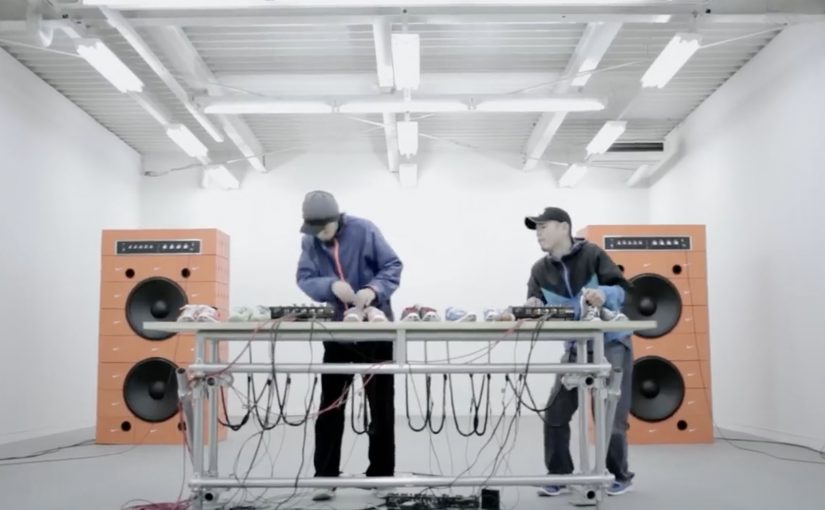
Nike: Music Shoes

Shoes as we know it are never going to be the same again. Nike has just come up with the first of its kind music shoes!

Here is a short video showing how the shoes were made…

This is the final Nike Music Shoes ad…

Why this idea feels like a shift

The shoes are not styled as fashion first. They are staged as an instrument. They are also staged as an interface. Here, “interface” means the shoe becomes a control surface that converts movement into sound. That reframing matters because it turns product into performance. Because the movement-to-sound mapping is immediate, the audience can grasp the idea without extra explanation. In global consumer marketing, proof-led product storytelling like this tends to travel further than style-led messaging. You do not watch someone wear them. You watch someone play them.

Extractable takeaway: When you introduce a new interaction, show the input and output in the same moment, so belief is earned through observable cause and effect, not claims.

  • Product becomes interface. Movement is translated into sound, which makes the shoe feel “alive”.
  • Proof in the making. The build film adds credibility and curiosity before the final creative payoff.
  • Shareable demonstration. People want to show others because the concept is easiest to understand when you see it.

What to learn from the two-video structure

Pairing a “how it was made” film with the final ad is a smart sequencing move. First you earn belief. Then you deliver the spectacle. In innovation storytelling, that order often performs better than going straight to the hero spot. The real question is whether your innovation needs a proof chapter before you ask people to share it. For novel product behaviors, lead with proof, then pay off with spectacle.

  • Earn belief first. Let the making-of do the minimum explanation needed for “this could be real”.
  • Then stage the performance. Use the final ad as the payoff where the product is “played”, not described.
  • Keep it demo-able. If a viewer cannot retell it after one watch, it will not travel.

A few fast answers before you act

What are Nike “Music Shoes”?

They are a concept where the shoe is treated like a musical instrument, translating movement into sound to create music through performance.

Why include a making-of film as well as the final ad?

The build film establishes credibility and explains just enough to make the final ad feel possible, not magical.

What is the core creative pattern here?

Turn a product into an interface, then let a live-style demonstration carry the message without heavy explanation.

How can brands reuse this idea without copying it?

Identify one product behavior you can translate into a new medium, then show both the “proof” and the “performance” as two linked chapters.

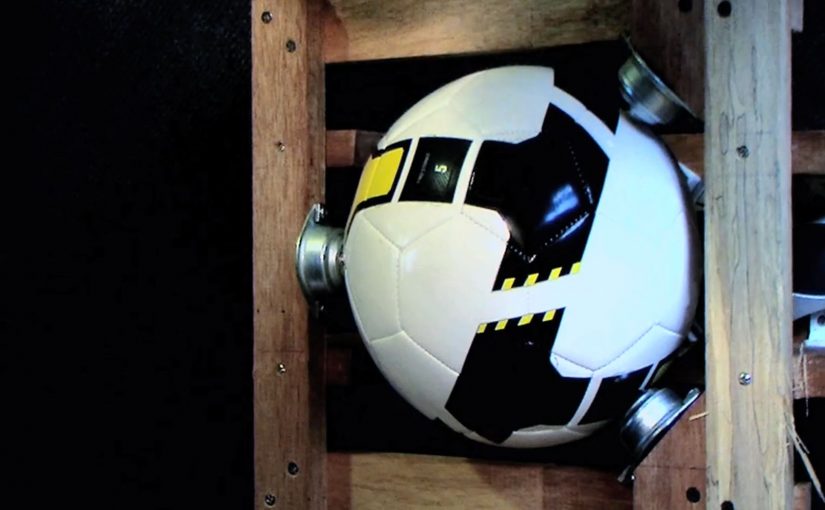
Nike: Trackball for CTR360

When Nike launched the CTR360 football boot in Singapore, they wanted something that could deliver the revolutionary features that make this product the ultimate in ball control.

So an interactive in-store experience was created where ball control and product knowledge of the Nike CTR360 was both seamless and seductive.

The real question is how to make a ball-control claim feel true within a few seconds of interaction.

For performance products, the best retail education is interaction, not explanation.

Why this retail execution works

The strongest part is that it does not separate “demo” from “education”. The interaction itself becomes the explanation. You learn by doing, and that is exactly how a ball-control product should be introduced. In performance-footwear retail, shoppers believe what they can trigger themselves without instructions. Here, “the mechanic” is the single interaction pattern that carries both the demo and the message.

Extractable takeaway: When a benefit is about control, design one self-explanatory action that proves control before you explain anything else.

  • Product truth in the mechanic. Control is demonstrated through controlled interaction, not described in copy.
  • Low friction discovery. Visitors do not need instructions to begin. The interface invites experimentation.
  • Retail as experience, not shelving. The store becomes the medium that proves the claim.

What to take from it

If your product benefit is physical or performance-based, build a retail moment that lets people feel the promise quickly. The goal is not to show every feature. It is to create one memorable proof point that makes the product easier to believe and easier to talk about.

  • Pick one proof point. Let people feel the promise quickly, instead of trying to cover every feature.
  • Make the start frictionless. Invite experimentation without needing staff to interpret what to do.
  • Design for retellability. Create a moment people can describe right after they try it.

A few fast answers before you act

What did Nike do for the CTR360 launch in Singapore?

Nike created an interactive in-store experience that demonstrated ball control while also communicating CTR360 product features through the interaction itself.

Why pair product education with interaction?

Because performance products are understood faster through demonstration than explanation. The experience makes the benefit tangible.

What is the core pattern behind this kind of retail activation?

Translate the product promise into a simple, inviting interaction. Then let that interaction deliver both the “wow” and the learning.

How do you know if an in-store experience is doing its job?

If a visitor can explain the product benefit immediately after trying it, without needing staff to interpret it, the design is working.