
#The8N8 Twitter Campaign

A celebrity tweets a question about the new Nokia N8. You spot the clue, follow the celebrity, and race to reply with the correct answer before everyone else. Do it fast enough, and you earn the follow-back. Repeat until you have eight.

The brief. Launching the Nokia N8 on Twitter

Wunderman Buenos Aires is given the task to launch the new Nokia N8 smart phone. They create a Twitter-based activation campaign called #The8N8. Here, “activation” means a participatory game on Twitter, driven by clue tweets and timed replies.

The real question is whether you can turn product features into a race people choose to replay.

This is a strong Twitter launch mechanic because it forces people to learn features under time pressure, while making the reward publicly visible.

How it works. Clues, speed, and follow-backs

  • Nokia enlists top celebrities to tweet questions, clues, and features of the phone.
  • Users find the clues, follow the celebrity, and respond correctly in the fastest time.
  • The reward is the celebrity following the user back.
  • The first eight people to get eight celebrities to follow them back win the new Nokia N8.

In consumer electronics launches on fast-moving social platforms, attention windows are short and social proof is a primary currency.

Why the follow-back works

By making the reward a follow-back from a celebrity, the mechanic converts speed and accuracy into instant social proof, which is why participants keep replaying the hunt.

Extractable takeaway: When you attach a visible status reward to answering product-feature clues fast, you can make launch messaging feel like a game instead of an ad.

Results. Reach and follower growth

The campaign is reported to reach 300,000 Twitter users. It is also reported to increase Nokia’s fan base on Twitter and Facebook by over 100%.

How to reuse the mechanic in a launch

  • Turn features into clues. Write prompts that translate key features into quick, answerable questions.
  • Make speed the differentiator. Keep the rule simple. First correct reply earns the follow-back.
  • Keep the reward visible. A follow-back is public, so the prize doubles as social proof.
  • Use a clear finish line. “Eight follow-backs” makes progress legible and creates urgency.

A few fast answers before you act

What is #The8N8?

A Twitter-based activation by Wunderman Buenos Aires to launch the Nokia N8.

What do participants actually do?

They follow participating celebrities, answer their clue tweets correctly, and do it faster than others to earn follow-backs.

What is the win condition?

Be among the first eight people to get eight celebrities to follow you back.

What are the reported outcomes?

Reported reach of 300,000 Twitter users and reported fan base growth on Twitter and Facebook by over 100%.

What is the transferable mechanic?

Turn product messaging into a speed-based game that rewards social proof. Here, that social proof is the follow-back.
Nokia Push: Connected Snowboarding in Beta

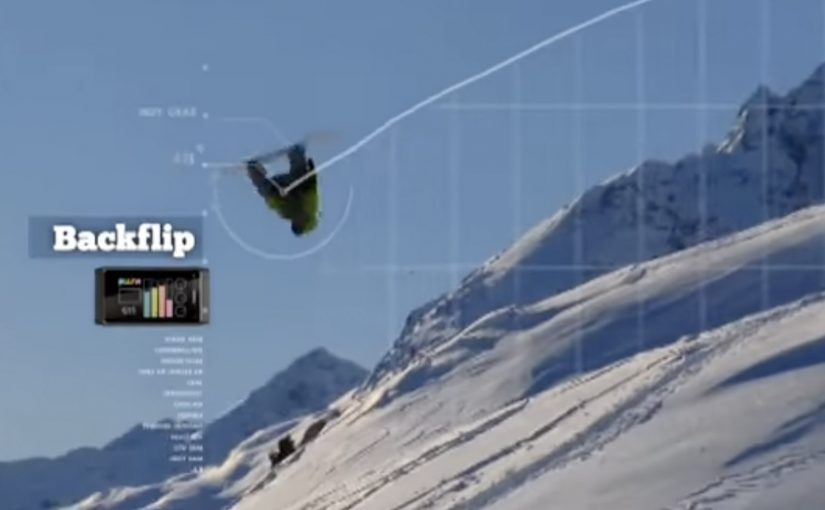
Even though Nokia has joined the Google and Apple smartphone party pretty late, they are clearly trying to innovate fast. With Nokia Push, they take a run at re-imagining snowboarding as a connected game you can play on any mountain in the world.

The idea is to mix gaming and reality using the data you generate while you ride. Bigger tricks, higher speed, crazier turns, more points. The experience is synced to your social life in real time, while also logging your full day on the mountain online.

Snowboarding, scored like a game

The core move is to treat a sport session as a live system of signals. Your board and your body generate performance data, and the platform translates that into a score and a story you can share. Because the system turns raw motion into immediate feedback and status, it gives riders a reason to repeat, improve, and share.

In global consumer tech marketing, sensor-driven “real-world games” help turn product capability into a shared, measurable experience.

Why Nokia frames it as “Push”

Nokia is not only showcasing hardware. It is showcasing a way of thinking. Open experimentation, community participation, and a product narrative that evolves in public instead of arriving fully finished. The real question is whether your “connected” feature creates a loop people want to compare and build on, not just data they can collect. That matters because the value is not just in the feature set. It is in the ecosystem effect, meaning the value that grows when other people can react to it, compare it, and build on it. Brands should treat beta as part of the product narrative, not a pre-launch excuse.

Extractable takeaway: If you can score the real world, ship the scoring and sharing loop early, so the community helps define what “good” looks like.

Where the story is heading next

By 2011, Nokia Push is set to collaborate with Burton Snowboards, described at the time as the world’s biggest snowboarding company, to create a new type of connected snowboarding. Work has already started, and the collaboration is positioned to run in the spirit of the Push project. Transparently, and openly in beta.

Regular progress videos are expected to detail what is being built and to count down to a beta moment at next year’s Burton Euro Open in January.

Steal this: connected sport as a game

  • Make the user the instrument. If the user’s movement creates the data, engagement becomes intrinsic, not forced.
  • Turn performance into a narrative. A score is useful. A replayable story is shareable.
  • Design for viewer control. Let people choose where, when, and how intensely they participate.
  • Ship in public. If the build is evolving, show the evolution so the community feels like a co-owner.

A few fast answers before you act

What is Nokia Push, in simple terms?

A concept that turns a real-world activity into a connected game by capturing performance data, scoring it, and sharing it socially.

What makes this different from a normal sports tracker?

The framing. It is built like a game with points and progression, not only like a dashboard for self-measurement.

Why does the “any mountain” promise matter?

It suggests the arena is the world, not a controlled venue. That universality is what makes it feel like a platform rather than a one-off stunt.

How does the beta, open approach help the campaign?

It creates an unfolding story. People can follow progress, anticipate milestones, and feel part of something that is being built, not just sold.

What is the biggest execution risk with this type of idea?

If setup is complex or sensor reliability is weak, the magic collapses. The experience has to feel effortless enough to use on a cold mountain with gloves on.