
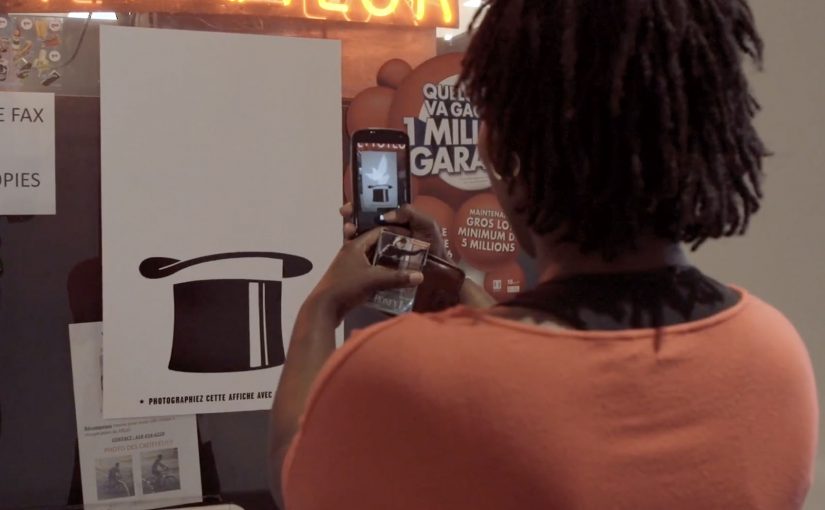
Québec City Magic Festival: The Magic Poster

To promote the Québec City Magic Festival, lg2 makes the poster behave like a trick, not a billboard.

The creative is a magician’s hat poster with a message printed in invisible ink. Curious passers-by discover the mechanic by doing what people already do. They pull out a phone, take a picture, and turn the flash on. The flash reveals the hidden copy, and a lucky few are rewarded with a free ticket for the festival’s closing show.

A poster that turns curiosity into participation

The mechanism is invisible ink plus a flash-triggered reveal. Instead of asking for attention, the poster pays attention back. It gives you a reason to stop, and it gives you a satisfying “aha” the moment you do.

In high-traffic city out-of-home placements, the best interactive work rides on habits people already have, not instructions they have to learn.

In out-of-home, the strongest interactive ideas do not demand a new behavior. They attach to a behavior already in the environment and simply add a twist.

Why it lands for a magic festival

The medium is perfectly aligned with the message. The campaign does not merely advertise magic. It performs magic in the street. That alignment makes the experience feel like a preview of the festival rather than an ad for it. The real question is whether the medium can demonstrate the experience you are selling, not just describe it.

Extractable takeaway: When promoting an experience product, make the marketing behave like the product. Let the audience sample the feeling, not just read the promise.

The free-ticket twist strengthens the loop. The reveal provides instant reward. The prize provides delayed reward. Both motivate sharing, because people want friends to try it and to see if they win.

How to design a flash-reveal OOH interaction

  • Hide something worth revealing. The reveal must feel like a payoff, not a gimmick.
  • Use a native trigger. Flash photography is a default phone capability, not an app install.
  • Reward the behavior. Even a small chance of winning can meaningfully increase participation.
  • Make it repeatable. The interaction should be easy enough that people can show someone else on the spot.

A few fast answers before you act

What is “The Magic Poster” concept?

A festival poster printed with invisible ink that reveals its message when someone photographs it with a phone flash, turning a passive billboard into a small magic trick.

Why is the flash-triggered reveal effective?

It uses a built-in phone behavior, creates instant payoff, and turns the audience into the operator of the trick, which increases attention and sharing.

What makes it more than a novelty poster?

The mechanic reinforces the product truth. The campaign demonstrates magic rather than merely claiming it, making the ad itself a preview of the festival experience.

How can brands adapt this without copying the exact technique?

Design a simple reveal that matches your story, attach it to a native behavior in the environment, and ensure the revealed content is genuinely rewarding, not just hidden for hiding’s sake.

What should the hidden message say?

Keep the revealed copy short and emotionally rewarding in one glance, so the flash moment feels like a payoff and not a puzzle.
Coca-Cola: The Happy Flag

Airports in Denmark have a simple tradition. People welcome arrivals with flags.

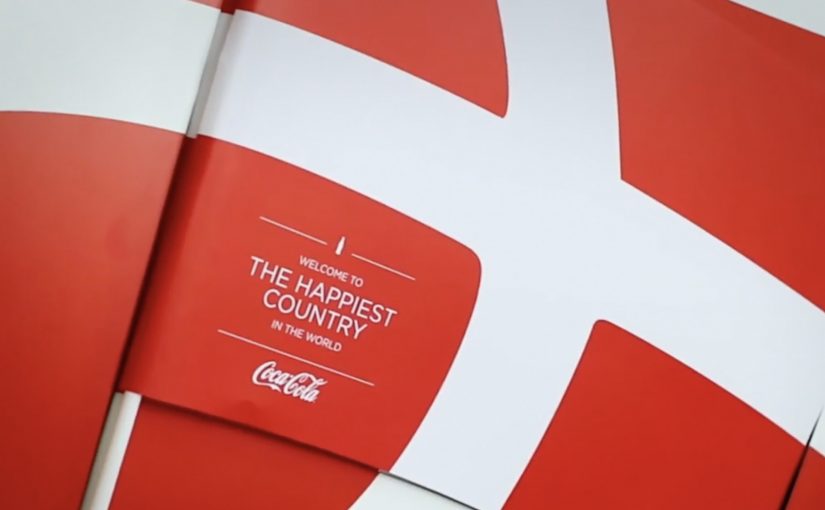
Coca-Cola takes a small cultural detail and turns it into a physical interaction. After a discovery that the Danish flag can be seen inside the Coca-Cola script, the brand brings that idea to Denmark’s biggest airport and makes the flag literally tearable from the logo.

The mechanism is a special poster where passers-by can take small Danish flags straight from the Coca-Cola mark, so even people who arrived without a flag can still join the welcome.

A logo that becomes a utility

This is not a poster that asks you to look. It is a poster that gives you something to do. The brand symbol becomes a dispenser. The action is obvious, the reward is immediate, and the result is visible in the room as more people start waving flags. For out-of-home, participation beats passive exposure when the action is effortless.

In global consumer brand portfolios, small rituals scale when you turn them into simple, repeatable behaviors that people are happy to perform in public.

The real question is whether your most recognizable cue can become a public action people do instinctively, not a message they merely notice.

Why it lands in an airport

Airports are full of waiting and scanning. A physical action breaks the autopilot, and the output is social. Because the poster turns the logo into a one-step flag source, the first few waves appear fast and trigger imitation. You do not keep a flag to yourself. You wave it. That makes the message travel without needing an additional media buy.

Extractable takeaway: When your brand asset is already recognizable, turn it into a useful object inside a real-world ritual. Utility creates permission. Participation creates memory.

The intent behind the “happiness” frame

The story is designed to borrow from Denmark’s “happiest country” reputation as described in various rankings and conversations, then translate that abstract label into something concrete. Here, “happiness” is framed as a warmer, more participatory welcome, not a vague claim. A warmer welcome. More flags in more hands. More people involved.

Moves to borrow for participatory out-of-home

  • Start with a local ritual. Find a behavior people already do gladly, then amplify it.
  • Make the interaction self-explanatory. If someone needs instructions, the moment dies.
  • Use a brand asset as the mechanism. When the logo is the tool, branding feels natural, not pasted on.
  • Design for public visibility. The best output is something others can see and copy instantly.

A few fast answers before you act

What is Coca-Cola’s “The Happy Flag” idea?

It is an airport poster activation where people can tear off Danish flags from the Coca-Cola logo, so more arrivals can be welcomed with flags even when greeters did not bring one.

What is the core mechanism that makes it work?

A familiar brand mark is redesigned as a dispenser. The logo becomes a physical utility, and the action produces a visible social signal in the space.

Why is an airport a strong place for this?

The environment already contains anticipation, reunions, and cameras. A simple, shareable gesture fits the emotional context and spreads through imitation.

How can brands adapt this pattern?

Pick a recognizable asset, connect it to a real-world ritual, and redesign it into a simple object people can use. Then make the output visible so participation recruits more participation.

What is the main failure mode to watch for?

If the action is not instantly obvious or the utility runs out quickly, participation collapses and the installation becomes a normal poster. Design the interaction, replenishment, and visibility so the first wave of use is effortless.