

Mirakl Santa Quits

A Christmas brand film made with generative AI

Mirakl, the ecommerce software and marketplace platform provider, has launched a Christmas campaign built around a 60-second brand film titled “Santa Quits”. The creative twist is not the plot. It is the production method.

The film was created with AiCandy Australia. Mirakl describes every character and scene as AI-generated, then shaped into a finished narrative through human creative direction and filmmaking craft.

Santa quits, the world panics, and an elf restarts operations

In the film, Santa resigns under modern seasonal pressure, triggering worldwide protests as people demand Christmas be saved. The resolution is deliberately on-theme. An elf restarts the operation using “agentic commerce” powered by Mirakl Nexus, restoring gift delivery in time for Christmas Eve.

Here, “agentic commerce” means software-driven agents that can search, decide, and execute commerce workflows across systems under defined guardrails, with humans setting policy and handling exceptions.

When the plot is the product truth

The real question is how a B2B commerce platform proves it is built for an agent-driven future without hiding behind abstract slides and buzzwords. This film answers by turning the operating model into the story: seasonal demand overwhelms legacy operations, then an agentic system orchestrates recovery.

By using generative AI to produce the film while telling a story about AI-powered commerce, Mirakl makes the medium itself part of the evidence, which is why “agentic commerce” lands as an operating model rather than a feature label.

In global B2B ecommerce infrastructure categories, credibility comes from showing how your system holds together when pressure spikes and timelines are non-negotiable.

Why this lands as B2B marketing

For marketers, the move is not “AI-made ad”. It is alignment. Message and medium point to the same idea: when expectations become impossible, throwing more people and more dashboards at the problem stops working. You need infrastructure designed for AI-assisted execution, not just human effort at higher speed.

Extractable takeaway: A B2B brand film earns attention when it behaves like a systems demo, showing what breaks under stress, what orchestrates the fix, and what customers can reliably expect.

The production lesson: AI changes the economics of craft

AiCandy’s claim is not that AI makes creativity optional. It is that AI filmmaking can deliver cinematic work faster and on tighter budgets, as long as human direction stays in charge of narrative, tone, and finishing. That mirrors Mirakl’s product posture: automation scales execution, while humans define intent and manage exceptions.

What to steal from this campaign

This is a smart B2B move because it turns a future-facing concept into a concrete failure mode and a concrete recovery path. If you reduce it to “AI-made brand film”, you miss the strategic structure.

The film works because it connects three things into one coherent story:

  • A familiar cultural moment (Christmas pressure).
  • A clear operational failure mode (the system cannot scale).
  • A product truth (agentic commerce needs infrastructure).

Copy the system, not the gimmick. Make your narrative demonstrate the future you are selling. Then make the medium reinforce the message.


A few fast answers before you act

What is “Mirakl Santa Quits”?

“Santa Quits” is a Mirakl Christmas campaign built around a 60-second brand film. Mirakl positions it as a story about seasonal commerce pressure and how agentic commerce can restore operations at scale.

Who created the film and how was it produced?

The film was created with AiCandy Australia. Mirakl states that characters and scenes were produced via generative AI, then shaped into a finished narrative through human creative direction and filmmaking craft.

What does “agentic commerce” mean in this context?

In this story, agentic commerce refers to software-driven agents that can execute commerce operations with a degree of autonomy, such as coordinating tasks and workflows to restart and run delivery operations under defined guardrails. In the film’s narrative, an elf uses agentic commerce powered by Mirakl Nexus to restore gift delivery.

Why is this campaign notable for marketers?

Mirakl uses AI to tell a story about AI-powered commerce, aligning message and medium. It is also a concrete example of generative AI being used for a brand film, paired with human creative direction, to reach a cinematic outcome under real constraints.

What’s the real business point behind the “Santa Quits” story?

The plot frames seasonal demand as an operational stress test. The resolution suggests that automation and agentic systems can restart and scale commerce operations quickly, restoring reliability when timelines are non-negotiable.

What is a practical way to apply this idea without making “AI theatre”?

Start with one high-frequency content format and define clear quality criteria and approval checkpoints. Then measure cycle-time, cost, and consistency. If you cannot show repeatable outcomes, you are experimenting, not building a scalable capability.
Thalys: Sounds of the City

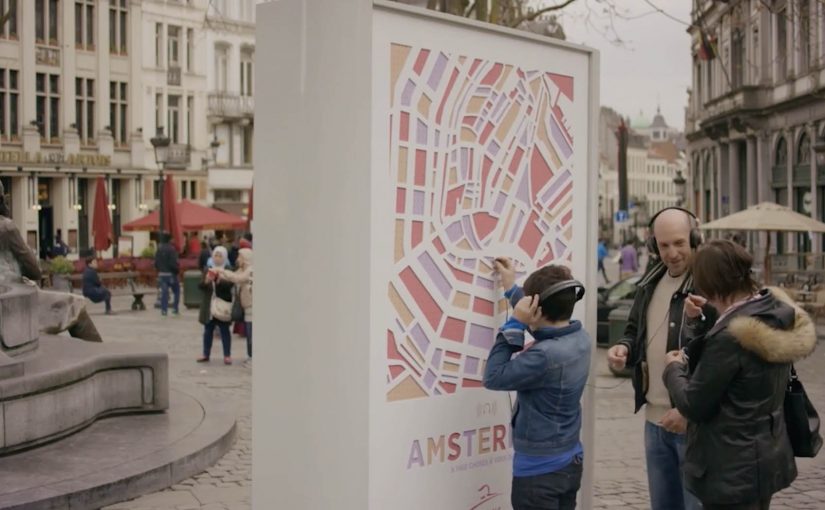
To encourage people to use the train to go and explore nearby cities, railway service Thalys creates three interactive billboards. Each billboard represents a city, and each is host to more than 1,000 unique sounds from that city.

Pedestrians who walk past these billboards are invited to plug in with their personal headphones and start exploring. So instead of using headphones to block out the city, they are made to use them to rediscover one.

When a billboard becomes a listening device

The mechanism is the whole point. A city map on a billboard doubles as an audio interface. Plug your headphones into different points and you unlock different sounds, turning a familiar out-of-home billboard format into a self-guided micro journey.

That matters because the interface makes exploration feel self-directed, which is why the destination becomes memorable before the trip starts.

In European high-speed rail travel, nearby cities compete on spontaneity and sensation as much as price or schedule.

Why it lands

This works because it flips a modern habit. Headphones usually remove you from your surroundings. Here they pull you into a destination you have not reached yet, using curiosity and discovery instead of discounts and slogans.

Extractable takeaway: If your audience already carries an interface, design the experience so their default behavior becomes your entry point. Then reward exploration with variety, so people keep trying “one more” interaction.

What Thalys is really selling

The real question is not how loudly you advertise a nearby city, but how quickly you make it feel explorable.

For travel brands, a sensory preview like this is stronger than another fare-led message.

The campaign sells proximity. You do not need a long promise about travel. You get a sensory preview that makes the next city feel close and personally explorable, even in the middle of your current one.

What travel marketers can lift from this

  • Turn passive media into a tool. If the unit does something, people approach it voluntarily.
  • Build a library, not a single message. 1,000+ sound fragments makes repeat interaction feel natural.
  • Use “rediscovery” as the hook. Familiar objects can become new experiences with one clever twist.
  • Let the audience choose the path. Interactivity creates viewer control and longer dwell time.

A few fast answers before you act

What is Thalys “Sounds of the City”?

It is a set of interactive billboards that let passersby plug in headphones and explore a city through a large library of location-specific sounds.

Why use sound instead of visuals?

Sound creates immersion fast and feels personal through headphones. It also differentiates travel advertising that usually relies on images.

What behavior does the idea exploit?

People already carry headphones and use them in public. The billboard redirects that habit from blocking out the world to exploring a destination.

What is the main metric to watch for OOH interactivity like this?

Dwell time, repeat interactions per person, and any measurable lift in intent or searches for the featured routes and cities.

How can another brand apply the pattern?

Identify a “portable interface” your audience already has, then design a physical touchpoint that turns exploration into the reward.

Volkswagen: Wolkswagen

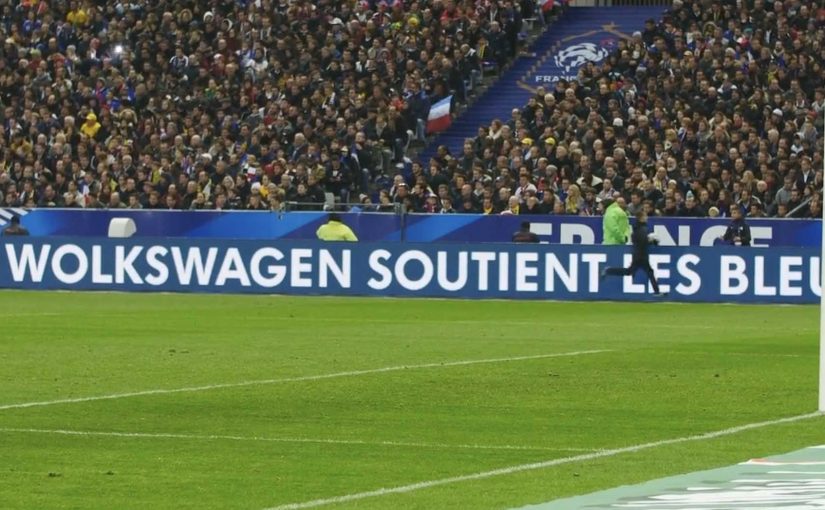
During a France vs Brazil football match in Paris, the LED boards around the pitch display a brand name that looks wrong. “Wolkswagen.”

Volkswagen leans into a simple human impulse. People love being the first to notice a mistake. So the campaign plants one at maximum scale and lets the crowd do what it always does. Point it out, correct it, and spread it.

The mechanism is the typo itself. A deliberate misspelling placed where 80,000 spectators and millions of TV viewers will see it, creating a wave of “they got it wrong” conversations that carries the real message. Volkswagen is present, watching, and ready to announce itself as a major partner of French football.

The psychology of a “correctable” brand moment

This works because correcting a visible public error lets people display attention and share the fix. Here, a “correctable” moment means a public cue that looks wrong but is safe and easy for the audience to fix. Noticing a typo feels like competence. Sharing it feels like helping others notice. The stunt converts that impulse into earned distribution, and it does it without asking anyone to watch a film or click a banner.

Extractable takeaway: If you want mass attention in a high-noise moment, design a safe, obvious “error” people can correct in public, then attach your actual announcement to the moment they point out and share the correction.

In live sports broadcasts, audiences are primed to scan for anomalies, and correcting them is a social reflex that spreads faster than the original message.

What the partnership announcement is really buying

The stated goal is awareness of a new relationship with French football. This is stronger than a standard sponsorship reveal because the audience helps distribute the news. The real question is how to make a routine partnership announcement impossible to ignore. The deeper goal is memorability. Sponsorship news is usually forgettable. A planted mistake is sticky, because people remember the moment they noticed it.

What to steal from this stadium-board stunt

  • Use one unmistakable deviation. The “wrongness” must be instantly readable from far away.
  • Make the correction harmless. The audience should feel clever, not manipulated or misled.
  • Deploy where attention is already concentrated. Stadium boards and live broadcast moments amplify small creative moves.
  • Ensure the reveal is clean. The moment must resolve quickly into the intended message, or it stays a gimmick.

A few fast answers before you act

What is the Wolkswagen idea?

A live stadium-board stunt that intentionally misspells “Volkswagen” as “Wolkswagen” to trigger public correction and attention, then uses that attention to support a football partnership announcement.

Why does an intentional typo generate more attention than a normal logo placement?

Because it activates a correction reflex. People engage to point out the “mistake,” and that engagement becomes the distribution channel.

What makes this feel like a live moment instead of an ad?

Placement and timing. It appears inside the live match environment, where audiences treat what they see as real-time context, not preplanned messaging.

What is the main risk with this pattern?

If the audience believes the brand genuinely made an error, the story can turn into ridicule. The execution needs a clear resolution so it reads as deliberate.

When should you use a “deliberate mistake” stunt?

When you have a time-bound announcement, a high-attention venue, and a brand that can credibly play with perception without damaging trust.