
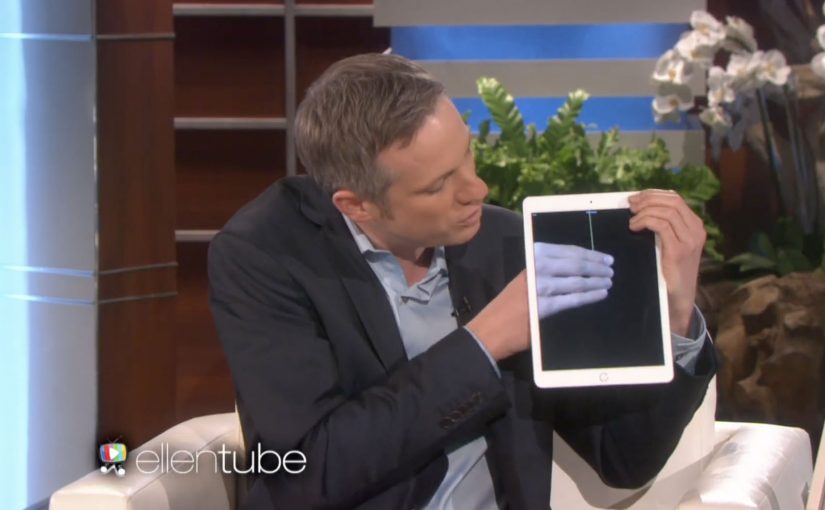
Simon Pierro: iPad Magic on Ellen

An iPad becomes a stage prop. Photos, objects, and interfaces behave like they can leak into the real world. That is the whole hook of Simon Pierro’s “digital magic”, and it plays especially well on a talk-show set. Here, “digital magic” means classic sleight of hand staged through a device interface so the screen appears to affect the physical world.

Simon Pierro is a digital magician from Germany who takes audiences to places they’ve never been, using a technological marvel they know and love, an iPad.

His latest performance was on The Ellen DeGeneres Show at the massive Warner Bros. studio complex in Hollywood. Here he treated Ellen DeGeneres and her enthusiastic audience to some of his best tricks, including his newest illusion, an iPad selfie.

Why “digital magic” works as a format

The mechanism is familiar stagecraft wrapped around a modern interface. The iPad provides a believable frame for impossible transitions, because everyone already understands screens, apps, photos, and swipes.

Extractable takeaway: Wrap your “impossible” moment in a familiar interface so the reveal reads instantly and can be retold without extra explanation.

In consumer technology and entertainment media, demos travel further when they feel like a performance, not a product explanation.

The moment that sells the illusion

The strongest beats are the ones that collapse distance between screen and reality. When a selfie or a photo becomes “physical”, the audience gets a clean before-and-after moment that is easy to retell and easy to clip.

The real question is whether your demo is built to be retold, not just understood.

If you market experiences, you should treat the demo as performance first and explanation second.

How to stage experience demos people retell

  • Use a prop people already trust. Familiar devices make impossible outcomes feel temporarily plausible.
  • Design for one clear closer. A single “how did that happen” finale gives the video its replay value.
  • Keep the story inside the frame. The best tricks look self-contained, so viewers do not need context to enjoy them.

A few fast answers before you act

What is “digital magic” in simple terms?

It is classic illusion and sleight of hand staged through modern devices, so screens, apps, and media become part of the trick.

Why does iPad magic perform well on TV and online?

Because the visuals read instantly and the reveals are clean. You do not need language or setup to understand the surprise.

What is a “signature reveal”?

It is the one moment you want viewers to remember, the clean switch from normal to impossible that carries the message on its own.

What makes a trick “shareable” as video content?

A tight sequence of cause and effect. You see the normal state, then the impossible state, and the clip ends before the mystery dissolves.

How do you translate this into brand work without copying it?

Borrow the structure. Use a familiar interface, create one signature reveal, and anchor the message in a single visual moment people can retell.
IKEA: Catch the Swedish Light

Summer is usually a slow period for IKEA in Belgium, and IKEA wanted to change that. Instead of running traditional advertising for summer offers, they built an interactive YouTube game that challenged viewers to “catch the Swedish light.”

Click here to watch the case video on the AdsSpot website.

A YouTube mechanic that turns attention into speed

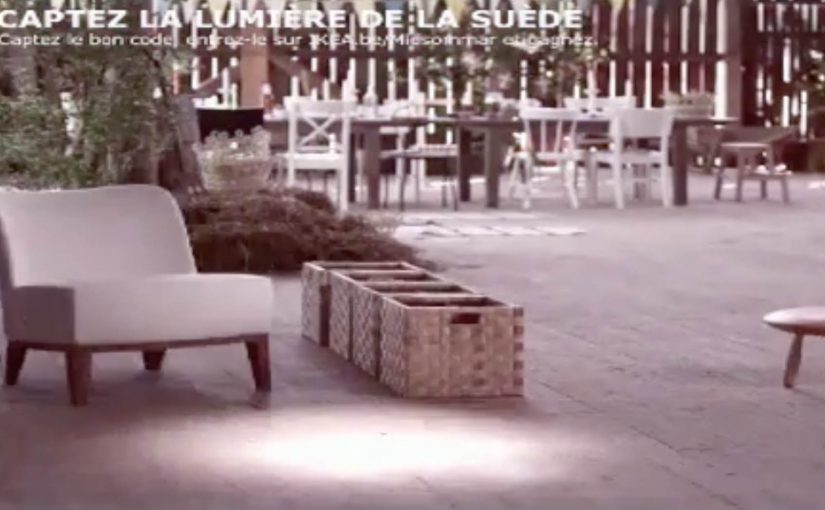
The game used a set of 48 different ads. Viewers had to pause the spot at the exact moment a beam of light hit a product. In that unique frame, a yellow code appeared in the top right corner. The first person to validate the code on the summer microsite won the product instantly.

In seasonal retail marketing, this kind of mechanic works best when it converts passive viewing into an action that is both simple and time-sensitive.

Why this is a smart use of YouTube’s constraints

The neat twist is that the limitation becomes the hook. Because YouTube is not designed for frame-perfect browsing, the challenge feels like a real skill moment rather than a basic form-fill. That “I nailed it” feeling is the reward even before the prize lands.

Extractable takeaway: If you want people to pay full attention to video ads, give them a single, clear reason to watch closely, and make the payoff depend on timing rather than effort.

What IKEA is really optimizing for

Yes, it is a prize mechanic. But the deeper objective is to turn summer browsing into a competitive habit. Viewers must watch actively, replay, and react quickly, which increases recall of products and offers without relying on heavier messaging. The real question is whether you want your summer promo to be remembered as an offer, or as a skill moment people choose to replay. This is a stronger play than a standard summer-offers spot, as long as the validation race feels fair across devices.

What to steal from Catch the Swedish Light

  • Make the win condition visual. A light beam hitting a product is instantly understandable.
  • Keep the action atomic. Pause at the right moment. Capture code. Validate. Done.
  • Use scarcity properly. “First to validate wins” creates urgency without extra complexity.
  • Scale through variations. Multiple ads keep the game fresh and reduce repetition fatigue.
  • Protect fairness. If latency (the delay between a code submission and server confirmation) or site load affects outcomes, communicate rules clearly and log validation times reliably.

A few fast answers before you act

What is “Catch the Swedish Light” in one sentence?

It is an IKEA Belgium YouTube-based game where viewers pause ads at the exact moment light hits a product to reveal a code, then validate fastest to win instantly.

Why does “pause at the right frame” drive engagement?

Because it forces active viewing. People stop multitasking, replay moments, and concentrate to hit the timing.

What makes this better than a standard prize draw?

The outcome feels earned. Speed and attention decide the winner, which makes participation more exciting and shareable.

What is the biggest execution risk?

Perceived unfairness. If buffering, device differences, or slow microsite performance decide winners, sentiment can flip fast.

What should you measure beyond views?

Replay rate, average time spent per viewer, code validation volume, site conversion rate, and whether product interest rises during the slow summer window.

LavOnline: Tomato Splat

A direct mail piece that dares you to make a mess

In Italy, awareness and penetration of online laundry services is described as low. LavOnline asked DDB Milan to build awareness and engagement by stressing two core benefits. Speed and simplicity.

The target was narrowed to young managers and professionals. People who work long hours and struggle to find an open shop after leaving the office. The solution was a playful direct mail pack sent to 1,000 time-strapped recipients that turns “laundry” into an action you can do in seconds.

The mechanic: splat a tomato, watch it spring back

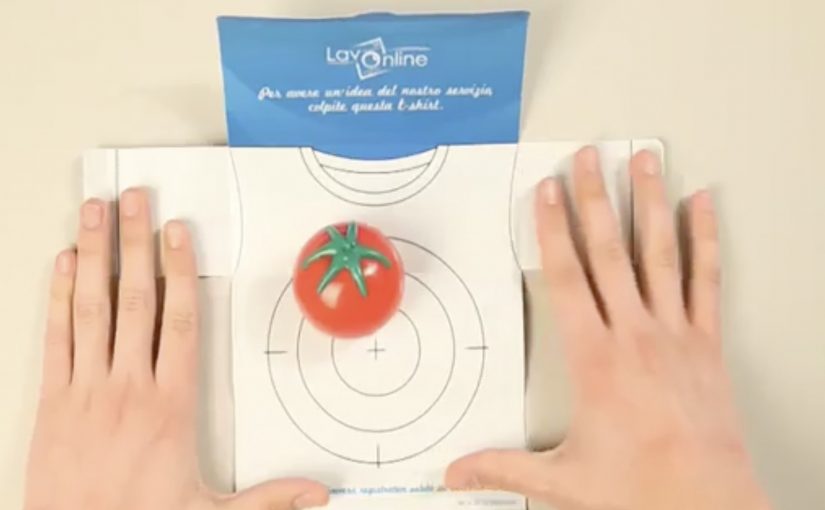
The mailer opens into a white t-shirt shape with a target at the center. Inside is a squishy tomato toy that recipients are encouraged to splat. The toy “splat” moment creates a satisfying mess, then reforms back into a neat tomato, mirroring the promise of a fast, simple service that handles stains without fuss.

Recipients are then pushed to act. If they enjoyed the experience, they are prompted to register on www.lavonline.it, try the service, and tell friends.

In consumer services marketing, interactive direct mail can outperform broad awareness when the physical action demonstrates the product promise faster than a paragraph of copy can.

Why it lands

The idea is built around a smart contradiction. To sell “no hassle laundry,” you briefly invite the audience to create hassle on purpose. That tension makes the piece memorable, and the reset behavior turns the metaphor into proof. It is also office-friendly. It sits on a desk, attracts curiosity, and naturally recruits secondary viewers who want to try the splat for themselves.

Extractable takeaway: If your promise is “simple and fast,” build a physical interaction that creates a tiny problem, then resolves it instantly. The resolution is the message people remember.

What the numbers are trying to prove

Results are reported as unusually strong for a targeted mailer. Within four weeks, 32% of recipients registered, 8% tried the service, and overall site traffic increased by 15%. The bigger point is not the percentages. It is that a single tactile mechanic turned a low-awareness category into a story people wanted to repeat. The real question is how to make an invisible service feel tangible before asking for sign-up. This is a stronger awareness play than a conventional mailer because the interaction makes the service promise feel real.

What to borrow from Tomato Splat

  • Make the benefit physical. Do not describe speed and simplicity. Demonstrate them with an action that resolves fast.
  • Target by daily friction. “No time after work” is a sharper trigger than broad demographics.
  • Design for desk spread. If the object invites a second person to try it, your reach multiplies inside the office.
  • Keep the CTA immediate. One link, one next step, no extra explanation required.

A few fast answers before you act

What is LavOnline’s “Tomato Splat” campaign?

It is an interactive direct mail activation where a mailed pack invites recipients to “splat” a tomato toy on a t-shirt target, then uses that quick reset metaphor to promote a fast, simple online laundry service.

Why use a physical mailer for an online service?

Because the physical interaction creates attention and memory in a category people ignore, then funnels that attention to a single online registration step.

What is the core creative mechanic in one line?

Create a small mess, then instantly restore order. A tactile metaphor for stain removal and convenience.

Why does this work for busy professionals?

The interaction is fast, playful, and office-compatible, and it speaks directly to the “no time after work” friction that blocks traditional laundry trips.

What is the main transferable principle?

When your value proposition is experiential, make the audience perform a micro-version of the experience, then connect it to a frictionless next step.