
Simon Pierro: Exclusive Preview of iPad 3

Simon Pierro: Exclusive Preview of iPad 3

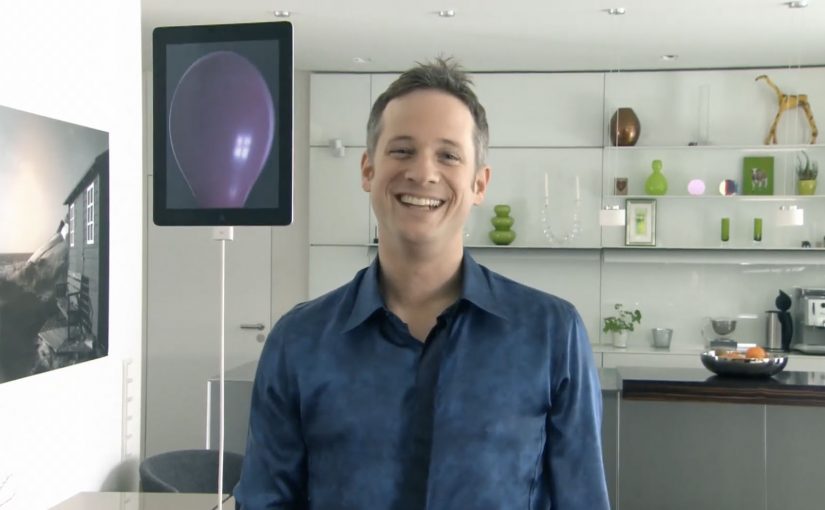
A magician holds up an unreleased device and “reviews” it by making features appear, disappear, and break the laws of a normal demo. It is a product tease delivered as a short performance.

Simon Pierro in his latest performance reviews the yet to be released iPad 3 in a magical way. Along the way he even jokes about “exclusive facts” like it being slightly thicker and heavier, then turns that into the next gag.

How the trick works as marketing

The mechanism is simple. Take the standard product review format and replace evidence with illusion. You still get a “feature tour”, but it is delivered as surprise and entertainment, which makes it far more shareable than a straight spec rundown. This is a strong move when your goal is shareable awareness, not full spec education.

In consumer technology launches, the fastest attention often comes from demos that feel like stories, not demos that feel like documentation.

Why it lands

It compresses curiosity into a tight loop. People watch because they want to see what the “new iPad” can do, then they keep watching because the performance keeps escalating. The device becomes a prop, and the prop becomes the headline. The real question is whether your launch moment gives people a story worth passing along.

Extractable takeaway: Wrap the message in a familiar format, then add one surprising twist so the format becomes the distribution engine.

A launch-demo pattern worth stealing

  • Turn the demo into a format. A review, an unboxing, a “first look”. Then bend it in a way people do not expect.
  • Give the audience one clean hook. “Exclusive preview” is enough. The rest is payoff.
  • Design for replay. Visual gags and quick reveals travel better than long explanations.
  • Let entertainment carry the message. The goal is not complete information. The goal is desire and talk value. Talk value here means a simple line people can repeat in their own words.

A few fast answers before you act

What is the core idea of this video?

A “review” of an unreleased iPad 3 delivered as iPad magic, where the performance replaces proof while still feeling like a product preview.

Why does a magical demo spread better than a normal demo?

Because it converts curiosity into surprise. Surprise is a stronger sharing trigger than information in most social feeds.

What is the transferable lesson for marketers?

If you can wrap a product message inside an entertaining format, the format becomes the distribution engine.

How do you apply this without a magician?

Use any “performance” constraint that creates visual surprise. A timed challenge, a one-take reveal, or an intentional format break can do the same job without literal magic.

When does this approach fail?

When the gimmick overwhelms the product, or when the audience feels misled rather than entertained.
Wacom Inkling: paper sketches, digitized

Wacom Inkling: paper sketches, digitized

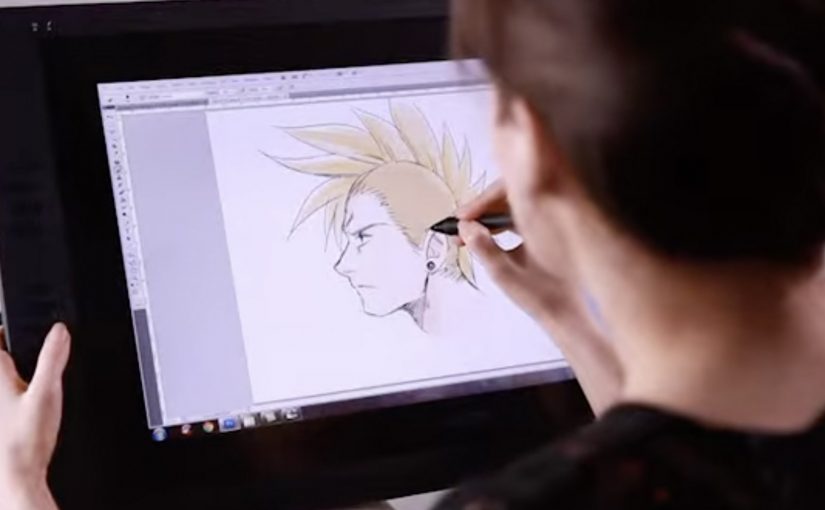
Wacom is launching a cool new digital sketch pen for artists called the Inkling. This unique pen allows artists to draw or sketch on a standard piece of paper and then automatically have a digital version created.

The trick is that Inkling pairs a real ink pen with a small receiver that clips to your paper and records your strokes as you draw, so you can plug it into a computer later and bring the sketch into your digital workflow.

What Inkling changes in a familiar habit

Most artists already start with pen and paper because it is fast, portable, and forgiving. Inkling keeps that behaviour intact, but removes the “scan it later” step by capturing the drawing while it happens.

How the capture works in practice

  • Draw normally. You sketch with an actual ballpoint pen on regular paper.
  • Record quietly. The clipped receiver tracks each stroke and stores the sketch.
  • Transfer when ready. You connect the receiver to your computer and import the captured file for editing.
  • Refine digitally. The value shows up when you want to iterate, clean up, or reuse elements without redrawing from scratch.

In creative and design workflows, bridging paper-first sketching to digital editing keeps momentum for artists who think with their hands.

The real question is whether you can keep paper-first speed while still landing in edit-ready digital files.

Why it lands: it removes one of the most annoying handoffs

The friction is never “making the sketch”. The friction is getting that sketch into the tools where it becomes a layout, a storyboard, an illustration draft, or a presentation asset. Inkling makes the handoff feel like part of the act of drawing, not a separate job you do later.

Extractable takeaway: If you remove one ugly handoff between a familiar analog habit and a digital toolchain, you get adoption without asking creators to change how they start.

What Wacom is really selling here

This is not just a new pen. It is a bridge product that expands Wacom’s relevance beyond tablets and into the earliest moment of creation, when ideas are still raw and fast. A bridge product connects a trusted old workflow to a newer one, so users can cross without friction. Wacom is right to focus on the handoff, not on adding more pen features. If the first capture happens with Wacom, the next steps in the workflow are more likely to happen with Wacom-friendly tools too.

Takeaways for marketing creator tools

  • Respect existing habits. Do not force a new behaviour when the old one already works.
  • Remove a single painful step. “No scanning” is a clearer benefit than a long list of features.
  • Sell the workflow, not the gadget. The story is speed from idea to editable file.
  • Show the before and after. Demos work best when viewers can see the exact handoff being eliminated.

A few fast answers before you act

What is Wacom Inkling?

It is a digital sketch pen system that lets you draw on regular paper with real ink while capturing a digital version of the sketch for later transfer to a computer.

Do you need special paper to use Inkling?

No. The idea is that you sketch on standard paper while a clipped receiver records your strokes.

How do you get the sketch onto your computer?

You connect the receiver to your computer and import the stored sketch so it can be edited digitally.

What is the main benefit compared to scanning?

You skip the “capture later” step. The sketch is already recorded as you draw, which makes it faster to move from rough idea to editable file.

Who is this best suited for?

It fits artists and designers who start on paper for speed, then want to refine, iterate, or reuse parts of the sketch digitally without redrawing everything.

Frijj: You LOL You Lose

Frijj: You LOL You Lose

Frijj, a UK-based milkshake brand, and Iris Worldwide developed a campaign to help people build their tolerance to the unexpected. The aim was to make Frijj’s new flavours, Honeycomb Choc Swirl, Jam Doughnut, and Sticky Toffee Pudding, feel like a challenge worth trying.

So they created an advergame, a branded game designed to promote a product through play. It pits you against friends from your social networks in a challenge of who can keep a straight face for the longest period of time while the web app serves up funny and weird YouTube videos.

A “don’t laugh” game that sells flavour confidence

The mechanic is straightforward. You start a session, the site throws escalating clips at you, and you try not to crack. The moment you smile, you lose. The format turns passive viewing into competitive viewing, which is exactly what makes it sticky. Here, “flavour confidence” means making unusual flavours feel safe and fun to try rather than risky or strange.

In FMCG launches, simple competitive mechanics are a reliable way to turn a product message into repeatable social behavior.

Why it lands

This works because it reframes product novelty as a playful test. Instead of saying “these flavours are bold”, it says “prove you can handle bold”. Social comparison does the rest. You want a better score than your friends, so you replay, you share, and you bring others into the same loop. The use of face tracking is also a smart constraint. If the system can “catch” a smile, the challenge feels fair and measurable rather than self-reported.

Extractable takeaway: If your product promise is “unexpected”, build a mechanic where the audience has to demonstrate composure or control. The brand benefit becomes the rule of the game, not the line of copy.

What Frijj is really buying with this advergame

This is a strong launch mechanic because it turns trial curiosity into repeatable social play at scale. The real question is whether the product promise can become a rule people want to test with friends. The game creates time spent, repeat visits, and a socially distributed invitation mechanic, all while keeping the brand message consistent. New flavours that might feel risky in a supermarket become a badge of fun online.

Design rules worth borrowing from Frijj

  • Make the rule binary. Smile equals lose. Simple rules travel.
  • Use content people already understand. YouTube “weird and funny” clips need no explanation.
  • Turn replay into the product benefit. Each retry reinforces “unexpected” as the brand’s territory.
  • Design social competition as the default. Friends, scores, and bragging rights beat generic “share this”.
  • If you use webcam detection, be explicit. Clear consent and clear on-screen feedback keep trust intact.

A few fast answers before you act

What is the core idea of “You LOL You Lose”?

A straight-face challenge where the “payment” is composure. You watch funny clips and try not to smile longer than your friends.

What is an advergame?

An advergame is a branded game designed to promote a product by turning the message into gameplay rather than traditional advertising.

How does the game know you “lost”?

It is described as using face tracking through your webcam to detect a smile. When you smile, the session ends.

Why is this a good fit for launching unusual flavours?

Because it converts “new and unexpected” into a playful challenge, which makes novelty feel fun instead of risky.

What should you measure if you run something similar?

Repeat plays per user, share and invite rate, average session duration, and any lift in branded search or retail trial during the launch window.