The Snapchat Pitch

Its been a while (2011) since I came across an innovative Social Media recruitment campaign. In this latest example Norwegian ad agency DDB Oslo has tapped the growing trend of chat apps to attract talent to its agency.

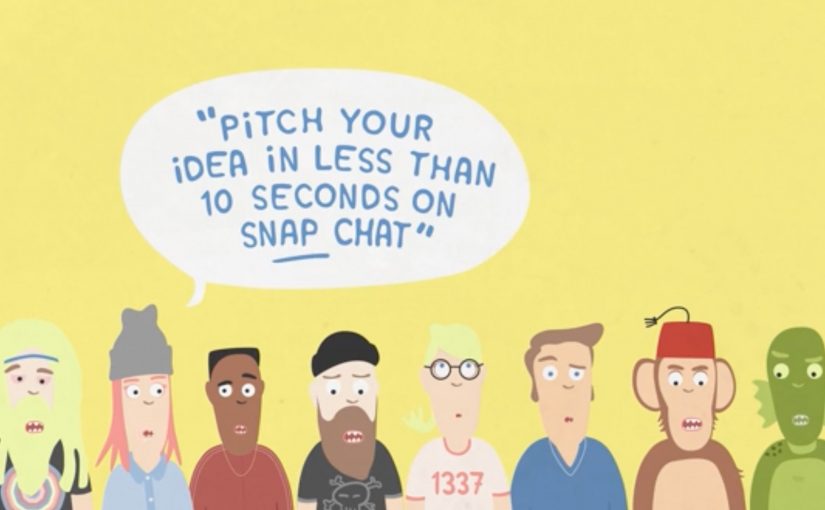
To seek out new talent they created “The Snapchat Pitch”. Interested job seekers had to sum up their concept in 10 seconds or less via video, drawing or song and send it over to DDB Oslo via Snapchat. If the DDB creative department liked the pitch, they would fly the job seekers over to their office for a final interview.

Why Snapchat was the right medium for this recruitment idea

The constraint is the feature. Ten seconds forces clarity. It pushes candidates away from long explanations and toward an idea that lands instantly. That is a useful filter for creative roles, because the pitch is not only the message. It is also proof of judgment under pressure.

Extractable takeaway: When the format itself forces the behavior you want to assess, the application becomes a live demonstration instead of a claim on a CV.

Snapchat also shapes the tone. It is informal, fast, and personal. That lowers the barrier to submit, and it signals that DDB Oslo is looking for modern creators who can think in native mobile formats, not just traditional portfolio pieces. Here, native mobile formats means short, informal creative communication built for the phone screen, not adapted from a longer presentation. Snapchat is not a gimmick here. It is the right screening tool because the medium tests the same creative compression the job demands.

In agency recruitment, where portfolios often reward polish more than immediacy, that makes the channel itself part of the assessment.

What makes it different from typical agency recruitment

Most recruitment campaigns ask for credentials first and creativity second. This flips it. The creative output is the entry ticket. The interview is the reward. That sequencing matters because it makes the selection criteria visible and fair. Everyone starts with the same brief. Communicate an idea in 10 seconds.

The real question is whether the first application step can reveal creative judgment before the interview begins.

What DDB Oslo is really optimizing for

For DDB Oslo, the business intent is not just to look different. It is to widen the top of the funnel while screening for candidates who can already work inside a mobile-first creative constraint. That makes the application mechanic do two jobs at once. It attracts attention and improves fit.

What to borrow if you want to attract talent

  • Use a format-native challenge. Pick a platform where the format itself tests the skill you care about.
  • Make the first step lightweight. Low friction increases the number and diversity of submissions.
  • Reward the best with a real-world next step. A flown-in interview makes the upside tangible and shareable.

A few fast answers before you act

What is “The Snapchat Pitch”?

It is a recruitment idea by DDB Oslo where job seekers pitched a concept in 10 seconds or less via Snapchat using video, drawing, or song.

What did candidates have to submit?

A short concept pitch that fits into 10 seconds, sent to DDB Oslo through Snapchat.

What happened if the pitch was good?

If the DDB creative department liked the pitch, they would fly the job seeker to the office for a final interview.

Why use Snapchat for recruiting?

The platform enforces brevity and rewards clarity. It also tests whether candidates can think and communicate in a modern mobile-native format.

Why does the 10-second limit matter?

It turns the application itself into a filter. Candidates have to show judgment, clarity, and creative compression before they ever reach the interview stage.

Recruitment: Pirates and Cyber Warriors

Since 2010 I have covered how different agencies around the world have been innovating with their recruitment campaigns. Now here are the latest two to join the list.

Two modern filters for hard-to-hire talent

Both ideas avoid broad “we’re hiring” noise. Instead, they place the offer inside the candidate’s real behavior, then use a simple mechanism to separate curiosity from capability.

The better recruitment move is to screen for behavior before you screen for polish.

The real question is not how to attract more applicants, but how to surface people whose behavior already matches the role.

Pirate Recruitment

Young web designers often need expensive application suites to create, and many end up downloading them from illegal pirate websites. Ogilvy Brussels uses that insight by uploading a file that appears to be the “wanted” application suite.

When designers download it, they do not find the software. They find a stronger offer: a job opportunity, delivered right inside the moment of intent.

In competitive digital talent markets, the hardest problem is not reach but signal.

Why this one works

The delivery is the targeting. If you are not the kind of person who looks for pro tools, you never see it. If you are, the offer lands as a wink that proves the agency understands your world. Because the message appears inside a live tool-search moment, it feels relevant instead of interruptive.

Extractable takeaway: Put the offer where the target audience already goes to solve a real problem. The closer your message sits to a “work moment”, the higher the relevance and the lower the waste.

Cyber Warriors Challenge

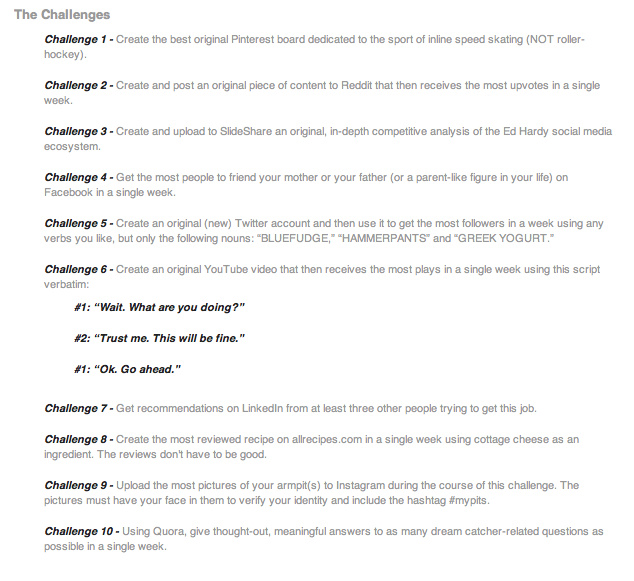
Wieden+Kennedy wants to recruit community managers for its client Old Spice, so it creates a deliberately crazy set of challenges. Candidates get five days to complete one or more tasks and submit proof of their exploits.

Cyber Warriors Challenge

Why this one works

It forces the right kind of effort. Community management is not just “posting”. It is speed, judgment, creativity, and resilience under ambiguity. A challenge-based entry filters for people who can actually do the work, not just describe it.

A small, time-boxed demonstration of the craft makes the screening signal stronger than a generic application form.

What to steal for your own recruitment

  • Recruit inside real behavior: distribute where the audience already acts, not where recruiters usually post.
  • Make the first step self-selecting: the wrong candidates should bounce naturally.
  • Keep the proof simple: “show me” beats “tell me”, but it has to be feasible in limited time.
  • Respect the audience: clever targeting works when it feels insightful, not exploitative.
  • Optimize for quality, not volume: fewer applicants can be a feature if they are better matched.

A few fast answers before you act

What is “pirate recruitment” in one line?

A job offer is packaged as a fake software download on pirate sites, so the right web designers discover the recruitment message at the moment they search for pro tools.

What is the Cyber Warriors Challenge?

A time-boxed set of tasks used as a screening step to recruit Old Spice community managers by requiring candidates to submit proof of real-world exploits.

Why do these tactics outperform standard job ads?

They target behavior, not demographics. Both approaches reach people in-context and require a small demonstration of motivation or capability.

What is the biggest risk when copying these ideas?

Trust and ethics. If the tactic feels deceptive, unsafe, or disrespectful to the audience, it can damage the employer brand faster than it attracts applicants.

How do you measure success?

Not by raw applicant volume. Track qualified applicants, interview-to-offer ratio, time-to-hire, and early performance or retention of hires sourced through the mechanic.

Jung von Matt: Lorem Ipsum Recruitment

Art Directors in agencies use Lorem Ipsum (dummy text) as a placeholder when creating layouts. A de facto place to generate that dummy text is Lipsum.com, described as drawing tens of thousands of creatives from around the world each day.

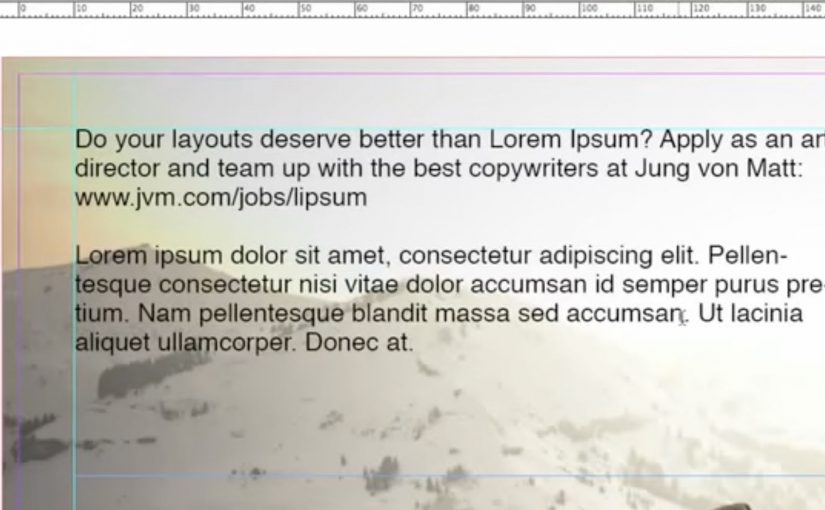
So for one week in January, Jung von Matt slipped a recruitment message into the flow. When anyone copy and pasted Lorem Ipsum from Lipsum.com into their layouts, a Jung von Matt recruitment line came along with the dummy text.

Recruitment that hides inside the tool, not the feed

The mechanism is a Trojan insertion into a daily workflow. Here, “Trojan insertion” means placing a message inside a routine working asset so it gets discovered during real task flow rather than through paid media. Instead of buying attention where creatives scroll, the message shows up exactly where creatives build. Inside the placeholder text that sits in the middle of real work. That works because the recruitment line appears when designers are already focused on layout work, which makes the interruption feel relevant rather than random.

In agency talent markets, the most efficient recruitment messages appear inside the tools and rituals creatives use every day.

Why it lands

This idea earns its attention rather than demanding it. The surprise is subtle. You spot it only if you are doing the job, which makes the message feel targeted and insider. It also travels naturally. Layouts get shared for feedback, reviewed, and iterated, so the line can surface in multiple contexts without additional media. This is smarter than a generic job ad because it uses working context as targeting.

Extractable takeaway: If you want to reach specialists, place the recruitment message inside a high-frequency workflow artifact, so the moment of discovery feels personal and relevant.

The real question is how to place a hiring message inside a creative ritual without making the brand feel intrusive.

What Jung von Matt is really optimizing for

The obvious goal is applications. The deeper goal is employer brand positioning. The agency is signalling that it understands how creatives work, and that it will recruit with the same craft it expects in the job.

What recruitment teams can steal from this

  • Target the workflow, not the platform. Start from where your talent produces, not where they consume.
  • Use a low-friction carrier. Dummy text is copied at scale, which makes distribution effortless.
  • Make the message context-native. A recruitment line should look like it belongs in the artifact it hijacks.
  • Design for second-hand discovery. Make it likely to be noticed in reviews, sharing, or handoffs.
  • Keep it respectful. The best hacks feel clever, not invasive.

Previously Jung von Matt have recruited creatives via the Trojan Recruitment campaign.


A few fast answers before you act

What is Lorem Ipsum Recruitment in one sentence?

It is a recruitment tactic where a Jung von Matt hiring message was embedded into Lorem Ipsum text so it appeared when creatives copied dummy text into layouts.

Why is Lipsum.com a smart place to do this?

Because dummy text generation is a repeated, habitual step in layout work, so the message shows up at high frequency in a relevant context.

What makes this more effective than a normal job ad?

It reaches the right audience while they are actively designing, and the discovery feels targeted rather than broadcast.

What is the main risk?

Trust. If the audience experiences it as tampering rather than wit, the stunt can harm employer brand instead of helping it.

What should you measure if you run a similar idea?

Qualified applications, referral quality, portfolio traffic, and whether employer brand perception improves among the specific roles you are targeting.