
Swedish Armed Forces: Who Cares?

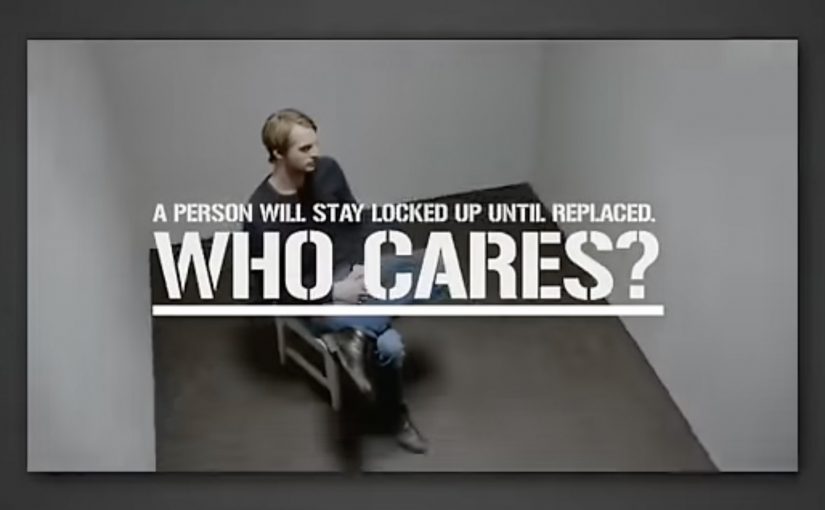
The Swedish Armed Forces needed to recruit young people to an occupation that, in many ways, requires giving up personal comfort in order to help others. To highlight that trade-off, DDB Stockholm created a digitally integrated event in Stockholm, meaning a live experience amplified online but solved only through offline action, to test how far people were willing to go for one another.

One person agreed to sit in a small boxed room and give up his freedom. The experiment was live-streamed over the internet, and nobody could help him via social media. The only way to help was to physically take his place yourself.

Would you have entered that room?

A recruitment test you cannot “like” your way out of

The mechanism is a single constraint with a hard rule. A person stays locked in a box until someone else arrives and swaps places. “Digitally integrated” here means the story travels through live video and online conversation, but the action can only happen in the physical world.

In public-sector recruiting, sacrifice is rarely persuasive as a slogan, so demonstrations that make the cost tangible tend to cut through faster than promises.

Why it lands

This works because the hard swap rule turns abstract values into a visible choice with a real cost. Watching a live stream makes you a witness, but the rule forces a sharper question. The real question is whether you care enough to surrender comfort, not whether you can signal support from a distance. The gap between those two states is the point of the experiment, and it makes the recruitment message feel earned rather than announced.

Extractable takeaway: If your role requires commitment, build a mechanic where commitment has a visible cost, and make the only path to “help” require real participation.

What the Armed Forces are actually testing

On the surface this is a recruitment film and an event. Underneath, it is a filter for mindset. This is recruitment built on proof, not persuasion. The work asks whether a young audience is willing to trade comfort for responsibility, and it frames that trade-off in the simplest possible form. One person is stuck. Only another person can free him.

What to steal from this participation mechanic

  • Make the value measurable. “Caring” becomes an action with a clear threshold.
  • Use digital for scale, not for the solution. Let the internet amplify, but keep the decisive moment real.
  • Design a rule people can retell. “He gets out only if you go in” travels in one sentence.
  • Let tension do the storytelling. A live situation creates attention without extra explanation.

A few fast answers before you act

What is “Who Cares?” in one line?

A Swedish Armed Forces recruitment experiment where a person remains locked in a box until someone physically arrives to replace him.

Why is the “no social media help” rule important?

It blocks low-effort participation and forces a real-world decision, which aligns with the message about giving up comfort to help others.

What does “digitally integrated event” mean here?

The event is distributed through live streaming and online conversation, but the only effective intervention is an offline, physical action.

What is the main psychological trigger?

It turns spectatorship into a moral fork. Watching is easy. Acting carries a cost, and that contrast creates the impact.

When does this pattern work best?

When you need to recruit or motivate for roles that require real commitment, and you can express that commitment through a simple, uncheatable rule.

Euro RSCG: Foursquare Mayor Recruitment

Guerrilla recruitment via social channels is gaining popularity among agencies. In this example, Euro RSCG Brussels used Foursquare to seek out digital talent.

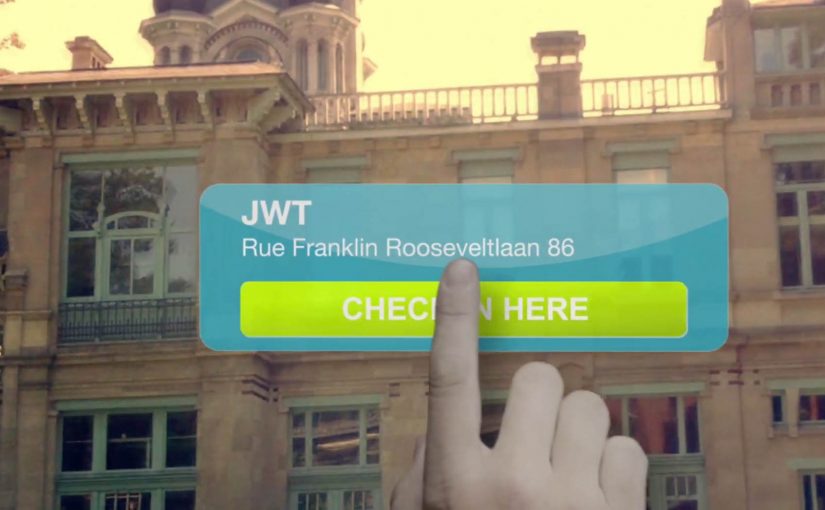
The team at Euro RSCG drove around Brussels every day and checked in at leading agencies. After they became the “Mayor” of targeted agencies, they released their recruitment messages.

Foursquare as a recruitment billboard

The mechanism is simple and slightly mischievous. Foursquare rewards repeated check-ins at a venue with the “Mayor” status. Euro RSCG uses that status as the placement, then drops hiring messages where competitors’ people are most likely to notice them. It works because the platform-granted title creates visible relevance at the exact venue where rival talent is already paying attention.

In competitive digital-talent markets, employer branding works best when it shows up inside the daily tools and rituals your target audience already uses.

Why it lands

It is instantly understandable, and it leverages a public platform rule rather than buying attention. The move also signals confidence. “We are willing to compete for talent in plain sight.” Used with restraint, this is a smart recruiting idea because it turns ordinary check-in behaviour into targeted employer visibility. The real question is whether the platform rule makes the message feel natively relevant or just makes the stunt feel intrusive. At the same time, it walks a fine line. If it feels like harassment rather than humour, the tactic can backfire.

Extractable takeaway: If you use a social platform as a recruiting channel, make the entry mechanic native to the platform and keep the message playful, specific, and respectful, or it will read as desperation.

Other examples of agencies using social media to attract talent are:

Recruitment moves worth borrowing

  • Target by context, not by demographics. “Where do the people I want already spend attention?” is often the better question.
  • Use platform rules as media. When the channel itself creates the placement, participation feels less like advertising.
  • Keep the call to action tight. One clear role or value proposition beats generic “we’re hiring.”
  • Anticipate the ethics. If you would not want a competitor doing it to you, adjust tone and frequency.
  • Design for screenshots. If the message is worth sharing, the audience will distribute it for you.

A few fast answers before you act

What is the Euro RSCG Foursquare idea in one sentence?

It is a recruitment tactic where Euro RSCG repeatedly checks in at competitor agency venues on Foursquare, becomes “Mayor,” then posts hiring messages to reach digital talent.

Why does “Mayor” status matter?

Because it is a visible, platform-granted position at a location. That makes the recruitment message feel placed “inside” the venue’s social layer rather than pushed from outside.

What makes this more effective than a standard job post?

It targets people by environment and habit. The message shows up where relevant talent is likely to be, not where job ads usually live.

What is the main risk?

Reputation. If the move feels aggressive, disrespectful, or creepy, it can damage employer brand faster than it attracts candidates.

How do you measure success?

Qualified inbound applications attributed to the tactic, social sharing and sentiment, and whether awareness among the intended talent pool increases without negative backlash.

Jung von Matt: Trojan Art Director

Jung von Matt is looking for talent again, this time art directors. Staying true to its creative reputation, the agency devised a cheeky way of recruiting from the same places competitors recruit from.

This time the “Trojan horses” were 15 well-known photographers whose work is regularly shown to top creative agencies in Germany. Here, “Trojan horses” means recruitment messages hidden inside portfolio work that creative departments already review. Jung von Matt’s job message was integrated into the photographers’ portfolios. An inscription on a bus. A graffiti on a wall. A stitchery on a pullover. The job ad appears inside the work, right where art directors and creatives are already paying attention.

Recruitment as a stealth placement inside creative culture

The mechanism is elegant. Instead of pushing job ads outward, the agency inserts them into a trusted distribution channel. Photographers’ portfolios are already a legitimate reason to visit creative departments. By embedding the hiring message into those images, the job ad arrives with credibility and surprise built in.

In agency recruitment, the most effective messages often travel through peer-to-peer channels where creative people already look for inspiration.

Why it lands

It respects the audience. Art directors do not want HR language. They want ideas. The recruitment message shows up as an idea. The “spot it” moment also creates a small status game. If you notice it, you feel like an insider, which is exactly the emotion you want associated with joining a top creative shop. This is a smart recruitment idea because it proves the agency’s creative standard in the act of recruiting.

Extractable takeaway: If you recruit creative talent, do not only describe the culture. Deliver the culture as a recruiting experience. The medium should prove the message.

What Jung von Matt is really doing here

Beyond hiring, this is reputation maintenance. The campaign reinforces the belief that the agency thinks differently, even about recruitment. The real question is whether your recruiting message proves the kind of culture and craft the role promises. It also targets a very specific context. The moment when competitors are reviewing portfolios and looking for talent. That is when the message is most likely to be acted on.

What to borrow from this recruitment play

  • Place your message in a trusted channel. Borrow the legitimacy of a format your audience already values.
  • Integrate, do not interrupt. Embedding the ad inside the creative work makes it feel like discovery, not spam.
  • Make the message audience-native. Speak in the language of the craft, not corporate templates.
  • Target the decision moment. Put the offer where hiring intent already exists.
  • Keep it simple. One clear role, one clear next step, no clutter.

A few fast answers before you act

What is the “Trojan Art Director” idea in one sentence?

It is a recruitment tactic where Jung von Matt embeds job messages inside photographers’ portfolio images that are regularly shown to top agencies, reaching art directors in-context.

Why are photographers’ portfolios a powerful distribution channel?

Because they are already viewed by creative departments and talent decision-makers. The audience is qualified and attention is high.

What makes this feel credible rather than gimmicky?

The message is integrated into real creative work and appears in a context where creativity is the currency. That makes the format match the audience expectation.

What is the main risk with stealth recruiting?

It can be perceived as hostile or disrespectful by peers if the tone is too aggressive. The balance is “cheeky” rather than “petty.”

How do you measure success for a recruitment stunt like this?

Qualified applications for the specific role, referral volume from the creative community, and whether employer brand perception improves among the target talent pool.