Sony: The Bottled Walkman

Sony: The Bottled Walkman

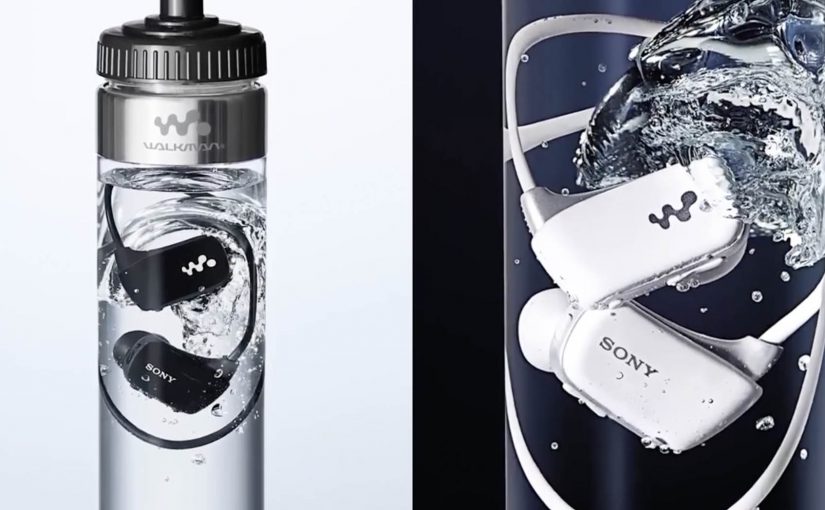
To promote Sony’s NWZ-W270 MP3 waterproof Walkman, DraftFCB Auckland packaged it inside bottles full of water. The bottles were then placed in special vending machines at pools and gyms across New Zealand.

The idea turns packaging into proof. The product sits submerged in plain sight, so the waterproof benefit is demonstrated before you even consider buying it.

Packaging that performs the demo

The mechanism is as literal as it is effective. Take a promise that people doubt. “Waterproof”. Then make the product live inside the condition that normally destroys electronics. The bottle becomes both display unit and credibility device. Here, a credibility device means packaging that makes the claim feel true before any copy has to explain it. That works because the same object that holds the product also removes the shopper’s main doubt at the point of purchase, and the vending machine puts it exactly where the need is strongest.

In consumer electronics marketing, the fastest way to overcome skepticism is to replace explanation with visible proof at the point of decision.

Why it lands

It works because it collapses three steps into one moment. Awareness, belief, and purchase happen in the same place, with the same object. Instead of asking people to trust a spec, the packaging forces a simple conclusion. If it can sit in water all day, it can survive your swim or workout.

Extractable takeaway: When your key benefit is hard to believe, design a retail experience where the product is shown living inside the benefit. Let the environment do the persuading, then make purchase frictionless.

What Sony is really optimizing

The real question is how to make a doubtful product claim feel true before a shopper has to trust the copy.

The vending placement is not just a media choice. It is distribution strategy. Pools and gyms are the exact contexts where “waterproof audio” feels immediately relevant, and where a vending machine purchase is already normalized as an impulse decision.

What to steal from the retail proof

  • Make the proof the packaging. If the box can demonstrate the claim, you do not need to over-argue it.
  • Sell where the benefit matters most. Context does half the persuasion if the product solves a live problem.
  • Reduce steps to purchase. Vending machines convert curiosity into action while attention is still high.
  • Keep the message one-beat simple. One look should be enough to understand the point.

A few fast answers before you act

What is “The Bottled Walkman”?

It is a Sony retail and packaging activation where the NWZ-W270 waterproof Walkman is sold sealed inside a bottle filled with water to demonstrate the product’s core benefit instantly.

Why use vending machines at pools and gyms?

Because that is where the waterproof use case is most obvious, and where a quick, impulse-style purchase fits the setting.

What problem does this solve versus a standard box on a shelf?

It removes doubt. The customer sees the product surviving in water before they ever read a claim.

Is this more “packaging innovation” or “experiential marketing”?

It is both. The packaging is the experience, and the experience is built to drive retail conversion.

How can another brand apply the same principle?

Identify the most doubted benefit, then engineer a display or pack that lets the product visibly live inside that benefit in the buying moment.

McDonald’s Free WiFi: Turning SSIDs into Ads

McDonald’s Free WiFi: Turning SSIDs into Ads

In Spain, McDonald’s offers free WiFi to all its customers. Since the WiFi signal reaches quite far, customers in surrounding restaurants also tend to use the McDonald’s network.

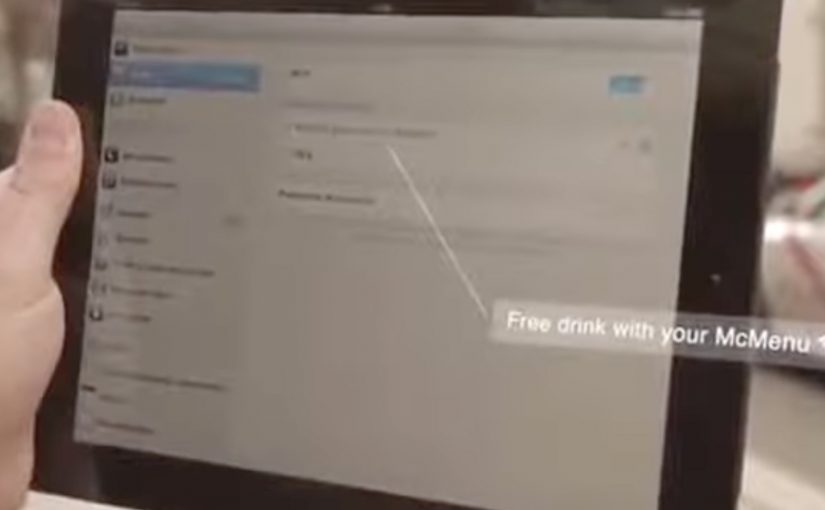
So McDonald’s decided to attract new customers via their own WiFi network. They simply changed the signal’s name into a message and embedded a promotion into it.

The simplest media channel you already own

This is a tiny idea with a very clear mechanism. A WiFi network name is a broadcast surface. That name is the SSID, the label devices show in the network list. It shows up exactly when people are deciding where to sit, what to order, or whether to move.

Instead of treating WiFi as utility, McDonald’s treated it as a micro-channel for demand capture.

Why the WiFi name works as advertising

In high-footfall retail settings where people scan for quick utility, the WiFi list becomes a decision interface and the SSID becomes a tiny billboard in that interface.

Extractable takeaway: When people already scan a utility list, naming inside that list can outperform bigger media because it meets intent at the moment of choice.

  • High intent moment. People looking for WiFi are already in “connect me now” mode.
  • Local reach. The signal spills into nearby venues, where potential switchers sit.
  • Zero-click visibility. You see the message before you even connect.
  • Low cost, repeatable. Updating an SSID is simple, fast, and scalable.

Where this crosses from clever to strategic

The real question is whether you treat owned infrastructure as a distribution channel, or just as a cost line.

The strategic move is not the pun. It is the use of owned infrastructure as a distribution channel. When your message sits inside a system people actively scan for, you reduce friction and increase the odds of action.

This is worth doing wherever you run guest WiFi and can keep the message instantly understandable.

It is also a reminder that not all “digital” has to be an app. Sometimes it is just naming.

What to take from this if you run retail or CX

  1. Audit your hidden touchpoints. SSIDs, receipts, kiosks, queue screens, packaging, all are media surfaces.
  2. Message at the decision point. Proximity channels work best when they align with immediate behavior.
  3. Keep the offer instantly understandable. People scan lists quickly. Clarity beats cleverness.
  4. Test and rotate. Like any channel, vary the message to learn what actually moves footfall.

A few fast answers before you act

What did McDonald’s do with its free WiFi in Spain?

It changed the WiFi network name into a message and embedded a promotional offer into the SSID to attract people nearby who could see the network on their devices.

Why does the WiFi signal matter here?

Because it reaches beyond the restaurant itself, meaning people in surrounding venues can still see and use the network, making it a local acquisition channel.

What is an SSID in this context?

It is the WiFi network name that appears in a device’s list of available networks. Changing it changes what people see before connecting.

Is this a “growth hack” or a real marketing tactic?

It is both. It is a lightweight tactic, but it is grounded in a real channel. Owned infrastructure that reaches potential customers at a high-intent moment.

What is the transferable lesson for brands?

Look for owned, ambient digital surfaces where people already scan for utility, then place a clear message there that can drive immediate action.