
James Ready: Billboard coupon savings

James Ready: Billboard coupon savings

James Ready beer and Leo Burnett Toronto are back with another campaign built around the same consumer truth. People want to afford more beer.

To help, James Ready introduced “billboard coupons,” a way to save money on life necessities like food, dry cleaning, and grooming. The idea is simple. If you save money elsewhere, you have more money left for beer.

By partnering with local retailers, the program lets people take a picture of a billboard and show the photo at the corresponding retailer to receive savings on selected products and services.

A billboard that behaves like a coupon book

This flips the billboard role. Instead of being pure awareness, it becomes a utility object you can “carry” with you via a phone photo. That change matters because it extends the life of the message beyond the moment you drive past it.

Extractable takeaway: The best OOH-led promotions create a portable proof-of-value, meaning a saved artifact the customer can show later to claim the benefit. If the audience can store it in their camera roll, the media becomes a tool, not just a reminder.

The mechanism: proof without printing

Traditionally, coupon programs rely on physical handouts or codes people forget. This uses a behaviour people already do without thinking. Photograph something. The photo becomes the redemption token.

The real question is whether your promotion can turn a photo into proof without adding steps.

The retailer partnership layer is what turns it from gimmick to program. It gives the billboard a reason to exist in specific neighbourhoods and creates a story local businesses can also talk about.

In promotion-heavy categories, photo-as-proof mechanics scale because they turn an everyday phone habit into redemption.

Why it works for a beer brand

James Ready positions itself around everyday value and a slightly cheeky, practical tone. Saving on dry cleaning and food is not glamorous, but that is the point. It makes the brand feel like it is on the consumer’s side.

There is also a subtle psychological move here. The “more beer money” framing makes saving feel like a win, not a sacrifice.

Mechanics to copy from billboard coupons

  • Use a universal behaviour as the trigger. Photos, texts, taps. Avoid anything that needs training.
  • Make redemption low-friction. “Show the photo” is simpler than entering codes or printing.
  • Partner for legitimacy. Retail partners turn a brand stunt into a usable savings program.
  • Design for memory. A billboard must communicate the entire mechanic in seconds.
  • Keep the value proposition honest. Small, real savings beat big, unbelievable promises.

A few fast answers before you act

What are “billboard coupons” in this James Ready campaign?

They are offers displayed on billboards that people photograph on their phones and then redeem by showing the photo at participating local retailers.

Why use photos instead of QR codes or SMS?

Because it reduces friction and works with basic phones and habits. Taking a photo is fast, familiar, and the image becomes a simple proof token.

What makes this more than a one-off stunt?

The retailer partnership network. When multiple local businesses honour the offers, the campaign becomes an ongoing utility rather than a single execution.

What is the biggest risk operationally?

Inconsistent redemption. If staff are not trained or offers are unclear, customers feel embarrassed and the brand takes the blame. Execution discipline matters.

How could a brand adapt this pattern today?

Keep the “portable proof” principle, but use a clearer redemption mechanism where appropriate. A scannable image or an in-wallet pass can preserve simplicity while improving tracking.
Burger King: Whopperface

Burger King: Whopperface

Proof marketing at the counter, not in a tagline

In fast-food marketing, “fresh” claims are easy to say and hard to believe. Proof marketing means giving customers evidence at the point of purchase, not just a promise. Burger King’s Whopperface is a clean example of turning a claim into visible proof inside the restaurant.

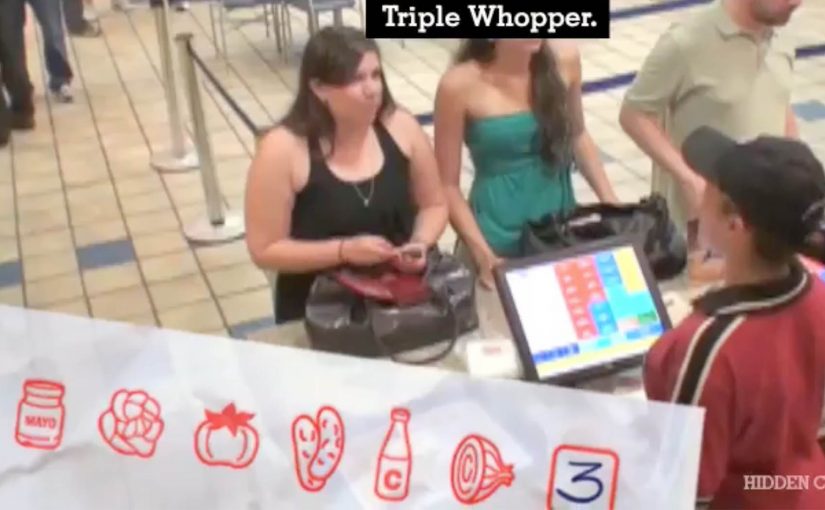
One cashier, one hidden cam, one printer. That is all Ogilvy Brasil needed to prove that Burger King sandwiches are made to order.

When a customer ordered a Whopper, they took a picture without anyone noticing. Then the customer got their freshly made sandwich with their face on it. Burger King proved that each sandwich is unique and made to order for each customer.

How Whopperface created “made to order” evidence

The mechanism is simple. Capture identity at the moment of order, then attach it to the product that comes out of the kitchen.

The hidden camera took the photo. The printer produced the personalized output. The handoff at the counter delivered the proof. The customer did not just hear “we make it fresh”. They received a physical, personalized marker that could only exist if the sandwich was made for them in that moment. Because the print is generated after the order, it converts timing into evidence, which short-circuits the usual “was this pre-made?” doubt.

Why it lands psychologically

In quick-service restaurants, the counter is the trust bottleneck for freshness. People trust what they can verify. Whopperface works because it lets the customer verify “made to order” with a marker tied to their identity.

Extractable takeaway: When skepticism is the barrier, attach a unique, customer-linked artifact to the output so the claim becomes self-evident at the moment of truth.

A customized face print is not a vague reassurance. It is a unique token. It signals individual attention and removes doubt about whether the item was pre-made. It also triggers a social instinct: if you receive something with your identity on it, you are more likely to show it, talk about it, and remember it.

The business intent behind the stunt

The intent was to rebuild credibility around freshness and ordering, using retail experience as the media channel.

The real question is whether your brand can turn its most fragile claim into something customers can verify in the moment.

Instead of spending budget repeating a claim, Burger King invested in a moment that created both belief and shareable content. The proof lived in the customer’s hands, and the story traveled naturally from there.

If trust is the issue, spend on proof at the counter before you spend on more media.

Proof patterns to borrow from Whopperface

  • Turn claims into artifacts. If you want belief, create something physical that acts as evidence.
  • Place proof at the point of truth. The point of truth is the exact moment and place the customer decides whether to believe you.
  • Use personalization as verification. Identity markers make “made for you” tangible.
  • Keep the system minimal. Simple setups scale. One camera, one printer, one process.

A few fast answers before you act

What was Burger King’s Whopperface?

A retail stunt where customers received their freshly made sandwich with their face printed on it, proving the order was unique and made specifically for them.

What was the core mechanism?

A hidden camera captured the customer at order time, and a printer produced a personalized output that was attached to the fresh sandwich at handoff.

Why does this prove “made to order” better than a claim?

Because it creates a unique, verifiable artifact that can only exist if the sandwich was produced for that specific customer in that specific moment.

What business goal did it support?

Increasing trust in freshness and differentiation by turning the restaurant experience into proof and shareable content.

What is the main takeaway for other brands?

If trust is the barrier, design a simple proof mechanism that customers can see, hold, and share.

Hyundai A-League: Gift Wrapping Swindle

Hyundai A-League: Gift Wrapping Swindle

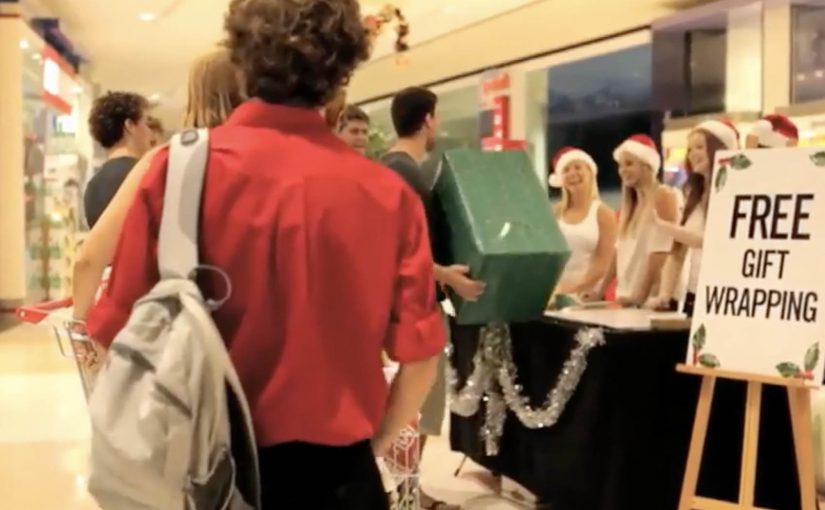
Getting people into a stadium rarely starts with sport. It starts with habit. Lowe in Sydney uses the pre-Christmas rush to put a match invitation into a moment people already care about, without needing another ticket ad.

A Christmas “service” that flips into promotion

The activation doesn’t fight for attention in a new media slot. It borrows an existing ritual, getting gifts ready, when people are already in a generous, social mindset and open to small surprises.

The smart part is the order of operations. It feels like help first, marketing second, which lowers resistance and makes the message easier to carry into conversation afterwards.

The reveal is the media

Once people opt in, the experience pivots. What looks like a straightforward offer becomes a playful con, and that pivot is the part people remember and retell.

That retelling is the distribution engine. It converts passive reach into a personal anecdote, and personal anecdotes are what move a friend group from “I saw something” to “we should go.”

In crowded sports and entertainment markets, attendance is often won at the everyday decision points where people choose what they will do with their next free evening.

The real question is whether you can turn an attendance ask into a story people want to retell, not just a message they notice.

Why the idea lands so well

The “swindle” framing does two jobs at once. Here, “swindle” simply means a playful bait-and-switch, the wrapping offer flips into a match invite. It creates tension and emotion in the moment, and it makes the participant feel involved, not targeted. The reaction is the content, and the retelling is the distribution.

Extractable takeaway: If you can attach your message to a real-world ritual that people already care about, you don’t need to “earn attention” from scratch. You simply redirect it, then give people a story they can repeat without you.

This is also listed in Effie Awards Australia reporting as a winner in the “Most Original Thinking” category, which fits the design: a small behavioural hack, not a big media buy.

What the league is really buying

The hidden win is not just awareness. It’s habit disruption. You take a non-football moment and reframe it as football-adjacent, then you push the idea of attending into a context where people are already planning social time around the holidays.

A ritual-first activation like this beats incremental ticket messaging because it recruits people’s social planning habits, not just their attention.

That’s how you move from “I saw an ad” to “we should go”. The campaign manufactures a nudge that feels organic because it is embedded inside a familiar activity.

Ritual-based attendance nudges to copy

  • Pick a ritual with built-in foot traffic: shopping, commuting, queues, checkouts, waiting rooms.
  • Make the reveal the message: the twist should be the reason people talk, not an extra layer you explain after.
  • Design for retelling: if the story can be repeated in one sentence, it will travel further than the experience itself.
  • Keep the CTA implicit: the best outcome is that people decide to act while they are still talking about what happened.

A few fast answers before you act

What is “The Great Christmas Gift Wrapping Swindle”?

It’s a holiday-season activation that turns gift wrapping into a surprise promotional stunt, engineered to spark conversation and drive attendance.

Why is gift wrapping a smart channel for sports marketing?

Because it’s a ritual people willingly engage with. The message travels physically with the gift, and the moment is social by default.

What makes this more effective than a standard ticket ad?

The participant becomes the messenger. A prank-style reveal produces a story, and stories outperform slogans when it comes to getting people to act.

What’s the main risk with prank mechanics?

If the reveal feels mean-spirited or wastes people’s time, you get backlash without benefit. The tone has to stay playful, and the participant has to feel “in on it” quickly.

How do you adapt the pattern outside sports?

Attach your offer to a real-world ritual in your category. Then design one clear twist that transforms the ritual into a story people want to repeat.