
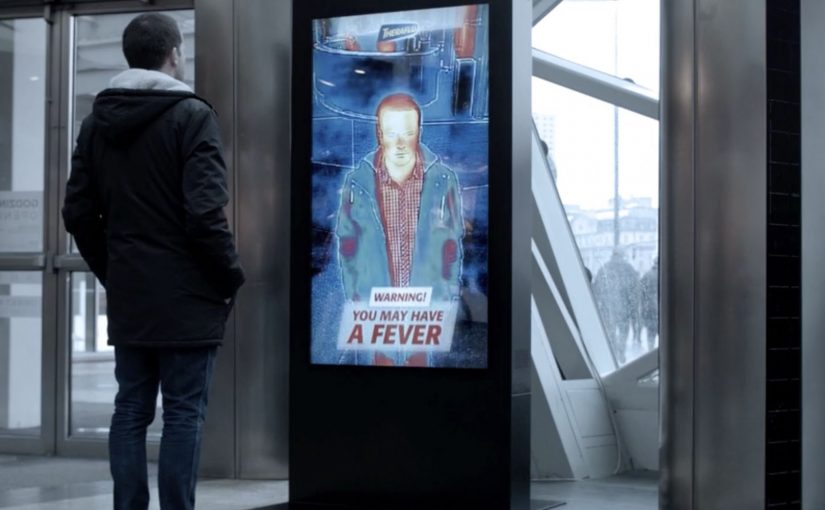
Theraflu: Thermoscanner

With the start of flu season, Theraflu in Poland wants to create a tool that lets passersby check if they have a fever without interrupting their daily commute.

So Saatchi & Saatchi develops what is billed as the world’s first outdoor ad with a live thermo-scanner camera, able to check the body temperature of the person standing next to it in real time.

The thermo-ad also lets people take a thermo-selfie, which here means a thermal-style image of themselves, download it via a microsite or QR code, and share it using the hashtag #TherafluThermoscanner, or send it by email to their boss as an explanation for absence.

Turning a symptom into an instant public check

The mechanism is a simple swap. Thermal cameras are usually associated with controlled environments like airports or clinics. Here, that same visual language is put into a familiar citylight so the “should I worry?” moment can happen on the street, in seconds. That shift matters because it turns a clinical signal into a low-friction commuter interaction, which is why the idea feels immediately useful instead of purely theatrical.

In European commuter cities, out-of-home works best when it adds utility without forcing people to break stride.

Why it lands

This works because it respects the reality of flu season behavior. Many people keep moving even when they feel off. The installation meets them where they already are, makes the result legible at a glance, and gives them an immediately shareable artifact that doubles as social proof and practical communication.

Extractable takeaway: If your message is health-related and time-sensitive, design a public utility that produces a clear personal output. Then make that output easy to reuse in the next real decision the person has to make.

What Theraflu is really buying

Beyond awareness, the ad builds a reason to act early. It reframes “flu medicine” from a product you remember later into a category you prepare for now, while the viewer is still in the mindset of assessing symptoms and deciding what to do next. The real question is how to make symptom checking feel immediate enough to trigger action before people default to pushing through the day. The stronger play here is utility-led brand framing, not spectacle for its own sake.

What to steal from the Thermoscanner

  • Embed the benefit inside the medium. If the media unit demonstrates the promise, the claim needs less persuasion.
  • Make the result portable. A shareable scan turns one interaction into many impressions.
  • Design for the commute. Fast, glanceable, and low-effort beats “immersive” when people are in motion.
  • Give sharing a job. Social posting is optional. Emailing a boss is a real utility hook.

A few fast answers before you act

What is the Theraflu Thermoscanner?

It is an interactive outdoor ad that uses a live thermal camera to estimate body temperature in real time and indicate whether a passerby may have a fever.

Why put a thermo-scanner in an outdoor ad?

It makes fever detection feel instant and accessible during daily routines, and it turns a brand message into a practical tool.

What is a thermo-selfie here?

It is a thermal-style image generated from the scan that people can download and share, or send as a message to explain they may be unwell.

What makes this more than a gimmick?

It is tied to a real, time-sensitive decision. “Do I have a fever?” and it delivers an output that can be reused immediately.

How can other brands apply the pattern?

Find a high-friction question people avoid answering, then build a quick public utility that returns a clear personal result and a shareable artifact.
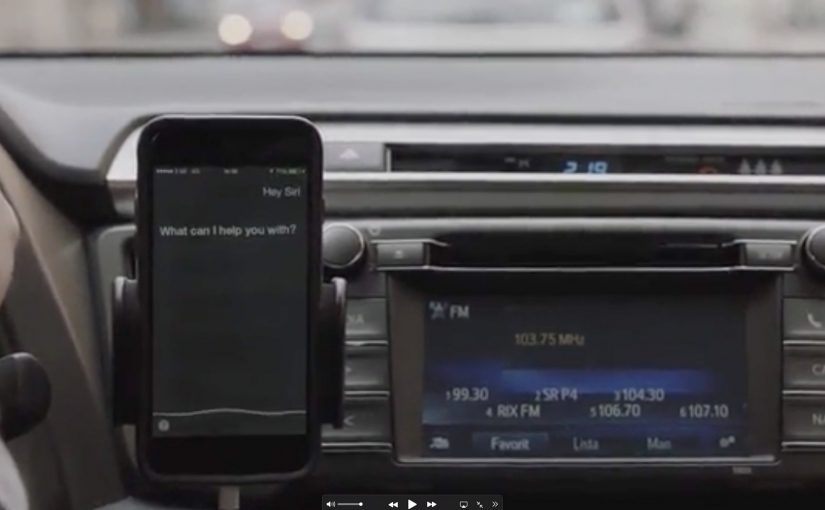
Toyota: A Siri-ous Safety Message

By hijacking Siri, Toyota in Sweden has found a new way to get people to turn off their phones in the car and stop texting.

With the help of Saatchi & Saatchi they created a radio ad that interacts with the phone without human intervention. It relies on the iPhone being plugged in and charging, and on the “Hey Siri” wake phrase being enabled, so even if the driver is not paying attention, their phone is.

Click here to watch the video on AdsSpot website.

Two separate ads ran during rush hour. One was designed for Apple’s Siri, and the other for Android with the “OK Google” wake phrase.

How the hijack works

The mechanism is voice-command interception. The ad speaks the wake phrase and a follow-up instruction that prompts the assistant to switch the device into airplane mode, provided the phone is in a state where it will listen hands-free. The trick is that radio is ambient, so the command can be delivered even when the driver is not actively using the phone.

In passenger vehicles where phones are commonly used for navigation and messaging, road-safety campaigns win when they reduce distraction without adding driver effort.

Why it lands

This works because it demonstrates the problem and the solution in the same breath. The message is not only “do not text”. It is “your phone can be compelled to stop being a temptation”. The moment your device responds makes the risk feel real, and it makes the remedy feel immediate.

Extractable takeaway: If you can make the safety behavior happen automatically at the moment of risk, you remove reliance on willpower. That shift from intention to automation is what makes behavior change scalable.

What the campaign is really saying about attention

The real question is how to remove temptation at the exact moment distraction becomes possible.

The deeper point is that distraction is not a moral failure. It is a design failure. If the environment keeps inviting you to look, eventually you will. Toyota reframes the ask from “be better” to “build a system that makes the right thing easier”.

What safety campaigns can steal from this

  • Use the medium’s superpower: radio is always-on and hands-free, so it can reach people at the exact time the habit happens.
  • Make the behavior visible: when the phone reacts, the lesson becomes undeniable.
  • Design for constraints: define the exact conditions required for the mechanic to work, then build the idea around them.
  • Offer an immediate fix: a safety message lands harder when it includes a concrete action, not only a warning.
  • Keep the premise singular: one problem, one intervention, one clear outcome.

A few fast answers before you act

What is “A Siri-ous Safety Message”?

It is a Toyota Sweden road-safety campaign built around radio ads that trigger voice assistants to switch a phone into airplane mode, aiming to reduce distracted driving.

How can a radio ad control a phone?

By speaking the wake phrase and a follow-up command that the assistant will interpret, if the device is plugged in and hands-free voice activation is enabled.

Why run two versions of the ad?

Because “Hey Siri” and “OK Google” are different triggers. Separate edits let the concept work across major phone ecosystems.

Is the main value the tech trick or the message?

The trick earns attention. The value is the behavior change prompt. It turns “turn off your phone” from advice into a demonstrated, immediate action.

What could make this backfire?

If people feel the intervention is intrusive, or if it interferes with legitimate in-car use like navigation. The campaign needs the safety intent to be unmistakable and the boundaries to be clear.

Coca-Cola: Slurp and Crunch Cinema Spots

Cinema etiquette, packaged as entertainment

Coca-Cola, with the help of Saatchi & Saatchi Denmark and M2Film, created a two-spot public service campaign that highlighted the annoyance of noisy slurps and crunching of refreshments during public viewing at the cinema.

Here, “public service” means a brand-funded reminder about shared cinema etiquette rather than a product offer.

Coca-Cola Gangster

Coca-Cola Stableboy

The move: make the sound the villain

Everyone knows the noise. The spots take that tiny irritation and push it to the foreground, so the whole room shares the same reaction at the same time. By making the sound the villain, the films turn annoyance into an instant, shared norm signal.

In shared public settings like cinemas, etiquette is enforced socially, so in-context cues matter more than abstract rules.

The real question is whether you can correct the behavior in the moment without sounding like you are policing it.

Why it works where it plays

Because it runs in the cinema. The reminder lands in the exact environment where people can immediately correct themselves. It feels like a social cue, not a rule.

Extractable takeaway: When you want voluntary behavior change, put the cue inside the moment of action and make it emotionally legible to everyone in the room.

The behavioral job

Highlight how slurps and crunching can ruin public cinema viewing, and nudge people toward better behavior without preaching.

A short in-context spot like this beats a generic reminder for etiquette nudges because it recruits the audience, not just the offender.

Steal the nudge

  • Micro-irritation: Pick a universal micro-irritation and dramatize it fast.
  • In-context delivery: Deliver the message in-context, where relevance is unavoidable.
  • Watchable change: Use story and character so behavior change stays watchable.

A few fast answers before you act

What was this Coca-Cola cinema campaign?

A two-spot campaign designed to highlight how loud slurping and crunchy snacking can annoy other people during a movie.

Who created the campaign?

The post credits Saatchi & Saatchi Denmark and M2Film alongside Coca-Cola.

How many spots were there and what were they called?

Two spots. “Coca-Cola Gangster” and “Coca-Cola Stableboy.”

Where was this intended to run?

In a cinema context, aimed at audiences during public film viewing.