
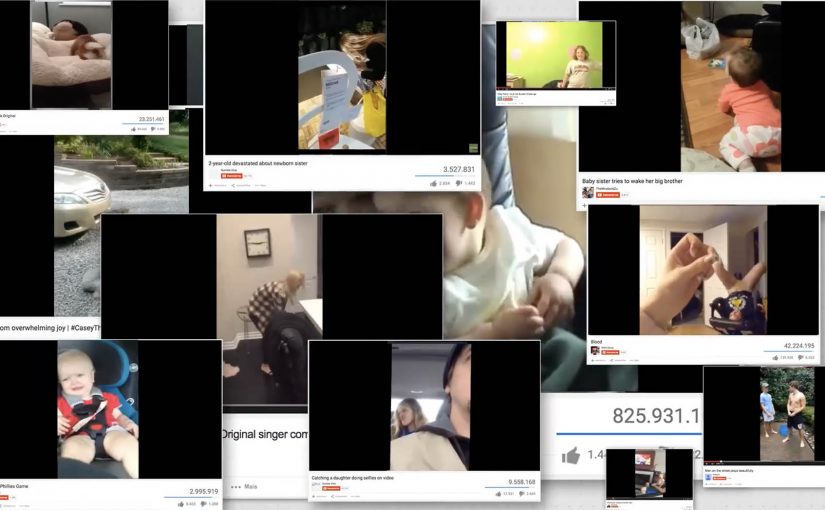
JWT Brazil: Black Bar Donation

Videos that are recorded vertically and then posted online generally end up with black bars on either side. Lots of viewers find that wasted space annoying. So JWT Brazil came up with the “Black Bar Donation” campaign, which lets creators donate those bars to NGOs that need help promoting themselves.

On the campaign microsite, people select a vertical video to upload, tag it with the NGO of choice, and then publish it directly to their own channel with the NGO messaging living inside the black bars.

Turning a formatting mistake into donated media

The idea is neat because it starts from a real irritation. The bars are normally dead space. Here they become a donation surface that travels with the content, wherever the video gets shared or embedded. By “donation surface,” I mean a fixed, consistently visible part of the frame reserved for the NGO message. The “media spend” is created from a mistake people already make every day.

The mechanism: creator-led distribution with a cause payload

Traditional NGO awareness depends on buying reach or earning press. This flips the model. Creators supply the distribution. The campaign supplies the insert. Here, the “cause payload” is the NGO message container that sits in the bars and stays consistent across creator videos. NGOs receive a consistent message container that rides along with user-generated video. This is a stronger pattern than producing yet another standalone PSA, because it turns creator distribution into donated inventory.

The real question is whether your cause message can hitchhike on creator distribution instead of demanding attention on its own.

It also gives creators a low-effort way to feel helpful. Upload once, choose a cause, publish. No new platform to build an audience on. No complicated call to action.

In digital marketing where attention is scarce, the smartest cause campaigns repurpose existing media waste into useful inventory without asking audiences to change their habits.

Why the “black bars” frame is a strong creative device

The bars work because they are visually stable. They sit outside the main video action, so the NGO message does not compete with the creator’s content. At the same time, the contrast is impossible to miss because the bars are solid, empty shapes that viewers are already staring at.

Extractable takeaway: When you can transform a widely repeated user error into a benefit for someone else, you get scale through behaviour, not through budget.

A pattern for scale without media spend

  • Find a ubiquitous waste surface. Dead space, downtime, defaults, leftovers. Anything people already produce at scale.
  • Make contribution feel effortless. One clear action, one clear outcome. No learning curve.
  • Keep the creator’s content intact. Add value around it, not on top of it.
  • Design for portability. The message should travel with the asset as it gets re-shared.
  • Make the intent obvious. Viewers should instantly understand that the added space supports a cause.

A few fast answers before you act

What is “Black Bar Donation” in one sentence?

It is a campaign that repurposes the black side bars on vertical videos as donated ad space for NGOs, so the NGO message travels with the video when it is published and shared.

Why does this work better than a normal PSA video?

Because it piggybacks on content people already choose to watch. The NGO message becomes part of the viewing frame, not an interruption users try to skip.

What makes this campaign scalable?

The supply is user behaviour. As long as creators keep shooting vertical video and uploading it, the campaign has new “inventory” to convert into donated space.

What is the biggest risk with this model?

Quality control and brand safety. If the creator video is problematic, the NGO message can end up adjacent to content it would never choose intentionally.

How would you adapt this idea for other platforms or formats?

Look for other consistent “frame” areas that do not disrupt the core content. Then build a simple creator workflow that lets people attach a cause payload without editing tools.
One Small Tweet: A Virtual Voyage to the Moon

A tribute that turns participation into progress

Neil Armstrong was the astronaut who took one small step for man and one giant leap for mankind. He was also the man who delivered on John F. Kennedy’s promise to be first to the lunar surface.

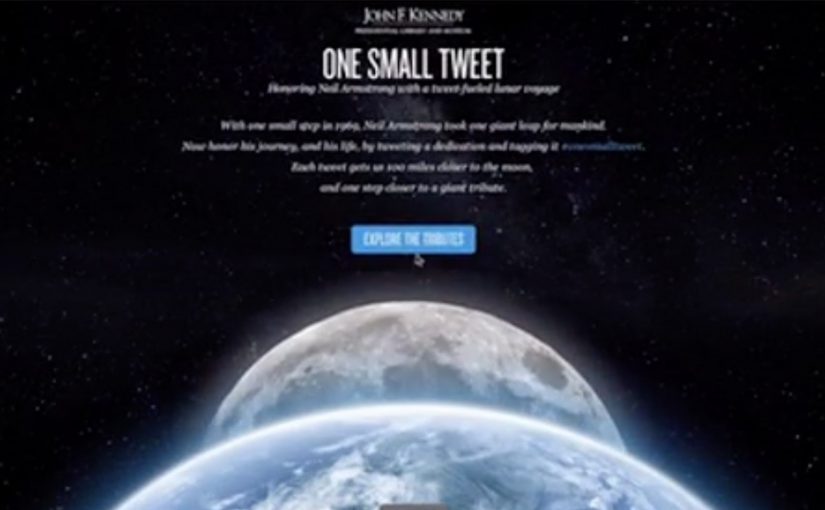
Neil passed away in August 2012. To honor his life, The Martin Agency created “One Small Tweet”. A roughly 238,900-mile virtual voyage to the moon powered by tweets written by admirers around the world.

Click here to watch the case video on the AdsSpot website.

How One Small Tweet works

People posted tributes tagged with #onesmalltweet. Those tweets were aggregated on www.onesmalltweet.com and used as “fuel” for the trip. Each tweet advanced the voyage by 100 miles, so the memorial was something you could watch move forward, one contribution at a time.

In cultural-institution storytelling, social participation becomes meaningful when individual contributions stack into a visible collective outcome.

Why it lands

The idea avoids the usual problem with online tributes. They are heartfelt but static. Here, the tribute has motion and a shared goal, which gives people a reason to join even if they do not know what to say at length. The real question is how to make remembrance feel collective instead of archival. This is a stronger tribute format than a static condolence wall. This works because every tweet visibly moves the same journey, turning private tribute into shared momentum. That progress mechanic, a visible journey meter that advances with each tweet, also makes the scale of remembrance legible. You can see the crowd forming, not just assume it exists.

Extractable takeaway: When you need mass participation, give people a simple action and attach it to a public progress measure. The progress becomes the story people return to and share.

What it teaches about social mechanics

  • Make the unit of contribution small. A tweet is low effort, so participation friction stays low.
  • Make accumulation visible. A journey meter turns separate tributes into one collective narrative.
  • Anchor the mechanic in meaning. The moon distance is not random. It is the symbolism that makes “100 miles per tweet” feel earned.
  • Design for global inclusion. Hashtags travel across borders faster than platform-specific formats.

A few fast answers before you act

What is “One Small Tweet”?

It is a tribute campaign that used tweets tagged #onesmalltweet to power a virtual journey to the moon, turning individual messages into visible collective progress.

How did tweets move the voyage forward?

Each tweet was treated as fuel. The mechanic advanced the trip by 100 miles per tweet, creating a progress narrative people could follow.

Why does a progress mechanic help participation?

It makes contributions feel consequential and connected. People can see their action add to something larger than a single post.

What’s the transferable pattern for other campaigns?

Use a small, easy action. Aggregate it in one place. Show cumulative progress in a way that reinforces the campaign meaning.

What is the main risk with this approach?

If the progress representation is unclear or updates feel unreliable, participation drops. The experience has to feel responsive and real.

Volkswagen: The Speed Camera Lottery

The winning idea of the Volkswagen fun theory award was submitted by Kevin Richardson, USA.

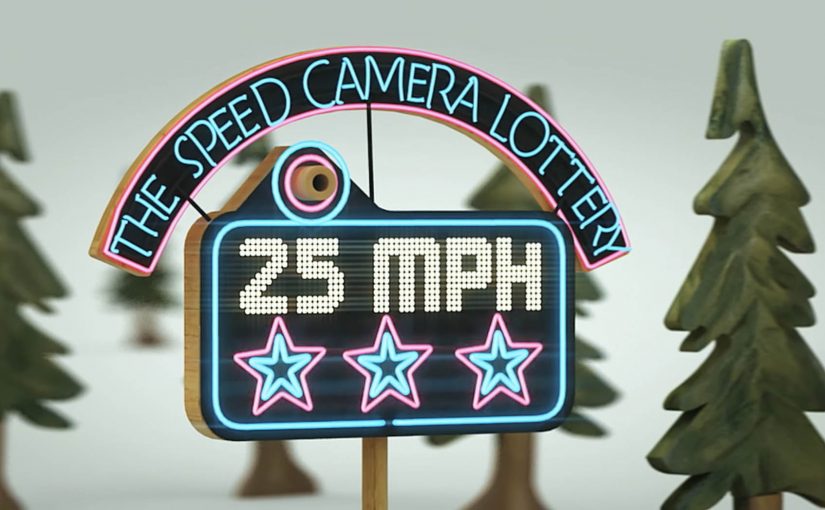
Can we get more people to obey the speed limit by making it fun to do. This is the question Kevin’s idea answers, and Volkswagen, together with The Swedish National Society for Road Safety, makes the idea real in Stockholm, Sweden.

A speed camera that rewards, not just punishes

The core twist is simple. The concept is described as a lottery wrapped around a speed camera. Drivers who pass at or under the speed limit are entered into a draw. The prize money is described as coming from the fines paid by drivers who speed.

That inversion matters because it changes the emotional frame. Instead of “the camera is there to catch me”, the camera becomes “a chance to win if I do the right thing”.

The mechanic: turn compliance into a game loop

The loop is short and repeatable:

  • Trigger: you approach the monitored zone.
  • Action: you choose to stay within the limit.
  • Reward: you are entered into a lottery, and someone wins.
  • Reinforcement: the story travels because “I won by driving properly” is novel.

Why it lands: it makes “doing the right thing” emotionally positive

Most enforcement is built on fear of loss. This flips motivation into the hope of gain, without removing consequences for speeding. It keeps the stick, but adds a carrot that people actually want.

Extractable takeaway: If you want everyday behavior to change, do not only increase the cost of the bad action. Add a visible, repeatable reward for the good action, and make the reward easy to understand in one glance.

In urban road-safety environments, messaging often underperforms because it feels like punishment instead of shared benefit.

The real question is how to make compliance feel desirable often enough that people repeat it without being re-taught each time.

What the brand really gets from this

Volkswagen is not selling a feature here. It is sponsoring a philosophy. Make better choices feel desirable, and the brand becomes associated with modern, optimistic problem solving rather than lecturing.

That is also why the execution travels so well as a film. It is a simple story with a surprising twist, and it is easy to retell without technical explanation.

What to steal for your own behavior-change campaign

  • Pay attention to framing: the same rule feels different when it is presented as “win” versus “don’t get caught”.
  • Make the rule legible instantly: people must understand the mechanic in seconds.
  • Design for repeat exposure: behavior change needs loops, not one-off impressions.
  • Fund rewards credibly: link the reward source to the problem so it feels fair.
  • Keep it measurable: define the behavior metric first, then build the experience around it.

A few fast answers before you act

What is the Speed Camera Lottery?

It is a road-safety concept where drivers who obey the speed limit are entered into a lottery, making compliance feel rewarding rather than purely punitive.

Why does adding a lottery change behavior?

It introduces a positive incentive that people talk about. The hope of gain can be a stronger daily motivator than the fear of a fine for many drivers.

Does this replace enforcement?

No. The idea is described as keeping normal enforcement for speeding, while adding a reward layer for drivers who comply.

What makes this a “Fun Theory” idea?

It tries to prove that fun, not just rules, can shift behavior. The experience makes the better choice feel more attractive in the moment.

What should you measure if you copy this?

Average speed and speed variance at the intervention point, compliance rate over time, and whether the effect persists once novelty fades.