
McDonald’s Sweden: Happy Goggles

McDonald’s Sweden: Happy Goggles

Today’s kids are growing up with smartphones and tablets as everyday objects, so for the 30th anniversary of the Happy Meal in Sweden, McDonald’s decides to move with the times without making radical changes.

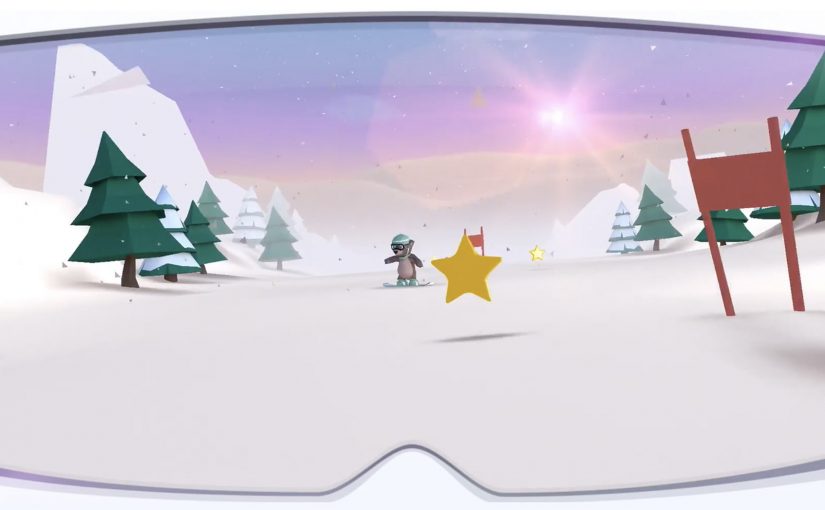
With a bit of ripping, folding, and sliding, the Happy Meal box becomes Happy Goggles. A simple VR viewer made from the box itself, designed to work with a smartphone.

The limited edition Happy Goggles are available from March 5th along with a virtual reality skiing game called “Slope Stars.” The game is positioned as a 360° ski experience that aims to blend fantasy and fun with basic slope-safety learning.

A physical build step that makes the tech feel like play

The mechanism is the point. Kids do not just receive a headset. They assemble it from something familiar, which turns the product into an activity and makes the “VR moment” feel earned rather than handed out.

In family-focused quick-service restaurants, packaging is one of the few branded touchpoints kids hold long enough to become a lasting brand memory.

The real question is whether a kids-facing tech idea can feel like play for children while still feeling bounded and acceptable for parents.

Why it lands with parents as well as kids

The idea works because it keeps the novelty lightweight and frames it as a bounded experience. A simple viewer, a themed game, and a message that leans toward safe behaviour on ski slopes rather than pure screen time. This is a smart family-facing tech layer because it adds interactivity without asking parents to accept an open-ended new device ritual.

Extractable takeaway: If you want families to accept a new tech layer inside a kids product, make the first interaction tactile and time-boxed, then tie the content to a clear parent-friendly benefit.

What the brand is really doing here

This is packaging as media, and packaging as product. By “packaging as media,” I mean the box itself becomes the channel that carries the experience. McDonald’s turns the most iconic part of the Happy Meal into the delivery vehicle for a digital experience, while keeping the core ritual intact.

What to borrow from Happy Goggles

  • Make the build part of the value: A small assembly step turns the moment into an activity, not just a handoff.
  • Use an owned touchpoint as the “device”: When the packaging is already in-hand, it can do distribution and storytelling at the same time.
  • Time-box the novelty with a parent-friendly frame: Keep the experience simple, themed, and clearly bounded so it feels acceptable, not addictive.

A few fast answers before you act

What are Happy Goggles?

Happy Goggles are a VR viewer made by folding the Happy Meal box into a headset-style form, designed to hold a smartphone for a simple virtual reality experience.

What is Slope Stars?

Slope Stars is a ski-themed VR game released alongside Happy Goggles, positioned as a 360° experience that mixes play with basic slope-safety messaging.

Why make the viewer out of the box instead of adding a toy?

Using the box removes distribution friction because every Happy Meal already includes it. Turning the box into the device also makes the experience feel like a clever transformation rather than an extra plastic object.

What makes this kind of packaging innovation shareable?

Happy Goggles are instantly legible because the build step and the reveal are the story. The transformation can be demonstrated in a single photo or short clip.

What is the transferable principle behind this idea?

The transferable principle is to make the first interaction tactile and contained, so the digital layer feels earned. A simple physical step can convert “new tech” into “play,” while a clear boundary makes it easier for parents to accept.
Swedish Armed Forces: Who Cares?

Swedish Armed Forces: Who Cares?

The Swedish Armed Forces needed to recruit young people to an occupation that, in many ways, requires giving up personal comfort in order to help others. To highlight that trade-off, DDB Stockholm created a digitally integrated event in Stockholm, meaning a live experience amplified online but solved only through offline action, to test how far people were willing to go for one another.

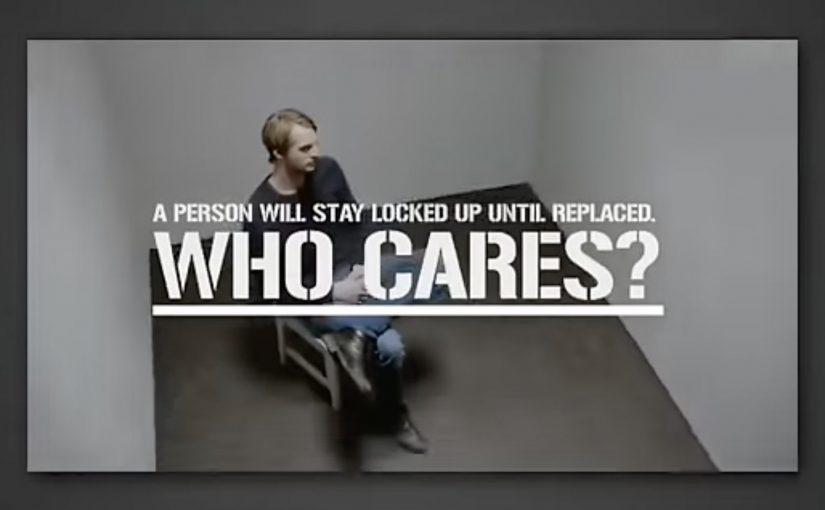
One person agreed to sit in a small boxed room and give up his freedom. The experiment was live-streamed over the internet, and nobody could help him via social media. The only way to help was to physically take his place yourself.

Would you have entered that room?

A recruitment test you cannot “like” your way out of

The mechanism is a single constraint with a hard rule. A person stays locked in a box until someone else arrives and swaps places. “Digitally integrated” here means the story travels through live video and online conversation, but the action can only happen in the physical world.

In public-sector recruiting, sacrifice is rarely persuasive as a slogan, so demonstrations that make the cost tangible tend to cut through faster than promises.

Why it lands

This works because the hard swap rule turns abstract values into a visible choice with a real cost. Watching a live stream makes you a witness, but the rule forces a sharper question. The real question is whether you care enough to surrender comfort, not whether you can signal support from a distance. The gap between those two states is the point of the experiment, and it makes the recruitment message feel earned rather than announced.

Extractable takeaway: If your role requires commitment, build a mechanic where commitment has a visible cost, and make the only path to “help” require real participation.

What the Armed Forces are actually testing

On the surface this is a recruitment film and an event. Underneath, it is a filter for mindset. This is recruitment built on proof, not persuasion. The work asks whether a young audience is willing to trade comfort for responsibility, and it frames that trade-off in the simplest possible form. One person is stuck. Only another person can free him.

What to steal from this participation mechanic

  • Make the value measurable. “Caring” becomes an action with a clear threshold.
  • Use digital for scale, not for the solution. Let the internet amplify, but keep the decisive moment real.
  • Design a rule people can retell. “He gets out only if you go in” travels in one sentence.
  • Let tension do the storytelling. A live situation creates attention without extra explanation.

A few fast answers before you act

What is “Who Cares?” in one line?

A Swedish Armed Forces recruitment experiment where a person remains locked in a box until someone physically arrives to replace him.

Why is the “no social media help” rule important?

It blocks low-effort participation and forces a real-world decision, which aligns with the message about giving up comfort to help others.

What does “digitally integrated event” mean here?

The event is distributed through live streaming and online conversation, but the only effective intervention is an offline, physical action.

What is the main psychological trigger?

It turns spectatorship into a moral fork. Watching is easy. Acting carries a cost, and that contrast creates the impact.

When does this pattern work best?

When you need to recruit or motivate for roles that require real commitment, and you can express that commitment through a simple, uncheatable rule.

McDonald’s: Pick N’ Play Billboard Game

McDonald’s: Pick N’ Play Billboard Game

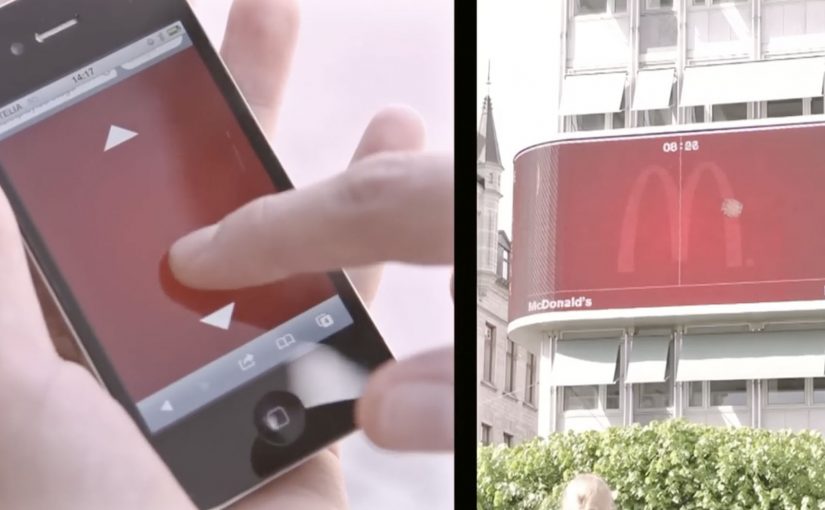
You are walking through central Stockholm and a McDonald’s billboard does something unusual. It invites you to play a quick Pong-style challenge on the screen, using your own phone as the controller.

DDB Stockholm has created another interactive outdoor campaign for McDonald’s Sweden called Pick N’ Play. Passers-by use their mobile phones as controllers to play for a chosen McDonald’s treat. If they last for more than 30 seconds, they score a coupon that earns them free fast food at a nearby McDonald’s.

Reportedly, the interaction avoids an app download and instead uses a simple mobile web flow, with proximity checks (via phone location) so only people physically near the screen can play.

Why this one pulls a crowd

The mechanic is instantly legible. Most people recognize Pong in a split second, which lowers hesitation and increases participation. The billboard also creates a public spectacle, which adds social proof and makes stopping feel normal, not awkward.

Extractable takeaway: This is rewarded interactivity, meaning the payoff is gated behind sustained attention instead of a tap. In outdoor, that simple “earn it” rule turns a public glance into a deliberate, measurable action.

What McDonald’s is really buying

The prize is not the point. The real value is a measurable bridge from street attention to store visit. A time-based win condition filters for people who are actually willing to pause, focus, and then act, which makes the coupon a higher-signal trigger than a generic discount blast.

The real question is whether your DOOH idea can turn a public moment into a private, trackable action without adding friction.

In global consumer brands and retail environments, interactive digital out-of-home earns its keep when it connects a public moment of attention to a private, trackable action on a personal device.

Steal these moves for your next DOOH game

  • Use a mechanic people already know. Familiar rules beat clever rules in outdoor contexts.
  • Make the phone the interface. It turns a billboard into a controllable experience and a trackable session.
  • Reward endurance, not clicks. Time-in-game is a simple proxy for real attention.
  • Close the loop fast. A coupon that can be redeemed nearby turns novelty into footfall.

Last year they had challenged pedestrians to take pictures of McDonald’s food to get it for free.


A few fast answers before you act

What makes an interactive billboard work in practice?

An interactive billboard works when the invite is understood in seconds and the first action feels effortless on a phone.

Do you need an app to control a billboard with a phone?

No. Campaigns like this are often built as mobile web experiences so participation is immediate and friction stays low.

How do you stop people from playing remotely?

By verifying proximity. A common approach is using phone location to confirm the player is physically near the screen before the session starts.

Why use a 30-second target?

It is long enough to prove engagement, short enough to feel achievable, and simple enough to explain with one line of copy.

What is the business upside versus a normal coupon?

You get a higher-intent audience. The coupon is earned through attention and action, which tends to correlate with stronger redemption and store visitation.