
Media Markt “Money Trucks”

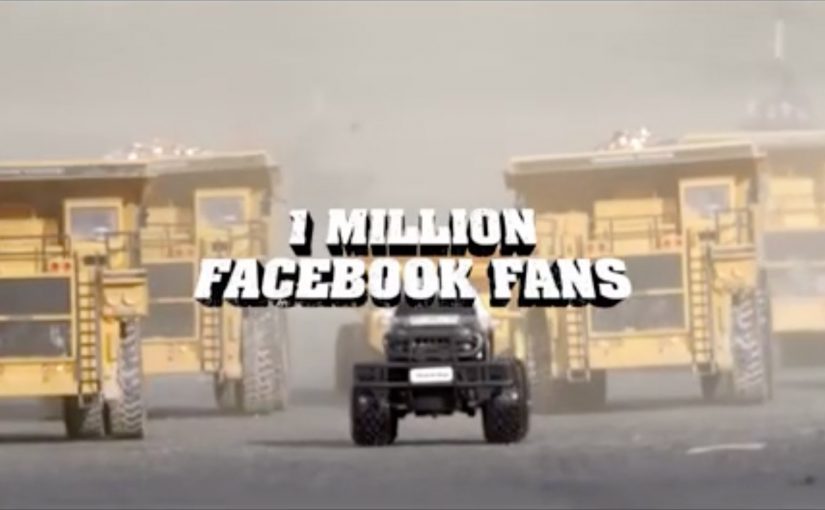
A security team clears the street in a quiet neighborhood. Neighbors step outside. Then a tiny convoy rolls in. 193 miniature “money trucks”, each loaded with 1-cent coins, drives up to the winner’s home and unloads one million cents into a growing pile in the driveway. It is a cash delivery staged like a movie scene, except the payoff is real.

The idea in one line

Celebrate a social milestone by turning “one million” into a physical spectacle people can watch, share, and retell.

What Media Markt does to mark 1 million Facebook fans

Over the last couple of years I have seen a handful of brands reach the 1 million fans milestone. To celebrate, most of them create really nice and innovative thank-you videos. A good example is Tic Tac “Likes” Matt. Media Markt hits the same milestone, but takes a very different route. It turns the number into a physical stunt people can watch, share, and retell.

Media Markt on reaching 1 million fans on Facebook launched a contest: “How many small trucks do you need to transport 1,000,000 cents?” The activation was created by Ogilvy & Mather Frankfurt.

The business intent is simple: turn a fan milestone into participatory attention that travels beyond the Facebook page itself.

How the campaign plays out

Step 1. Start with a guess that feels simple and sticky

The mechanic is deliberately basic: one question, one number, one prize framed as a million small units. It is easy to participate, and easy to share.

Step 2. Make the prize physically absurd

The winner does not receive a bank transfer. She receives €10,000 as 1-cent coins, delivered using the exact number of miniature trucks the contest asks people to estimate.

Step 3. Turn delivery into content

The delivery is filmed as a “cash-in-transit” moment: security clearing streets, convoy arriving, coins dumped into a heap. The documentation becomes the story asset that travels beyond Facebook.

In retail and mass-market marketing, milestone campaigns travel further when the audience can see the scale in the real world, not just read the number on a screen.

The numbers that make it feel “earned”

  • The correct answer is 193 trucks.
  • The winner is in Saßmicke (western Germany), and the stunt is played as a neighborhood event, not a private handover.

Why it works

This works because the mechanic turns an abstract fan count into a visible, countable spectacle people can grasp in seconds.

Extractable takeaway: If a brand milestone matters to you, convert it into a physical event with one simple unit people can instantly understand and retell.

It converts an online number into a physical reality

“One million fans” is abstract. One million coins is instantly legible, and the convoy makes the number feel even bigger.

The stunt is engineered for repeatable media beats

Announcement. Guessing phase. Winner selection. Convoy “journey” updates. Final delivery video. The campaign creates multiple moments people can follow, not one single post.

It is brand-consistent in one glance

Electronics retail competes in a world of deals and hype. This behaves like a deal, but acts like a story. The spectacle fits the loud, “big gesture” brand posture without needing product claims.

The deeper point

The real question is how to turn a passive social milestone into a public event people want to witness and retell.

This is a better move than another thank-you video because it makes participation and spectacle do the distribution work.

If you want people to care about a community milestone, do not announce the number. Stage the number. Make it participatory, then make the payoff visual enough that the community wants to distribute it for you.

How to stage a milestone people retell

  • Turn a milestone into a game: “1 million fans” becomes a concrete challenge with one guessable number.
  • Make the prize a proof object: Delivering “1 million cents” as physical trucks makes the claim visual and press-friendly.
  • Use a single, memorable unit: “Cents” is simple. People instantly understand the scale without explanation.
  • Let the reveal be the content: The answer plus the delivery moment is the story, not a brand speech.
  • Design for retelling: If someone can summarize it in one sentence, it will travel.

A few fast answers before you act

What is the campaign mechanic?

A Facebook contest asks fans to guess how many miniature trucks are needed to transport one million cents.

What is the actual prize?

€10,000 delivered as 1,000,000 one-cent coins, transported by 193 miniature trucks.

Why does the “193 trucks” detail matter?

Because it closes the loop. The answer is not just “correct”. It becomes the logistics and the spectacle of the payout.

Who creates the campaign?

Ogilvy & Mather Frankfurt.

What is the reusable pattern?

Turn a social milestone into a simple prediction game, then make the reward delivery so visual that it becomes the main distribution asset.
Toronto Silent Film Fest: Instagram trailers

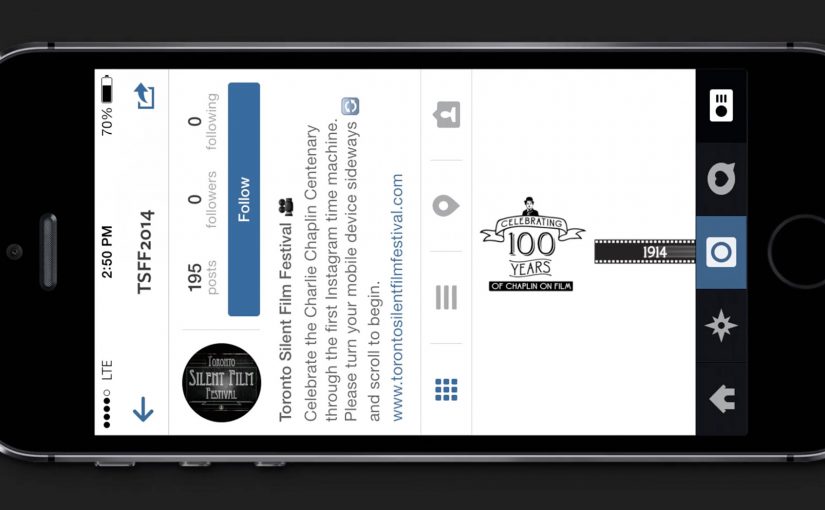
You open Instagram, land on a feed of black-and-white stills, and start scrolling fast. Suddenly the images “move” like a flipbook. It feels like a tiny silent-movie trailer hiding inside a platform that is supposed to be static photos.

The month before, Fox used Vine to mash up a Wolverine trailer and stir hype. Now the Toronto Silent Film Festival borrows the same instinct, then applies it to Instagram. It promotes the event with what it bills as a first-of-its-kind set of Instagram trailers that only really work on a smartphone.

An Instagram trailer, in this format, is a sequence of consecutive still frames posted as individual images. When you scroll rapidly, your thumb becomes the playback control and the feed becomes the projector.

In niche cultural events marketing, the fastest way to earn attention on a small budget is to turn a platform’s native behaviour into the medium.

The trick lands because the mechanic matches the subject. Silent films are built on frame-by-frame illusion. Instagram is built on frame-by-frame browsing. Put the two together and the experience feels clever, not forced.

Why this works better than a normal trailer drop

A standard trailer asks for time and attention up front. This asks for curiosity first. You discover the motion by accident, then you replay it because you want to confirm what you just saw. That discovery loop is the real distribution engine. For a social-first launch, this is a better opener than dropping a normal trailer because it earns replays before it asks for commitment. By “discovery loop” I mean the accidental motion, the immediate replay to confirm it, and the urge to show someone else.

Extractable takeaway: If you can turn a native gesture into a repeatable “did you see that?” moment, you can earn attention and sharing without asking for a click.

What the campaign is really doing

It is less about explaining the festival and more about attracting the right kind of audience. If you enjoy the hack, you are probably the kind of person who will enjoy the program. The format acts like a filter for taste.

The real question is whether your launch gives people a simple action that doubles as playback and sharing.

This work is credited to Cossette, and it later picked up industry recognition for using mobile behaviour as the creative device, which fits the strategy. Make the idea itself feel like a silent-film magic trick.

What to steal for your own social-first launch

  • Exploit a native gesture. Scrolling is a universal habit. Build around it.
  • Make discovery the hook. The best “first play” happens when people think they found something.
  • Match mechanic to meaning. Frame-by-frame browsing is a perfect metaphor for silent-film motion.
  • Keep the explanation optional. If the concept needs a paragraph to understand, it will not spread.

A few fast answers before you act

How do Instagram trailers work in this campaign?

The trailer is split into many still frames and posted as consecutive images. On a phone, you scroll quickly through the feed to simulate motion like a flipbook.

Why does this feel “right” for a silent film festival?

Silent cinema is fundamentally frame-based illusion. This mechanic recreates that feeling using modern thumb-scrolling, so the medium reinforces the message.

What is the main advantage over posting a normal video?

Discovery. People do not just watch. They figure it out, replay it, and show someone else how it works.

What kind of brands or events can use this pattern?

Anything with a strong visual identity and a story that benefits from “reveal”. Especially cultural events, launches, and limited-time programs where curiosity drives consideration.

What is the biggest risk with platform hacks?

If the experience only works in a narrow usage mode, many people will miss it. The mechanic needs to be obvious enough that first-time viewers understand what to do within seconds.

Ben & Jerry’s #CaptureEuphoria: Instagram OOH

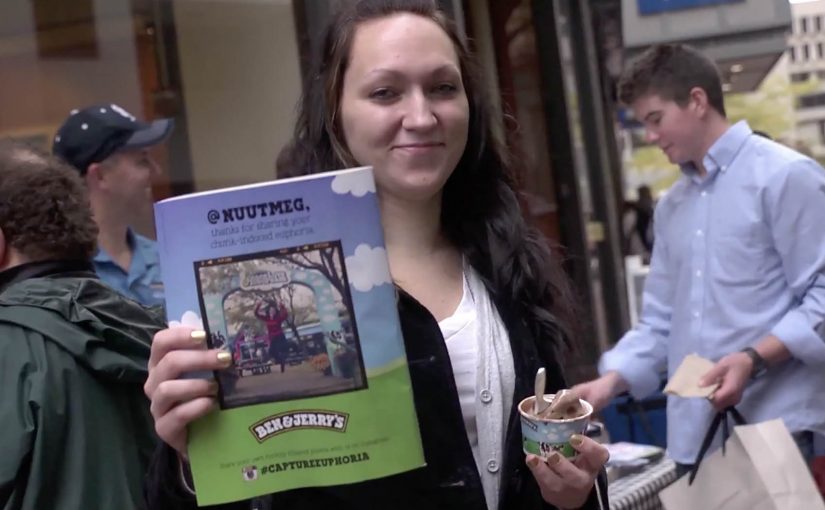
Ben & Jerry’s jumps onto the Instagram wave with a photo contest that challenges fans to capture their “euphoria” towards the brand. Winners from around the world are then featured in special Ben & Jerry’s advertising, including local print, bus station placements and billboards that appear near their homes.

The mechanic: a hashtag that turns into local visibility

The idea is straightforward. Fans post Instagram photos that represent “euphoria” and tag them with #captureeuphoria. Ben & Jerry’s curates a set of winners, then brings those images into the real world by placing them as local advertising close to where the photographer lives.

This is hyperlocal out-of-home (OOH) as a reward. Instead of giving people a generic prize, the campaign gives recognition that is geographically personal.

Recognition-based rewards are the better default when the goal is to deepen community, not just spike entries.

The real question is whether your reward shows up in the participant’s physical world, not just their feed.

In global FMCG marketing, the strongest social contests create an offline payoff that feels personal, not promotional.

Why it lands: recognition beats “stuff”

Most contests promise products, vouchers, or a one-time win. This one promises status. Your photo becomes the ad. Your community becomes the audience. That flips the usual relationship between brand and fan, and it makes participation feel less like a transaction and more like belonging.

Extractable takeaway: A social contest gets more powerful when the payoff is not only online. It is something the participant can physically encounter in their own neighborhood.

What Ben & Jerry’s reinforces by calling it “euphoria”

By anchoring the idea to a feeling rather than a product shot, the campaign invites more creative submissions and a wider interpretation of what “Ben & Jerry’s moments” look like. The brand gets a stream of fan-made images that reflect joy and personality, and the best of it becomes media.

What to steal for your next community-first contest

  • Reward participation with identity, not only incentives. Public recognition can outperform discounts when the brand has true fans.
  • Make the submission format native. A hashtag plus a photo is a low-friction action people already understand.
  • Close the loop in the real world. If you can turn online creation into offline visibility, the story becomes more memorable.
  • Keep the brief emotionally clear. “Capture euphoria” is an instruction people can interpret without overthinking.

A few fast answers before you act

What is Ben & Jerry’s #CaptureEuphoria?

It is an Instagram photo contest where fans post images tagged #captureeuphoria, and selected winners have their photos featured in local advertising near where they live.

Why is the offline ad placement the key twist?

Because it turns participation into public recognition. The reward is visible, personal, and rooted in the winner’s own community.

What makes this different from a standard user-generated content (UGC) contest?

Instead of only reposting winners online, it converts fan content into out-of-home and print media, which raises the perceived value of being selected.

What should a brand be careful about with hashtag-based submissions?

Moderation and curation. If the hashtag stream is unfiltered, off-brand or disruptive content can hijack the gallery effect.

How do you measure success for a contest like this?

Track volume and quality of submissions, unique participants, sentiment, earned reach from reposting, and the lift in brand engagement during the campaign window.