
Molson Canadian: The Beer Fridge

Molson Canadian: The Beer Fridge

First various brands created campaigns with red buttons, then came one with a pink phone, and now Molson, a Canadian beer brand, revolves a whole campaign around bright red refrigerators.

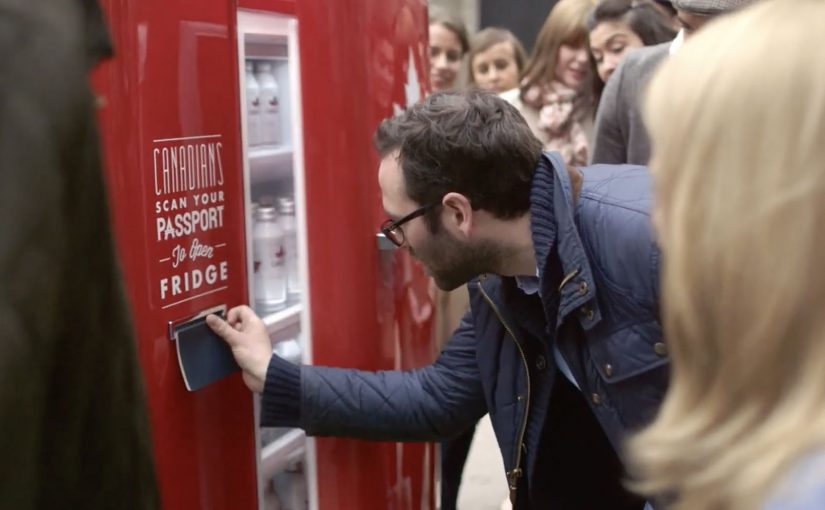
These eye-catching fridges were filled with Molson Canadian beer and strategically placed across a variety of European locations to attract crowds. The catch is simple. The fridge can be opened only by scanning a Canadian passport.

The campaign was created by Rethink Canada to bring back the classic tagline, “I Am Canadian.” The footage collected from the different locations was then cut into a longer online film and a shorter TV ad, described as running during the Stanley Cup Finals.

A gate that turns identity into a moment

The mechanism is a physical “access rule” everyone understands. Here, the access rule is simple: only a scanned Canadian passport opens the fridge. A fridge full of free beer is a magnet. The passport scan turns that magnet into a social filter, because the only way anyone drinks is if a Canadian is present and willing to open it. In one move, the crowd goes from spectators to collaborators.

In multinational brand building, national identity can easily become abstract. This makes it concrete in public, in seconds, with a prop people instinctively gather around.

Why it lands

It works because the restriction creates a mini-drama with a friendly payoff. People try. People fail. Then the “right” person arrives, the door opens, and the whole crowd benefits. The brand gets an emotional signature without needing to over-explain heritage, or wave flags on screen.

Extractable takeaway: If you want a brand idea to travel, design a simple rule that forces strangers to interact. Make the rule easy to understand, visibly enforced, and rewarding for everyone, not only the “qualified” participant.

What Molson is really reviving

The fridge is the stunt, but the strategic job is memory refresh. “I Am Canadian” is not a new line. The activation re-earns the right to say it by staging a situation where being Canadian is the key that unlocks a shared experience.

The real question is whether a legacy national tagline can earn fresh relevance without sounding like a rerun. Molson gets this right because the stunt turns identity from a slogan into a shared public reward.

What brand teams can take from it

  • Use a physical object as a social trigger. Fridges, doors, vending machines, and switches pull people in because they promise an outcome.
  • Let the rule do the storytelling. One constraint can communicate positioning faster than a paragraph of copy.
  • Make the payoff collective. If only one person wins, the crowd turns cynical. If everyone wins, the crowd turns into distribution.
  • Film what the rule creates. The best “campaign video” is documentation of real behavior the mechanic generates.

A few fast answers before you act

What is Molson Canadian’s “Beer Fridge” campaign?

It is an activation built around bright red fridges placed in public locations. The fridge opens only when a Canadian passport is scanned, turning identity into the key that unlocks free beer.

Why require a Canadian passport?

The passport requirement creates instant tension and a clear story. It forces a social moment where Canadians become the enablers, and everyone around them shares the reward.

What does this have to do with “I Am Canadian”?

The mechanic makes “Canadian-ness” functional rather than symbolic. The tagline lands as a conclusion the crowd just witnessed, not a claim the ad simply states.

Why place the fridges in Europe?

Because it creates contrast and visibility. A Canadian-only key in a non-Canadian setting produces curiosity, crowds, and a stronger “identity unlocks access” narrative.

How can another brand apply this pattern?

Choose one brand truth, translate it into an access rule, and attach a collective payoff. Then design the experience so the resulting human interactions are worth filming.

Tic Tac: Likes Matt

Tic Tac: Likes Matt

Tic Tac France recently reached one million fans on Facebook. To say thank you, they published a video where the CEO personally thanks the one millionth fan, Matt, with the message: “If you like us, Matt, we’ll like you back”.

In the video, the whole company is totally obsessed with Matt, and his picture shows up everywhere. It is a simple, funny way to celebrate a milestone, and it is worth watching even if it is in French.

A milestone video that turns one fan into the headline

The mechanism is playful personalization. Here, playful personalization means taking one real fan and making that person the center of the joke so the thank-you feels specific rather than generic. Instead of thanking “everyone”, the brand picks one real milestone moment and builds a mini story around it, with the CEO as the voice of gratitude and the office as the exaggerated stage. That mechanism works because naming one person gives the audience a concrete character to remember and retell.

In FMCG social media marketing, milestone celebrations work best when they feel genuinely personal rather than corporate.

Why it lands

This works because it converts an abstract number into a human. “One million fans” is easy to scroll past. “Matt” is specific, memorable, and funny. The obsession gag also gives viewers a reason to share, because the content has a punchline, not just a thank-you line. This is the right way to celebrate a social milestone because it earns attention without sounding self-congratulatory.

Extractable takeaway: When you need to celebrate a community milestone, do not amplify the number. Personify the moment with one concrete protagonist, then build a simple story people can retell in one sentence.

What the brand is really doing

The real question is how to turn a milestone post into something people want to share, not something the brand wants to announce.

The video is not only gratitude. It also signals attentiveness. The brand is implying that individual fans matter, and that the page is a place where recognition can happen, not just another broadcast channel.

What to borrow from this milestone format

  • Make the milestone tangible. One named person beats a generic “thanks everyone”.
  • Use leadership sparingly. A CEO appearance can add weight when the message is short and human.
  • Build a repeatable format. You can repeat the pattern at future milestones without it feeling forced.
  • Give it a share trigger. A clear gag or twist increases forwarding and comments.

A few fast answers before you act

What is “Tic Tac Likes Matt”?

It is a Facebook milestone thank-you video where Tic Tac France celebrates one million fans by thanking “Matt”, the millionth fan, in a humorous, highly personalized way.

Why focus on one person instead of the whole community?

Because a single protagonist makes the milestone concrete and easier to remember, and it gives the audience a story to share.

What role does the CEO play in the idea?

The CEO acts as an authenticity cue. The message feels less like a standard post and more like a direct acknowledgment.

What is the main lesson for community teams?

Milestone posts should earn attention with a simple narrative device, not with bigger graphics or bigger numbers.

How could another brand adapt this?

Pick a real milestone moment, identify a specific “hero” of that moment, and build a short, human thank-you story around them.

Jimmy Kimmel: Halloween Candy Prank 2012

Jimmy Kimmel: Halloween Candy Prank 2012

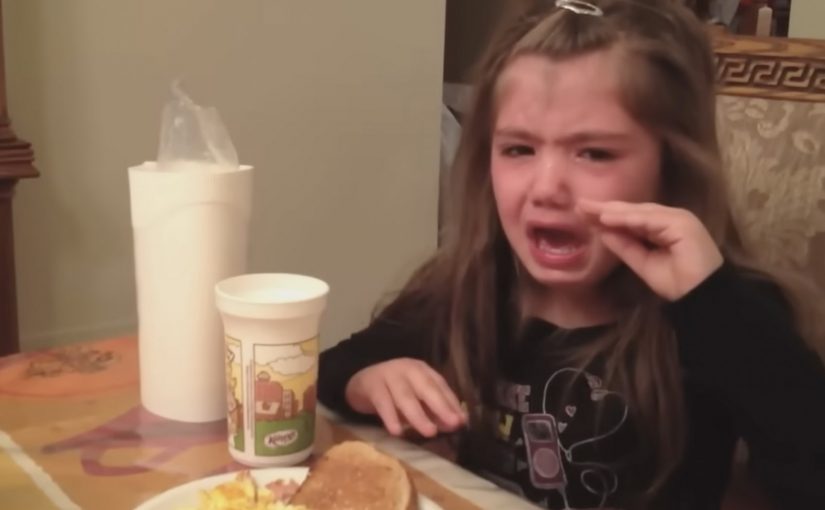
Last year for Halloween, talk show host Jimmy Kimmel challenged the parents of America to tell their kids that they ate all their Halloween candy and then video tape their reactions and share them on YouTube. The challenge was a huge success and the best-of compilation reportedly passed 34 million views within a year.

So this year, once again, Jimmy Kimmel issued the same challenge. The results are exactly as brutal and hilarious as you’d expect.

A late-night segment built from other people’s cameras

The mechanic is straightforward: a single, repeatable prank with a clear instruction. Tell the kids you ate the candy, capture the reaction, upload it, and label it so the show can find it. The audience does the filming. The show does the curation.

In mass-audience US entertainment formats, recurring viewer challenges turn a broadcast show into a participatory channel.

The real question is how you turn a simple prank into a recurring submission format people want to recreate.

This is smart format design, not just a funny late-night stunt.

Why it lands

It is a format, not a one-off. The joke is simple enough to repeat annually, which makes participation feel like joining a tradition.

Extractable takeaway: Repeatable audience challenges go viral when the instruction is easy, the emotional payoff is immediate, and the show’s role is tight curation. The audience supplies volume. The editor supplies pace and punch.

It scales because the setup is universal. Every family understands the stakes instantly. No explanation needed. Just the moment.

It is engineered for contrast. You get the full spectrum in minutes: outrage, tears, bargaining, moral lectures, and the occasional surprisingly mature response.

What this recurring prank format teaches

  • Write the participation brief like a recipe. One action, one prompt, one deliverable, one label.
  • Design for low production. If it can be filmed on a phone with no setup, you will get scale.
  • Make the headline self-evident. If people can describe it in one sentence, they will share it.
  • Curate ruthlessly. The “best-of” cut is what turns raw clips into a watchable story.

A few fast answers before you act

What is the core idea behind this Jimmy Kimmel challenge?

A simple prank prompt that viewers can easily recreate, then submit, allowing the show to compile the best reactions into a tight, shareable segment.

Why does it work so well as a recurring format?

Because the setup is instantly understood, participation is easy, and each year produces fresh reactions without changing the concept.

Is this “user-generated content” or just a TV bit?

Both. The audience generates the footage. The show packages it into a broadcast-quality narrative through editing and selection.

What makes the compilation feel addictive to watch?

Fast escalation and variety. Each clip delivers a quick emotional hit, and the edit keeps the pace moving before any one moment drags.

What is the transferable lesson for marketers?

If you want mass participation, create a repeatable prompt with an immediate emotional outcome, then invest in curation so the best entries become the distribution engine.