Seoul is often described as having one of the world’s highest levels of gasoline consumption, and parking space is scarce. The everyday cost is not just frustration. It is fuel burned while circling for a spot. One widely cited estimate frames it as roughly 15km a month driven just to find parking, which can add up to about a litre of fuel wasted per driver.
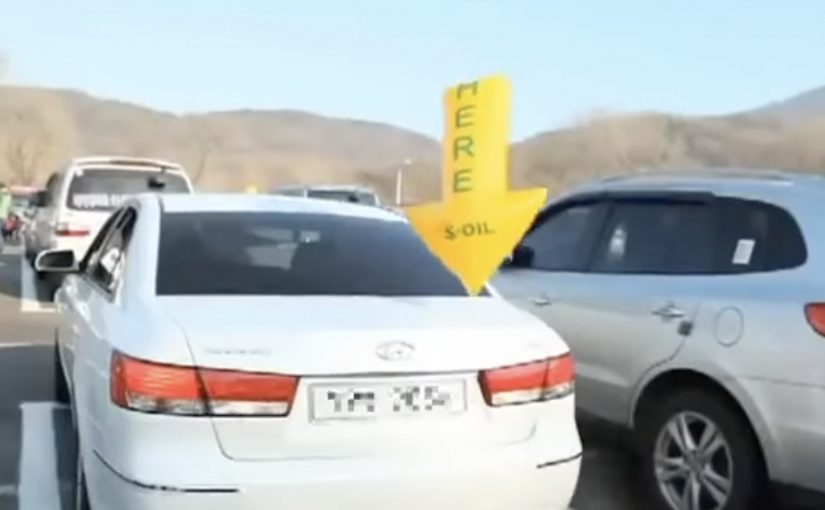
To reduce that waste, South Korean oil brand S-Oil teamed up with Cheil Worldwide and tried a simple visibility hack. In practice, that means turning hidden parking availability into a physical signal drivers can read from a distance. Bright yellow HERE balloons were set up for each parking space. When a car parked, the balloon dropped. When the car left, it rose again. Drivers could spot the balloons from far away and head straight to open spaces without wandering.
A parking signal you can see from across the lot
The mechanism is low-tech but precise. Each space gets a tall, arrow-shaped balloon tethered so that occupancy physically pulls it down. Availability lets it float up. The whole system turns a hidden status. “Is this space free?” into a visible skyline of yes and no.
In dense Asian megacities where time, congestion, and emissions compound daily, the best “smart city” ideas are often the ones that remove searching rather than adding instructions.
The real question is how quickly you can make a hidden status visible enough to remove wasted movement at scale.
Why it lands
This works because it attacks a behaviour, not an attitude. Drivers do not need to be persuaded to care about fuel. They just need the environment to stop making them waste it. The balloons cut decision time, reduce aimless loops, and make the correct action obvious without signs, apps, or learning curves.
Extractable takeaway: When your outcome depends on reducing “search”, do not ask people to change intent. Change visibility. Make the correct option legible from far away, and the behaviour shifts on its own.
What the results are described to show
Campaign reporting describes the one-day test as saving about 23 litres of fuel across roughly 700 cars. The same reporting frames the real opportunity as scale. If you replicate a small efficiency across many lots and many days, the cumulative savings become meaningful.
What parking and place teams can steal
- Turn status into a skyline. If availability is the problem, make it visible at distance.
- Prefer passive systems over active ones. No app installs, no user training, no instructions needed.
- Design for the first two seconds. The idea must be understood instantly from a moving car.
- Measure the behavioural delta. Track circling reduction, time-to-park, and fuel impact, not just “awareness”.
A few fast answers before you act
What are S-Oil “HERE” balloons?
They are arrow-shaped balloons installed above parking spaces that rise when a space is free and drop when a car occupies it, so drivers can spot availability from a distance.
What problem does the idea solve?
It reduces fuel and time wasted while drivers circle looking for a space by making empty spots immediately visible.
Why use balloons instead of an app?
Balloons work for everyone instantly, without installs, connectivity, or attention on a screen. The signal is in the environment where the decision happens.
What results were reported?
Campaign reporting describes a one-day test where roughly 700 cars saved about 23 litres of fuel, with larger savings possible if scaled.
How can a city or brand adapt this approach?
Pick a “hidden” status that causes wasted movement, then create a physical signal that is readable at distance and updates automatically with the real-world state.