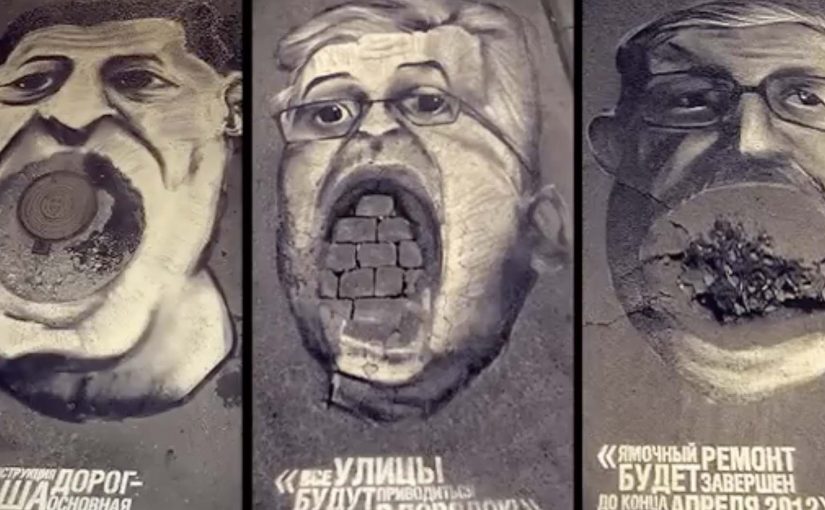
With the new Samsung Note 10.1, caricature artists can now go digital. To highlight this feature and raise awareness about the tablet, Samsung puts a real caricature artist “into” an outdoor billboard experience and has him draw live caricatures of passers-by. The finished drawings are then put on the Samsung Portugal Facebook page.
A live billboard that behaves like a street-portrait stand
The mechanism is simple. People stop. They watch themselves being drawn in real time. The artist works digitally using the Note 10.1, and the billboard becomes a public canvas that makes the device’s creative promise visible from across the street.
In consumer electronics marketing, live demos in public spaces work when the product capability is undeniable without any explanation.
Why it lands: you do not “see a feature,” you experience it
This is not a spec sheet. The real question is whether your launch turns a capability into a moment people actively want, or just a message they tolerate. The device becomes the instrument of a familiar craft, and the outcome is something people actually want. A caricature is personal, fast, and inherently shareable, which makes the crowd effect, the people who stop to watch, do the distribution work.
Extractable takeaway: If your live demo produces a personal artifact on the spot, proof travels further because people share the outcome, not your claims.
What Samsung is really achieving
- Proof at full scale. A drawing tool is hard to dramatize in a 30-second spot. On a billboard, the proof is the show.
- A reason to stop. The promise is not “look at our tablet.” The promise is “get drawn.”
- A built-in content pipeline. The Facebook posting turns a one-off street moment into a browsable gallery.
What to steal for your next live product demonstration
- Choose an outcome people value. A personal artifact beats a generic demo every time.
- Make the capability visible from distance. If it only works up close, most of the street never understands it.
- Close the loop digitally. Give people a clear place to find “their” result after the moment ends.
- Let the crowd be the media. A live, public performance naturally draws more viewers than static outdoor.
A few fast answers before you act
What is Samsung Live Human Outdoor?
It is an outdoor activation where a caricature artist draws passers-by live using the Samsung Note 10.1, with finished sketches published to Samsung Portugal’s Facebook gallery.
What product feature is being demonstrated?
The ability to create digital drawings naturally and quickly on a tablet, associated with pen-based input and creative apps.
Why use caricatures instead of a standard product demo?
Because the outcome is personal and entertaining, which makes people stop, watch, and share, while the product capability is being demonstrated in plain sight.
What makes this “live communication” rather than outdoor advertising?
The billboard is not only a display. It is a real-time performance and interaction, with the public influencing the content through participation.
What is the main lesson for experiential product launches?
Turn a feature into a moment people want. If the experience creates a valued takeaway, attention becomes voluntary and sustained.