
Mountain Dew: Paintball Street Art in London

Mountain Dew: Paintball Street Art in London

Paintballing meets street art in Mountain Dew Energy’s UK campaign. The idea is built around a simple collision: take the raw physicality of paintballing and merge it with graffiti culture.

The campaign is centred on a Facebook app designed to find and showcase the brand’s official street artists. Rather than appointing talent from the top down, Mountain Dew Energy lets fans decide who represents the brand on the street.

The campaign video shows the Graffiti Kings creating large-scale street art using paintballs inside London’s graffiti hub, the Leake Street Tunnel. The featured artists, Knoxville and Grohl, are not random selections. They were chosen by fans following a teaser phase that invited participation before a single wall was painted.

When the medium becomes the spectacle

The mechanism is the twist on technique. Graffiti is usually associated with spray cans and markers. Paintballs introduce unpredictability, force, and performance. The act of creation becomes as interesting as the final artwork, giving the campaign strong visual momentum.

In youth and culture-led marketing, credibility rises when the brand builds a participatory system and lets the community validate the outcome.

In UK culture-led brand marketing, credibility compounds when the community is allowed to validate who gets the wall.

The real question is whether you will let fans choose the makers before you ask them to share the outcome.

Why fan selection changes the power dynamic

Letting fans choose the artists shifts authorship. The brand steps back from curating taste and instead creates a framework where the community validates talent. That makes the outcome feel earned rather than manufactured, which matters in street culture.

Extractable takeaway: If you need cultural credibility, move selection upstream and let the community choose the creators before you invest in production.

This also gives the campaign a built-in narrative arc. The teaser phase creates anticipation. The vote creates ownership. The execution becomes a payoff that fans feel partially responsible for.

The intent behind the paintballs

The business intent is not just awareness. It is cultural alignment. Mountain Dew Energy positions itself close to street culture, creativity, and youth expression. By avoiding polished studio aesthetics, the brand signals that it understands the messier, louder edges of its audience. Brands should not borrow street-culture signals unless they also borrow the audience’s decision rights.

Moves to copy from paintball graffiti

  • Hybridise formats. Combining two cultures can create immediate distinction.
  • Make creation performative. If the process is entertaining, it becomes shareable.
  • Let fans decide. Participation before execution increases emotional investment.
  • Choose the right setting. Leake Street Tunnel adds credibility that no set could replicate.
  • Design the buildup. Teasers and voting give the campaign a rhythm, not just a reveal.

A few fast answers before you act

What makes this campaign different from typical street art sponsorships?

The use of paintballs turns graffiti into a live performance, not just a finished visual, and makes the act of creation central to the story.

Why involve fans in choosing the artists?

It transfers credibility. When the community selects the talent, the brand avoids looking like it is imposing taste from above.

Does the Facebook app actually matter?

Yes. It is the coordination layer, meaning the simple system that collects votes and points fans to the official artists, and gives the campaign a reason to unfold over time.

What audience behaviour is this trying to encourage?

Engagement, sharing, and identification with the brand as part of a creative subculture rather than just a beverage choice.

What is the key takeaway for brand-led cultural campaigns?

Create a platform, not just a placement. When people can influence the outcome, they are more likely to care about the result.
QR Codes: Travel Back in Time to Graffiti

QR Codes: Travel Back in Time to Graffiti

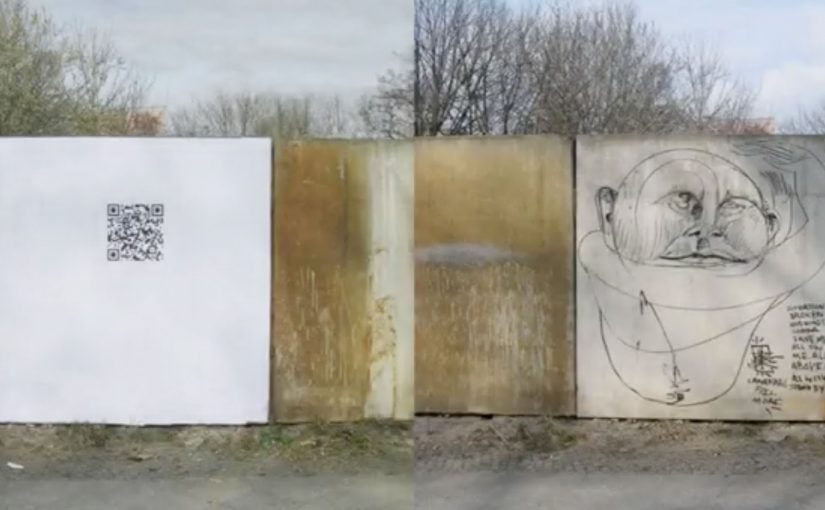
QR Codes are now being used to preserve graffiti for posterity by photographing the graffiti before it is removed. After the graffiti has been cleaned off by local authorities or a building owner, a QR Code is placed in the exact location which leads to the original image of the graffiti. In this way, a mobile phone with a QR-Code Reader can be used to travel back in time. Here, “time travel” means scanning a code on a cleaned wall to see the photo of what used to exist there.

How the “time travel” mechanism works

The system is straightforward: capture the artwork while it exists, then replace the physical mark with a digital pointer after it disappears. The QR code becomes a permanent address for a temporary piece. Because the code stays put while the paint does not, the link between place and memory survives removal.

In cities where street art is constantly overwritten, cleaned, or redeveloped, lightweight digital markers can preserve cultural memory without freezing the city in place.

The real question is whether you want to erase the mark, or keep a findable trace of it in the same place.

This is the right preservation trade-off: let surfaces change, but keep the memory retrievable where it mattered.

Why it lands

It respects ephemerality instead of fighting it. Graffiti stays transient, but its trace stays findable.

Extractable takeaway: Preservation becomes compelling when it is tied to a precise location and low-friction. If people can access “what used to be here” in the exact place they are standing, the archive feels like part of the city rather than a separate museum.

It puts the archive back on the street. The documentation is not hidden in a database. It is anchored to the exact wall where the work lived.

It makes discovery participatory. You have to scan, which turns the passer-by into an active retriever of the past, not just a viewer.

Borrowable moves for place-linked archives

  • Anchor digital content to a precise physical spot. Place is the interface, not just the backdrop.
  • Design for “after removal”. If the thing you love will disappear, make the replacement object carry the memory.
  • Keep the interaction simple. A scan is a smaller ask than an app download or a long URL.

A few fast answers before you act

What problem does this solve?

It preserves the visual record of graffiti that is likely to be removed, while still letting the city clean or repaint surfaces.

Why use QR codes instead of a normal plaque or sign?

A QR code can point to a photo archive and scale cheaply. It also keeps the physical footprint small.

What makes this feel like “traveling back in time”?

You stand in the present at a cleaned wall, scan the code, and instantly see what used to exist in that exact location.

What are the key dependencies for this to work long-term?

The linked image hosting must stay live, and the code must remain readable and not be removed or damaged.

How could a city or brand adapt the idea?

Use location-linked markers to preserve temporary culture. Murals, pop-up installations, event posters, even construction hoardings, while keeping the interaction one-step simple.

CNN International: Go Beyond Borders

CNN International: Go Beyond Borders

A brand message written into a city’s geography

The strongest initiatives do not ask people to remember. They make history physically reappear in the places where it happened.

The Go Beyond Borders Project was an initiative of Heimat Berlin and CNN International, in conjunction with Berlin tape artist El Bocho, created around the 20th anniversary of the fall of the Berlin Wall.

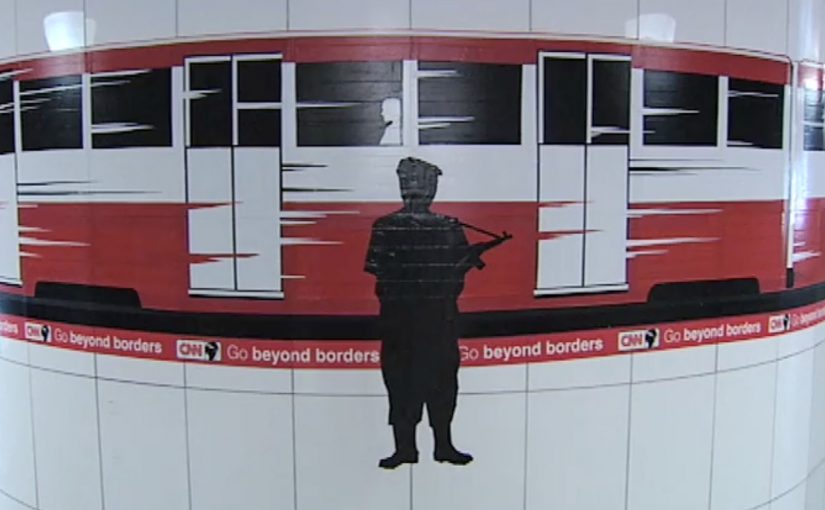
40 km of Go Beyond Borders tape was produced to mark the original position of the Berlin Wall, and eight street art installations told heroic stories of those who conquered the divide between East and West Berlin.

How the project worked as a city-scale marker

The mechanism combined two layers. A city-scale marker is a simple physical rule repeated along a route so the city itself becomes the medium.

First, the tape traced the former Wall line, turning an invisible historical boundary into a visible path you could follow. Second, the street art installations anchored that path with human stories, making the line about people, not only geography.

Because the tape turned an invisible boundary into a route you could walk, it made the former Wall line feel present in everyday movement.

It was simple enough to understand instantly, but large enough to feel unavoidable once you encountered it.

In European cities where collective memory is written into streets and transit, a walkable marker can carry meaning faster than a ceremony can.

The real question is whether your message can be experienced as a physical rule, not merely read as copy.

If the story is spatial, you should build the physical marker first and let media coverage follow.

Why it landed harder than a conventional commemoration

Most anniversaries stay inside ceremonies, speeches, and media coverage. This one put the memory back into the street. The tape created a direct, physical confrontation with “where the divide was.” The art installations made the meaning legible by focusing on courage and crossing, not abstraction.

Extractable takeaway: When meaning depends on place, turn the place into the medium with one walkable marker, then add human stories so the marker carries emotion, not just coordinates.

That shift matters because it turns history into presence, and presence into conversation.

The intent behind “Go Beyond Borders”

The action also marked the launch of CNN’s new international slogan: Go Beyond Borders.

The business intent was to associate the brand with perspective, movement, and crossing divides, using a real-world symbol that already carries emotional weight. Rather than declaring what the slogan means, the initiative demonstrated it through a place-based experience people could encounter and share.

What Go Beyond Borders teaches about place-based branding

A place-based brand initiative uses a physical location or route as the primary medium for the message, not only media.

  • Make the invisible visible. If the story is spatial, mark it in the real world so people can physically encounter it.
  • Pair scale with human narrative. A city-scale gesture earns attention. Stories earn meaning.
  • Use a simple rule. One clear device. Here, tape tracing the line. Makes participation and comprehension effortless.
  • Let the message be demonstrated. If your slogan is about crossing boundaries, show a boundary and what it took to cross it.

A few fast answers before you act

What was the Go Beyond Borders Project?

An initiative by Heimat Berlin and CNN International with artist El Bocho that used tape and street art to mark the former Berlin Wall line and tell stories of crossing East and West Berlin.

What was the core mechanism?

40 km of tape traced the Wall’s original position, while eight street art installations provided narrative anchors and human context.

Why did the tape approach work so well?

Because it turned an abstract memory into a physical, walkable marker that people could encounter in everyday life.

What business goal did this support?

Launching and giving meaning to CNN’s “Go Beyond Borders” slogan by demonstrating it through a culturally significant, real-world experience.

What is the main takeaway?

If you want a message to stick, embed it in a place people can experience, then reinforce it with stories that explain why it matters.