
Fantastic Delites: Human lab mice wheel stunt

People zip into mouse suits, step into a giant wheel, and start running. Keep the pace. Do not tumble. Hold the speed long enough and the reward drops. A free pack of Fantastic Delites, earned the hard way.

This “human lab mice” stunt from Fantastic Delites and agency Clemenger BBDO follows the earlier interactive vending machine installation, where the Delite-o-matic pushed people through button mashing and silly tasks for the same prize. Here, “human lab mice” means real people dressed as mice, running the wheel like a lab experiment. The idea stays consistent. If the snack is worth it, you will work for it.

The mechanism is brutally clear. The audience understands the rules in one glance, then sticks around for the inevitable slips, recoveries, and wipeouts. That is what makes it shareable. The product is the trophy, but the entertainment is the price of entry.

In Australian FMCG sampling, the fastest way to earn attention is to turn trial into a story people want to watch, not a handout people walk past.

Why the “lab mice” framing works

It flips the usual sampling dynamic. Instead of the brand chasing you with freebies, you chase the freebie. The mouse wheel is a physical metaphor for craving and persistence, and the costumes make the whole thing socially safe to laugh at.

Extractable takeaway: When you can make the “try” itself entertaining and socially safe, the crowd becomes your distribution, and the product becomes a trophy instead of a handout.

What the brand is really buying

This is not a rational product argument. It is a proof-by-behaviour message, meaning the audience infers quality from what people do, not what the brand claims. When real people are willing to look ridiculous for a snack, the snack gets a shortcut to “it must taste good.” The activation also turns one giveaway into many impressions, because spectators become the media. This kind of sampling is worth doing only when the challenge is the content and the reward stays modest. The real question is whether your sampling earns spectators before it earns trial.

Sampling takeaways for challenge-for-reward

  • Make the rules readable from 10 meters away. If people cannot explain it instantly, they will not stop.
  • Build a loop that produces moments. Near-fails, fails, retries, wins. That is natural entertainment.
  • Keep the reward proportional. Small prize, big fun. The contrast is the joke.
  • Design for a crowd. If spectators are part of the experience, distribution comes for free.

A few fast answers before you act

What happens in the Fantastic Delites “lab mice” stunt?

Participants wear mouse costumes and run inside a giant wheel. They have to maintain speed long enough to earn a free pack of Fantastic Delites from the Delite-o-matic.

Why does this count as effective sampling?

Because it turns product trial into a public spectacle. The giveaway is small, but the attention is large, and the story is easy to retell.

How is this connected to the Delite-o-matic?

It uses the same behavioural premise. People will do surprisingly effortful things for a free snack, and that behaviour becomes the message.

What is the key design principle behind this kind of activation?

Clarity plus consequence. Clear rules create instant understanding. Visible failure creates tension and humour. Together they keep people watching.

What is the biggest risk with “challenge for reward” stunts?

Making the challenge feel unfair or too slow. If success looks impossible, the crowd loses interest. If success looks too easy, there is no drama.
Radio Tel Aviv 102FM: The City Number Hack

Turn the city’s own numbering system into media

There are many radio stations in Tel Aviv, but only one is called “Radio Tel Aviv”. It broadcasts on 102FM. The task is simple. Make the city associate Tel Aviv with the station.

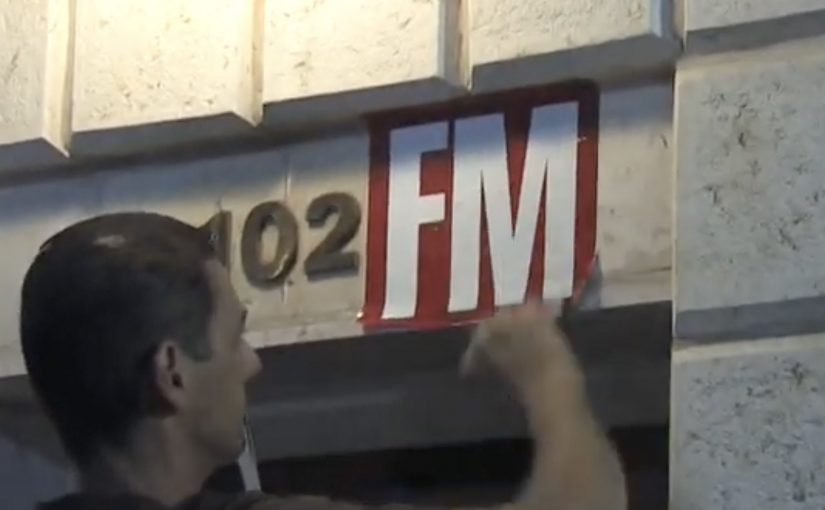
Saatchi & Saatchi Tel Aviv finds a native hook. Major streets in Tel Aviv have building numbers, and “102” appears all over the city. One night, the agency transforms every building number “102” into an ad. Stickers are affixed so “102” becomes “102FM”, complete with the station’s logo and tagline.

The mechanic: hijack an existing cognitive shortcut

People already scan building numbers without thinking. They are part of navigation, deliveries, meeting points, and everyday orientation. By converting “102” into “102FM”, the campaign piggybacks on a habit the city already has and turns it into repeated brand encoding.

In local media branding, the strongest growth lever is often not “more messages”. It is embedding the frequency into a pattern people naturally repeat. The real question is how to make a station identifier feel like part of the city, not just part of the media plan.

Why it lands

It feels clever because it is discovered, not announced. The brand does not interrupt you. It meets you where your eyes already go. And because it is scattered across real places, the idea creates the impression that the station is everywhere, even if the media spend is tiny.

Extractable takeaway: If you want people to remember a frequency, number, or short identifier, graft it onto an existing urban pattern that people already read dozens of times a day.

What radio marketers can steal from 102FM

  • Use native infrastructure. Wayfinding, numbering, and signage are pre-existing attention systems.
  • Keep the modification minimal. The smallest change that flips meaning is often the most elegant.
  • Optimize for repetition. Memory is built through repeated micro-exposures, not one big shout.
  • Make it feel like a city inside-joke. “Spotted it” is a powerful driver of organic talk.

A few fast answers before you act

What did Radio Tel Aviv do with “102” building numbers?

They added stickers so building numbers reading “102” became “102FM”, turning everyday street numbering into repeated reminders of the station frequency.

What is the core creative mechanic?

It hijacks an existing behavior. People already scan building numbers, so the campaign repurposes that habit into brand recall.

Why does this work better than traditional posters for frequency recall?

Because it appears in places people already look, and it repeats naturally across the city, creating many small memory anchors.

What’s the transferable lesson for other brands?

Find a pattern the environment already supplies, then attach your identifier to it in the smallest possible way.

What is the main risk with this tactic?

If it is perceived as vandalism or causes confusion for residents, backlash can override the cleverness. Location choice and execution quality matter.

Coca-Cola: Where Will Happiness Strike Next

A vending machine that behaved like a brand promise

The simplest activations often travel the farthest when the “idea” is visible in one glance. Coca-Cola’s Happiness Machine is a clean example of that kind of instantly understood storytelling.

A Coca-Cola vending machine was transformed into a happiness machine that delivered “doses” of happiness by dispensing more than people expected from a normal purchase.

How the Happiness Machine mechanism worked

The mechanism was a familiar object with an unexpected behavior.

A vending machine is supposed to be transactional. Insert money, get a product. By breaking that script and delivering more than expected, the machine turned an everyday moment into a surprise experience that people immediately wanted to share.

The physical interface did the heavy lifting. No explanation was required because the “before versus after” was obvious in real time.

In global FMCG organizations, activations scale faster when a bystander can understand the payoff in three seconds.

Why the surprise felt contagious

Surprise creates attention, but generosity creates warmth. The experience worked because it did not feel like a trick. It felt like a gift. That distinction matters.

Extractable takeaway: Brands should pair a surprise twist with generosity so sharing feels like celebrating people, not exposing them.

People are happy to share content when it makes them look human, not gullible.

And because the moment happened in public, reactions became social proof. Social proof here means other people’s visible reactions validating that the moment is worth paying attention to.

The business intent behind “doses” of happiness

The intent was to make Coca-Cola’s “happiness” positioning tangible in a way advertising rarely can.

The real question is whether your brand promise can be experienced in public without anyone needing a caption.

Instead of describing a feeling, the brand staged it. The vending machine became a repeatable format that produced real reactions. Those reactions became content, and that content extended the experience far beyond the original location.

Stealable moves from the Happiness Machine

  • Use a familiar object. If people understand the baseline instantly, the twist lands faster.
  • Break a script with generosity. “More than expected” creates goodwill and shareability.
  • Design for public reaction. The audience is not only the participant. It is everyone watching.
  • Make the brand promise physical. If your positioning is emotional, create a moment people can feel, not just read.

A few fast answers before you act

What is the Happiness Machine, in one sentence?

A normal Coca-Cola vending machine behaves unexpectedly by giving people more than they paid for, creating a gift moment instead of a transaction.

How does the mechanism work?

Use a familiar object. Break the expected script. Deliver an instant, legible payoff. Let public reactions create social proof and distribution.

Why does this kind of surprise travel so well?

Because the story structure is clean. Normal situation. Unexpected twist. Human reaction. That sequence is easy to capture and easy to share.

What business intent does this serve?

It makes the “happiness” positioning tangible. Instead of describing a feeling, the brand stages a moment people can experience and witness.

What can brands steal from this execution?

Keep the setup simple, make the payoff instantly understandable, and design for spectators as much as participants. The crowd is part of the creative.

What should you measure if you copy this pattern?

In-the-moment attention and dwell time, organic capture and shares, sentiment, and recall. Also track whether people retell the action, not just the logo.