When “say it on Twitter” becomes “say it in song”
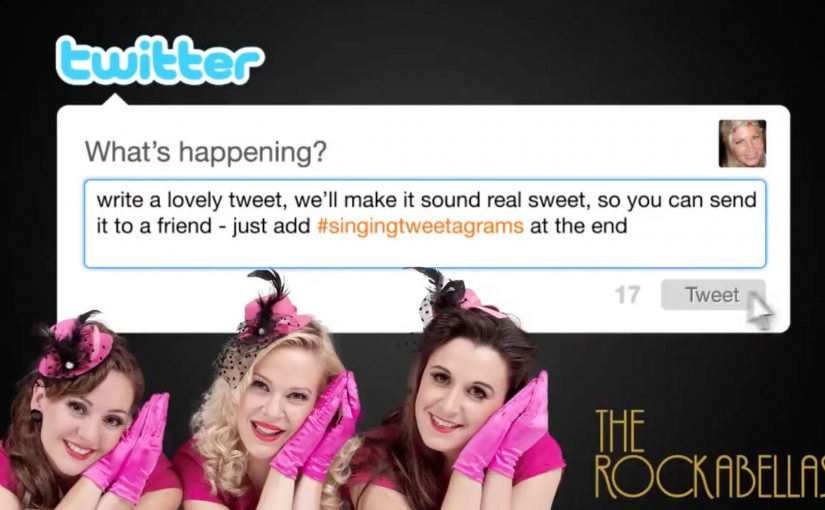
Got a friend who needs cheering up? Or maybe you just want to tell them that you love them, miss them, or really like their new haircut. Now you can say it with Orange UK’s new singing tweetagram. In this activation, a tweetagram is a short tweet that gets turned into a personalized song you can share.
The mechanic: hashtags in, custom songs out
It works like this. You write the tweetagram message to someone, adding the hashtag #singingtweetagrams. Orange then picks the best ones and has the Rockabellas record the message in song within a few hours. Orange then uploads the song and tweets it to you with a link, so you can send it on to the person.
A tweetagram is a short message written in the native language of Twitter, then converted into a personalized media artifact that feels like it was made for one person.
In consumer social marketing, the strongest hashtag activations reward participation with a tangible output that people can share without extra explanation.
Why it works: the reward is the content
The clever part is that the prize is not a discount or a badge. The prize is the thing you actually want to share. This is a smart activation because it turns participation into a gift-like artifact people actually want to pass on. A custom song is inherently gift-like, and it gives the sender social credit while giving the receiver a genuine moment.
Extractable takeaway: If you can turn a native platform input into a fast, polished, personal artifact, the reward becomes the share, and the experience travels without extra persuasion.
This also reduces the usual user-generated content risk. Users write the raw line, but the brand controls selection, production, and final output quality.
When a brand turns a user’s message into a polished artifact and returns it quickly, it converts “engagement” into a keepsake. That creates higher motivation to participate and higher likelihood of forwarding.
The operational question: can Orange produce at internet speed?
The question will be whether they can keep up the pace set by Wieden + Kennedy in its Old Spice effort, which was described at the time as producing more than 180 videos in a couple days and pumping out responses nearly immediately. The real question is whether Orange can keep the “within hours” turnaround feeling real at scale.
That comparison matters because the magic is not only the idea. It is the turnaround time. If the lag feels slow, the moment passes and the sender stops feeling clever for trying.
Steal this pattern: hashtag-to-song rewards
- Make the output unmistakably personal. Names, in-jokes, and direct address beat generic templates.
- Return value fast. “Within hours” is part of the product, not a service detail.
- Keep creation native. Let people use the platform behavior they already know. Here it is a tweet plus a hashtag.
- Curate to protect quality. Selection is a feature. It keeps the final artifacts share-worthy and on-brand.
A few fast answers before you act
What is Orange UK’s Singing Tweetagrams campaign?
It is a Twitter-based activation where people post a message with #singingtweetagrams. Orange selects some messages and has the Rockabellas record them as short personalized songs, then sends the result back as a shareable link.
Why is “speed” so important in this format?
Because the sender’s motivation is tied to the moment. Fast turnaround keeps the interaction feeling live, current, and socially relevant.
What role does curation play in making it work?
Curation protects output quality and brand tone. Users provide raw inputs, but the brand controls which messages become finished content.
How is this different from typical user-generated content contests?
The reward is not external. The reward is the finished content itself, which is designed to be shared and kept.
What is the biggest execution risk?
Production bottlenecks. If demand outpaces recording capacity, turnaround slows and the concept loses the real-time feeling that drives participation.