
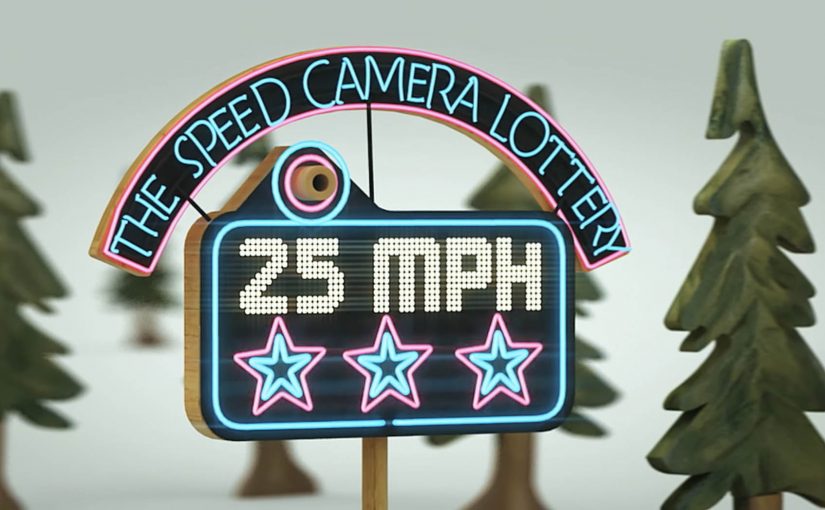
Volkswagen: The Speed Camera Lottery

The winning idea of the Volkswagen fun theory award was submitted by Kevin Richardson, USA.

Can we get more people to obey the speed limit by making it fun to do. This is the question Kevin’s idea answers, and Volkswagen, together with The Swedish National Society for Road Safety, makes the idea real in Stockholm, Sweden.

A speed camera that rewards, not just punishes

The core twist is simple. The concept is described as a lottery wrapped around a speed camera. Drivers who pass at or under the speed limit are entered into a draw. The prize money is described as coming from the fines paid by drivers who speed.

That inversion matters because it changes the emotional frame. Instead of “the camera is there to catch me”, the camera becomes “a chance to win if I do the right thing”.

The mechanic: turn compliance into a game loop

The loop is short and repeatable:

  • Trigger: you approach the monitored zone.
  • Action: you choose to stay within the limit.
  • Reward: you are entered into a lottery, and someone wins.
  • Reinforcement: the story travels because “I won by driving properly” is novel.

Why it lands: it makes “doing the right thing” emotionally positive

Most enforcement is built on fear of loss. This flips motivation into the hope of gain, without removing consequences for speeding. It keeps the stick, but adds a carrot that people actually want.

Extractable takeaway: If you want everyday behavior to change, do not only increase the cost of the bad action. Add a visible, repeatable reward for the good action, and make the reward easy to understand in one glance.

In urban road-safety environments, messaging often underperforms because it feels like punishment instead of shared benefit.

The real question is how to make compliance feel desirable often enough that people repeat it without being re-taught each time.

What the brand really gets from this

Volkswagen is not selling a feature here. It is sponsoring a philosophy. Make better choices feel desirable, and the brand becomes associated with modern, optimistic problem solving rather than lecturing.

That is also why the execution travels so well as a film. It is a simple story with a surprising twist, and it is easy to retell without technical explanation.

What to steal for your own behavior-change campaign

  • Pay attention to framing: the same rule feels different when it is presented as “win” versus “don’t get caught”.
  • Make the rule legible instantly: people must understand the mechanic in seconds.
  • Design for repeat exposure: behavior change needs loops, not one-off impressions.
  • Fund rewards credibly: link the reward source to the problem so it feels fair.
  • Keep it measurable: define the behavior metric first, then build the experience around it.

A few fast answers before you act

What is the Speed Camera Lottery?

It is a road-safety concept where drivers who obey the speed limit are entered into a lottery, making compliance feel rewarding rather than purely punitive.

Why does adding a lottery change behavior?

It introduces a positive incentive that people talk about. The hope of gain can be a stronger daily motivator than the fear of a fine for many drivers.

Does this replace enforcement?

No. The idea is described as keeping normal enforcement for speeding, while adding a reward layer for drivers who comply.

What makes this a “Fun Theory” idea?

It tries to prove that fun, not just rules, can shift behavior. The experience makes the better choice feel more attractive in the moment.

What should you measure if you copy this?

Average speed and speed variance at the intervention point, compliance rate over time, and whether the effect persists once novelty fades.
JetBlue: Nothing to Hide

JetBlue’s ground rule for the sky

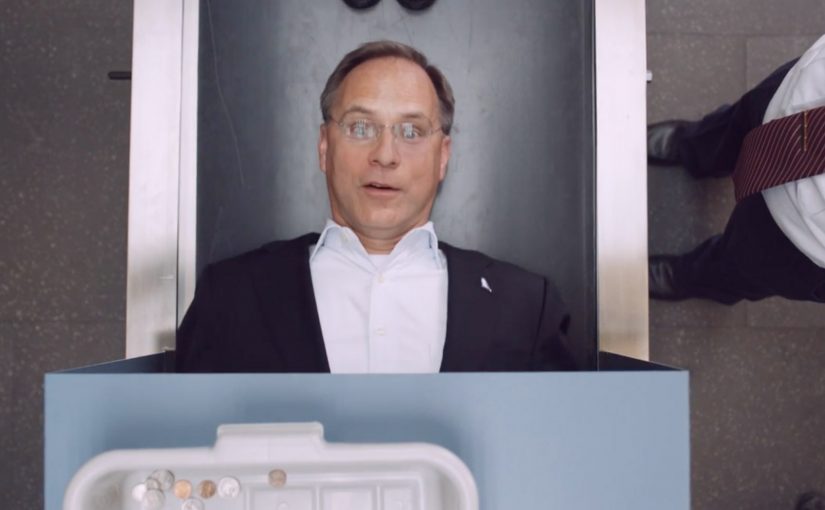
JetBlue has a new credo: “If you wouldn’t take it on the ground, don’t take it in the air.” The carrier’s first ads from Mullen were described at the time as using hidden cameras in Manhattan to illustrate the point. The clip that’s still available is the CEO version. JetBlue’s CEO, Dave Barger, has a lot to say and nothing to hide.

What this execution is really selling: transparency as a brand behavior

This is not a product demo. It is a credibility play. By “credibility play,” I mean a trust-building move where behavior and voice do the convincing, not feature claims. Putting the CEO front and center makes the promise feel like an internal standard, not just a campaign line. Because leadership voice is hard to outsource, the claim reads as accountable, not decorative.

When a service brand uses leadership voice in a short spot, it is trying to compress distance: less “corporate statement,” more “here’s what we stand for.”

In service categories where trust is fragile, a simple fairness test plus a human spokesperson can communicate differentiation faster than feature claims.

In high-frequency service categories, transparency only lands when it is expressed as a behavioral rule customers can reuse without you in the room.

Why the credo works

The line is a mental model. It creates a “ground test”: if a behavior feels unacceptable in a taxi, store, or restaurant, it should feel unacceptable in an airplane cabin too. That reframing lets people judge the category with everyday rules they already believe in.

Extractable takeaway: If you can turn your promise into a simple test people apply to new situations, you get a platform that travels faster than feature claims.

The business intent hiding in plain sight

This is competitive positioning disguised as common sense. The brand is implicitly calling out industry behaviors customers resent, then claiming the moral high ground by promising not to play those games.

The real question is whether you can name a rule customers can repeat and use to judge you.

Even if you never remember the details of the ad, you remember the test. That is the goal.

Moves behind a repeatable promise

  • Make the line a test, not a slogan. If people can apply it to new situations, it travels.
  • Put a real human behind the promise. A credible spokesperson turns positioning into accountability.
  • Keep the claim grounded in everyday fairness. “Would you accept this here?” is easier than explaining features.
  • Leave room for multiple executions. A platform is only useful if it can produce many spots without getting weird.

A few fast answers before you act

What is JetBlue’s “Nothing to Hide” spot about?

It uses a simple fairness credo. If you would not accept something on the ground, you should not accept it in the air. In this clip, CEO Dave Barger delivers that message directly.

Why use a CEO in an airline ad?

It signals accountability and reduces corporate distance. The promise feels like a leadership standard, not just a marketing claim.

What does “If you wouldn’t take it on the ground” actually do for the brand?

It gives customers a fast rule to judge airline behavior. That reframes category annoyances as unacceptable, and positions JetBlue as the alternative.

Is this a campaign line you can extend?

Yes. The “ground test” can be applied to many service irritations, which makes it a reusable platform rather than a one-off message.

What is the biggest execution risk?

If real experience does not match the fairness promise, the line becomes a liability. The clearer the credo, the higher the expectation it creates.

Daffy’s: The Undressing Room

You are walking past a Daffy’s store window in Manhattan and it looks like a fashion show has moved onto the street. Models are inside the display. A crowd is outside. And the public is controlling what happens by text message.

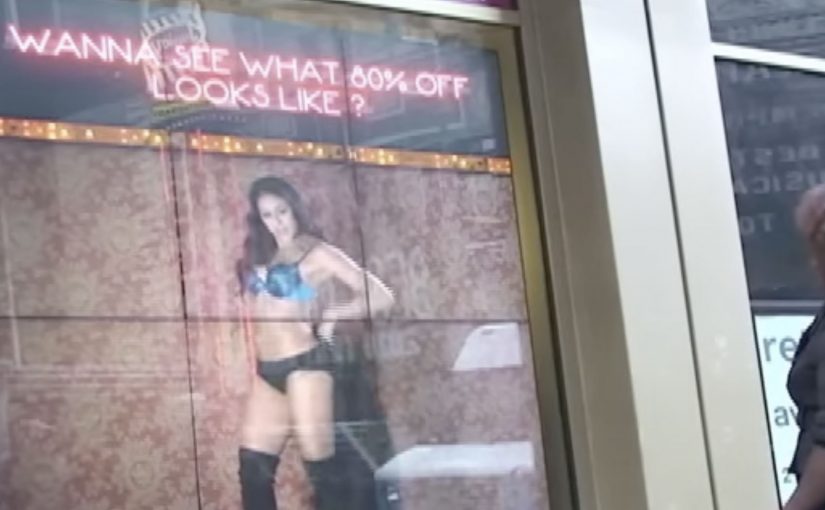
Daffy’s is a fashion retailer from NYC. For their fall fashion launch, they created a street-level event that blended window shopping, a fashion show, and an interactive peep show, meaning passers-by could text outfit requests to models inside while the exchange played out publicly on the glass, to create live interaction from hundreds of passers-by for an entire day and night.

The idea was simple. Put great-looking models in the window with items from the new range. Ask the public at street level to text a special number for each model, requesting specific items to try on and then change out of. Each message was projected onto the store window, letting the crowd follow the conversation, while the models used phones to interact with people on the street.

That shift from window to stage is what turns a shopfront into a live media channel when footfall competes with endless distractions.

Why the mechanism pulls a crowd

The mechanism is a tight loop. You text. Your message appears publicly. The model responds with an immediate, visible action. That creates instant feedback, plus social proof, because everyone can see that participation changes the experience.

Extractable takeaway: When participation is public and the response is immediate, bystanders become an audience because they can see cause and effect in real time.

It also turns fashion into a game with a scoreboard you can read. The projected message stream makes the crowd feel like a single audience, not scattered individuals passing by.

In high-traffic retail corridors, the format works best when the interaction loop is visible to everyone, not just the person who texts.

What Daffy’s is really buying

This is not just “engagement” for its own sake. It is earned attention at street level, then a shareable story that travels beyond the location. The activation is designed to make people stop, watch, talk, and tell others to come over.

The real question is whether you are designing for fast, visible participation that creates social proof, or just staging a spectacle.

This pattern is worth copying only when you can keep the loop tight and keep people safe once the crowd forms.

According to Daffy’s communications, more than 1,500 text messages were received between 6:00 p.m. and 9:30 p.m., and the event was suspended twice by NYC police due to crowd overflow impacting pedestrian and vehicle traffic.

Practical takeaways for interactive storefronts

  • Make the audience the controller. Participation should change something real, not just “send a message”.
  • Project the input publicly. Visibility creates social proof and gives bystanders a reason to join.
  • Design for fast feedback. The shorter the gap between action and response, the bigger the crowd gets.
  • Let the store be the medium. If the window is already the brand’s stage, use it as one.

A few fast answers before you act

What was Daffy’s “Undressing Room”?

A storefront window event where passers-by texted requests to models inside the window, and the messages were displayed publicly so the crowd could follow along in real time.

Why does projecting messages onto the window matter?

It turns private participation into a public feed. People see that the experience is live, and that others are actively shaping it, which increases curiosity and crowd growth.

What’s the core interaction design pattern here?

Public input plus immediate physical response. The text is the trigger. The window action is the payoff.

What makes this more effective than a normal fashion show?

Viewer control. People do not just watch. They influence what happens, and that makes them more likely to stay, share, and bring others.

What’s the biggest operational risk with this kind of activation?

Crowd control. If the moment works, it attracts more people than a normal storefront can safely handle, so permits and on-site management matter.