
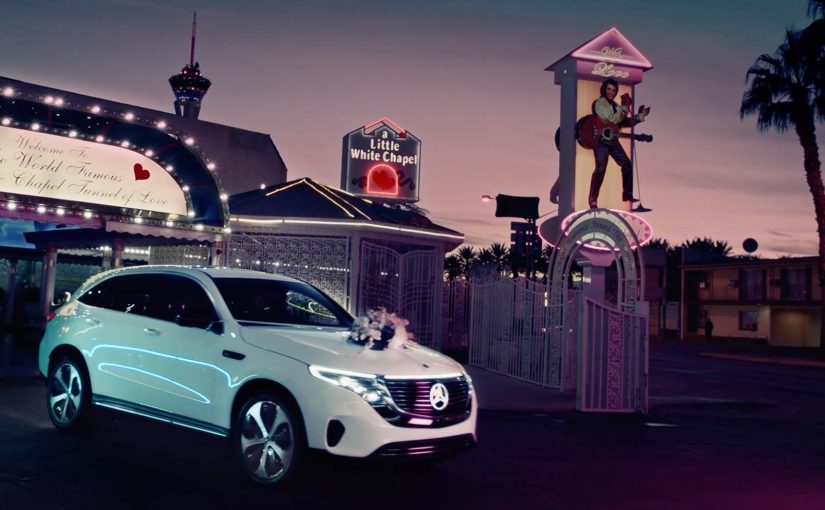
Mercedes-Benz: Yes, A.I. Do

For the world premiere of their new Mercedes-Benz EQC at CES 2019 in Las Vegas, Mercedes transformed their new model into a wedding carriage. Four lucky couples were invited to test drive the new Mercedes-Benz EQC on the roads of Las Vegas and experience its special A.I. features first hand. In this context, “A.I. features” refers to the in-car intelligent functions Mercedes chose to demonstrate during the drive.

The real question is how you make a new, tech-heavy product feel experienceable in minutes, not explainable in slides.

Why this launch twist works

By wrapping a CES tech premiere in a wedding ritual and putting couples behind the wheel, Mercedes turns abstract capability into visible behavior. The ritual creates instant stakes and attention, so the A.I. moments are noticed as part of a real drive, not as claims.

Extractable takeaway: If your features are hard to describe, borrow a human ritual people already recognize so the experience carries the technology.

  • It turns a product reveal into a story. A “wedding carriage” reframes a tech premiere into an experience people immediately understand.
  • It makes A.I. tangible. Instead of describing features on a stage, it puts them into a real drive where reactions matter.
  • It earns attention without shouting. The setup is unusual enough to travel, while still keeping the car at the center.

In consumer-tech and automotive launches where attention is fragmented and skepticism is high, familiar rituals help audiences grasp “what is happening” before they judge “what it does”.

Steal the ritual frame for launches

Wrap a launch moment in a simple, human ritual. Then invite a small group to experience the product in-context so the story carries the technology, not the other way around.

  • Pick a ritual that already means something. Use a simple human frame to make the launch instantly legible.
  • Let real use do the persuading. Put the product into an in-context experience so reactions carry more weight than narration.
  • Keep the product as the stage. The theme should guide attention toward the product experience, not away from it.

A few fast answers before you act

What happened in the Mercedes-Benz “Yes, A.I. Do” activation?

For CES 2019 in Las Vegas, Mercedes used the EQC premiere as a wedding-carriage themed experience and invited four couples to test drive the car and experience its A.I. features first hand.

Why use couples and a wedding theme for a car launch?

It creates an instantly recognizable narrative frame, which makes the activation easier to remember and easier to share than a standard demo.

What is the main takeaway for product launches?

Give the viewer a clear story hook, then let the product prove itself through a real experience rather than through claims.

How do you keep a stunt from overshadowing the product?

Make the product the “stage”. The theme should guide attention toward the experience of the product, not away from it.
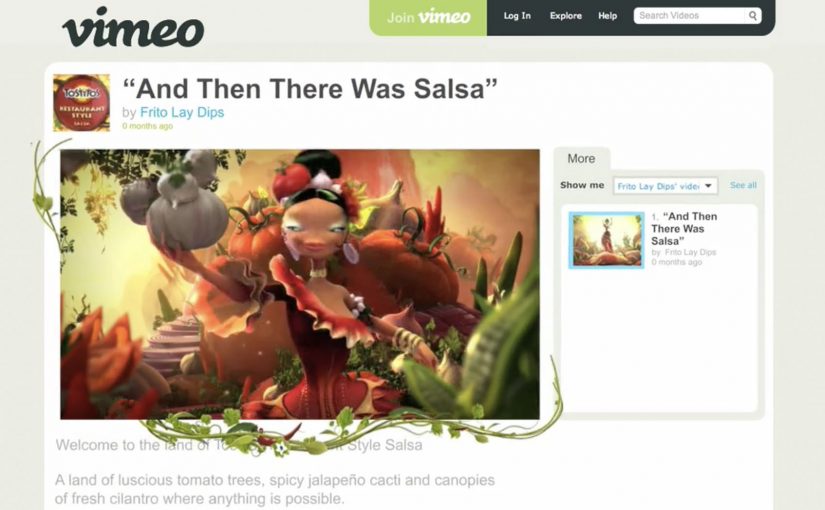
Tostitos: And Then There Was Salsa

Frito-Lay teamed up with online video sharing site Vimeo to create a new advertising campaign for their Tostitos Salsa. The video began with some beautiful CG which then quickly swallowed the viewer’s browser to become a full-screen experience.

When the player becomes the canvas

The execution starts like a normal hosted film. Then the interface itself becomes part of the performance, as the visuals expand beyond the frame and turn the browser window into the stage.

The takeover mechanic in plain terms

The mechanism is a deliberate break of expectation. Here, the takeover mechanic means the film expands beyond the player so the browser window itself feels absorbed into the ad. The film uses high-polish CG to earn trust, then escalates into a page takeover that makes the viewer feel like they have crossed a boundary from “watching” into “being inside” the world of the spot.

In digital brand experiences, fullscreen takeovers work when the format shift is the message, not just a louder container for the same footage.

Why this lands

It delivers a physical sensation in a purely digital space. That moment of “wait, my browser is gone” creates surprise and attention, and it also flatters the viewer by treating the screen as a cinematic environment rather than a box with controls.

Extractable takeaway: If you want immersion, do not only add detail inside the frame. Change the frame itself in a way that reinforces the story you are telling.

What Frito-Lay is buying with the Vimeo partnership

The intent is to make a salsa film feel like an event. A takeover turns a standard online view into a shareable “you have to see this” moment, and it associates the product with craft, spectacle, and a bit of controlled chaos.

The real question is how to make a salsa ad feel bigger than a pre-roll without losing the viewer in empty spectacle.

What to steal for your next immersive video

  • Earn attention first, then escalate. Start simple, then make the environment change once the viewer is already hooked.
  • Make the format shift meaningful. The jump to full-screen should feel like part of the narrative, not a gimmick.
  • Design one unforgettable beat. The takeover moment is the memory. Everything else supports that single peak.
  • Pick the right host for the idea. A platform partnership matters most when the platform’s norms are part of the contrast you are exploiting.

A few fast answers before you act

What is “And Then There Was Salsa”?

It is a Tostitos Salsa online film distributed via a Vimeo partnership, designed to shift from a normal player view into a full-screen browser takeover for a more immersive effect.

What is the core mechanic that makes it feel different?

The experience changes the viewing container. It starts as a standard video, then expands beyond the player and takes over the browser window, so the interface becomes part of the execution.

Why does the Vimeo partnership matter here?

It matters because the idea depends on contrast. A familiar hosted-player environment makes the takeover feel more dramatic when the film suddenly breaks out of it.

When is a fullscreen takeover a smart choice?

When the goal is to create a memorable moment rather than maximize completion rates. It is especially useful when craft and spectacle are part of the brand story.

What should you be careful about with this pattern?

Overuse and irrelevance. If the takeover does not reinforce the idea, viewers experience it as interruption. Performance and compatibility also matter because the format depends on smooth playback.