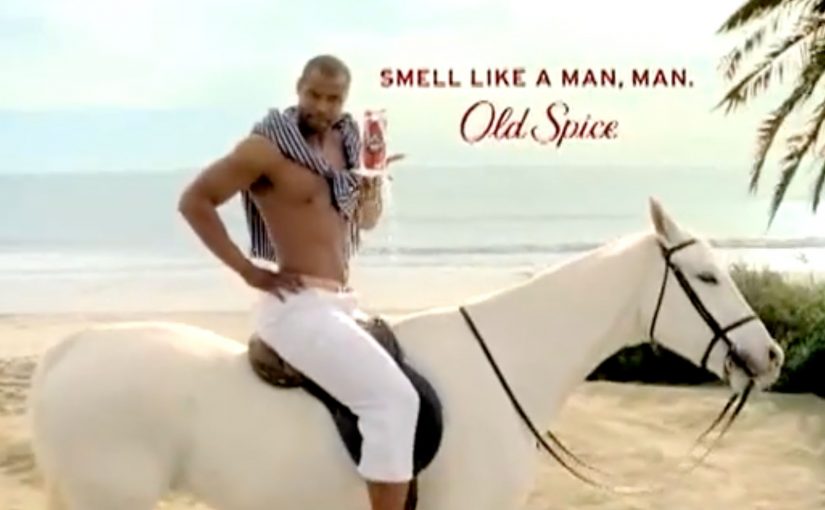
Old Spice: The Social Response Campaign

One body wash campaign that owned the conversation

This Old Spice case study takes us through the insight around targeting men and women at the same time to generate conversation around body wash. When it launched, the campaign managed to capture 75% of all conversations in the category.

To continue the success, Old Spice & Wieden + Kennedy created the next level, where Mustafa. Now a household hero. Engaged with the fans directly. The response campaign consisted of around 180 customized videos which engaged the fans directly. Thus it became the best social campaign ever to have been created.

Here are some stats of the campaign.

  • On day 1 the campaign received almost 6 million views (that’s more than Obama’s victory speech)
  • On day 2 Old Spice had 8 of the 11 most popular videos online
  • On day 3 the campaign had reached over 20 million views
  • After the first week Old Spice had over 40 million views
  • The Old Spice Twitter following increased 2700% (probably off a lowish base)
  • Facebook fan interaction was up 800%
  • Oldspice.com website traffic was up 300%
  • The Old Spice YouTube channel became the all time most viewed channel (amazing)
  • The campaign has generated 1.4 billion impressions since launching the ads 6 months ago
  • The campaign increased sales by 27% over 6 months since launching (year on year)
  • In the last 3 months sales were up 55%
  • And in the last month sales were up 107% from the social responses campaign work
  • Old Spice is now the #1 body wash brand for men

And without further a-due. The best social campaign ever.

The real shift: from broadcast to back-and-forth

The original idea did something rare. It spoke to men and women at the same time. Then it did the smarter thing. It treated the public reaction as the next creative brief. 180 customized responses turn attention into participation.

In FMCG categories where products are similar, a brand character plus high-volume two-way interaction can turn attention into a defensible advantage.

Why this still feels like a blueprint

Most campaigns stop when the film launches. This one starts there. When the character becomes a “household hero,” the brand gains a voice people want to talk to. The response layer makes the audience feel seen, not targeted.

What the numbers are really doing here

The stats are not just bragging rights. They are proof that conversation can move the entire system. Views, follows, site traffic, impressions, and ultimately sales. All tied to a campaign designed to travel socially.

What to steal from Old Spice’s playbook

  • Build for both sides of the purchase conversation. The user. And the influencer in their life.
  • Treat launch day as the start of the campaign, not the finish line. Plan the response layer.
  • Create a character and tone that can scale across dozens or hundreds of variations without losing recognition.

A few fast answers before you act

What was the core insight in this Old Spice campaign?

Target men and women at the same time to generate conversation around body wash, then use that conversation to fuel the next wave of content.

What made the “response campaign” different?

Mustafa engaged fans directly through around 180 customized videos, turning audience attention into two-way interaction.

What results did the post claim?

The post cites rapid view growth over the first week, large jumps in social following and interaction, major traffic increases, and significant sales lifts over months.

What is the core mechanic behind the success?

A launch film that sparks broad conversation, followed by high-volume personalized responses that keep the conversation accelerating instead of fading.

Kit Kat: Jesus Loves Kit Kat

When a bite turns into a “sighting”

Every so often the internet latches onto a “miracle” story. This one starts with a simple, everyday moment. Someone takes a bite of a Kit Kat, and suddenly the bite pattern is framed as a face. Cue the inevitable question. Is it real, or is it just our brains doing what they always do with patterns?

Either way, the punchline lands immediately because the brand line is already waiting for it. Jesus loves Kit Kat. Have a break. Have a Kit Kat.

The stunt behind the headline

The mechanism is a simple one. Take a familiar cultural pattern. The “miraculous sighting” story. Then attach it to an everyday object and let curiosity do the distribution work.

In European FMCG marketing, low-budget PR seeding can outperform paid media when the story is easy to retell and the brand cue is unmistakable.

In this case, the campaign is described as being kick-started by sending a tip to major Dutch news sites about a “Jesus face” discovered in a bitten Kit Kat, complete with “proof” photos. Once the story lands, the audience spreads it for free, partly to react, partly to mock, and partly to forward the joke.

Why it lands: the audience writes the punchline

It works because the viewer instantly knows what to do with it. “Is it real” is the hook. “Obviously not” is the release. Then the slogan becomes the comment section fuel, because “Have a break” and “Give me a break” are ready-made responses that keep repeating the brand.

What the brand is really buying

This is not persuasion. It is memory and talk value. The goal is to force a moment of attention in a low-involvement category, then lock the attention to a slogan people already know well enough to quote without effort.

What to steal if you want earned reach without begging for it

  • Use a story shape people already recognise. Familiar formats travel faster than “new idea” explanations.
  • Make the brand cue inseparable from the joke. If the gag works without the product, you are funding entertainment, not brand recall.
  • Design for repeatable phrasing. The best hooks come with a built-in line people will type in their own words.
  • Know the risk. Hoax-style PR can backfire if your category depends on trust, seriousness, or institutional credibility.

A few fast answers before you act

What is happening in “Jesus Loves Kit Kat”?

A playful “sighting” style story frames a bitten Kit Kat as if it reveals a face, and the curiosity and debate around it drives sharing.

What is the core mechanism?

PR seeding plus a familiar meme-like story format. People click to judge it, then share to react, mock, or pass along the joke.

Why does this kind of story travel fast?

Because it is easy to retell and invites opinion. The audience becomes the distributor by arguing about whether it is “real”.

What is the brand risk to watch?

Hoax-style hooks can backfire in categories where trust and seriousness matter. The technique needs category-fit and tone discipline.

What is the most transferable takeaway?

If you use a cultural format people already recognise, make sure the brand cue is inseparable from the punchline, otherwise the joke outlives the brand.

Coke Zero: Find Your Online Lookalike

A social experiment built on the “evil twin” feeling

If you have ever reckoned you have an evil twin somewhere else in the world, or that you were separated at birth but no one has got round to telling you, Coke Zero’s “worldwide social networking experiment” plays directly into that curiosity.

Coke Zero created a Facebook app called the “Facial Profiler” with one clear aim: find your online lookalike.

Coke Zero Facial Profiler App

The mechanic is simple and self-explanatory. You upload a photo to the database. Coke analyses the facial characteristics and attempts to find the nearest match from other uploaded images.

In global FMCG marketing, lightweight social utilities can turn personal identity-curiosity into mass participation with minimal friction.

Why it spreads without feeling like an ad

This works because the “reward” is social, not transactional. People want to see the result, they want to show friends, and they want friends to try it back, which increases the pool of uploaded images and improves the matching for everyone.

There is also a built-in tension that keeps it sticky: the match is never perfect, which invites replay, comparison, and conversation rather than closure.

Where the brand message sits in the experience

The campaign does not argue product attributes head-on. Instead, it borrows the logic of the product proposition and turns it into a human metaphor: “close enough” can still be compelling.

The idea behind the campaign is: ‘If Coke Zero has the taste of Coke…is it possible that someone out there has your face?’.

What to steal for your next participation mechanic

  • Start with a universal itch. Identity, comparison, and “who do I look like” is instantly legible in any market.
  • Make the first step frictionless. One upload, one result, immediate payoff.
  • Let the community improve the product. Every participant makes the experience better for the next one.
  • Encode the proposition in the mechanic. The “same taste” claim becomes a story people can experience, not just hear.

A few fast answers before you act

What is Coke Zero’s Facial Profiler?

It is a Facebook application that invites people to upload a photo and then returns the closest lookalike match from other uploaded images in the database.

How does the campaign mechanic work?

Participation creates the asset. Users contribute photos, the system compares facial characteristics, and the database grows with every upload, which increases the chance of finding a “near match”.

Why does this kind of idea get shared?

Because the output is personal and social. The result is fun to show, fun to debate, and it prompts friends to try it too, which naturally amplifies reach.

What is the business intent behind the experience?

To make the Coke Zero proposition memorable by translating “close enough to Coke” into a human analogy, so the brand message is felt through participation rather than explained through claims.

What is the most transferable lesson for digital campaigns?

Build a simple loop where the audience action creates the content, the content creates conversation, and the conversation recruits the next participant.