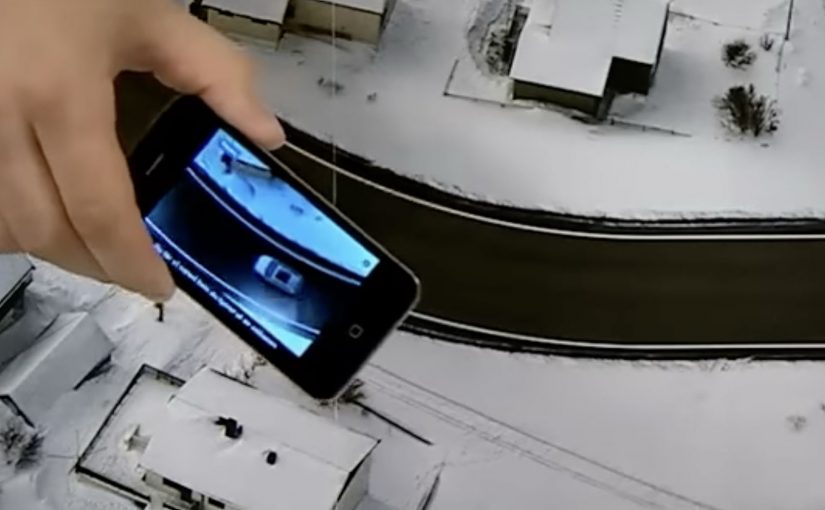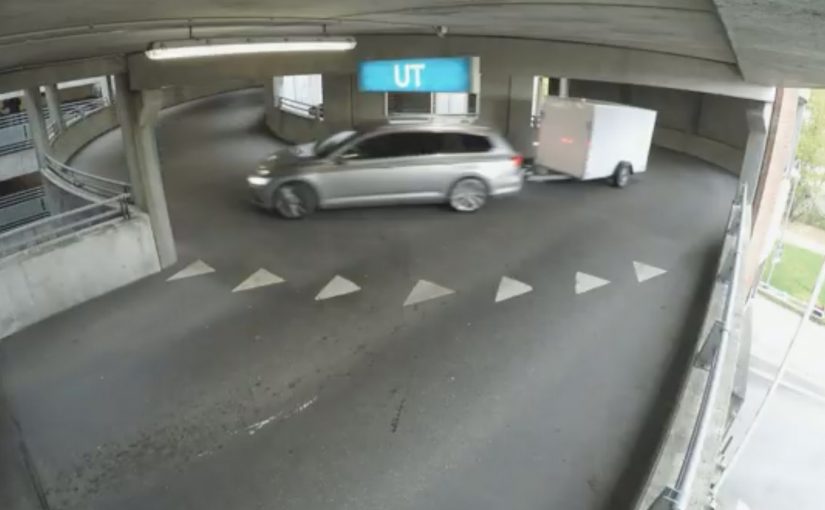
The Trailer Assist feature allows Volkswagen cars to park semi-autonomously using the rear backup camera. To promote this feature in Norway, Volkswagen created a stunt where a driver appeared to back up his car and trailer at high speed through parking lots, roundabouts and intersections.
The film looks impossible on purpose. The “trailer” was built as a disguised driving rig, with a stunt driver inside. One-way transparent plexi glass (and film) kept visibility possible for the driver in the rig, while still selling the illusion from the outside.
What Trailer Assist is actually solving
Reversing with a trailer is where confidence collapses for many drivers. The steering feels counter-intuitive, small corrections compound fast, and stress makes it worse. Trailer Assist flips that experience by turning the job into a simpler “direction setting” task, while the system handles the tricky part of guiding the trailer’s path using the rear camera. By “direction setting,” the driver chooses where the trailer should go rather than constantly counter-steering every correction.
Why the stunt works as marketing
In automotive marketing, driver-assist features are easier to remember when the audience feels the pain before it hears the specification. Because the stunt externalizes the panic of trailer reversing at an exaggerated scale, viewers immediately understand why assistance matters before the feature is explained. This is smart feature marketing because it dramatizes the user problem first and the technology second.
Extractable takeaway: When a feature reduces a known stress point, dramatize the stress first so the assistance feels necessary rather than technical.
What Volkswagen is really demonstrating here
The real question is whether Volkswagen can turn a hidden driver-assist feature into a capability buyers instantly understand and remember. Volkswagen is not selling autonomous driving here. It is selling confidence at the exact moment many drivers feel least competent.
What to steal for tech-feature storytelling
- Start with a strong visual proof. If the benefit is hard to explain, make it easy to see.
- Use exaggeration to earn attention, then anchor in reality. The stunt pulls people in. The feature explanation keeps it credible.
- Pick a scenario your audience already fears. Trailer reversing is a universal stress test.
A few fast answers before you act
What is Volkswagen Trailer Assist?
A driver-assist feature that helps manoeuvre a trailer while reversing using the rear camera, reducing the counter-intuitive steering challenge.
What did Volkswagen do in Norway to promote it?
They staged a stunt that made it look like a Volkswagen reversed a trailer at very high speed through real-world driving situations.
How did they create the illusion?
A disguised trailer rig with a hidden stunt driver inside made the movement possible while keeping the “reverse drive” effect believable from the outside.
Why was plexi glass part of the setup?
One-way transparent plexi glass (and film) allowed the driver in the rig to see out while keeping the illusion intact for onlookers and camera angles.
What is the key takeaway for marketers?
When a feature is hard to appreciate in a static demo, create a single dramatic scenario that forces attention, then connect it back to the everyday value.