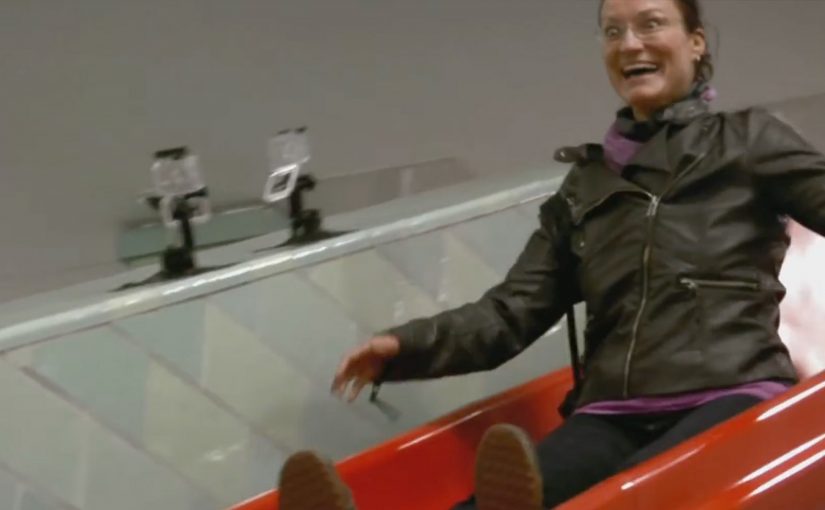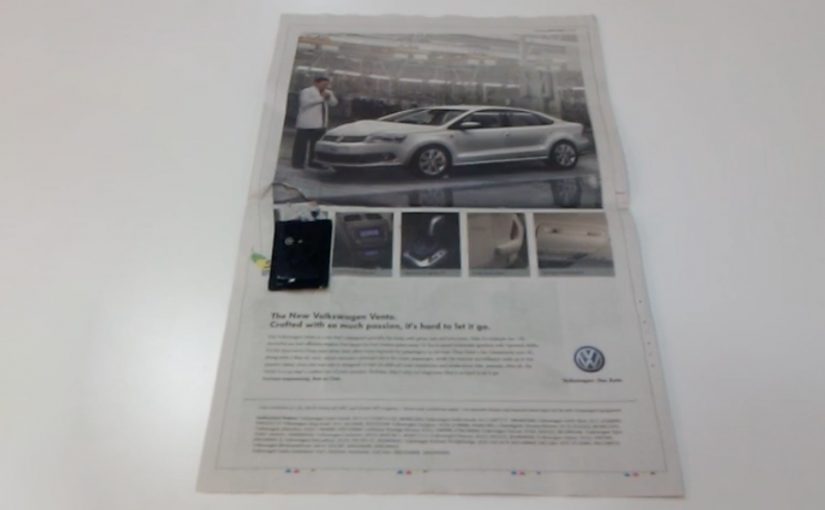
In India, Volkswagen has created a “talking” press ad that makes a newspaper behave like a greeting card. Reports described it as one of the most talked about topics of the day on Facebook and Twitter, because the ad does something print is not supposed to do. It speaks.
If you bought the Times of India edition carrying the special wrap, you would have seen a clutter-breaking execution with a built-in audio module. When you open the newspaper, a light-sensitive sensor acts like a switch and the message starts playing. Fold the paper and the audio shuts off.
The activation is widely reported as part of Volkswagen’s launch push for the Vento, executed at massive scale in India’s daily press.
Print that behaves like a device
The genius here is not the audio file. It is the interface. Open equals on. Close equals off. That single rule makes the experience feel magical, because it requires no instructions and no “tech literacy”. The paper itself becomes the power button.
It also creates a physical moment of surprise in an environment that is normally predictable. You expect ink. You do not expect a voice.
In mass-circulation newspaper markets, turning a silent medium into a sensory one is a reliable way to earn attention, as long as the mechanic is instant and self-explanatory.
Why this spread so fast
The format does the distribution work. People do not share “a new car ad”. They share “my newspaper started talking”. That is the difference between a message and a story.
Extractable takeaway: If the mechanic can be demonstrated in a repeatable loop, the audience becomes your distribution by showing it to other people.
It also turns the reader into a demonstrator. Once you discover it, you want to show someone else by repeating the action. Open. Close. Open again. That loop is built for office desks, breakfast tables, and social feeds.
What Volkswagen is really buying
The business intent is to make “arrival” unmissable. A new model launch needs attention in a crowded category, and this format forces a moment of engagement even if someone is only half-reading the paper.
The real question is whether your format makes the story self-propagate before you pay for reach.
This pattern works when the surprise is tightly coupled to the product story you want retold, not just the novelty of the mechanic.
It also signals “German engineering” through the medium itself. The ad does not just claim innovation. It performs it.
What to steal from a talking newspaper
- Build a one-rule mechanic. A one-rule mechanic is a single on and off trigger people can explain and repeat in one sentence.
- Make discovery physical. The more “showable” the action, the faster it spreads.
- Let the medium carry the proof. If you are selling engineering, make the communication feel engineered.
- Design for repeat demonstration. A loopable experience gets re-played and re-shared.
A few fast answers before you act
How does a “talking newspaper” ad work?
A small audio module is attached to the printed wrap or page. A light-sensitive sensor detects when the paper is opened and triggers playback. Closing or folding the paper stops the audio.
Why is this more effective than a normal print ad?
Because it forces a moment of attention through surprise, and it creates a story people repeat. The format itself becomes the message.
What kind of campaign is this best suited for?
Launch moments, announcements, and “new arrival” messaging, where the job is to break through clutter and get people talking immediately.
What is the biggest risk with sensory print executions?
Annoyance. If the audio is too loud, too long, or hard to stop, the novelty flips into irritation. The on and off behavior must feel fully under the reader’s control.
What should you measure if you run something like this?
Earned mentions, correct retelling of the mechanic, and immediate brand linkage to the intended message. If people talk about the talking paper but forget the brand, you paid for novelty, not impact.