
Brake New Zealand: Living Memories

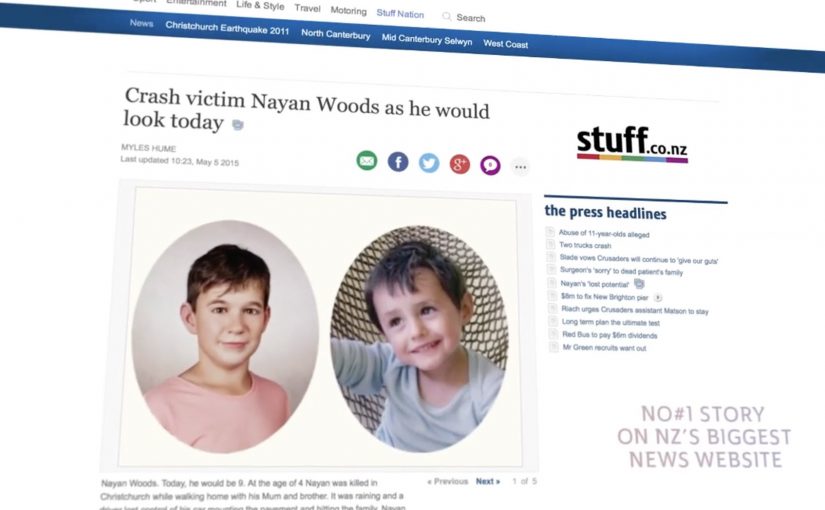
Five families sit down to meet someone they have not seen in years. Not in footage, and not in memory. They are shown a new portrait of what their child would look like today if the crash had not happened.

That is the emotional core of “Living Memories”, a campaign created for New Zealand road safety charity Brake with Y&R New Zealand. Five bereaved families volunteer their stories and photographs. A forensic age progression specialist creates an age-progressed sketch for each child, then Weta Digital applies a film-grade 3D character workflow to render those sketches into lifelike portraits.

From forensic sketch to a portrait that feels real

The mechanics are deliberately simple and respectful. Start with family photos. Build a plausible “today” version using forensic age progression. Then use a VFX-grade craft process to land realism: facial structure, skin texture, hair, lighting, and the small imperfections that make an image feel like a person, not a concept.

In interviews about the project, the team describes avoiding the usual driver-centric shock formula. Instead, the work reframes a fatal crash as a theft of future, not only a loss of life. The portraits are the device that makes that reframing unavoidable, which is why the work lands as empathy instead of another warning people learn to tune out.

In road safety communication, behaviour change work gets stronger when it makes consequences specific, personal, and imaginable, rather than statistical and abstract.

Why it lands without lecturing

The real question is how to make the cost of a crash feel immediate before another family has to imagine the years that never happened. It works because it replaces generic warning language with a concrete counterfactual. That counterfactual means a specific life that should have continued. You are not asked to fear injury. You are asked to face a specific life that could have continued. That shift moves the message from compliance to empathy, and empathy is harder to shrug off. This is a stronger road safety move than another driver-centric shock ad because it turns consequence into empathy instead of noise.

Extractable takeaway: If you need behaviour change, pick one vivid, human “missing future” moment your audience can picture in seconds, and build your creative device around making that moment feel undeniably real.

The brand and charity intent behind the emotion

Brake’s job is awareness plus support for people affected by road trauma. This execution earns attention without spectacle, and it gives the charity a clear platform story to carry through the week. For Y&R, it is a case study in how craft and restraint can outperform volume, especially when budgets are limited.

What to steal for your next high-stakes message

  • Stop telling people to “be careful”. Show the specific, lifelong cost of one decision.
  • Use a single, truthful device. Here, it is age progression plus realism, not a pile of tactics.
  • Cast real stakeholders, not actors. Voluntary participation carries moral weight and credibility.
  • Let craft carry the persuasion. When realism is the point, invest in the details that make it believable.
  • Build the story for earned reach. The reveal moment is inherently newsworthy and shareable.

A few fast answers before you act

What is “Living Memories” in one sentence?

It is a Brake New Zealand road safety campaign that uses forensic age progression and Weta Digital craft to show what five children killed in crashes might look like today.

What is the core mechanism?

Family photos become age-progressed forensic sketches, then those sketches are rendered into realistic portraits so the audience can emotionally grasp “lost futures”, not just “lost lives”.

Why use portraits instead of crash scenes?

Portraits shift the message from fear to empathy. They make the consequence personal and imaginable, which tends to travel further than generic warnings.

How do you keep work like this from feeling exploitative?

Consent and dignity are the guardrails. Participation must be voluntary, families must control boundaries, and the storytelling must centre the person lost, not the brand or the spectacle.

What is the most reusable lesson for other topics?

When you need serious behaviour change, replace abstract statistics with a single, concrete “this is what is missing” moment that people can picture instantly.

Nar Mobile: The Donor Cable

Azerbaijan is often described as having an unusually high incidence of children born with thalassemia, a hereditary blood disorder found across Mediterranean and nearby regions. The illness can require extensive blood transfusions for babies, and hospitals can struggle with shortages of donated blood.

So Y&R Moscow partnered with Azerbaijan cellular network Nar Mobile to re-imagine blood donation for a more digital daily life. Together they created a special wearable bracelet. A donor cable is a wearable charging cable that lets smartphone owners easily donate battery power to another person, and uses that act as a prompt to donate blood.

A wearable that makes donation tangible

The Donor Cable is a charging cable designed as a bracelet. When someone’s phone is dying, you can connect phone to phone and transfer power. The campaign then bridges that familiar “help” moment to a bigger one. Donate blood.

A donor cable is a physical connector that enables one person’s phone battery to recharge another device. The campaign uses that simple transfer as a metaphor for medical donation.

In mobile-first markets, translating “helping” into a familiar phone habit can lower friction for real-world donation behaviour.

Why this lands

This works because it does not start with guilt or abstract altruism. It starts with a small, instantly useful act between two people, then reframes that feeling of helping as the reason to do the harder, higher-impact thing. The bracelet format also keeps the reminder on you without requiring ongoing media.

Extractable takeaway: If you need behaviour change, start with a low-friction action that already feels rewarding, then create a clear bridge and an immediate next step to complete the “real” action while motivation is still warm.

What the numbers are trying to prove

The stronger strategic move here is the bridge from everyday phone help to real blood donation, not the bracelet itself.

The real question is whether the campaign makes the jump from symbolic transfer to actual donation immediate enough to convert intent into action.

Campaign coverage described the donor cables as an instant hit and reported an increase in blood donation of 335%. Treat that percentage as reported performance unless you have a primary measurement source to cite.

What behaviour-change teams should steal

  • Make the metaphor usable. A real action beats a slogan.
  • Put the reminder on the object. Wearable prompts outlast a media flight.
  • Collapse distance to conversion. Pair the story with an easy path to donate.
  • Keep the rule explainable. If it takes a paragraph to understand, it won’t spread.

A few fast answers before you act

What is the Donor Cable?

A wearable charging cable that lets one person transfer battery power to another phone. It is used as a behavioural prompt to encourage blood donation.

Why connect phone charging to blood donation?

The idea uses a clear analogy. A small, immediate “donation” of power makes the bigger act of donating blood feel more approachable, and more top-of-mind.

How does the bracelet change behaviour beyond awareness?

It creates a repeatable micro-action people can perform in public, then links that positive social moment to a concrete next step. Donate blood.

Is the 335% figure a verified metric?

It is presented in campaign coverage as a reported result. If you want it stated as verified, you would need a primary measurement source.

What’s the main risk if you copy this pattern?

If the bridge from the small action to the real action is not immediate, the analogy stays clever but does not convert. The donation step must be easy to find and easy to complete.

Virgin Atlantic: No Ordinary Park Bench

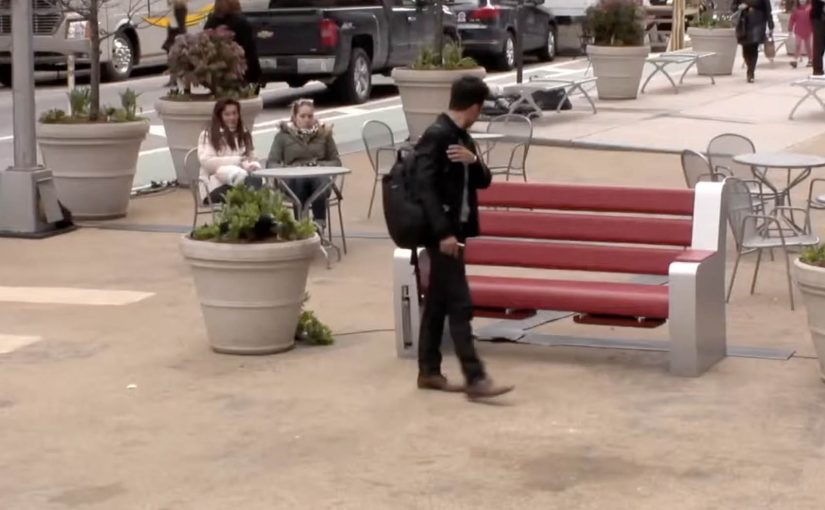
Virgin Atlantic wanted to give the people of New York a taste of their onboard services. So with the help of Y&R New York they took over an ordinary bench and gave unsuspecting park-goers an unforgettable Virgin Atlantic experience.

How an “ordinary” bench becomes an airline product demo

The mechanism is a simple swap. Take a familiar public object. Upgrade it with unmistakable “premium” cues. Then add a layer of surprise service so the bench behaves less like street furniture and more like a seat with hospitality. The passersby reaction becomes the content, and the content carries the brand promise further than a static poster ever could.

In premium service brands, the fastest route to belief is letting people experience the service promise before they ever buy.

Why it lands

This works because it compresses a complex claim, “we make flying feel special”, into a single, legible moment in the real world. You do not need a fare sale, a cabin diagram, or a spec sheet. You just need the contrast of ordinary versus treated-like-a-guest.

Extractable takeaway: When your differentiation is a feeling, stage a public, bite-sized version of that feeling. Make it easy to understand in one glance and easy to retell in one sentence.

What the stunt is really doing for the brand

It turns an intangible benefit, service, into something tangible and shareable. The real question is how you make an intangible service promise feel credible before purchase. The bench is not the point. The point is credibility by demonstration. It is a live proof point that “Virgin Atlantic service” is a thing you can recognize, even on the ground.

What premium service brands can borrow

  • Choose a familiar object: the more ordinary the baseline, the stronger the contrast when you upgrade it.
  • Make the promise physical: show the service, do not describe it.
  • Design for bystanders: build a moment that attracts a crowd without requiring explanation.
  • Keep the story clean: one setup, one surprise, one payoff.
  • Capture reactions: human responses are the most efficient proof of “this is different”.

A few fast answers before you act

What is the “No Ordinary Park Bench” idea?

It is a Virgin Atlantic street activation where an ordinary park bench is transformed into a branded service moment, giving park-goers a taste of the airline’s onboard experience.

Why use a bench instead of a pop-up booth?

A bench is instantly understood and frictionless. People sit without committing to “an activation”, which makes the surprise feel more genuine and the reactions more watchable.

What makes this effective for premium brands?

Premium is hard to prove with claims alone. A live demonstration makes the promise tangible, and it gives people a story to repeat.

What is the core pattern to reuse?

Pick one everyday touchpoint, upgrade it dramatically, and deliver the brand benefit in a way people can feel immediately.

What is the biggest risk with this format?

If the experience feels staged, intrusive, or confusing, the audience will not lean in. The best versions are simple, respectful, and clearly additive to the public space.