

ibis: Sleep Art Paints Your Night

ibis: Sleep Art Paints Your Night

You fall asleep in an ibis room. While you’re out, a robot “wakes up” and turns your night into an abstract painting. By morning, you have sleep captured as a physical artifact, not a vague promise.

How Sleep Art works

The setup is simple in concept and slightly mad in execution. A mattress fitted with sensors captures signals like movement, temperature and sound. Those inputs are translated into brush strokes, and a robot paints them onto a canvas live through the night.

In European hospitality marketing, making an invisible benefit like “better sleep” visible and shareable can create disproportionate talk value for an economy brand.

The real question is whether a hotel brand can turn a private, hard-to-prove benefit into something people notice, remember, and share.

Where it shows up

The Sleep Art experience is positioned as available in European capitals including Paris, London and Berlin. Brand materials for the same operation also describe a Warsaw stop as part of the run.

Why this lands

This hits because it turns a universal, private activity into something you can see, keep, and show. It also gives ibis a distinctive proof object for its sleep story. By proof object, I mean a tangible output, like a canvas or shareable visual, that makes the benefit visible without extra explanation.

Extractable takeaway: If your core benefit is hard to perceive in the moment, translate it into a concrete output people can take home, screenshot, or share, so the benefit becomes demonstrable without extra explanation.

What the brand is really doing

Sleep Art is a product promise made legible. It frames “happy sleep” as both experience design (the room, the bed, the ritual) and content creation (the artwork), so the campaign functions as acquisition, PR, and brand repositioning at the same time.

How to make invisible benefits visible

  • Make the benefit visible. Convert an intangible promise into an artifact people can show.
  • Instrument the experience. Sensors are not the headline. The output is.
  • Design the morning-after moment. The reveal is where the story becomes tellable.
  • Scale with a lighter digital version. A physical installation creates the myth. A simple app extends reach.

A few fast answers before you act

What is ibis Sleep Art?

It’s a branded experience that converts sleep signals into abstract art, originally via a sensor-equipped bed feeding a robot that paints a canvas during the night.

What data does it use?

Signals such as movement, temperature and sound from sensors in the sleep setup, translated into visual patterns and brush strokes.

Why put a robot in the story at all?

The robot makes the transformation feel physical and “real,” which increases memorability and gives the brand a strong visual for PR and sharing.

How do people participate?

Through a registration mechanic routed via the ibis Facebook presence, positioning it as a limited, win-an-experience style activation.

What makes this a strong hospitality campaign pattern?

It turns a differentiator that’s hard to prove quickly, sleep quality, into a visible output that can travel beyond the hotel stay.
Philips Russia: The Art of Ironing

Philips Russia: The Art of Ironing

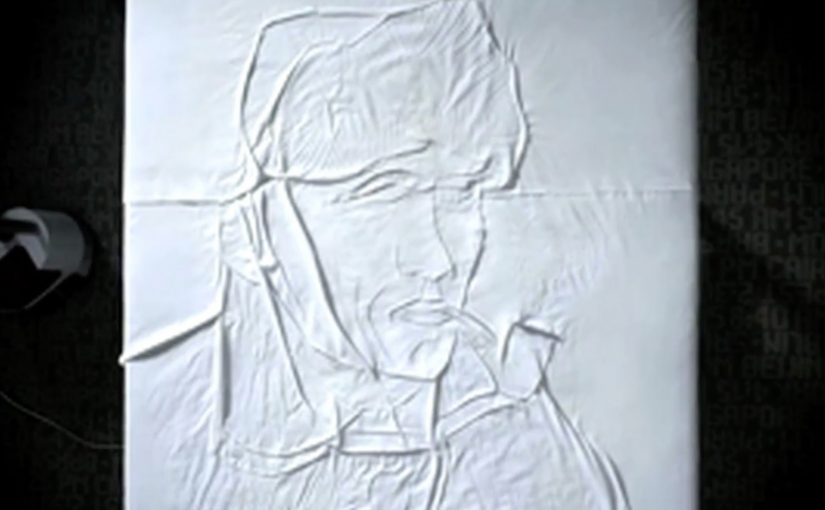
Earlier this year I had covered a couple of novel approaches to art. Joining that collection is this film from Philips Russia, where the performance of its irons and steamer products is demonstrated by recreating famous Dutch paintings on a plain piece of white cloth.

It is a simple setup with a surprising payoff. A sheet. A tool you already understand. Then, with pressure, heat, and steam, the fabric starts behaving like a canvas.

When fabric becomes a canvas

The craft trick is that wrinkles and flattened areas act like light and shadow. Steam relaxes fibres, pressure fixes the fold, and controlled temperature makes the result repeatable. In other words, the “brushstroke” is not pigment. It is texture, created and locked in by the iron.

In global consumer electronics and home appliance marketing, the hardest job is to make small performance differences feel tangible in seconds.

Why it lands

This works because it makes an invisible promise visible. Most iron claims are abstract. More steam. Better glide. Fewer wrinkles. Here, the demonstration turns those claims into a proof you can read from across the room. That is why the idea persuades so quickly: the same steam, pressure, and temperature control needed to shape fabric into a portrait also signals control over everyday wrinkles. If an iron can reliably “draw” with fabric, it can reliably handle a shirt collar.

Extractable takeaway: When your product benefit is hard to evaluate (speed, precision, consistency), design a demo where the benefit becomes a visible artefact. The artefact should be legible instantly and hard to fake without the real capability.

What Philips is really selling

The paintings are the hook, but the real message is controllability. Consistent steam output. Predictable temperature. Even pressure. The art is not the point. It is the credibility vehicle that lets viewers infer performance without needing specs.

The real question is how to make product control visible before a viewer has to trust the spec sheet.

The spot is credited to DDB Moscow, which fits the overall approach. Make the proof the story, not the claim.

What to steal for your next product demo

  • Pick a “hero capability” and exaggerate it safely. If precision matters, show precision at a level nobody expects in the category.
  • Use a familiar reference. Famous paintings function as a built-in quality benchmark. Viewers know what “good” looks like.
  • Make the proof readable without explanation. If the demo needs narration to work, it is probably not a demo yet.
  • Engineer for repeatability. The best demos look like magic, but behave like a process.

A few fast answers before you act

What is “The Art of Ironing”?

It is a Philips Russia film that demonstrates iron and steamer performance by recreating classic Dutch paintings using wrinkles and flattened texture on white cloth.

What product point does the demo prove?

Control and consistency. Steam output, temperature stability, and pressure control are implied by the ability to create repeatable, detailed fabric texture.

Who is credited for the campaign?

The campaign is credited to DDB Moscow.

Why use famous paintings instead of an original design?

Recognition compresses understanding. Viewers instantly know the reference, so they can judge the fidelity without being taught the criteria.

How can another brand use this approach without copying it?

Translate the principle, not the prop. Choose a culturally familiar benchmark in your category, then create a visible artefact that only your real capability can produce.

Eterna Cadencia: The Book That Cannot Wait

Eterna Cadencia: The Book That Cannot Wait

Last month I wrote about Austria Solar’s annual report, whose pages became visible only when exposed to sunlight.

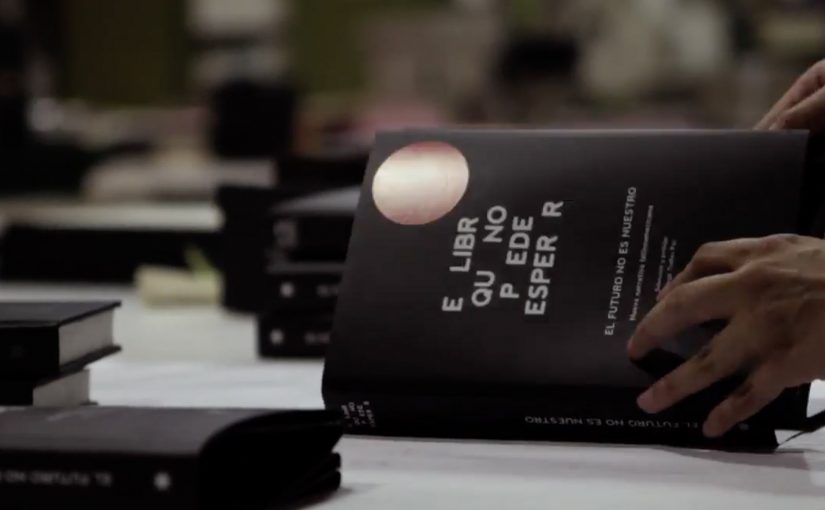
Now Buenos Aires based bookshop and publisher Eterna Cadencia has released “El libro que no puede esperar”, “The book that cannot wait”. It is an anthology of new fiction printed in ink that disappears after two months of opening the book.

The mechanic: ink that fades once you open the seal

How is that possible. Here, the mechanic is a built-in physical rule: the books are described as being silk-screened using a special ink, then sealed in air-tight packaging. Once opened, the printed material reacts with the atmosphere and starts to fade. The result is that, after roughly two months, the text vanishes.

In global publishing markets where e-books change reading habits, physical formats regain attention when they add a constraint that digital cannot replicate.

Why it lands: urgency turns reading into an action, not an intention

The idea does not compete with e-readers on convenience. It competes on psychology. A normal book is patient. This one is not. It creates a deadline, and deadlines change behavior. Because the fading is irreversible, the deadline feels real rather than promotional.

Extractable takeaway: If you want people to stop postponing a behavior, make the cost of waiting tangible and irreversible. Scarcity works best when it is built into the product, not added as a marketing slogan.

What it is really doing for new authors

The real question is whether a physical constraint can turn passive interest into immediate reading.

This is smart publishing design, not a gimmick for its own sake.

At face value, this is a publishing gimmick. Underneath, it is an argument for momentum. New fiction struggles when it sits unread on a shelf, because “I’ll get to it” often becomes “never”. A time-limited book reframes the purchase as a commitment to read now, which is exactly what emerging authors need.

The project is also widely described as being developed with DraftFCB, which helps explain why the execution feels like an idea engineered for cultural pickup, not just for bookstore shelves.

What to steal if you are marketing anything physical

  • Build the message into the object: the product itself should carry the story, even without a campaign.
  • Make the constraint legible: people should understand the rule in one sentence.
  • Turn delay into loss: urgency works when waiting has a real consequence.
  • Use packaging as a trigger: opening the seal is a clear “start” moment, and that matters for behavior.
  • Design for retellability: “a book that disappears if you do not read it” spreads on its own.

A few fast answers before you act

What is “The Book That Cannot Wait”?

It is a print book sealed in packaging where the text is printed with ink that starts fading once the seal is opened, so the content disappears after around two months.

Why would a publisher want ink that disappears?

To create urgency. The mechanic nudges readers to start and finish the book quickly, which can help emerging authors get read instead of getting postponed.

Is this a product innovation or a marketing campaign?

It is both. The object is the media. The disappearing ink turns the product into the message, which then earns coverage and conversation.

What is the biggest risk of copying this idea?

Trust. If people feel tricked or if the fade behavior is inconsistent, the stunt becomes resentment. The rules need to be clearly communicated and reliably delivered.

Where else does “built-in urgency” work?

It can work in limited editions, time-bound access, perishability, or experiences that change after first use. It is strongest when the constraint feels meaningful, not arbitrary.