Disney Appmates. The next toy revolution

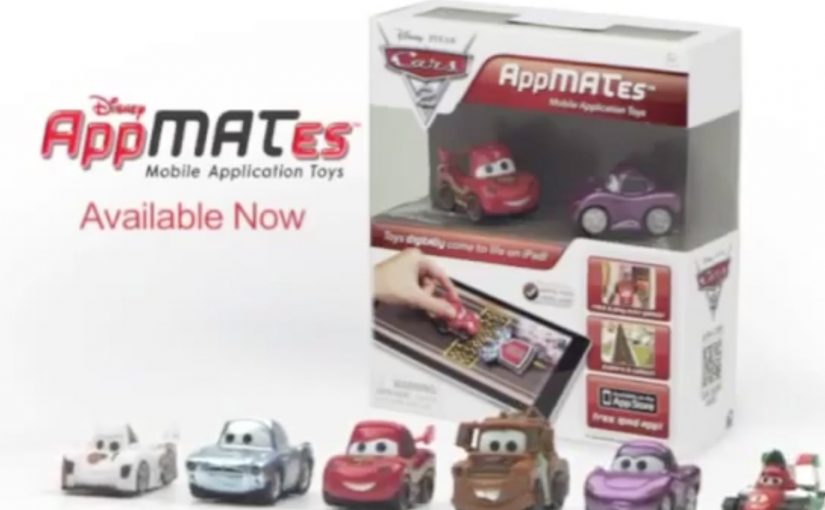
Disney recently announced a new line of toys called Disney Appmates. These new toys and the iPad work in tandem to create a very new age play experience. Featuring the likenesses of characters from Cars 2, the Appmates are miniature figures with special sensors mounted on the bottom. The sensors work with the Cars 2 Appmates app to identify each figure when put against the iPad screen.

The Apple and Disney Stores will start selling Lightning McQueen, Tow Mater, Finn McMissile, and Holley Shiftwell in October. Francesco Bernoulli and Shu Todoroki will be launched in November and will made available exclusively through the Apple Store.

What is actually new here

The interesting shift is not “toys plus an app.” It is the iPad becoming part of the physical play space. The figure is not only a character. It becomes an input. Place it on the screen, and the app recognizes it and reacts. That is a different play loop than tapping icons, or watching a video, or playing a standalone game.

Why the Cars 2 character lineup matters

The character list makes the product strategy visible. Lightning McQueen, Tow Mater, Finn McMissile, and Holley Shiftwell anchor the launch. Francesco Bernoulli and Shu Todoroki extend the line later. The Apple Store exclusive adds a distribution edge for a toy that is, by definition, tied to an iPad experience.

What to borrow if you build connected experiences

  • Make the physical object a trigger. The figure is the key that unlocks a specific interaction.
  • Design for collecting and replay. Each character creates a reason to return to the app and try combinations.
  • Align the channel with the behavior. If the experience requires an iPad, selling through Apple Store channels is a direct route to the right audience.

A few fast answers before you act

What are Disney Appmates?
They are miniature character figures designed to work with an iPad app to create a hybrid physical plus digital play experience.

How does the iPad recognize the figures?
Each figure has special sensors mounted on the bottom, and the Cars 2 Appmates app identifies the figure when it is placed against the iPad screen.

Which characters are available first?
Lightning McQueen, Tow Mater, Finn McMissile, and Holley Shiftwell are scheduled to start selling in October.

Which characters arrive later?
Francesco Bernoulli and Shu Todoroki are scheduled for November.

What is exclusive to the Apple Store?
Francesco Bernoulli and Shu Todoroki are made available exclusively through the Apple Store.

Shopping & Money: When Payment Disappears

Shopping is 24×7. It happens everywhere, not just in a store or on a website.

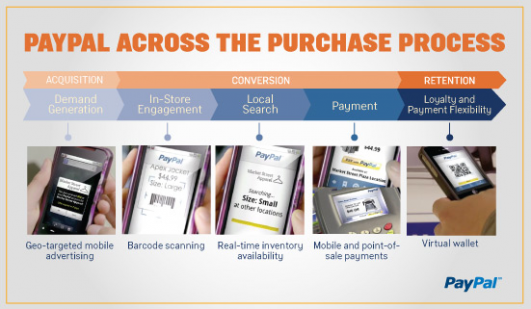
The intersection of smartphones, social media, online and offline shopping puts the consumer squarely in control. The shopping journey is no longer linear. Discovery can start in a social feed, comparison can happen on a phone while standing in front of a shelf, and purchase can happen without ever “going to checkout”.

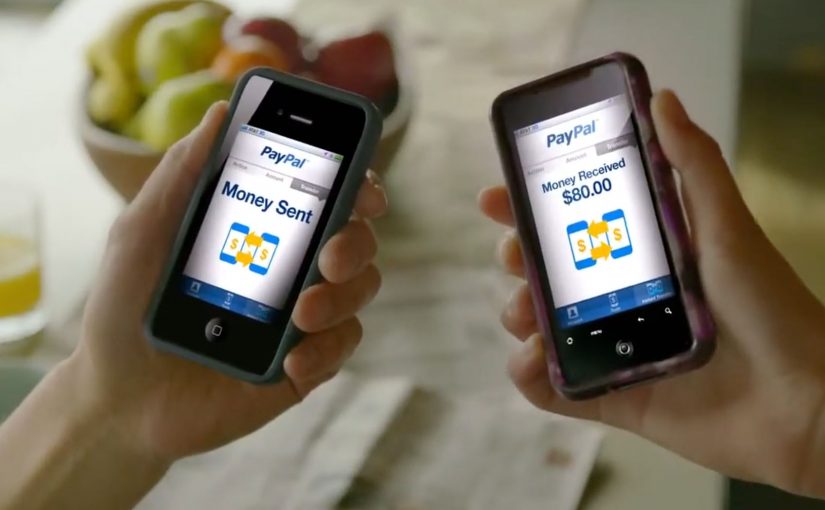
That shift is exactly what PayPal leans into with a hype video depicting what the future of shopping might look like. The story is not only about paying faster. It is about payment disappearing into the experience, powered by PayPal’s next generation payment platforms as they aim to re-imagine money.

Payment is becoming invisible

We already see the building blocks all around us.

  • The phone becomes the remote control for shopping. Discovery, decision, and purchase collapse into one device.
  • Identity and trust become the key. Not the physical wallet.
  • The act of payment moves from a moment to a background process. It becomes an outcome of intent, not a step.

What changes is not only how you pay. It is when you pay. Or more precisely, whether you even notice it.

In commerce ecosystems, the player that owns identity, trust, and the payment layer can influence far more than checkout. It can shape the full shopping journey.

The consumer is in control. Brands and retailers adapt or fade

When consumers can shop anytime and anywhere, the competitive battlefield shifts.

  • Convenience becomes design. You win by removing friction, not by adding features.
  • Context beats channel. The store is not a place. It is a moment, a need, a trigger.
  • Attention becomes the scarce currency. If payment is effortless, the real fight is for preference, trust, and relevance.

In this model, money is not the centerpiece. The experience is.

What the PayPal vision is really selling

Commerce becomes ambient.

PayPal’s narrative previews a broader shift. Commerce becomes ambient.

The hype is the packaging. The strategic message underneath is that payment platforms want to sit one layer deeper in the journey. Not at the end, but throughout.

They aim to become the connective tissue between identity, intent, and transaction.

This is why the video matters. It is not a product demo. It is a stake in the ground. The future of shopping is continuous, and the future of money is embedded.

What to watch next

If payment disappears, a few questions matter more than ever.

  • Who owns the consumer relationship when the transaction becomes frictionless?
  • How do trust, privacy, and permission evolve when identity becomes the wallet?
  • What does loyalty look like when the purchase moment is no longer a moment?

The brands and retailers who win treat checkout as a symptom. Not a destination.


A few fast answers before you act

What does “payment disappears” actually mean?

Payment becomes a background step. The shopper focuses on choosing and receiving, while the transaction happens with minimal explicit action.

Why is the smartphone central to this shift?

It combines identity, context, discovery, and transaction capability in one always-on device, collapsing steps that used to be separate.

What is the strategic risk for retailers?

If the payment layer owns identity and trust, it can also mediate choice. Retailers risk becoming interchangeable unless they add differentiated experience value.

What is the opportunity for brands?

To design end-to-end journeys that reduce friction and increase relevance. When paying fades away, experience quality becomes more visible.

What is the hardest part to get right?

Trust and permission. Invisible payment only scales when consumers feel in control and understand when and why transactions occur.

IAA Walk of Innovations – 2011

I was at the IAA 2011 this Saturday, and I got a glimpse of our automobile future. It felt awe-inspiring. Almost all electric. Fully computerized. Interactive dashboards and even window displays.

But while I looked at the cars with amazement, I kept a close look out for innovative implementations of “today’s” cutting-edge technologies. I was curious to see how car makers use touch displays, social media, QR codes, and augmented reality to engage visitors at such a massive event.
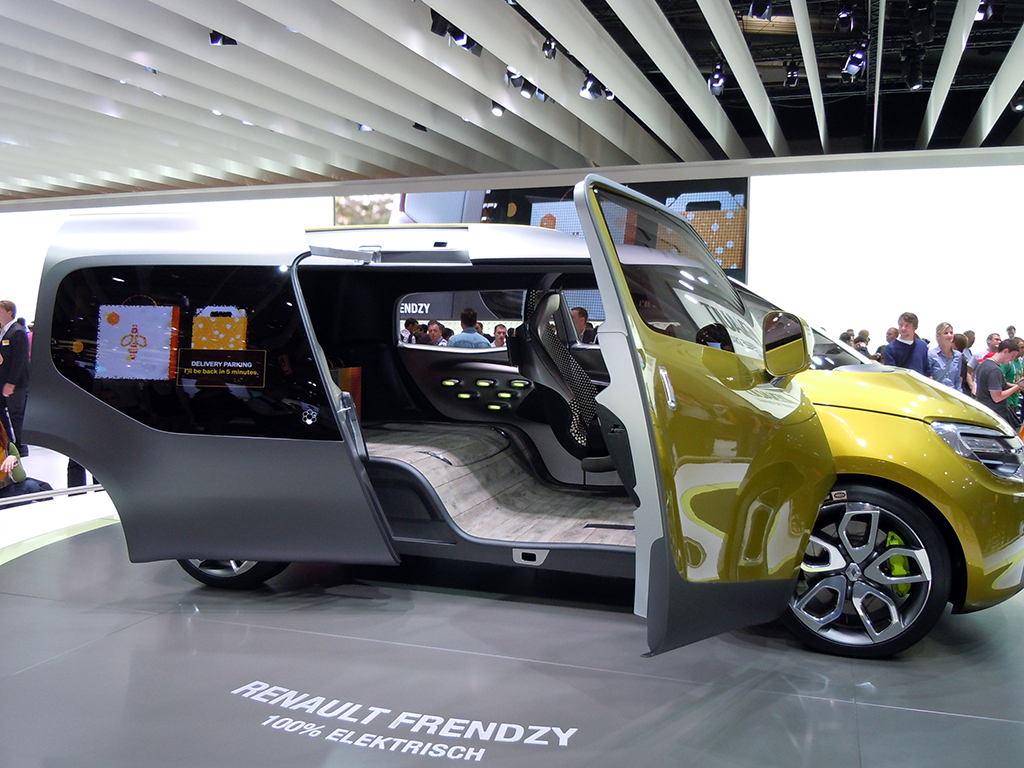
Renault Frendzy. 100% Electric

Here is a quick photo report of what I found interesting and innovative at the show.

Volkswagen
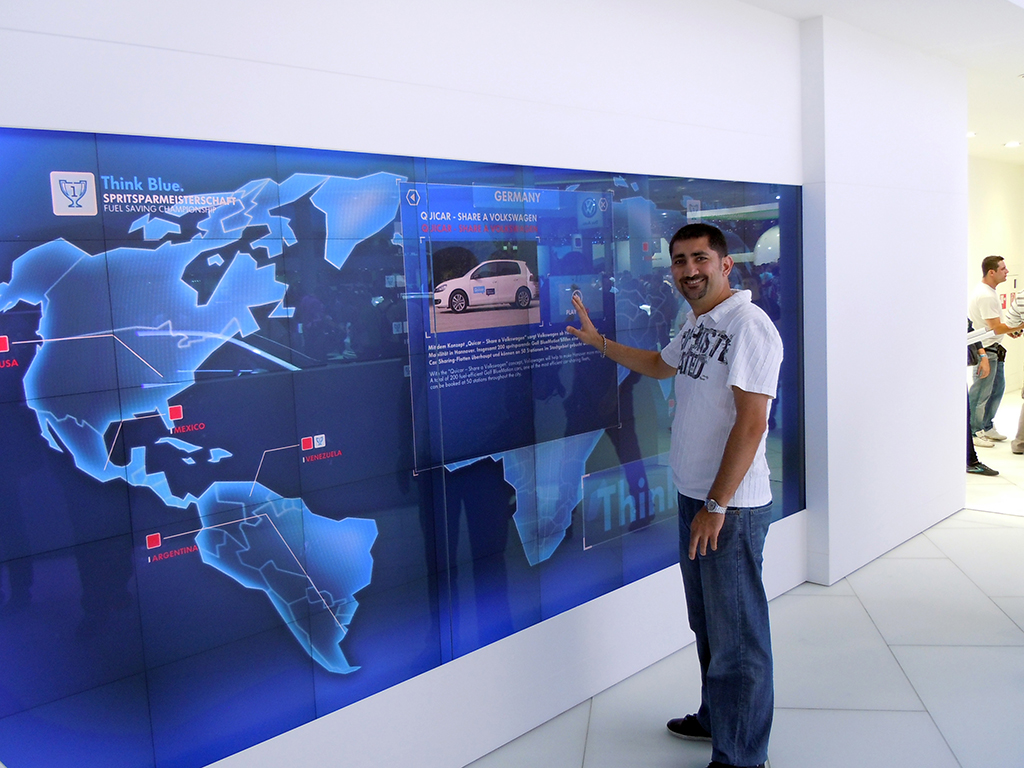
Volkswagen Interactive Motion Display

The Volkswagen BlueMotion technology was presented through a huge motion-based interactive display. Visitors did not need to touch the display. They used various gestures to navigate through the menu options.

Renault
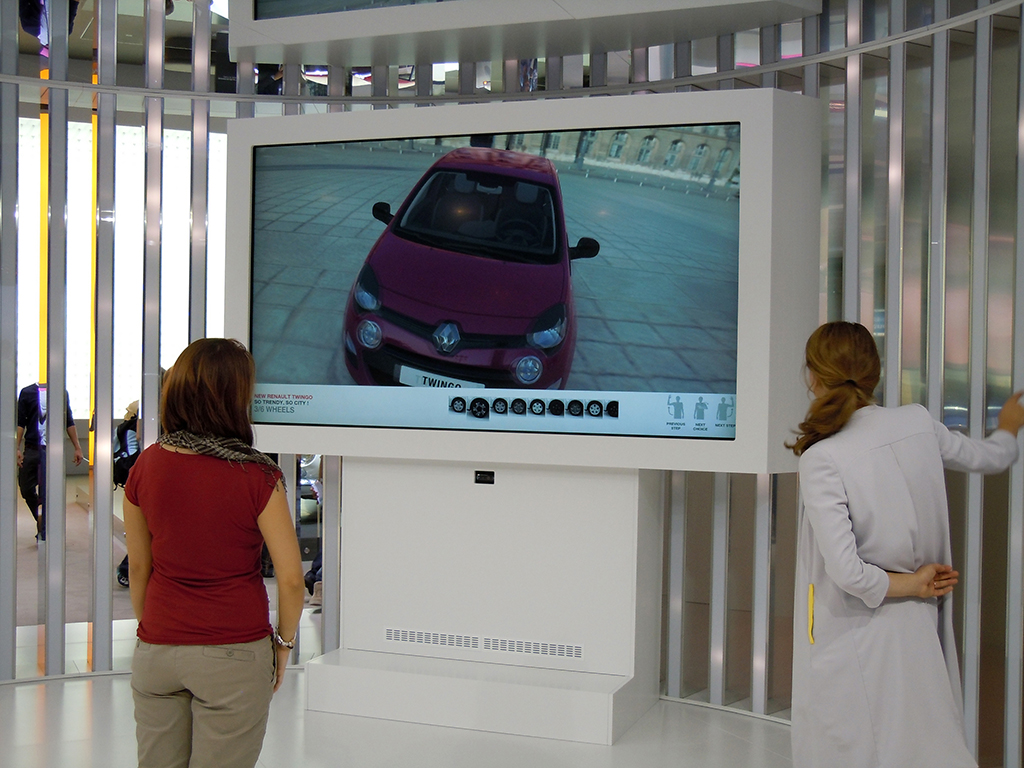
Renault Twingo

Visitors used the motion-based interactive display to learn more about the Renault Twingo. They could also change the colors of the model and watch demo videos.

Hyundai
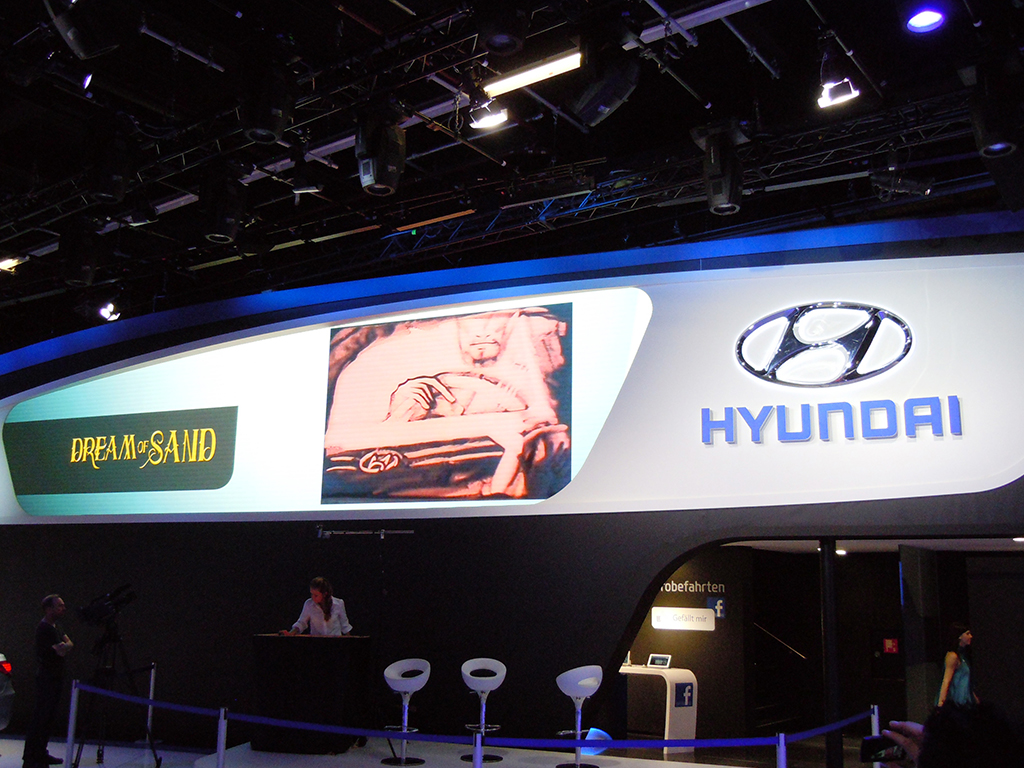
Dream of Sand

The main draw at the Hyundai stall was the “Dream of Sand” show by Svetlana Goncharenko and Natalya Netselya, who created vivid pictures in real time using sand.

Hyundai was also one of the only car brands trying to connect the stand with Facebook. Visitors needed to “Like” the Facebook page in order to be part of a lucky draw that gave them a chance to drive a Hyundai dream car. Important details like the fan page URL and contest information were not visible, or not easily accessible.

Skoda
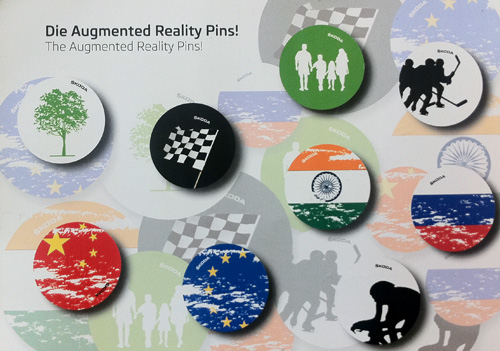
Skoda Augmented Reality Pins

Skoda gave visitors augmented reality pins. The Junaio AR app was used to scan the pin and activate the augmented reality. Most of the pins were gone by the time I got there, so I scanned the info card instead. It did not trigger the 3D surprises that the pins would, but it did offer a set of regional videos.

Citroën
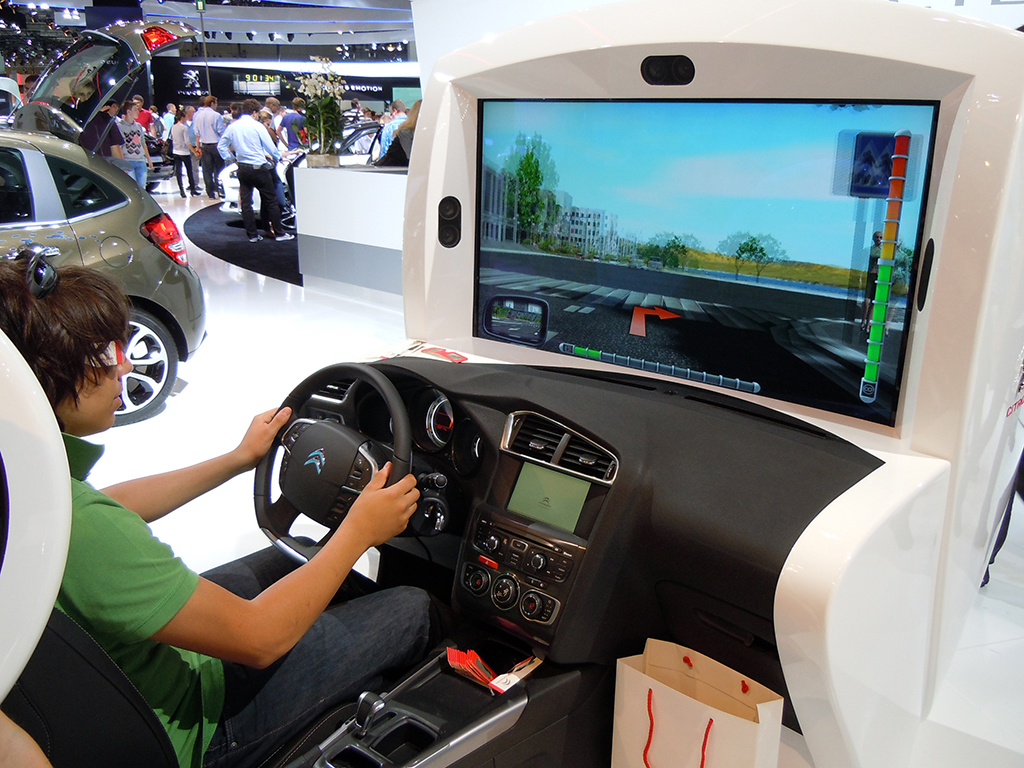
Citroen Eco Drive

At the Citroën Eco Drive simulator, visitors could take the car for a 3D test drive.
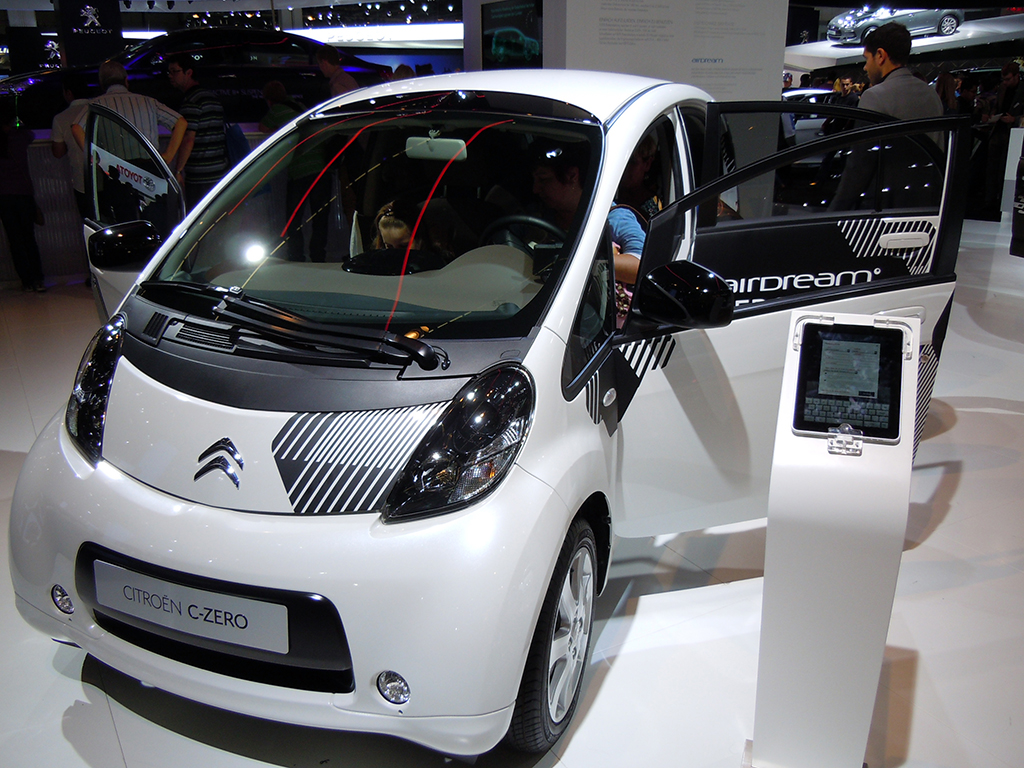
Citroen C-Zero

iPads were used by many car manufacturers to interactively share model specifications, videos, brochures, and to take automated enquiries from high-potential buyers.

Opel
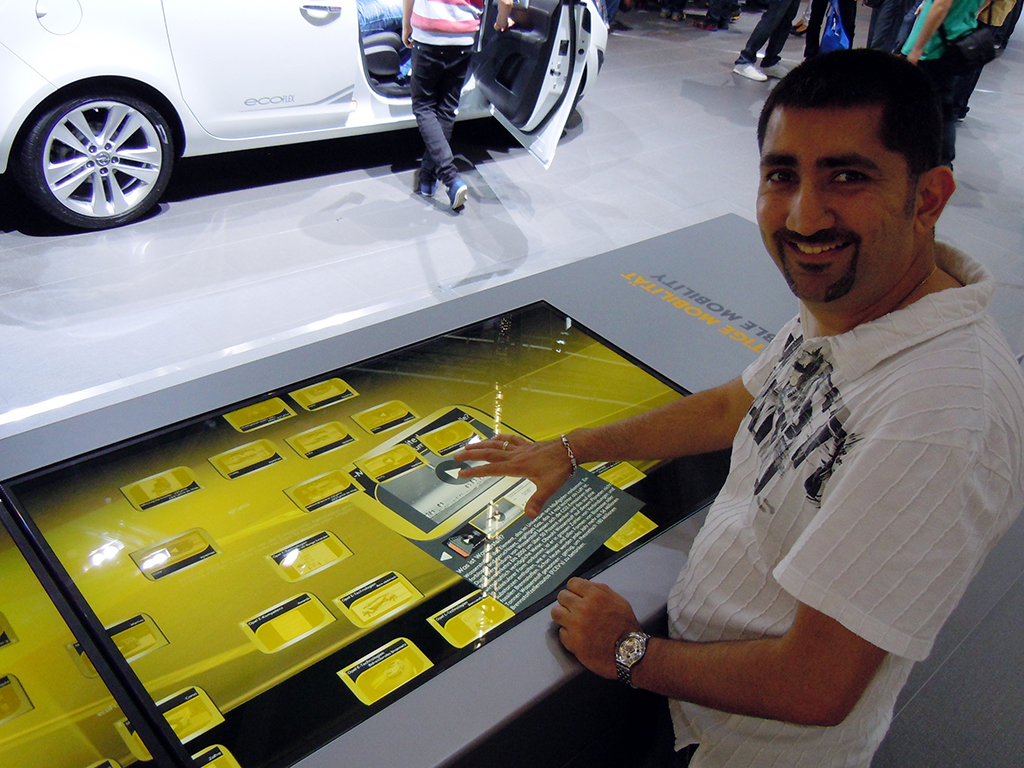
Opel Microsoft Surface setup

Opel used Microsoft Surface technology to share information about its cars. This was my first live experience with Surface. It worked much like the Apple touch interface, even though it did not feel as sensitive and smooth.

Ford
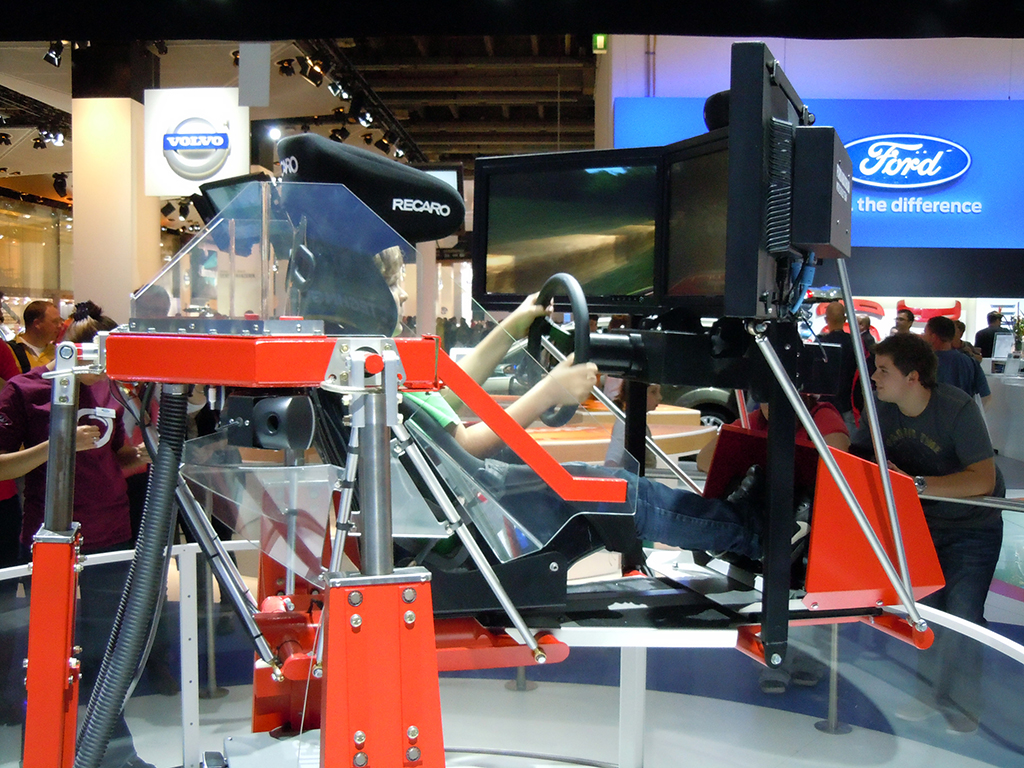
Ford Simulator

Ford, like Citroen and Volvo, set up a car simulator at its stand.
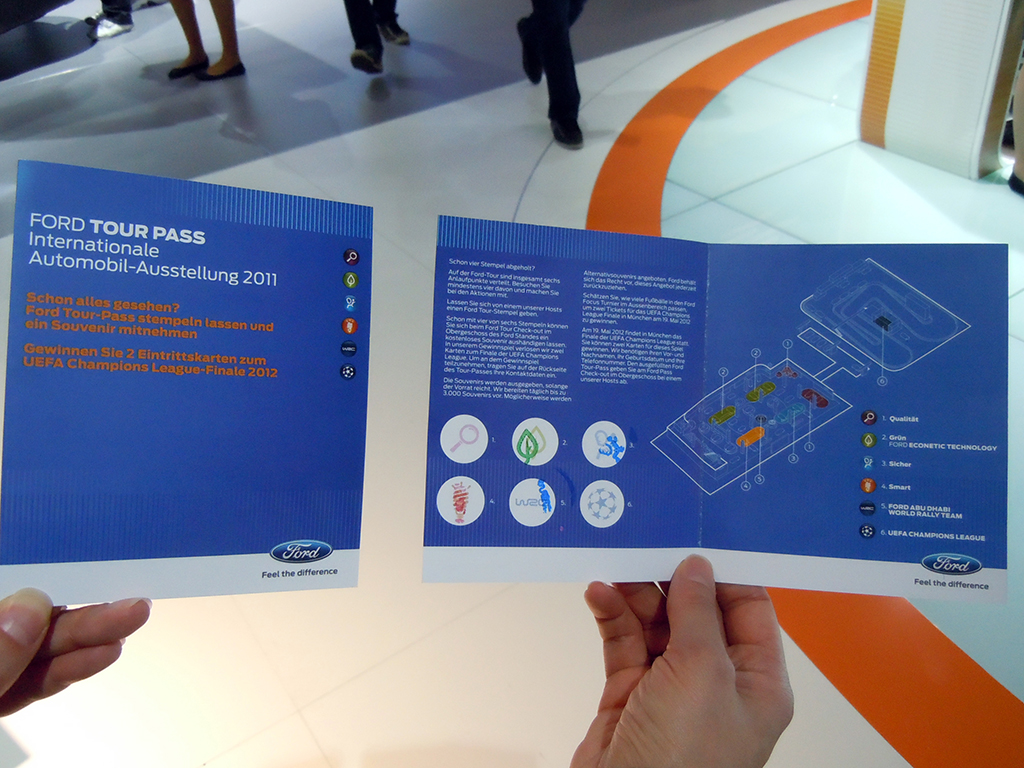
Ford Stamps

They also engaged visitors with a small “collect the stamps” game. The game made visitors go to each section of the Ford stand, correctly answer some easy questions related to the car and technology, collect the stamps, and get Ford-branded water bottles. Visitors could also play further and win two tickets for the UEFA Champions League Final in 2012.
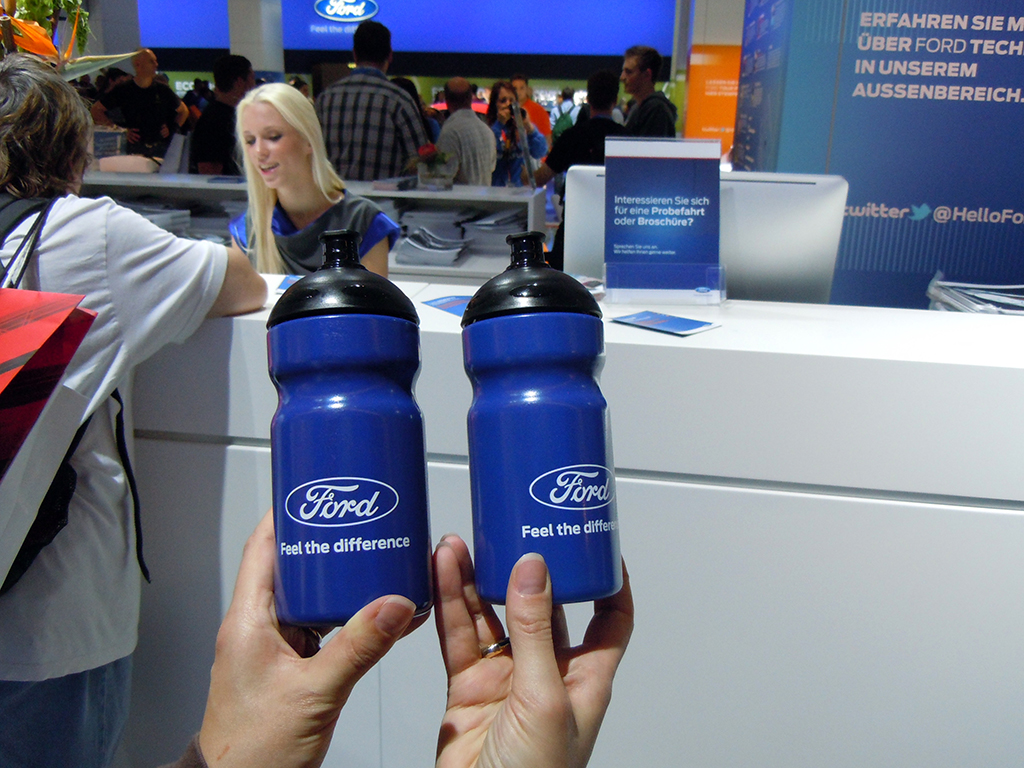
Ford Bottles

Chevrolet

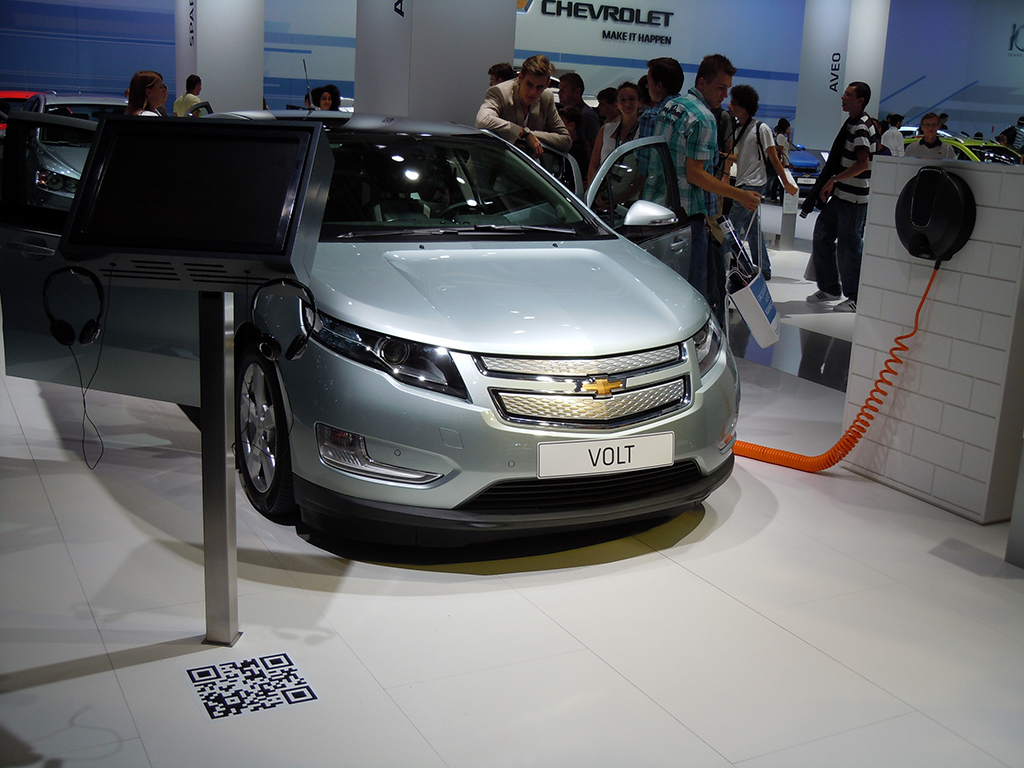
Chevrolet Volt

Visitors could scan the QR code on the floor to view a short Chevrolet Volt specs video.

Volvo
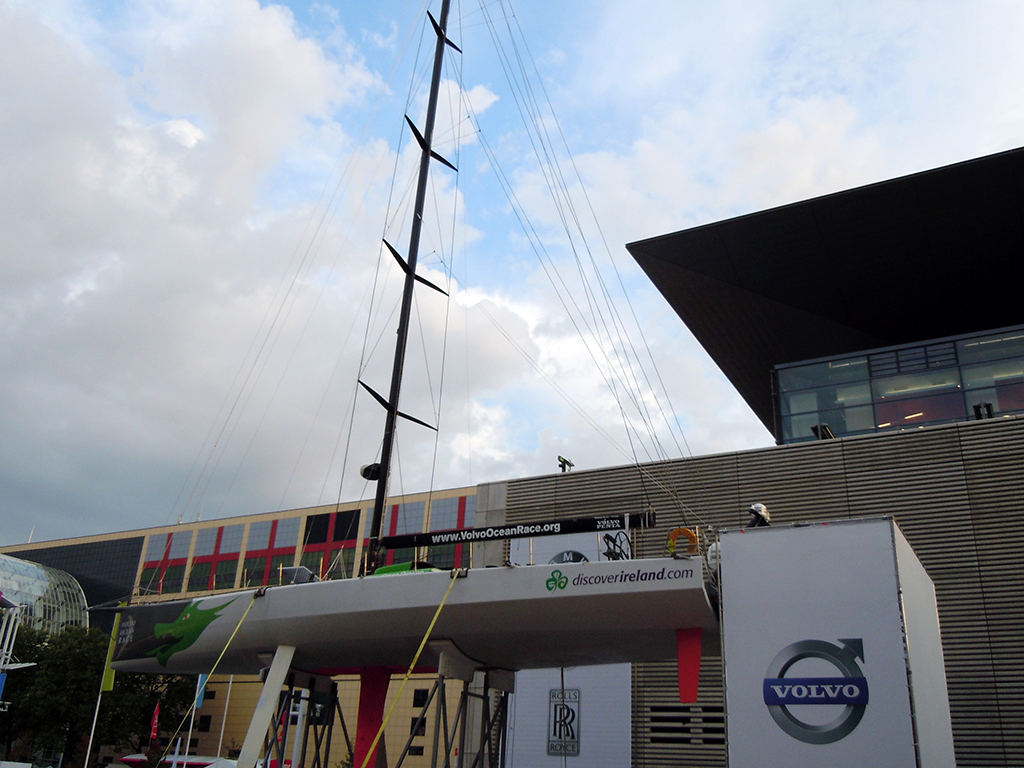
Volvo Sailing

The Volvo Open 70 Simulator gave visitors a first-hand experience of what the Volvo sailing team goes through when they go sailing in the ocean.
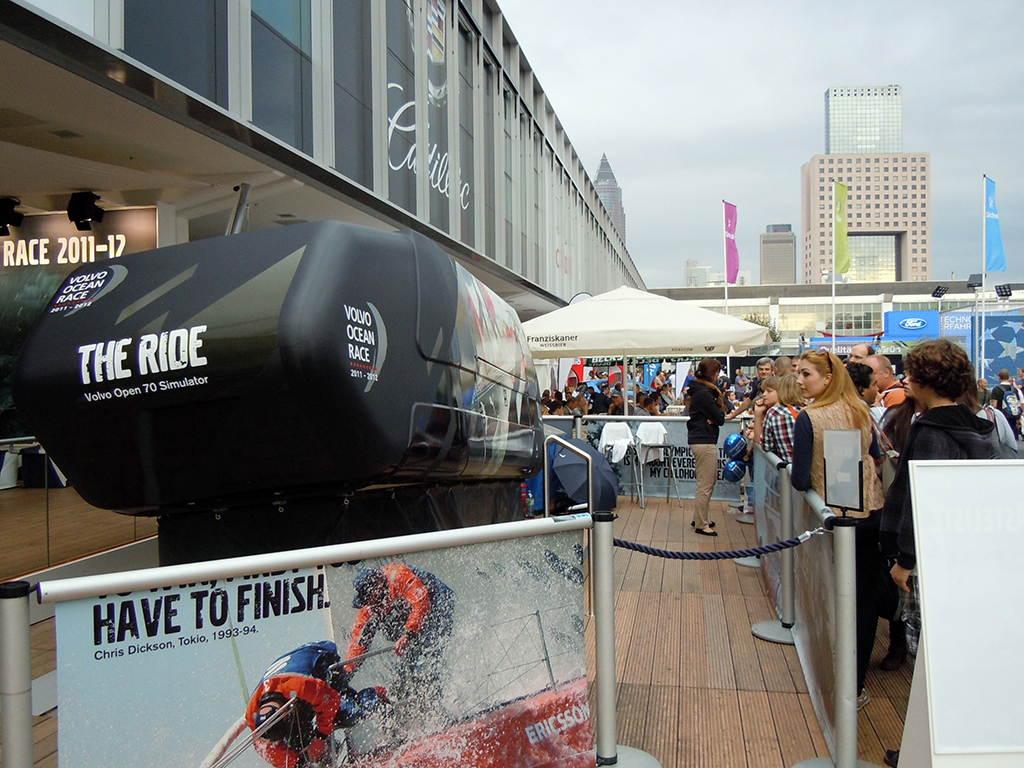
Volvo Sailing Simulator

On taking the ride I slid steeply from left to right on the seat. There was also non-stop wind blowing on my head, with regular splashes of water. It created a strong 4D-style experience.

Visitors could also try to hoist a virtual sail. On my second attempt I hoisted the sail in 12.3 seconds. The current record was set at 9.03 seconds by one of the previous visitors.
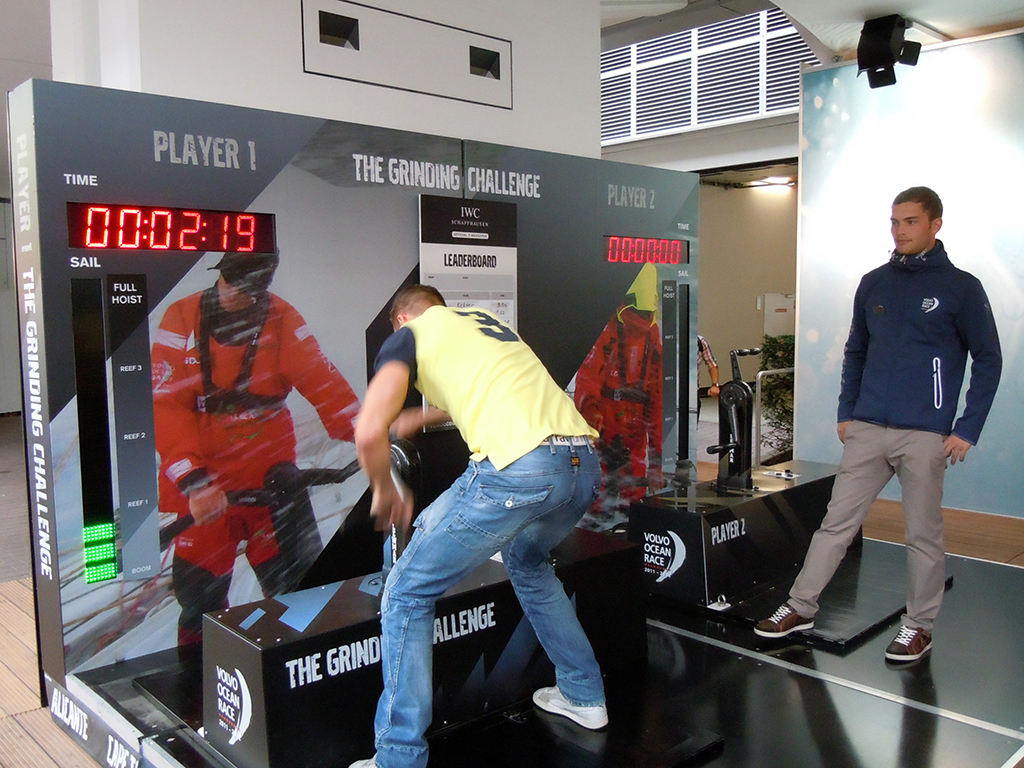
Volvo Sail Hoisting

Mini Cooper

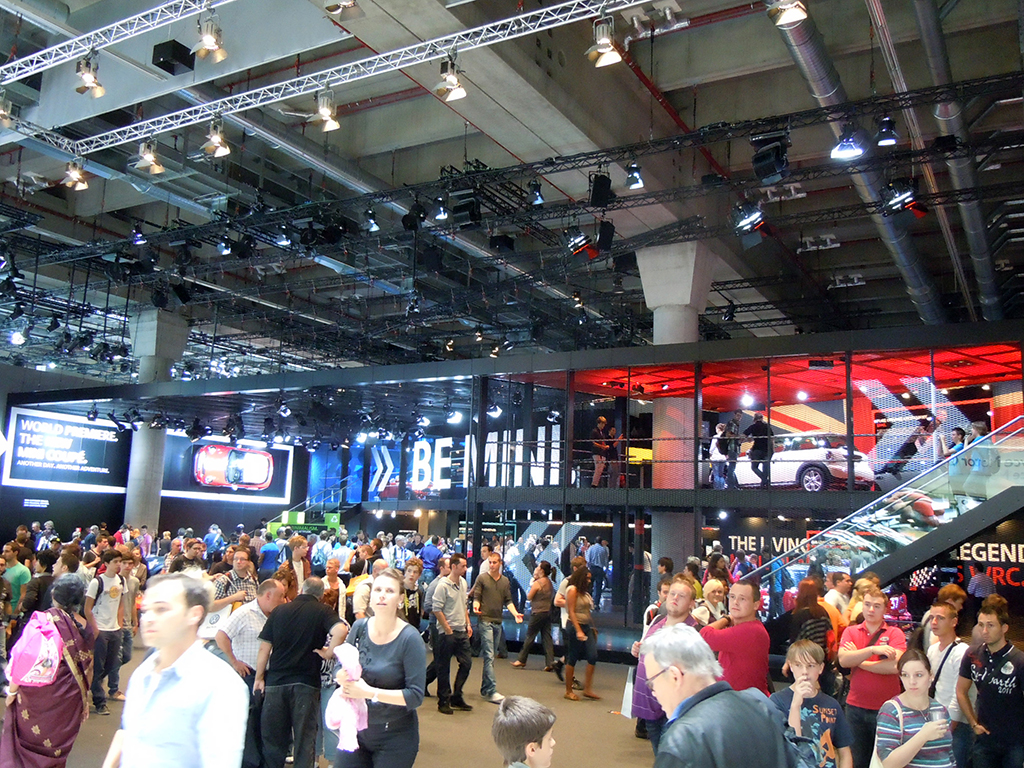
Mini Cooper stand overview

I really enjoyed visiting the Mini Cooper stand. The displays were amazing. A beautiful Mini surrounded by a bright circular display appeared as one entered the stand.
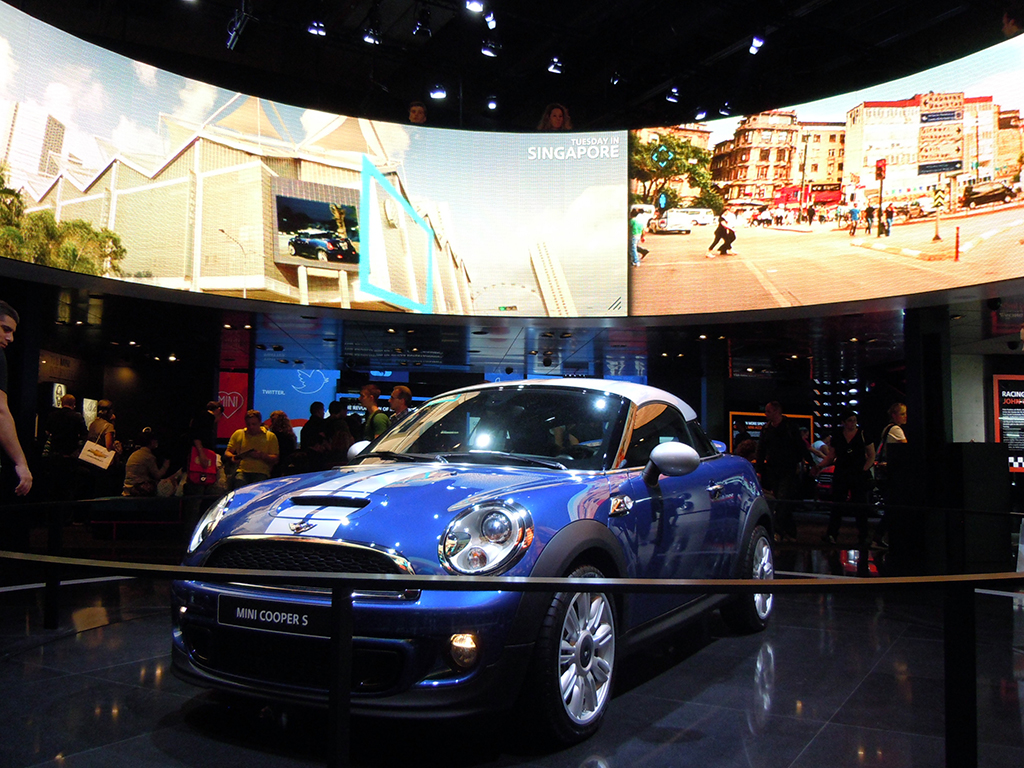
Mini Display

Minis in multiple colors were on display with various digital displays across the walls.
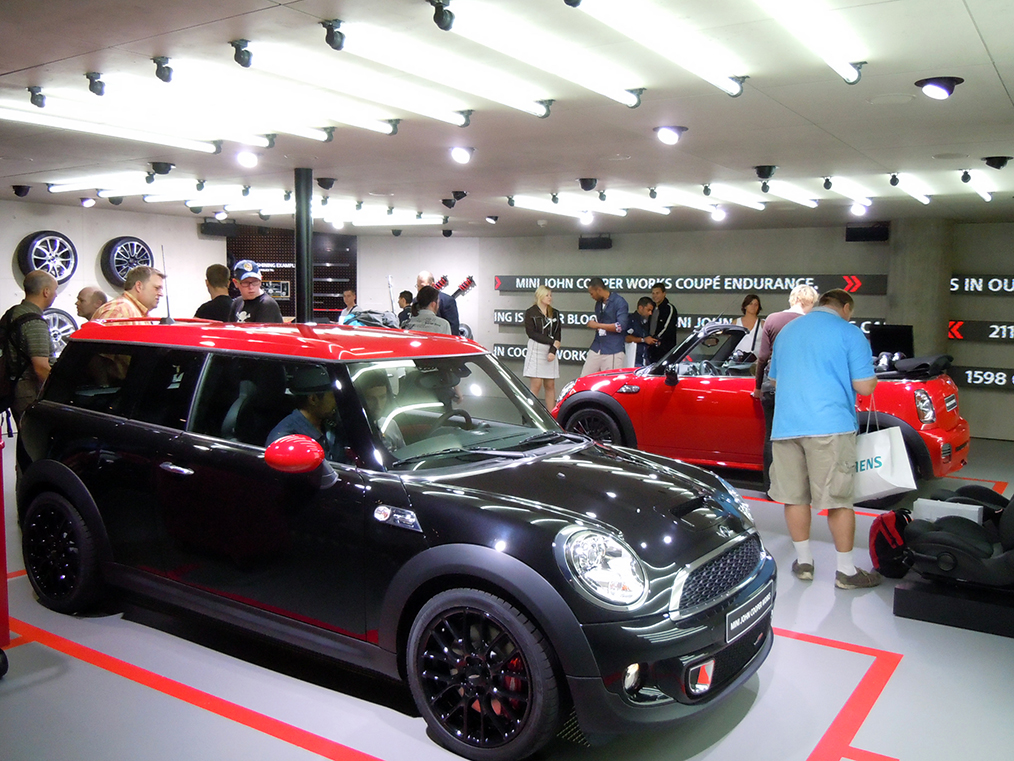
Mini Cooper multiple cars and wall displays

They also showcased their new iPhone app for the car, positioned as the intelligent link between the driver and the Mini. The app claimed to help the driver perfect a more sporty and precise driving style.
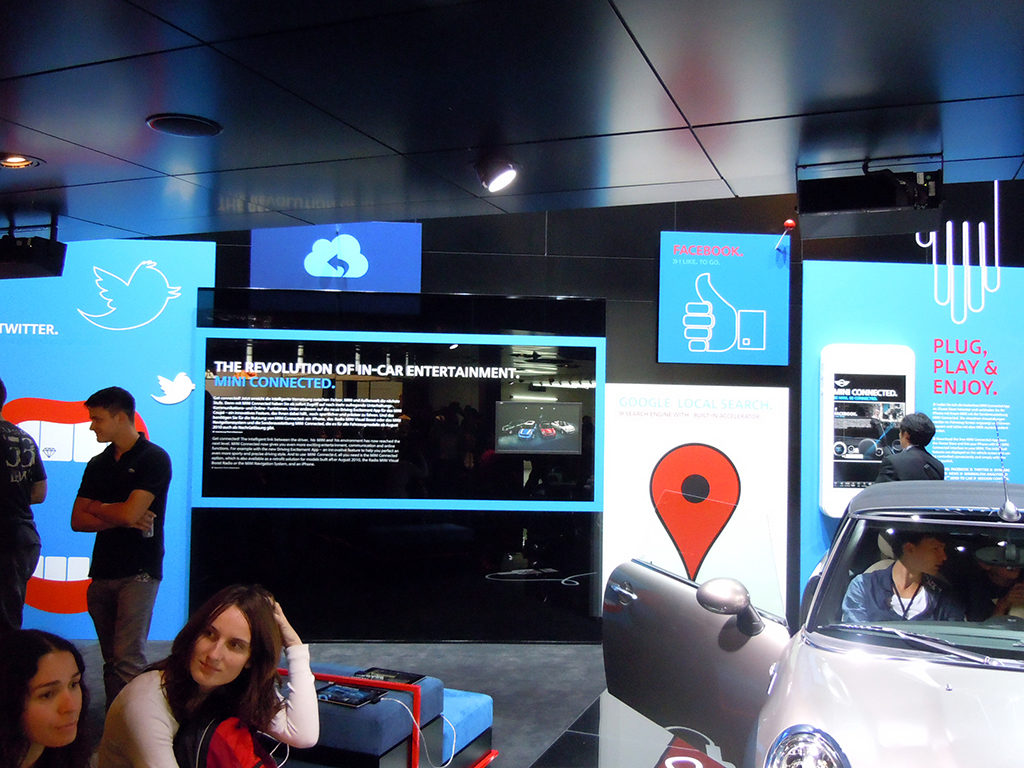
Mini iPhone App

I also spotted Lancia, Fiat, and Alfa Romeo promoting their iPhone apps via simple leaflets.
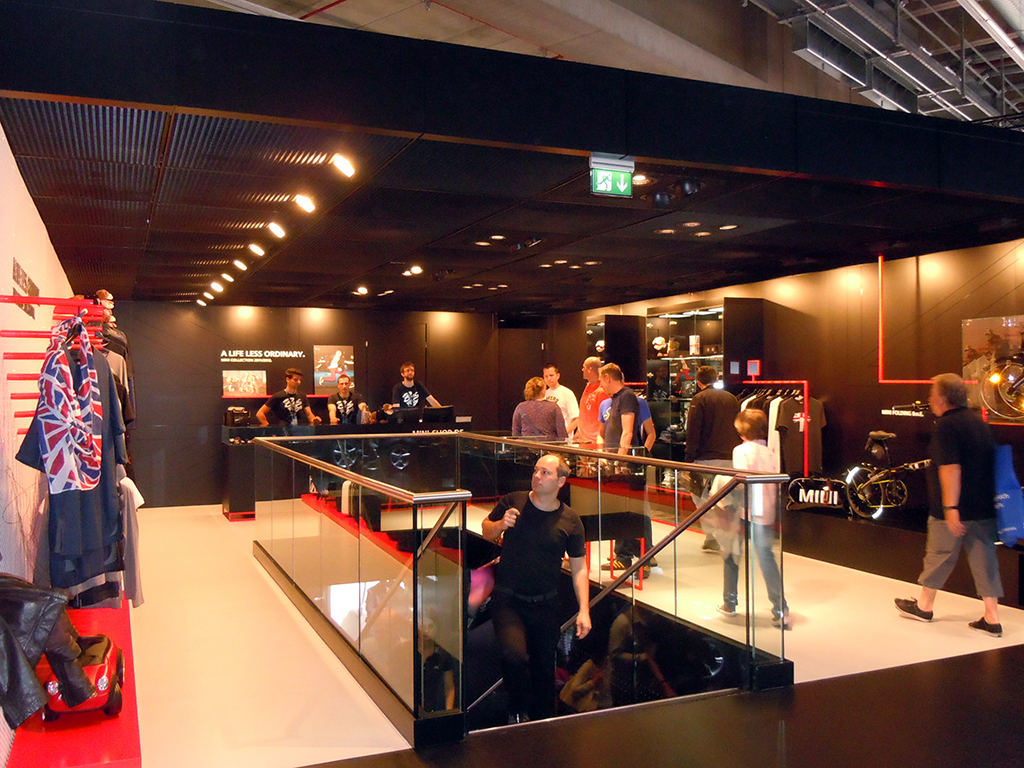
Mini Souvenirs

A souvenirs section greeted visitors on the first floor of the stand.
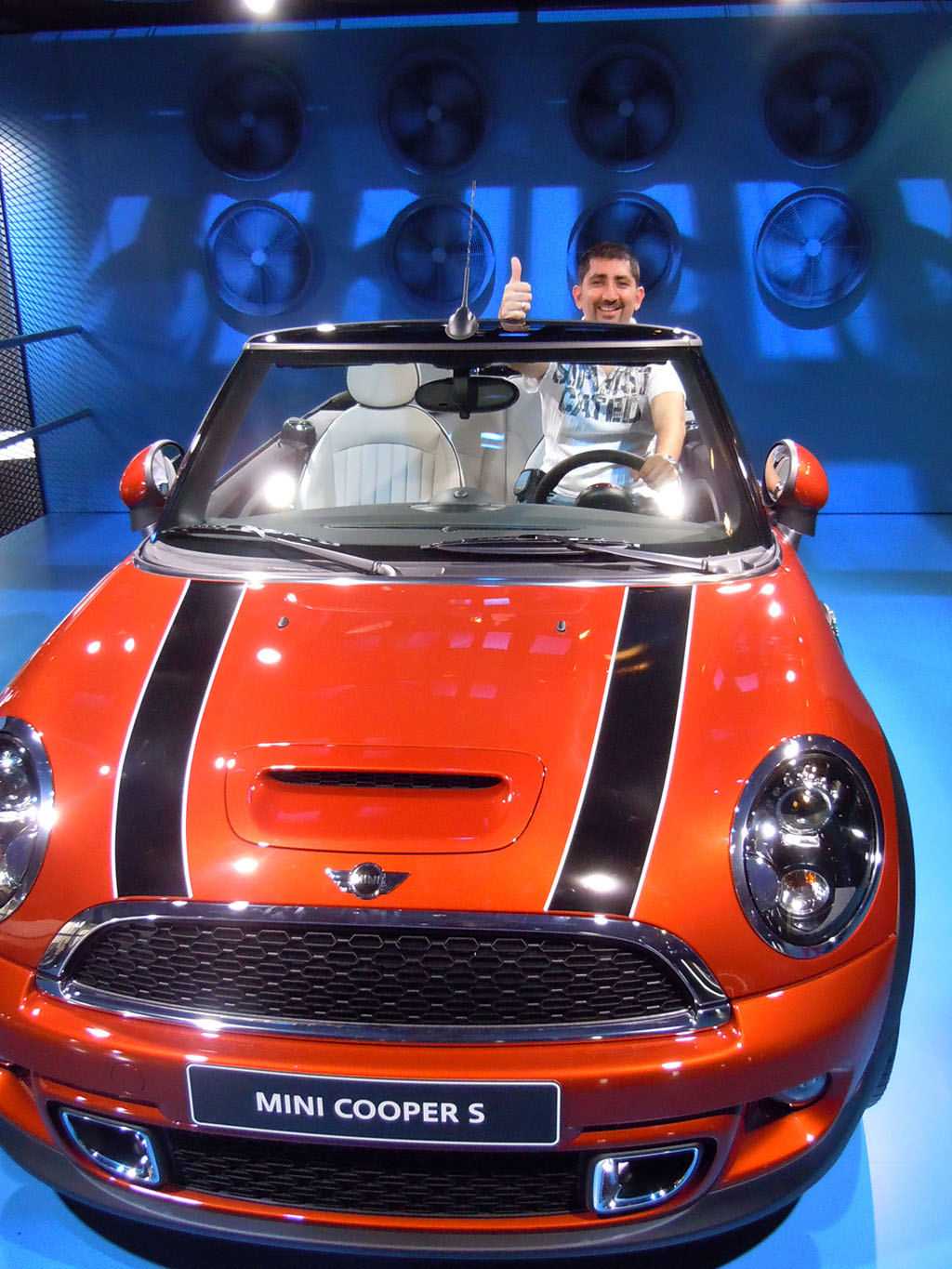
Got my Mini

In the end I got to drive my own Mini!

BMW
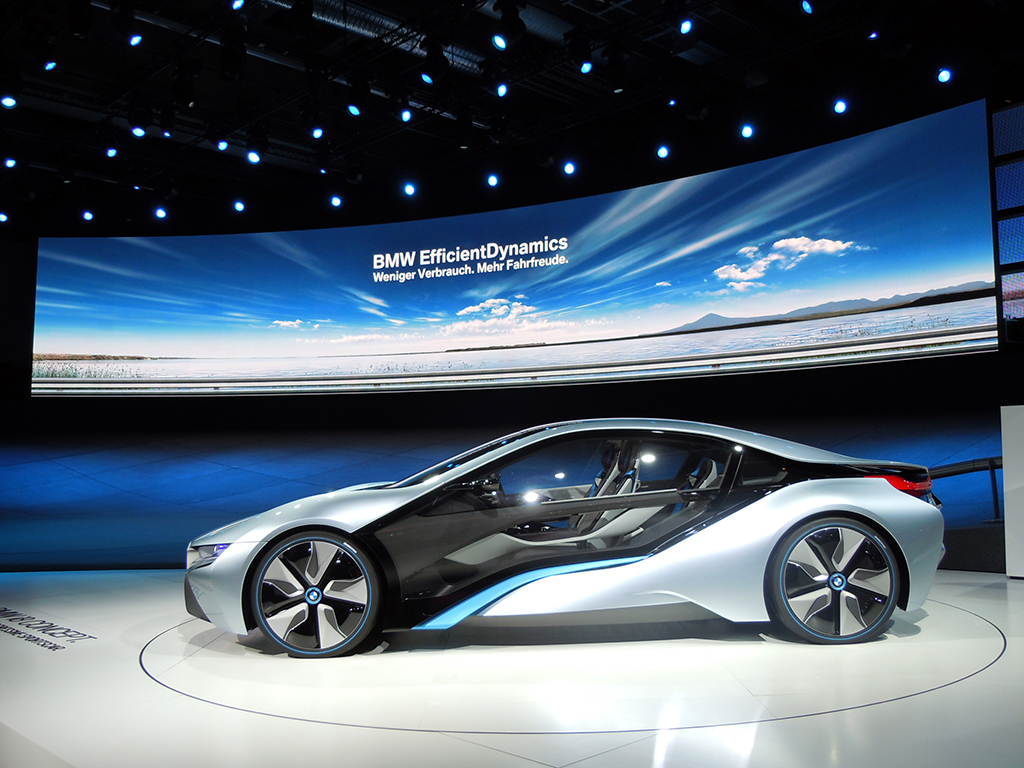
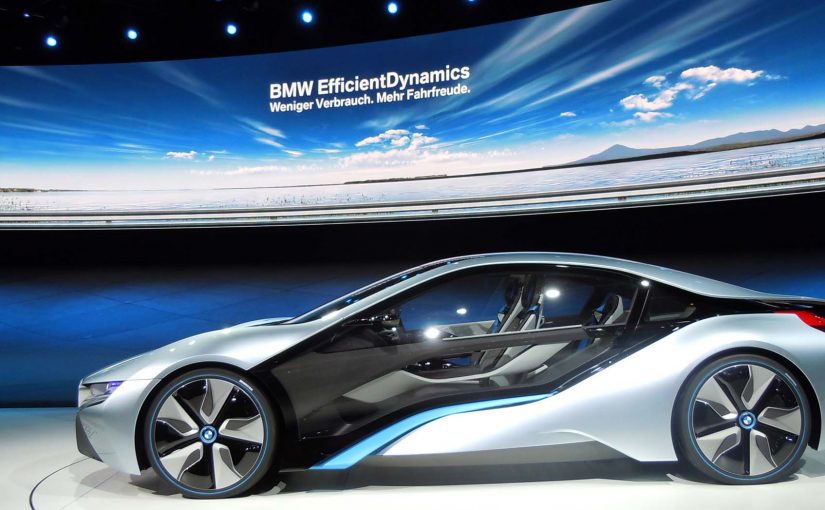
BMW. Mission Impossible Ghost Protocol car

The BMW stand was the biggest in terms of size and digital displays. Two of the most stunning concept cars from IAA were here. The car from the photo above appears in the Hollywood blockbuster “Mission Impossible: Ghost Protocol.”
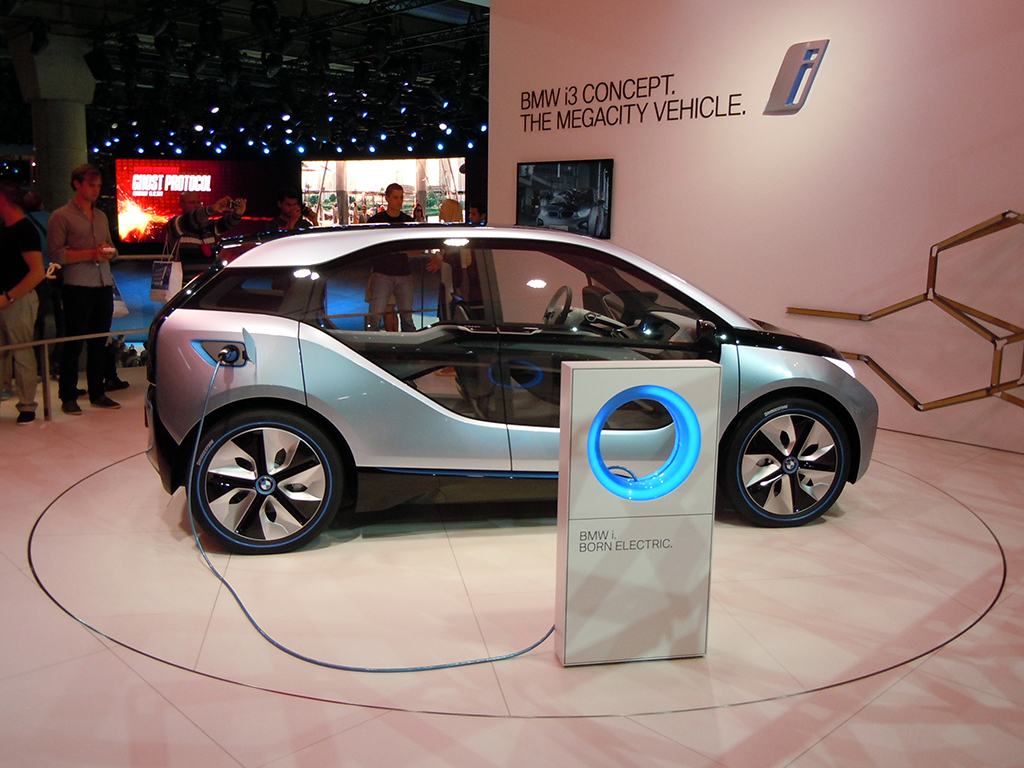
BMW i3 Concept

At the BMW i3 Concept city car area, I found an interactive telescope through which I could watch videos and product demos. To select a video, I had to move the telescope around and point it at what I wanted to play.
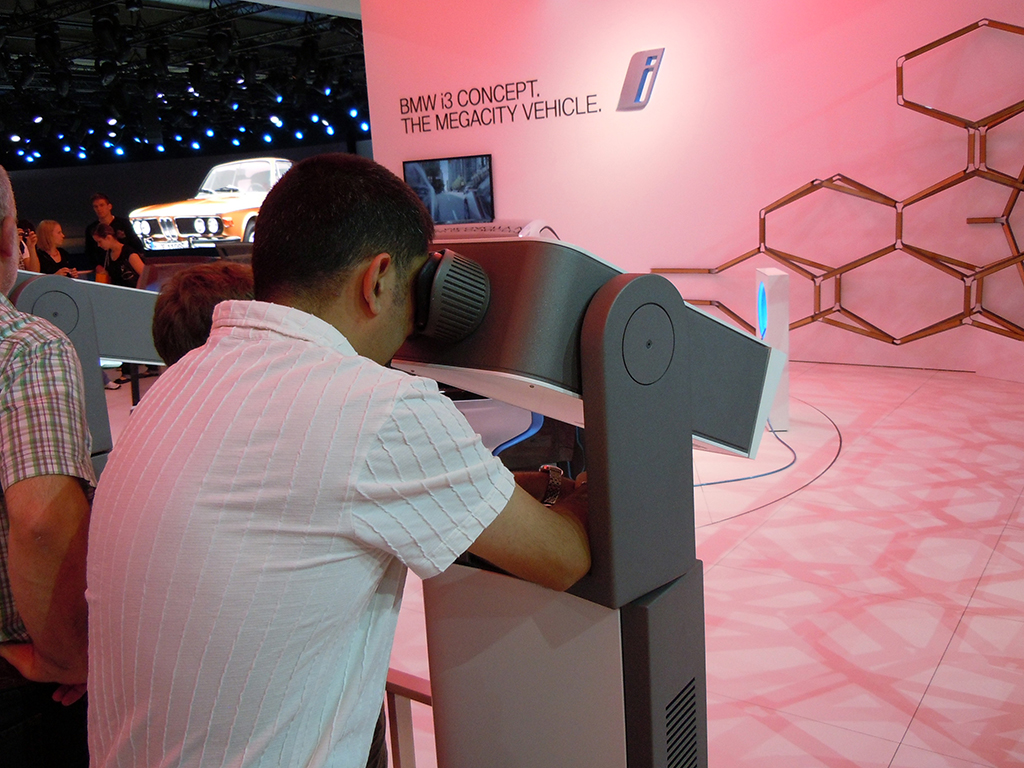
BMW i3 Concept Presentation via Interactive Telescope

Closing note from the show floor

I spent seven hours at IAA. It was totally awesome. The only car stalls I could not visit were those of Mercedes and Audi. There were simply too many people crowding those stands, and if I had waited, I would have missed at least half of what else I saw during my time there.

I look forward to the next Internationale Automobil Ausstellung in two years. Till then, this is Sunil signing off from IAA 2011.


A few fast answers before you act

Q: What is this post?
A photo report of IAA 2011, focused on practical uses of touch, motion control, social mechanics, QR codes, and augmented reality on brand stands.

Q: What is the single strongest engagement pattern across stands?
Interactive interfaces that pull visitors into exploration. Motion-based screens, simulators, and hands-on experiences that create a reason to stay.

Q: Which activations stand out most?
Volkswagen’s gesture-based BlueMotion display. Volvo’s Open 70 sailing simulator with wind and water. Ford’s stamp-collection game that drives exploration.

Q: Where does mobile show up most clearly?
Brands promote iPhone apps via leaflets and app demos, plus iPads used widely for specs, videos, and lead capture.

Q: What is the practical takeaway for event experience design?
If you want people to engage at scale, make the interaction obvious, physical, and rewarding. Then make the next step easy to find.