
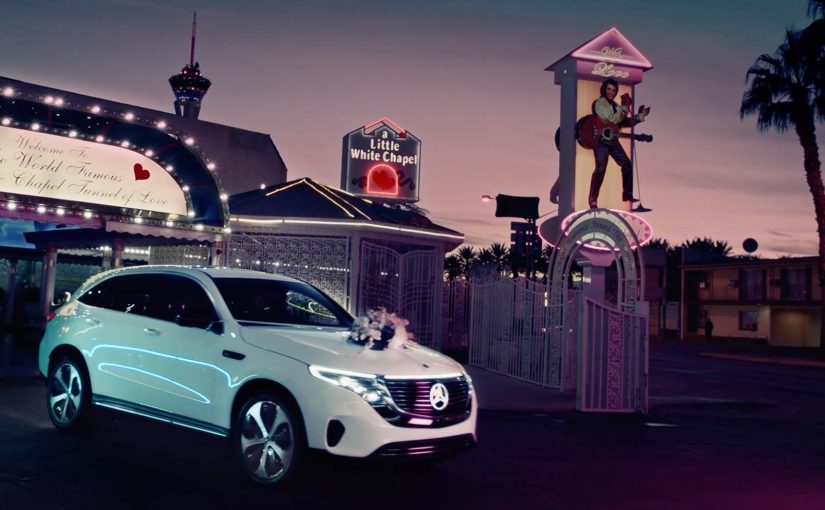
Mercedes-Benz: Yes, A.I. Do

For the world premiere of their new Mercedes-Benz EQC at CES 2019 in Las Vegas, Mercedes transformed their new model into a wedding carriage. Four lucky couples were invited to test drive the new Mercedes-Benz EQC on the roads of Las Vegas and experience its special A.I. features first hand. In this context, “A.I. features” refers to the in-car intelligent functions Mercedes chose to demonstrate during the drive.

The real question is how you make a new, tech-heavy product feel experienceable in minutes, not explainable in slides.

Why this launch twist works

By wrapping a CES tech premiere in a wedding ritual and putting couples behind the wheel, Mercedes turns abstract capability into visible behavior. The ritual creates instant stakes and attention, so the A.I. moments are noticed as part of a real drive, not as claims.

Extractable takeaway: If your features are hard to describe, borrow a human ritual people already recognize so the experience carries the technology.

  • It turns a product reveal into a story. A “wedding carriage” reframes a tech premiere into an experience people immediately understand.
  • It makes A.I. tangible. Instead of describing features on a stage, it puts them into a real drive where reactions matter.
  • It earns attention without shouting. The setup is unusual enough to travel, while still keeping the car at the center.

In consumer-tech and automotive launches where attention is fragmented and skepticism is high, familiar rituals help audiences grasp “what is happening” before they judge “what it does”.

Steal the ritual frame for launches

Wrap a launch moment in a simple, human ritual. Then invite a small group to experience the product in-context so the story carries the technology, not the other way around.

  • Pick a ritual that already means something. Use a simple human frame to make the launch instantly legible.
  • Let real use do the persuading. Put the product into an in-context experience so reactions carry more weight than narration.
  • Keep the product as the stage. The theme should guide attention toward the product experience, not away from it.

A few fast answers before you act

What happened in the Mercedes-Benz “Yes, A.I. Do” activation?

For CES 2019 in Las Vegas, Mercedes used the EQC premiere as a wedding-carriage themed experience and invited four couples to test drive the car and experience its A.I. features first hand.

Why use couples and a wedding theme for a car launch?

It creates an instantly recognizable narrative frame, which makes the activation easier to remember and easier to share than a standard demo.

What is the main takeaway for product launches?

Give the viewer a clear story hook, then let the product prove itself through a real experience rather than through claims.

How do you keep a stunt from overshadowing the product?

Make the product the “stage”. The theme should guide attention toward the experience of the product, not away from it.
Feel the View

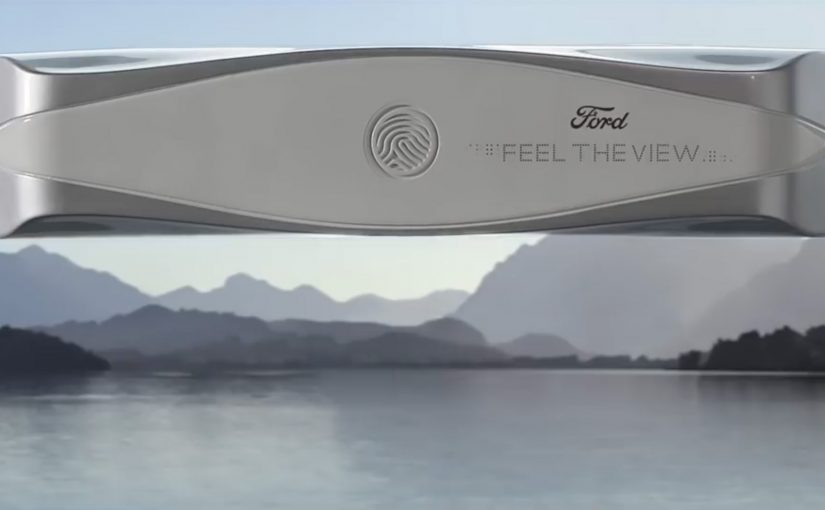
Ford in Italy, together with agency GTB Rome, teams up with Aedo, a local start-up that creates devices for people with visual impairments. Together they design a prototype device that attaches to a car window and decodes the landscape outside, allowing visually impaired passengers to experience it with the tip of their fingers.

The device transforms the flat surface of a car window into a tactile display. The prototype captures photos via an integrated camera and converts them into haptic sensory stimuli. Here, “haptic” means tactile patterns you can feel with your fingertips. The result is not primarily visual. It is perceptible through touch and hearing.

In automotive and mobility experience design, the real bar is whether the same journey can be translated across senses without creating a separate experience.

Why this matters as accessible experience design

This is an assistive interface built around a real, emotional moment. Looking out of a window during a drive. It treats “the view” as an experience that can be translated into other senses, rather than a privilege reserved for sighted passengers. Because the window is where attention naturally goes, using it as the tactile surface makes participation feel shared rather than segregated.

Extractable takeaway: If you want inclusive innovation to land, translate the same moment into multiple senses instead of designing a parallel version of the experience.

Inclusive innovation should be judged by whether it expands participation in the same moment, not by how novel the technology sounds.

The product idea in one line

Capture what is outside the car, then render it on the window surface as a tactile and audio layer that can be explored in real time.

The real question is whether your design lets people participate in the same moment as everyone else, without extra friction or stigma.

What to take from this if you build inclusive innovation

  • Start with a human moment. Here, it is shared travel and the desire to participate in what others are seeing.
  • Use the environment as the interface. The window is already where attention goes. It becomes the display.
  • Translate, do not replace. The concept does not mimic sight. It converts the same input into touch and sound.

A few fast answers before you act

What is “Feel the View”?

A Ford Italy concept with GTB Rome and Aedo that prototypes a car-window device converting outside landscapes into a tactile and audio experience for visually impaired passengers.

How does the prototype work at a high level?

An integrated camera captures what is outside, then the system transforms the input into haptic stimuli on the window surface, supported by audio cues.

What is the core design principle?

Make the experience accessible by translating the same real-world scene into senses the user can rely on, in the moment.

Is this a production product or a prototype concept?

It is described as a prototype concept rather than a production feature, so treat it as a design pattern more than a released product.

What can you apply even if you do not build haptics?

Start from a shared human moment, pick the surface where attention already goes, then translate the same scene into other senses instead of creating a parallel experience.

Dolce & Gabbana: Drones on the Catwalk

Marketing is one of the most creative and toughest industries in the world. Each day, companies are seeking new ways to attract attention and to mesmerize possible clients into becoming loyal customers. At Milan Fashion Week on Sunday, Dolce & Gabbana stunned the watching crowd with a memorable opener that replaced human fashion models with drones.

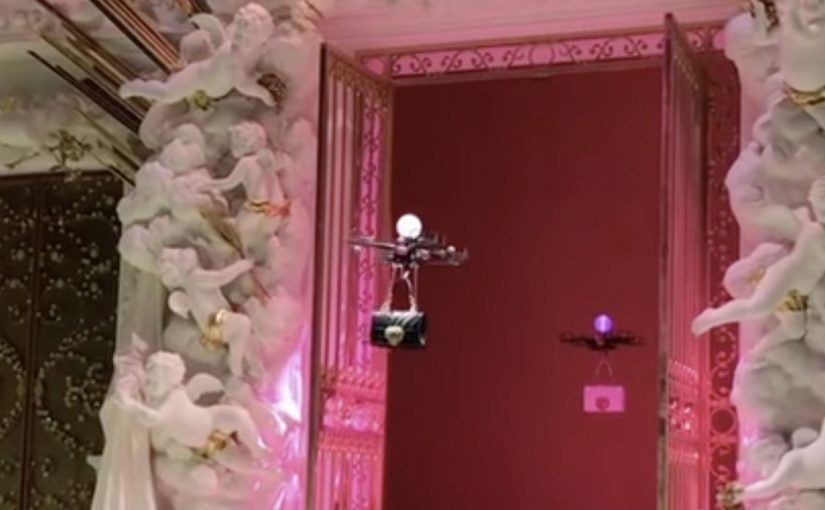
The drones were made to carry Dolce & Gabbana’s latest range of “Devotion” leather handbags as part of its fall and winter collection. Around seven copters hovered along the runway, each with a Dolce & Gabbana handbag dangling beneath it.

How the stunt works

The mechanism is pure stagecraft. Here, stagecraft means using the runway itself as the media device, not just as the place where the product appears. Take the product that matters. Put it in motion. Remove the expected human element. Then let the crowd do the amplification for you. The runway becomes the distribution channel, because every phone in the room turns into a broadcast rig.

In luxury and fashion marketing, runway moments often function as global media events rather than closed-room trade shows.

Why it lands

The drones are not there to “model” the bag better than a person. They are there to create a new mental category for the launch. Tech meets craft. Spectacle meets product detail. It is instantly legible, and that legibility is what makes it shareable. The real question is not whether drones are novel, but whether the launch gives people a visual they can describe and repost in one sentence.

Extractable takeaway: If you want a product launch to travel, engineer one clean, easily described visual rule that can be captured in a single clip and understood without context.

The business intent behind the spectacle

There is a practical strategy under the theatrics. A handbag line needs repetition to build recognition. An opener like this creates an excuse for editorial coverage that would not exist for a standard runway walk. It also frames the collection as a moment, not just merchandise. This is a smart luxury launch because it turns product display into earned-media design.

What luxury brands can steal from this opener

  • Lead with the product, not the brand story: put the object at the center of the visual idea, then let everything else support it.
  • Design for the camera lens: build an opener that looks good from the audience angle, because that is where the internet gets its footage.
  • One rule, repeated: a single, consistent gimmick (bags carried by drones) reads stronger than five different surprises.
  • Operational friction is part of the story: if a stunt has constraints, treat them as production discipline, not as an afterthought.
  • Make the opener do the PR work: the first 30 seconds should be enough for headlines, clips, and social captions.

A few fast answers before you act

What did Dolce & Gabbana do at Milan Fashion Week?

They opened a runway segment with drones carrying the brand’s Devotion handbags, replacing the expected human “bag parade” with flying copters.

Why use drones instead of models?

Because it creates an immediate, high-contrast visual. It signals novelty fast, it photographs well, and it makes the product launch feel like a cultural moment.

Is this a technology play or a PR play?

Primarily a PR play. The technology is the prop. The real value is attention, recall, and the shareable simplicity of the idea.

What is the transferable pattern for other brands?

Put your product into an unexpected but instantly understandable delivery mechanism. Keep the rule simple. Make it easy for a spectator to capture and repost.

What is the biggest risk with stunts like this?

Execution risk. If the tech introduces delays, safety concerns, or awkward staging, the narrative can flip from “innovative” to “gimmicky”. Production rigor matters as much as the idea.