
The Kentucky Flying Object

KFC India turns a chicken box into a build-it-yourself tech toy. Select boxes for the newly announced Smoky Grilled Wings include the “Kentucky Flying Object,” also called “KFO,” a mini-drone you assemble yourself.

The limited-edition boxes are available in ten selected cities from January 25 to January 26.

If you receive one of the special boxes, you get your wings plus a fully functioning mini-drone, along with assembly instructions online at kfodrone.com.

The real question is whether your packaging can deliver a moment people want to prove, not just a message they can scan.

Why this is packaging-led “tech savvy” marketing

KFC is not adding a QR code or a one-off AR filter. It is putting the message inside the product experience. The packaging becomes the headline. The consumer gets something physical, surprising, and demonstrably “tech,” in the moment of consumption. Because the surprise is physical and immediate, it turns the claim into something people can demonstrate.

Extractable takeaway: “Tech savvy” marketing lands when the proof is inside the product experience, not bolted on as a scan, filter, or claim.

In quick-service restaurant marketing, packaging is often the only owned touchpoint guaranteed to be present at the moment of consumption.

This play is smart only if the object is safe, usable, and instantly explainable without a support ticket.

The behaviour it encourages

This is a meal that extends beyond eating.

  • Assemble.
  • Show someone.
  • Fly it.
  • Share the proof.

The drone is not just a giveaway. It is a social object that creates repeatable conversations, both offline and online. By “social object,” I mean a thing people naturally show, talk about, and pass around.

What to watch if you replicate this play

A high-novelty object inside a food pack raises immediate execution questions.

  • Safety and compliance. Especially around batteries, rotors, and usage guidance.
  • Availability clarity. Limited editions can frustrate if expectations are unclear.
  • Post-purchase support. Instructions, spare parts, and handling issues.

Make the pack the proof

  • Build the behaviour into the pack. If it cannot be assembled and shown in minutes, it will not travel.
  • Design for proof, not impressions. Give people something they can demonstrate, not just describe.
  • Pre-empt the three frictions. Safety guidance, availability clarity, and post-purchase support decide whether the stunt backfires.

A few fast answers before you act

What is the “Kentucky Flying Object”?

A limited-edition KFC India box concept where select Smoky Grilled Wings boxes include a DIY mini-drone.

When and where is it available?

In ten selected cities from January 25 to January 26.

What is the core marketing idea?

Turn packaging into the primary experience, then let the object create shareable proof that travels beyond the store.

Why is this stronger than adding a QR code or AR filter?

Because the “tech” proof is physical and immediate. It is experienced in-hand during consumption, then demonstrated, not just scanned or claimed.

What are the execution risks that decide whether it backfires?

Safety and compliance, availability clarity, and post-purchase support. If any of those fail, novelty turns into frustration.

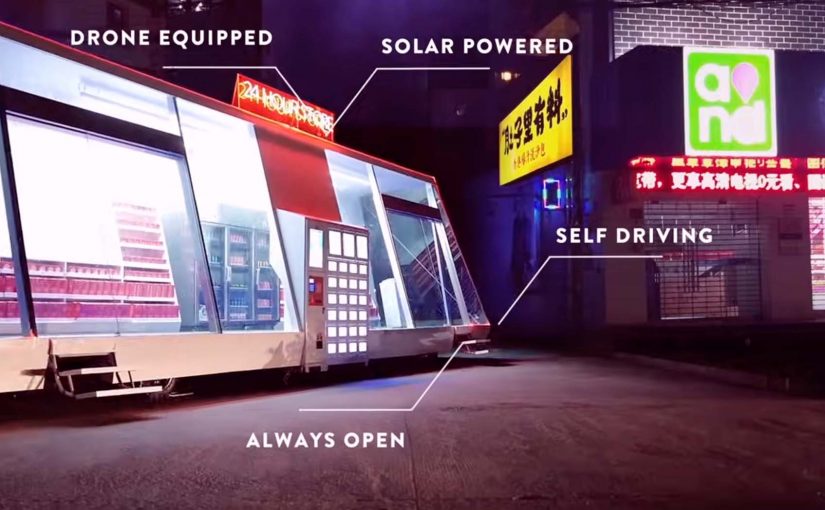
The Moby Mart

Every parking space becomes a 24-hour store. The Moby Mart is designed to turn ordinary parking spots into always-on retail. Roughly the size of a small bus, it carries everyday products such as snacks, meals, basic groceries, and even shoes. To use it, you download an app, register as a customer, and use your smartphone to unlock the doors. Here, “always-on” means open around the clock without staff on site.

The idea is in trial mode. The store is undergoing trials in Shanghai through a collaboration between Swedish startup Wheelys Inc and China’s Hefei University. For now, the trial prototype is stationary, based permanently in a car park. But the company says it is working with technology partners to develop the self-driving capability, as shown in the video.

The mechanism behind the parking-space store

The mechanism is app-gated access plus self-service. Entry, selection, payment, exit. When that first unlock step feels safe and effortless, an unattended unit starts to feel like normal retail, not a gimmick.

In urban convenience retail, reducing the distance and time between intent and purchase is often the real differentiator.

The real question is whether you can move retail to the moment of demand without breaking trust, support, and replenishment.

If the access and “this worked” confirmation are not rock-solid, mobility and novelty will not save the experience.

What this concept makes tangible

This lands because it reframes “location” as something you can deploy and operate, not just something you lease and staff. The store becomes infrastructure, and the app becomes the front door.

Extractable takeaway: When you make access the first experience, trust and operations become part of the product, not back-office details.

Retail flips from “go to store” to “store comes to you”

The provocation is simple. If the unit can be deployed anywhere, then proximity becomes a variable you can design, not a constraint you accept.

Friction reduction becomes the product

The app unlock and self-service flow compresses the journey. Entry, selection, payment, exit. Less waiting, less staffing, less handoff.

Mobility creates new placement logic

A store on wheels changes what “location strategy” means. Instead of long-term leases, the unit can be positioned where demand spikes, or where fixed retail is uneconomical.

What to copy from Moby Mart

  • Start with a familiar format. People immediately understand a convenience store. That lowers cognitive load.
  • Make access the first experience. App unlock is the “moment of truth.” If that step is seamless, everything downstream feels modern.
  • Design for unattended trust. Clear rules, clear prompts, and a clear “this worked” confirmation prevent anxiety in a staffless space.
  • Prototype the operating model early. Mobility, restocking, and support are not secondary. They are the offering.

A few fast answers before you act

What is the Moby Mart?

A bus-sized, staffless, mobile convenience store concept that aims to turn parking spaces into 24-hour retail, accessed via a smartphone app.

How do customers use it?

They download an app, register, and unlock the doors with their phone to shop inside.

Where is it being tested?

It is undergoing trials in Shanghai through a collaboration between Wheelys Inc and China’s Hefei University.

Is it already self-driving?

The trial prototype is stationary in a car park. The company says it is working with partners on self-driving capability.

What is the core lesson for marketers and innovators?

Move the experience to the moment and place of demand. Then design the access, trust, and operations as the real product.