
A New Kind of Catalog 2: IKEA’s AR catalog

A New Kind of Catalog 2: IKEA’s AR catalog

Last year Ikea re-imagined their catalog via a visual recognition app that brought its pages to life through inspirational videos, designer stories, “x-ray” views that peek inside furniture, and more.

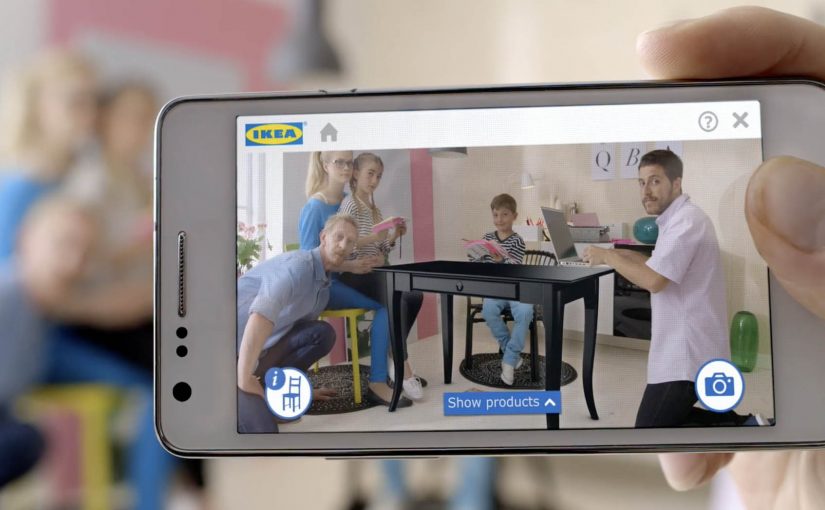
Now, for the 2014 IKEA catalogue, they push that idea into something far more useful: you can place virtual furniture directly into your home by putting the printed IKEA catalogue where you want the furniture to appear, then viewing the result through your phone or tablet using augmented reality (AR), meaning digital objects layered onto a live camera view of your real space.

The simple mechanic that makes a paper catalogue feel like a showroom

The experience design is almost disarmingly straightforward. The catalogue is not just media. It becomes the physical reference point that tells the app where “here” is, and roughly how big “life-size” should be. Because that reference point anchors position and scale, the placement feels believable enough to support a buying decision.

  • Open the IKEA catalogue app on a phone or tablet.
  • Scan a supported product page.
  • Close the catalogue and place it on the floor (or surface) where you want the item to “live.”
  • Watch the furniture appear in-context, then explore alternatives by browsing within the app.

In global retail and consumer brands, this kind of print-to-mobile AR, where the printed catalogue acts as the marker for the AR view, works because it turns “can you picture it?” into “can you see it here?” at the exact moment people are deciding.

Why it lands: utility beats novelty

AR marketing often dies as a gimmick because the “reveal” is entertaining but irrelevant. Here, the reveal is practical: scale, placement, and fit are exactly what shoppers worry about most.

Extractable takeaway: If emerging tech does not reduce a real decision friction, treat it as a distraction, not a strategy.

Even when the rendering is not perfect, the direction is clear. Reduce uncertainty. Help people make a confident choice. And if it cuts down on “it looked smaller online” returns, that utility is measurable, not just shareable.

What IKEA is really doing with this catalogue

This is a classic “bridge” play, a deliberate handoff between inspiration and purchase. IKEA keeps the reach and habit of a paper catalogue, then uses mobile interactivity to remove friction at the decision stage.

The real question is whether it removes enough doubt to change a purchase decision, not whether the AR looks impressive.

AR is worth investing in when it behaves like decision support, not when it just decorates a story.

It also quietly reinforces a brand position: IKEA is not only about affordable design. It is also about smart, accessible tools that help you plan and live better at home.

How to design an AR catalog people reuse

  • Make the printed piece part of the interface. Treat paper as a trigger, a marker, a controller. Not a dead-end.
  • Reward the scan with decision support. The “wow” should reduce doubt: sizing, configuration, compatibility, placement, or proof.
  • Design for fast repetition. The real value comes when people try multiple options in minutes, not once for curiosity.
  • Keep the action close to purchase. The best AR demos shorten the path from consideration to “yes” without feeling like a hard sell.

A few fast answers before you act

What is IKEA doing differently with the 2014 catalogue?

They extend the catalogue beyond scan-to-watch content by letting people place virtual furniture into their real home environment using AR.

How does the AR placement work in simple terms?

You scan a supported page, place the physical catalogue where you want the item to appear, and the app overlays a furniture model into the live camera view.

Why is a printed catalogue useful in an AR flow?

The catalogue becomes a physical reference point for position and approximate scale, making placement feel more believable than a free-floating 3D object.

What business problem does this help solve?

It reduces purchase hesitation by letting people judge fit and placement earlier, and it can help lower the risk of dissatisfaction and returns.

What’s the key lesson for marketers using emerging tech?

Build the experience around utility that supports a decision. Novelty may earn a try. Utility earns repeat use and moves people toward purchase.
NIVEA: Solar Ad Charger

NIVEA: Solar Ad Charger

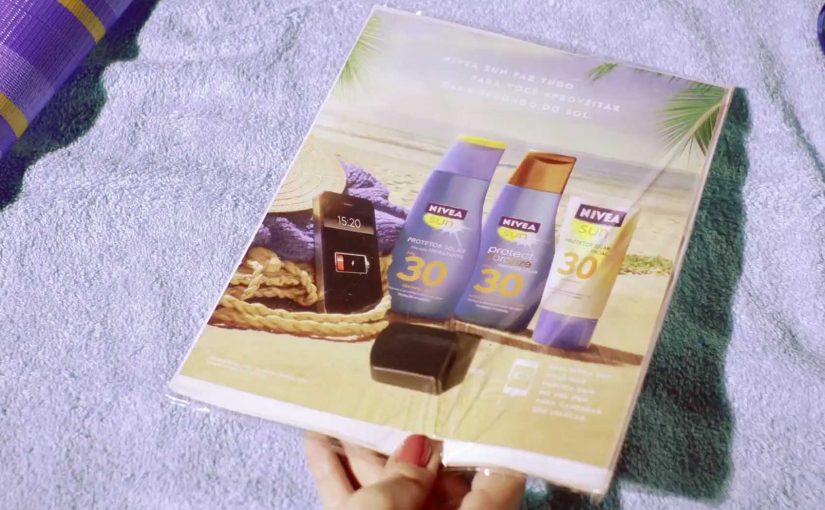
You are on the beach, your battery is dying, and the solution is sitting inside a magazine. NIVEA Sun and Draftfcb Brazil built a print ad insert with real solar panels and a USB port, so beachgoers could plug in and charge while staying in the sun.

The mechanism is the message. The ad is not “about” a product benefit. It behaves like one. Put it in sunlight, connect your phone, and it becomes a small piece of beach kit.

In consumer brand marketing, the most memorable activations turn a media placement into a useful object that fits a real moment of need.

The real question is whether you can make the medium do the job your copy normally tries to do.

This kind of utility-first work is worth copying because it earns attention by solving something small, fast, and real.

Everything in the context ties together cleanly. Sun. Beach. Sunscreen. Mobile phone. Solar charger. The usefulness makes the brand feel present without asking for attention, because the attention arrives naturally once the ad starts solving a problem.

When “print” becomes a product

This is a simple but important shift. The ad is no longer a container for persuasion. It is a container for utility. That makes the experience inherently shareable, because the story people retell is not “I saw an ad”. It is “I charged my phone with a magazine”.

Why this idea lands on a Brazilian beach

Beach time is long, bright, and social. It also creates a predictable friction point. Phones run out of battery, and leaving the spot to find power breaks the day. A solar-powered insert fits the environment and the behaviour, so the concept feels obvious in hindsight.

Extractable takeaway: When the environment already supplies the input, design the interaction so the payoff arrives with almost no explanation.

How to reuse the Solar Ad Charger pattern

  • Start with a real constraint. Battery anxiety is a better brief than “increase awareness”.
  • Let the medium carry the meaning. Solar charging in sunlight communicates the sun story instantly.
  • Make the interaction self-explanatory. A USB port is a universal instruction set.
  • Design for the “tellable moment”. A tellable moment is an interaction someone can retell in one sentence, without explaining the ad first.

A few fast answers before you act

What is the NIVEA Solar Ad Charger?

It is a magazine ad insert created for NIVEA Sun in Brazil that includes thin solar panels and a USB port, allowing readers to charge a phone using sunlight.

Why does this count as interactive advertising?

Because the viewer has to use it. The interaction is physical and immediate. Place it in sun, connect a cable, and the ad performs a function rather than only communicating a claim.

What makes the idea feel so “on brand”?

The utility is inseparable from the product context. Sunscreen is used in the sun. The charger also only works in the sun. The message and the mechanic are the same thing.

What is the main lesson for FMCG launches?

If you can turn a placement into a small, relevant tool, you shift from attention-seeking to value-giving. That typically increases recall, sharing, and positive brand association without needing complex explanation.

What is the most common pitfall with utility ads?

Overengineering. If it requires special setup, fragile components, or unclear instructions, people will not try it. Simple inputs and fast payoff matter more than novelty.

eMart: Flying Store Wi-Fi Balloons

eMart: Flying Store Wi-Fi Balloons

In May 2012, eMart created the Sunny Sale campaign, distributing coupons through a sun-activated QR code.

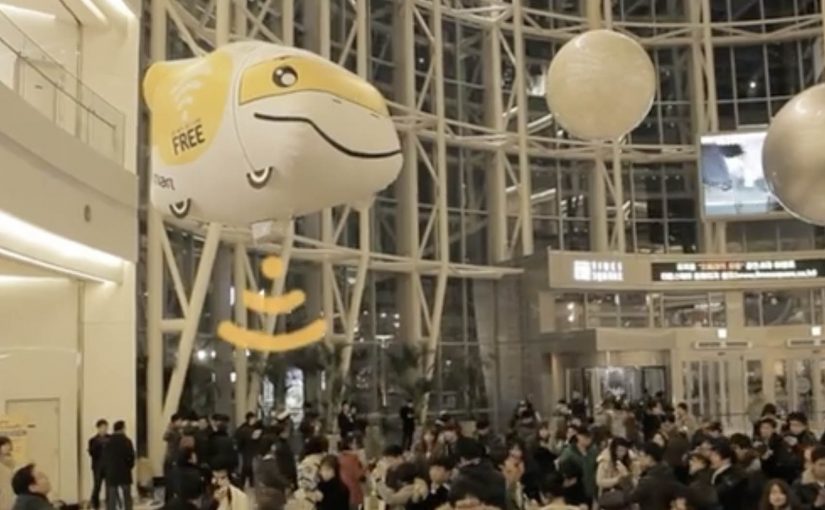
Now, in its latest campaign, eMart creates “Flying Stores”. These are truck-shaped balloons fitted with a Wi-Fi router. These balloon stores float across Seoul, and people who cannot get to an eMart store during the day can connect to the balloon’s Wi-Fi signal and order directly online.

Wi-Fi as the storefront

The mechanism is a mobile commerce shortcut disguised as outdoor media. The balloon is the attention object, but the real call-to-action is the hotspot. Connect. Land inside the eMart mobile experience. Buy now, while you are in transit or between errands. Because joining a Wi-Fi network is a familiar, low-friction action, the hotspot makes the “store comes to you” promise feel immediate.

In dense urban retail markets, removing distance and time as barriers is often the fastest route to incremental mobile conversion.

The real question is whether your activation builds a functional shortcut into the customer journey, not just a spectacle around it.

Why it lands

It targets a real constraint, not a demographic. People are time-poor, and “accessibility” often decides which retailer wins repeat behavior. The balloon flips accessibility from “go to the store” to “the store comes to you,” with Wi-Fi as the bridge.

Extractable takeaway: When your growth problem is “people can’t get to us,” do not just advertise harder. Create a literal on-ramp that collapses the journey from attention to transaction into one simple action that feels native, like joining a Wi-Fi network.

What to steal for your next retail activation

  • Make the trigger physical, then make the conversion digital. The balloon earns attention. The phone closes the sale.
  • Design for commuters. Transit corridors are full of intent, but short on time. Your flow must be fast.
  • Give the audience a reason to connect. Free Wi-Fi is a utility. Utility beats persuasion in the first 10 seconds.
  • Measure beyond views. If it is meant to drive commerce, track app installs, orders, and repeat usage, not just impressions.
  • Reinforce the pattern with a related example. See the 2011 flying fish balloons campaign for the Sea Life park in Speyer, Germany.

A few fast answers before you act

What is an eMart “Flying Store”?

A truck-shaped balloon equipped with a Wi-Fi router that people can connect to, then use to enter eMart’s mobile experience and shop online.

Why use Wi-Fi instead of a QR code this time?

Wi-Fi turns the activation into a utility, not just a scan. It creates a direct, immediate pathway into mobile shopping, especially for people on the move.

What makes this more than a PR stunt?

The hotspot is a functional distribution layer. If the mobile flow is good, the activation can produce measurable installs and transactions, not only buzz.

What should you measure to judge success?

Track connects to the hotspot and the downstream actions you care about, like app installs (if required), orders, and repeat usage, not just media impressions.

What is the biggest risk in copying this idea?

If the connection experience is unreliable, slow, or confusing, the novelty becomes frustration. Utility-led activations only work when the utility works.