
Giraffas: The Goal Screen

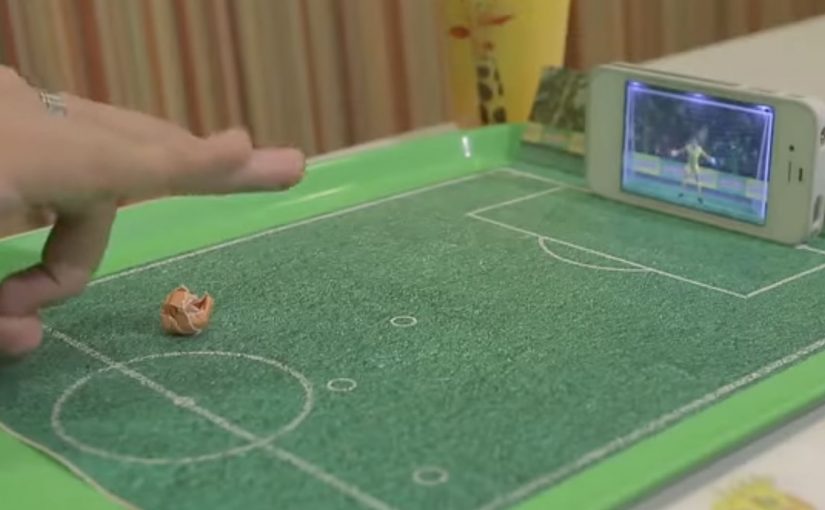
To capitalize on the lead up to the 2014 FIFA World Cup, Brazilian fast food chain Giraffas creates a mobile game that turns their tray papers into a virtual soccer field. To play, consumers rip the side of the paper tray, make a paper ball, and flick it into their mobile screens.

7 million tray papers are printed, and the game is made possible by using the smartphone camera to recognize the ball distance, the accelerometer to identify the trajectory of the kick, and the microphone to recognize the area of impact.

A game that bridges paper and screen

The mechanism is a simple physical ritual, meaning a repeatable action with objects already on the tray, that unlocks a digital experience. The tray liner provides the “pitch”. The paper ball provides the input. The phone turns sensors into a referee, translating distance, direction, and contact into gameplay.

That matters because the tray liner and paper ball remove setup friction, so the leap from noticing the idea to trying it stays almost instant.

In quick-service restaurants, the strongest interactive ideas add value during the waiting and eating moment, without requiring staff training or extra hardware at the counter.

The real question is how little effort a brand can ask of people before play feels easier than ignoring it.

Why it lands

The strongest part of the idea is not the World Cup tie-in. It is the packaging mechanic that makes play feel native to the meal. This works because it turns a disposable surface into a reason to play, and it makes participation feel immediate. It is not “download an app for later”. It is “play right now, with what you already have, while you are here”. The World Cup context supplies motivation, but the in-store simplicity supplies repeatability.

Extractable takeaway: When you want in-the-moment engagement, design a physical trigger that is already in the customer’s hands, then use the phone only as the translator. The fewer steps between curiosity and action, the more people actually try it.

What to borrow from this tray-to-screen mechanic

  • Use packaging as the interface. If your brand owns a surface (tray liners, cups, wrappers), it can become the entry point.
  • Make the first attempt effortless. Rip, roll, flick. Three verbs. No instructions wall required.
  • Exploit phone sensors, not novelty tech. Camera, accelerometer, and microphone are scalable because they are already everywhere.
  • Anchor to a cultural moment, but keep it evergreen. The event creates urgency, the mechanic creates habit.

A few fast answers before you act

What is “The Goal Screen” for Giraffas?

It is an in-store mobile game that turns Giraffas tray papers into a virtual soccer field, using a paper ball that customers flick into their phone screen.

Why does the paper tray matter to the experience?

The tray paper acts as the physical “pitch” and the trigger for play, making the game feel native to the restaurant moment.

How does the phone detect the kick?

The setup is described as using the camera for distance, the accelerometer for trajectory, and the microphone for impact area.

What is the marketing objective behind this kind of mechanic?

To make the in-store visit more entertaining and memorable, and to create a reason to interact with the brand during the meal.

What is the transferable lesson for other brands?

Turn a ubiquitous brand touchpoint into a play surface, then use the phone as a lightweight sensor hub that makes the interaction feel “magical” without added hardware.
Catch the Oreo: An Augmented Reality Game

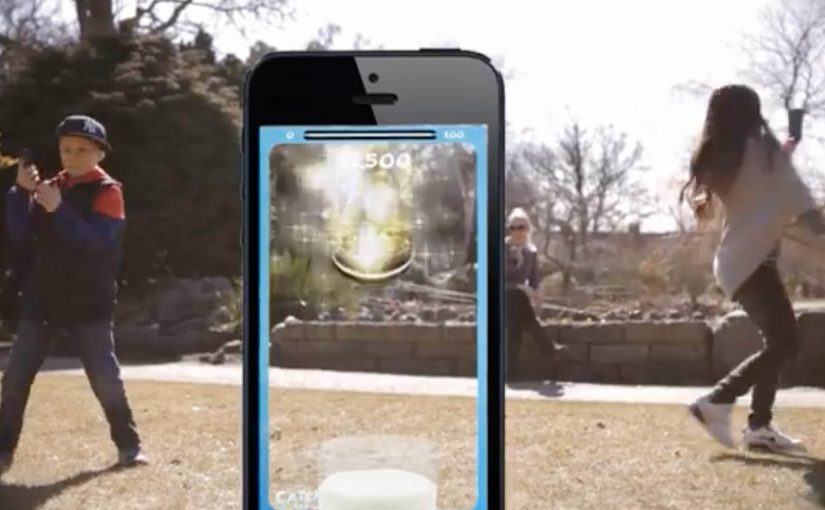
Oreo Cookies, to commemorate the first video game created by Ralph H. Baer, used modern day technology to create an augmented reality game called “Catch the Oreo”. The game is available on Android and iOS devices.

Here, augmented reality means the phone camera view overlays virtual Oreos onto the live scene, so you catch them in your space.

People living in Norway and Denmark are automatically entered into a sweepstake competition by just playing and uploading their high score. There are weekly prizes and the winners are decided by drawing lots.

Competition lasts from 8 April to 28 July 2013 (both dates included). So start playing.

Why AR is a good fit for a simple, repeatable game

The charm of “Catch the Oreo” is that it takes a basic arcade mechanic and gives it a physical feeling. AR turns “tap on a screen” into “catch it in your space”, which makes the game feel more immediate and more shareable.

Extractable takeaway: When the core action is instantly understandable, AR can add physicality and shareability without adding rule complexity.

AR works best here as a thin layer of delight over a simple arcade loop, not as the loop itself.

  • Instant understanding. Catch the cookie. Score points. Improve your high score.
  • AR adds novelty without complexity. The camera layer makes it feel new, but the rules stay simple.
  • Replays are built in. High scores naturally invite repeated attempts.

In European FMCG marketing, lightweight mobile games like this can be a practical way to turn momentary attention into repeatable engagement.

The sweepstake mechanic reduces pressure and increases participation

Weekly prizes and winners drawn by lots change the psychology. You do not have to be the absolute best player to feel you have a chance. You just have to play and upload.

The real question is whether your mechanic can motivate repeat play without making most participants feel they have already lost.

That is a smart way to broaden participation, especially in markets where you want scale quickly.

A random-draw sweepstake can reward participation rather than skill, which can widen the funnel while still benefiting from weekly prize cadence.

Why Norway and Denmark focus matters

By making the sweepstake specific to Norway and Denmark, Oreo can concentrate buzz, prize logistics, and local relevance. It also allows them to measure adoption and participation within a defined footprint.

What to take from this if you run mobile engagement campaigns

  1. Keep the core mechanic simple. AR is the layer. The game rules should be obvious.
  2. Reward participation, not only skill. Lot-based prizes can widen the funnel.
  3. Use time-boxed windows. Fixed dates create urgency and repeat visits.
  4. Make sharing part of the flow. High-score uploads naturally create a distribution loop.

A few fast answers before you act

What is “Catch the Oreo”?

It is an augmented reality mobile game created by Oreo, available on Android and iOS, where players catch Oreos to achieve a high score.

Where was the sweepstake promotion available?

For people living in Norway and Denmark, who were entered automatically by playing and uploading their high score.

How were winners selected?

There were weekly prizes and winners were decided by drawing lots, not purely by highest score.

What were the competition dates?

It ran from 8 April to 28 July 2013, with both dates included.

What is the main lesson for AR marketing?

Use AR to add delight, but keep the underlying mechanic simple and repeatable, then attach incentives that drive replays and sharing.

GOL Airlines: Mobile Check-in banner you fly

Here is a pretty innovative banner ad from AlmapBBDO in Brazil for GOL Airlines. The banner challenges you to imagine what it would be like to “fly” on your mobile phone.

You submit your mobile number into the banner. Seconds later you get a live call with flight instructions. At the same time the page transforms into a flying game controlled directly from your phone keypad.

You then fly a virtual plane across a major Brazilian travel site while destination deals appear underneath the route you choose. Flying is simple. Touch numbers to change direction and trigger special manoeuvres. The ad finishes by reminding you that flying is easier when you check in via your mobile phone.

In travel categories where products feel interchangeable, interactive creative wins when it turns a service benefit into a felt experience in seconds.

A banner that calls you back

The key move is not the game. It is the phone call. The call instantly makes the experience feel “live” and personal, and it bridges the banner and the handset into one connected moment. Once the call happens, the user is no longer passively viewing an ad. They are inside a two-device interaction.

The real question is whether your creative can make the service benefit happen inside the unit, rather than only claiming it.

This is a classic example of making the handset part of the unit. The mobile phone becomes the interface, which proves the check-in promise instead of describing it.

The mechanic: second-screen control without an app

Most second-screen ideas fail because they ask people to download something or switch contexts. This one uses what every phone already has. The keypad. In other words, the phone becomes a simple remote control for what happens on the page. That choice removes onboarding friction and makes the interaction feel surprisingly accessible for a banner unit.

It also creates a clean narrative arc. Number entered. Call received. Instructions delivered. Game begins. Deals appear. The brand claim lands as the closing line rather than the opening pitch.

In consumer travel marketing, where attention is scarce and booking friction is high, this kind of second-screen viewer control turns “convenience” into something you can feel.

Why the “flying game” format fits the job

The game is not meant to be deep. It is meant to create one sensation. Control. When you steer the plane with your own phone while destination deals appear under your route, the ad links that felt control to the check-in promise.

Extractable takeaway: If your benefit is “ease,” build a small interaction that gives the viewer control and a useful reward in the same moment. In a “message as mechanism” execution, the claim is delivered through the interaction itself, not a line of copy.

Steal this from GOL’s mobile check-in banner

  • Use a real-world channel as the trigger. A live call is stronger than a visual prompt because it changes the user’s state immediately.
  • Make the phone the interface. If you are selling a mobile service, let the mobile device do the work inside the experience.
  • Keep controls primitive and universal. Keypad inputs beat complex gestures when you need instant comprehension.
  • Reward the interaction with utility. Deals, destinations, availability, or next steps should appear as part of play, not after it.
  • End with the service tie-back. Let the experience earn the claim, then state it plainly.

A few fast answers before you act

What is the core idea of the GOL mobile-controlled banner?

You enter your phone number into a banner, receive a live call with “flight” instructions, and then control an on-page flying game using your phone keypad while travel deals appear as you fly.

Why does a phone call change the effectiveness of a banner ad?

It makes the experience feel immediate and real, and it creates a bridge from passive viewing to active participation without asking the user to install anything.

What category situations benefit most from this pattern?

Categories where the product is hard to differentiate visually and the benefit is “convenience” or “ease.” Airlines, ticketing, banking, utilities, and service platforms.

What is the biggest execution risk?

Operational friction. If the call is delayed, fails, or feels spammy, the experience collapses. Timing, consent clarity, and reliability are everything.

How would you modernise the mechanic without changing the concept?

Keep the phone as controller, but use a consent-forward trigger and fast connection method. For example, a one-tap call prompt or a verified in-browser handoff that still preserves the “live instructions” feeling.