Coca-Cola: Velcro Posters for Grip Bottle

Coca-Cola: Velcro Posters for Grip Bottle

A bus-shelter poster you can literally grip

Here is another cool innovation at the bus shelters. Coca-Cola has come up with a new Grip Bottle which has a better grip for holding. To let people know they printed posters with Velcro on them and placed them in bus shelters in Paris to make people interact with the grip.

Here, “interact” means a simple touch that demonstrates the grip benefit on the spot.

The campaign was a big success as people were literally hooked on to the campaign and there was a 3.8% brand volume growth in France compared to 2007.

The campaign was created by Marcel in Paris, France.

The smartest part: the demo is the media

If the claim is “better grip,” then the fastest proof is to make you grip something. Velcro turns the poster into a hands-on argument.

In European urban transit shelters, people wait close enough to the media that touch-based demos are possible.

Why it sticks in your head

Bus shelters give you time. And touch beats talk. You do not just read about the benefit. You feel it while you wait, which makes the proof harder to ignore.

Extractable takeaway: If a benefit can be proven in one gesture, design the media so the gesture happens by default.

The business point

The real question is how to make a product claim self-evident in a few seconds.

When the proof fits inside the medium, demonstrate the benefit instead of explaining it.

Make the new Grip Bottle noticeable, and make the “better grip” benefit instantly understandable through interaction.

What to take from this

  • Tactile benefits: When the benefit is tactile, communicate it through touch, not explanation.
  • High-dwell placements: Use high-dwell environments, meaning places where people naturally wait, to earn interaction, not just impressions.
  • Simple mechanics: Keep the mechanic, meaning the action you ask people to do, simple enough to repeat at scale.

A few fast answers before you act

What was the Coca-Cola Grip Bottle campaign?

A bus-shelter activation in Paris promoting Coca-Cola’s Grip Bottle by using Velcro posters that encouraged people to interact with the grip.

Where did the campaign run?

It was placed in bus shelters in Paris, France.

What outcome did the post cite?

The post cited a 3.8% brand volume growth in France compared to 2007.

Who created the campaign?

The post credits Marcel in Paris, France.

Volvo: There’s More to Life, in 3D

Volvo: There’s More to Life, in 3D

Volvo is pushing past the “cold Swedish marque” perception and leaning into an emotion-led brand campaign built around a disarming line: “There’s more to life than a Volvo.”

The campaign print ad sets up a string of human moments, then lands the message back on the car with a safety punchline. “There’s not running into the car ahead of you, in your XC60. That’s why you drive one.”

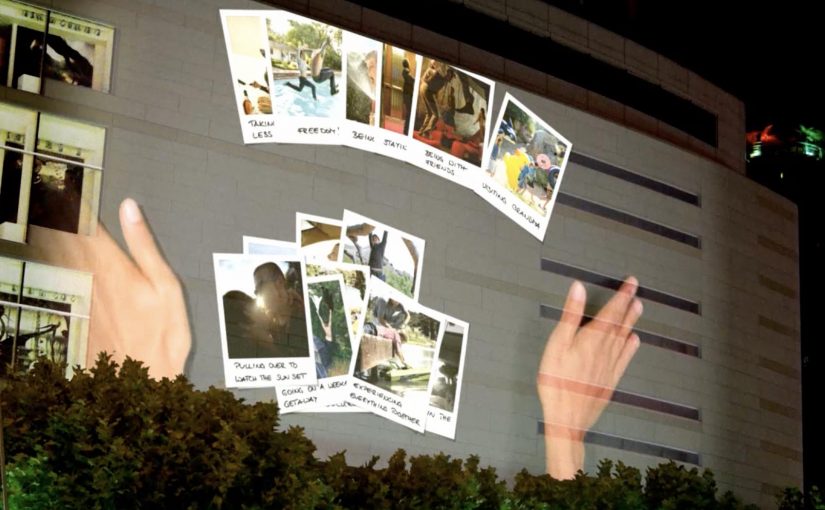
Germany gets a very different kind of treatment. A 3D projection in Frankfurt turns the thought into a public spectacle, produced by NuFormer in cooperation with Saatchi & Saatchi.

When the brand line needs public proof

Projection mapping, sometimes called 3D video mapping, is the practice of aligning animated light to the exact geometry of a building facade so the architecture appears to move, fold, or transform. Here, it becomes a storytelling canvas for an emotion-led repositioning. By public proof, I mean a shared, observable moment that demonstrates the brand promise in the real world.

Across European automotive brand building, public-space spectacle is often used to make an abstract shift in perception feel immediate and shared.

Why this execution fits the line

“There’s more to life than a Volvo” only works if it feels like an invitation, not a lecture. The projection format helps because it is experiential rather than declarative. It lets the audience feel the campaign instead of being told about it.

Extractable takeaway: If a repositioning line asks for emotion, design the experience so the audience lives the feeling first, then let the product proof arrive as the payoff.

It also reframes safety. Safety is still the payoff, but it arrives after life. The story says: live fully. Then rely on the car to take care of you when the unpredictable happens.

The real craft move

The real question is whether your repositioning can be experienced, not just stated.

This is branded content without pretending to be entertainment content. The execution does not hide the brand. It earns attention through novelty in public space, then uses that attention to make the line stick as a memory.

Turn a repositioning line into proof

  • Pick a line that can carry a scene, not just a tagline. If you can imagine it as an experience, you can build with it.
  • Translate the message into a physical moment, so “brand shift” becomes something people witness together.
  • Keep the emotional arc intact. Life first, product proof second. That order is the strategy.
  • Use one technical definition inside the story, so audiences and answer engines can repeat what the format is and why it matters.

A few fast answers before you act

What is projection mapping, in plain terms?

It is a technique where projectors are calibrated to a building’s shape so animated visuals appear to interact with the architecture, creating a 3D illusion.

Why use a 3D projection for a brand line?

Because it makes an intangible message tangible. A public moment gives a repositioning scale, memorability, and social proof.

How does this support Volvo’s safety story without leading with safety?

It frames safety as enabling life, not replacing it. The campaign invites emotion and spontaneity, then lands on protection as the reason the promise is credible.

What is the key risk with spectacle-led brand work?

If the spectacle is not anchored to a single, repeatable line, people remember the show and forget the meaning. The message must be retellable in one sentence.

What should be measured to judge effectiveness?

Unaided recall of the line, brand attribute shift toward “modern” and “engaging,” plus amplification signals like organic shares and press pickup tied to the execution.

Cadbury Creme Egg: Egg-Splatting Bus Stands

Cadbury Creme Egg: Egg-Splatting Bus Stands

Turning bus-stop boredom into a reason to play

Only available from New Year’s Day to Easter Day, the Cadbury Creme Egg is one of the best selling confections in the U.S., Canada, and the United Kingdom.

In a bid to boost Creme Egg sales in the lead-up to Easter, Cadbury’s has come up with some really unique bus shelter ideas in the UK.

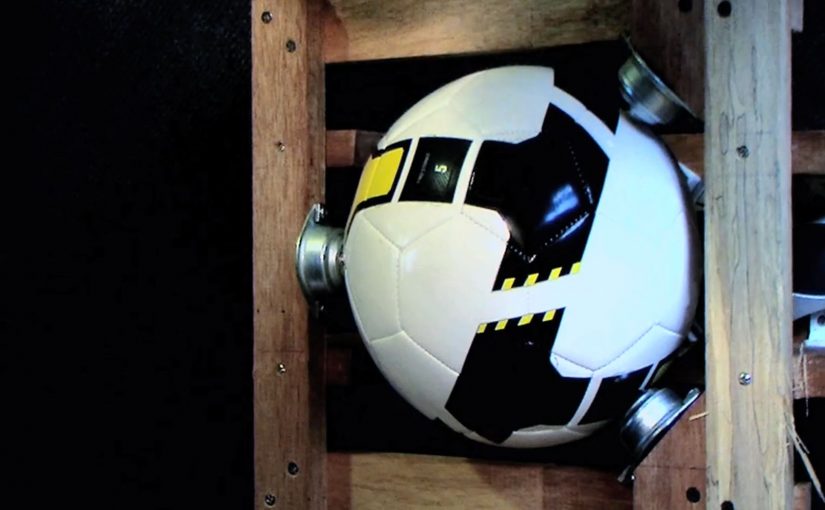
Waiting for a bus is boring. Now though, you can fill this time by playing Cadbury’s first ever interactive outdoor game called Splat the Egg.

How the idea works: time, place, and a simple interaction loop

The mechanism is classic context hijack. By “context hijack”, I mean using the place’s existing purpose and dwell time as the trigger for a simple action. You take a moment with unavoidable waiting, add a clear instruction, and reward participation with a small burst of fun. The shelter becomes the interface, and the product becomes the “game object”. Because the action is legible and the payoff is immediate, people can join in without needing a long explanation.

In European FMCG launches with seasonal availability, interactive out-of-home can act as both reminder and recruiting surface, converting passive footfall into active brand experience.

Why it lands: it gives the viewer control over the medium

It works because it reframes waiting as choice. Instead of being stuck, you get something to do. And once one person starts, the social proof pulls in the next. A bus stop is already a small crowd. The game turns it into a moment people watch and talk about. The real question is whether your out-of-home placement gives people something to do, not just something to read. Interactive out-of-home should earn attention by turning waiting into play, not by piling on more claims.

Extractable takeaway: If your medium comes with unavoidable dwell time, build a two-second, self-explanatory action that rewards participation and makes spectators part of the experience.

The business intent: make seasonal scarcity feel like an event

Creme Egg’s limited availability is built for anticipation. This activation makes that anticipation physical. It pushes mental availability ahead of Easter and ties the product to a playful ritual rather than just a purchase.

A neat extension for people who cannot try it in person

Is this the future of advertising. Every lamp post and bus shelter calling out to be stroked, touched or hit?

For those who won’t have the chance to experience the real thing. You can have a go at the online version at www.cremeegg.co.uk/greateggscape/.

The Great Eggscape

What to steal for interactive out-of-home without overbuilding it

  • Exploit dwell time. Bus stops, queues, and waiting areas are built-in attention pockets.
  • Keep the interaction legible in two seconds. If it takes explanation, it will not scale in the street.
  • Design for spectators as well as players. The crowd is part of the distribution.
  • Connect the physical to an accessible fallback. An online version extends reach beyond the locations.

A few fast answers before you act

What is Cadbury’s “Splat the Egg” bus shelter idea?

An interactive out-of-home activation that turns a bus shelter into a playable game, letting people waiting for a bus engage with a Creme Egg-themed experience.

Why choose bus shelters for an interactive campaign?

Because they come with natural dwell time. People are already waiting, so the activation converts idle minutes into engagement without asking for extra effort.

What is the core mechanism?

Context hijack plus a simple interaction loop. A clear instruction turns a waiting moment into a quick burst of fun, and the shelter becomes the interface.

What is the business goal behind this activation?

To build anticipation for a seasonal product and tie scarcity to a playful ritual that increases mental availability ahead of Easter.

What is the most transferable takeaway?

Build simple viewer control into the medium at moments of forced waiting, and design for spectators as well as participants so the crowd becomes distribution.