
EA Sports SSX: SSX Shakes

EA Sports SSX: SSX Shakes

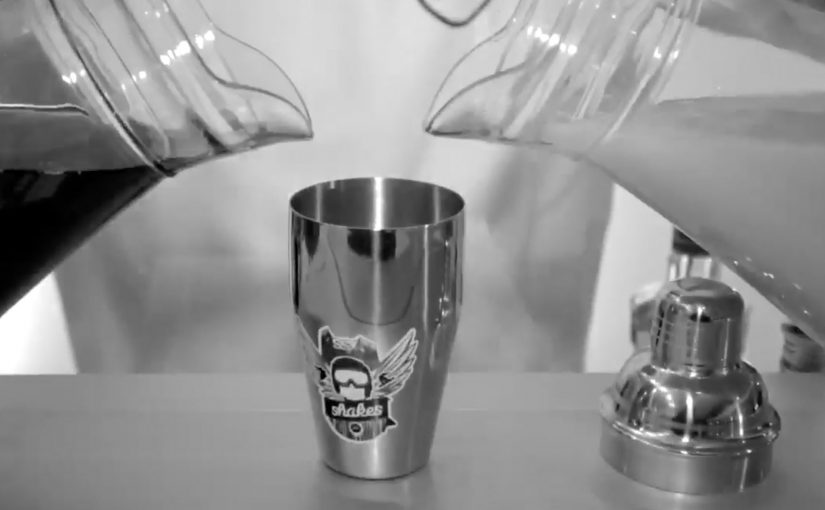
A cocktail order comes in, and a bartender does not reach for the shaker. A pro rider does. The drink gets “shaken” by performing the very snowboard trick it is named after, then handed over fresh to the guest who ordered it.

That is the core of SSX Shakes. A small, invitation-only pre-launch event in Belgium created to generate extra buzz and free press for EA’s SSX extreme snowboarding release on PlayStation and Xbox 360. Duval Guillaume Modem (Antwerp) stages the night around mood and shareability: music, a slope setup, a cocktail bar, riders, and hands-on game play.

How the mechanic turns into media

The mechanism is deliberately tight. Cocktails are named after specific snowboard tricks. Guests choose one. Riders perform the corresponding trick while holding the shaker, then deliver the finished drink. After the event, every blogger and journalist receives a personalised video showing the making of their own SSX shake, packaged for easy sharing with friends, fans, and followers.

In European games marketing where launches depend on earned coverage, the best activations create a photogenic proof point and a ready-to-publish asset for every attendee.

The real question is whether you can hand every attendee a personalised, ready-to-post asset that still feels native to the product story.

Why it lands

It collapses three jobs into one moment. It entertains in the room. It proves the SSX fantasy of trick-driven adrenaline in a physical way. Because the trick is also the “shaker”, the camera captures that fantasy in a single, explainable shot. Then it hands each guest a personalised piece of content that makes sharing feel like showing off a story, not doing a brand a favour.

Extractable takeaway: If your goal is buzz, do not just invite press to watch something. Give them a personalised, category-native moment that can be posted as a complete narrative, without extra editing or explanation. By “category-native”, I mean it uses the category’s own cues and rituals so the story makes sense without context.

What to steal for your next press and influencer activation

  • Build one iconic “single frame”. A rider mid-trick with a cocktail shaker is instantly legible. Your activation needs a moment people can recognise in a second.
  • Make participation the content generator. The guest’s choice determines the trick and the drink. That turns attendees into co-authors of the footage.
  • Personalise the output, not the invitation. The personalised video is the real multiplier. It gives each person a reason to share that is about them, not the brand.
  • Keep the mechanic on-brand. Tricks are not decoration here. They are the core of SSX, translated into a bar ritual.

A few fast answers before you act

What is SSX Shakes in one sentence?

A pre-launch event where SSX-themed cocktails are “shaken” by pro riders performing the matching snowboard trick, followed by personalised recap videos for attendees to share.

Why does the personalised video matter so much?

Because it turns attendance into distribution. Each guest leaves with a finished asset that is already framed for social sharing and blogging.

What is the brand objective behind a concept like this?

To generate earned media and social reach before release by creating a highly visual, retellable moment tied directly to the game’s core fantasy.

How do you adapt this if you cannot produce personalised videos?

Keep the “one guest, one ready-to-share asset” rule, but simplify the output. Capture a short, branded clip or photo that features the guest’s choice and the hero moment, and deliver it to them in a format they can post immediately.

What is the main failure mode if someone copies this format?

If the “hero moment” is not instantly understandable on camera, the event can be fun in-person but produce weak content, and the earned media engine stalls.

American Express “Twitter Sync”

American Express “Twitter Sync”

You sync your American Express card to Twitter, retweet an offer with a specific hashtag, and the reward loads to your card without printing a coupon. For example, tweeting #AmexWholeFoods loads a $20 statement credit that applies when you spend $75 or more at Whole Foods.

A statement credit is a credit applied to your card account after a qualifying purchase.

The foundation. Couponless offers via Facebook

In July last year, American Express launched a first of its kind application on Facebook called “Link, Like, Love” that allowed card members to link their cards to the app and receive deals based on the likes, interests and social connections of the card members and their Facebook friends.

Members who used this service did not have to print coupons to redeem at a store. Instead, they loaded deals onto their AmEx account by hitting an online button in the app, and the reward was given when they swiped the card at the time of purchase.

The latest move. Sync your card with Twitter

Now, in its latest social venture, American Express allows card members to sync their cards with their Twitter account at sync.americanexpress.com/twitter. After the sync, card members follow @AmericanExpress and re-tweet its special offers that come with exclusive hashtags. The re-tweet loads the card with a couponless reward.

In US consumer retail programs, card-linked offers live or die on how little friction sits between discovery, activation, and redemption.

The real question is whether you can make offer activation feel like normal feed behavior while keeping redemption invisible at checkout.

Why this lands. Activation becomes a social reflex

The mechanism is the point. The retweet is the activation event, and the statement credit is the reward. That matters because activation moves into a habit people already perform in the feed, while redemption stays automatic at swipe. This is a strong pattern when you want offers to be used without asking people to print, clip, or remember anything.

Extractable takeaway: If redemption happens at the point of payment, your biggest lever is activation friction. Make activation feel like ordinary behavior, not like work.

The constraint. Availability by market

The Facebook and Twitter sync work only for US card holders.

What to copy. Couponless offer mechanics

  • Trigger in the moment of attention: Use a lightweight action people already do in the channel as the activation step.
  • Redeem where trust is highest: Deliver the benefit at purchase via the existing payment instrument, not via a separate coupon ritual.
  • Make the rule explicit: Tie every offer to one clear condition and one clear reward so it is easy to repeat and explain.

A few fast answers before you act

What is American Express Twitter Sync?

A program that lets card members sync an AmEx card to Twitter and load couponless offers by retweeting hashtagged deals.

What does a retweet actually do?

It activates an offer and loads the reward to the synced card, so redemption happens automatically when the card is used.

What is a concrete example of an offer?

Tweeting #AmexWholeFoods loads a $20 statement credit that applies when a purchase of $75 or more at Whole Foods is made.

What do you need to do after syncing?

Follow @AmericanExpress and retweet its special offers that include the required hashtag.

Who can use it?

It is positioned for US card holders.

IKEA Beröra

IKEA Beröra

To launch the iPad version of the IKEA catalogue in Norway, ad agency SMFB created a brand new IKEA product called “Beröra”.

“Beröra” is a sewing kit with a special conductive thread that you sew into the index finger of your favourite gloves. Once the operation is done, the gloves work on a touch screen.

The idea in one clean sentence: Beröra turns any winter glove into a touchscreen glove, so the IKEA catalogue app fits the reality of how people live and move.

A launch mechanic that feels like a product, not a campaign

The smart move is that the “ad” looks and behaves like an IKEA item. A needle, instructions, and conductive thread. Simple enough to DIY (do it yourself), tangible enough to talk about, and useful enough to keep around after the novelty fades.

Extractable takeaway: When a digital launch depends on in-the-moment behavior, ship a small physical fix that removes the biggest usage friction so trial becomes effortless.

Conductive thread matters because most touch screens register conductive contact. So the kit essentially makes a glove fingertip “readable” to the device without forcing people to buy specialised tech gloves. By solving the glove-on touchscreen problem up front, the kit makes the first app interaction frictionless, which is what turns curiosity into downloads.

In cold-climate retail markets, the fastest way to accelerate digital adoption is to remove the tiny physical frictions that stop people trying it in the moment.

The real question is whether your launch removes the first real-world barrier to trial, or just asks people to work around it.

Solve the barrier first, then market the now-easier behavior.

Results and recognition

The promotion generated a lot of interest. As reported at the time, 12,000 kits went in roughly two weeks, and the IKEA Norway iPad catalogue app broke download records.

The work later picked up awards-circuit recognition, including a One Show merit award, and gold at the Festival of Media in Montreux in the Best Launch Campaign category.

What to steal for your next app launch

  • Turn the barrier into the giveaway. Do not “explain” the friction. Remove it with something people can hold.
  • Make the object shareable offline. A physical product travels through homes, offices, and friend groups faster than a banner ever will.
  • Keep the installation simple. If the user needs a tutorial longer than a minute, the drop-off kills word of mouth.
  • Let the product demonstrate the promise. When the benefit is self-evident, belief comes for free.

A few fast answers before you act

What is Beröra, in plain terms?

Beröra is a DIY conductive-thread sewing kit created for IKEA Norway. You sew the thread into a glove fingertip so it works on touchscreen devices, supporting the launch of IKEA’s iPad catalogue.

Why does a physical kit help launch a digital catalogue?

Because it removes a real-world usage barrier. If people cannot comfortably use a phone or tablet in winter conditions, they will not build the habit. The kit makes the app feel practical, not theoretical.

What makes this a strong “earned media” idea?

It creates a story that is easy to repeat. IKEA made a product that solves a modern annoyance, and it is tied directly to the app being promoted. That combination tends to travel well as earned media, meaning unpaid coverage and sharing.

What is the key mechanism that drives engagement here?

Utility creates trial. Trial creates talk. Talk creates downloads. The kit is the trigger that makes the catalogue experience easier, then social sharing does the distribution work.

What should you measure if you do something similar?

Track speed of redemption, install lift during the distribution window, and repeat usage of the app. If you have it, add branded search lift and share-of-voice during the launch period.