
Aldo: Ring My Bell

Aldo: Ring My Bell

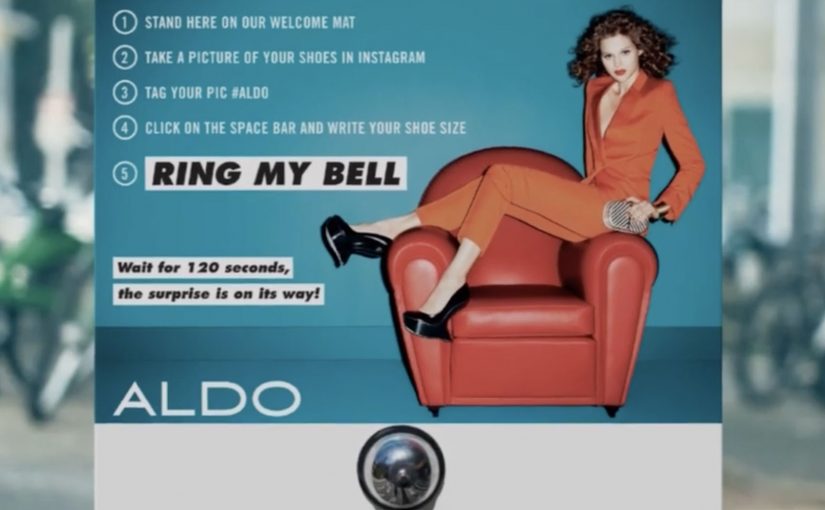
You stand on a welcome mat in the middle of the street, photograph your shoes, post to Instagram with #ALDO, add your shoe size, then ring a bell and wait 120 seconds. If you complete the steps, you get a surprise gift.

How the stunt turns a hashtag into a real-world trigger

The mechanism is a five-step participation script, a fixed sequence of actions that any passer-by can copy, that converts street curiosity into a trackable social action. The welcome mat marks the “stage”. The Instagram post captures proof and size data. The bell is the commitment moment. The 120-second wait creates tension. Then the brand pays off with a physical surprise delivered to the participant.

In high-footfall urban shopping streets where social posting is second nature, the fastest activations are the ones that turn a simple post into an immediate, tangible reward.

Why it lands

This works because it is friction-light and outcome-heavy. The instructions are short enough to follow at a glance, and the payoff happens quickly enough that the crowd stays to watch. The bell and countdown also make the moment public, which naturally pulls in the next participant.

Extractable takeaway: If you want social behaviour in the wild, write the participation flow like a street recipe. One clear prompt, one proof action, one suspense beat, one fast reward.

What the brand is really buying

The real question is not whether a hashtag can spread, but whether it can trigger a public action that proves the reward is real. This is less about reach in the abstract and more about engineered proof. By engineered proof, the brand makes the promised reward visible in real time so the next person believes it will work for them too. People do not just see a poster. They see someone trigger a reward in real time, which makes the campaign feel trustworthy and repeatable.

What to steal from a street-triggered reward loop

  • Make the call-to-action executable in under a minute. Anything slower loses passers-by.
  • Use a public commitment moment. A bell, button, or scan turns observers into a queue.
  • Time-box the suspense. The 120 seconds creates attention and crowd energy.
  • Design the payoff for spectators too. The best street rewards recruit the next person automatically.

A few fast answers before you act

What is “Ring My Bell”?

A street activation where pedestrians post a shoe photo to Instagram with #ALDO and their size, ring a bell, wait 120 seconds, then receive a surprise gift.

What is the core mechanism?

A simple participation script that links a social post to a physical reward, with a short countdown to keep attention on-site.

Why collect shoe size in the post?

So the reward can be prepared or matched quickly, and so the brand can fulfill immediately without follow-up friction.

What makes this work as OOH?

It turns signage into an interaction, and it makes the result visible to everyone nearby, which creates instant social proof on the street.

What is the safest reusable lesson?

Build an offline-to-online loop where the social action is the trigger, and the reward is fast enough to be witnessed in the moment.
Lux: Magic Shower Rooms

Lux: Magic Shower Rooms

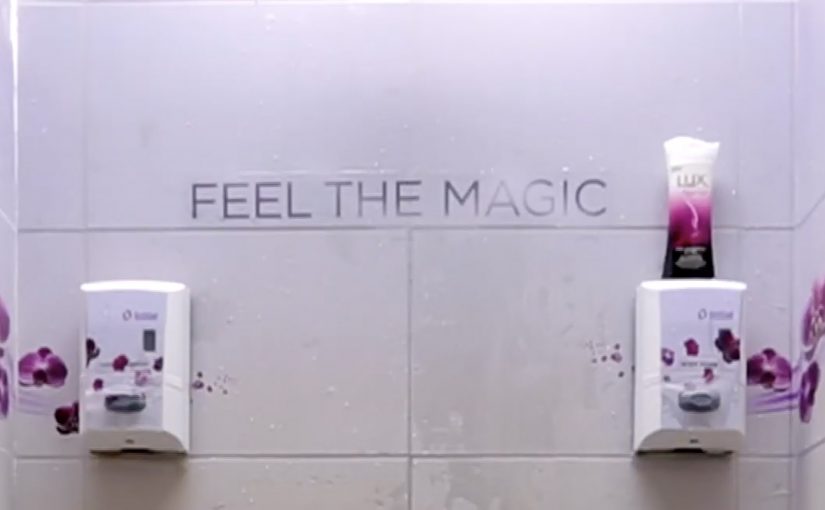
Unilever samples the new Lux Magic Spell shower soap in ladies’ shower rooms across spas, clubs and gyms in Singapore. But instead of handing out a bottle and hoping for recall later, the sampling moment is engineered into the space itself.

The walls and floors are covered with special stickers made using hydrochromic ink. Hydrochromic ink is a water-reactive coating that changes appearance when it gets wet. As soon as water hits the surface, the white layer disappears to reveal the message and beautiful trails of orchids, so the shower moment becomes a small piece of “magic” tied directly to the product experience.

When the environment becomes the sampler

The mechanism is water-activated reveal. The user does not need instructions, scanning, or a download. The shower triggers the transformation automatically, and the brand message arrives as part of the ritual.

In APAC beauty and personal-care sampling, the most efficient activations reduce the gap between trial and emotion by making the first-use moment feel special.

Why it lands

This works because it avoids the typical sampling failure mode. The product is tried, but nothing memorable happens. Here, the reveal creates a clear “before and after” moment, and that moment is inseparable from using water and being in the shower, which is exactly where the product belongs. In-space triggers beat a handout when the product is used in a fixed ritual and the trigger is unavoidable.

Extractable takeaway: If you want sampling to drive preference, attach the product trial to a sensory trigger in the same environment where the product is naturally used, and make the payoff immediate and unmistakable.

The real question is whether your sampling moment creates a memorable “before and after” that only happens in the product’s natural context.

Moves to borrow for your next ambient sampling activation

  • Make the trigger inevitable. Water is not optional in a shower room. So the reveal is guaranteed to happen.
  • Let the brand behave like a “feature” of the space. The message is not pasted on top. It is revealed by the environment.
  • Use beauty cues that match the promise. Orchids and floral trails visually echo fragrance and sensoriality without needing copy-heavy explanation.
  • Design for the first five seconds. The moment someone sees the reveal, they understand what changed and why it is interesting.

A few fast answers before you act

What is “Magic Shower Rooms” in one sentence?

A Lux sampling activation where shower-room stickers reveal orchids and messaging only when water hits them, turning product trial into a live, in-context surprise.

Why use hydrochromic ink here?

Because it converts water contact into a visible transformation, making the shower itself the interaction trigger.

What makes this stronger than a normal sampling handout?

It creates a memorable moment during first-use, in the exact environment where the product is meant to be experienced.

Where does this idea work best?

In environments where the trigger is unavoidable and the product ritual is already happening, so the reveal feels native instead of staged.

What is the main execution risk?

If the reveal is hard to notice, messy, or poorly maintained, the magic becomes confusion, and the brand association turns negative.

Turismo de Portugal: Cobblestone QR Codes

Turismo de Portugal: Cobblestone QR Codes

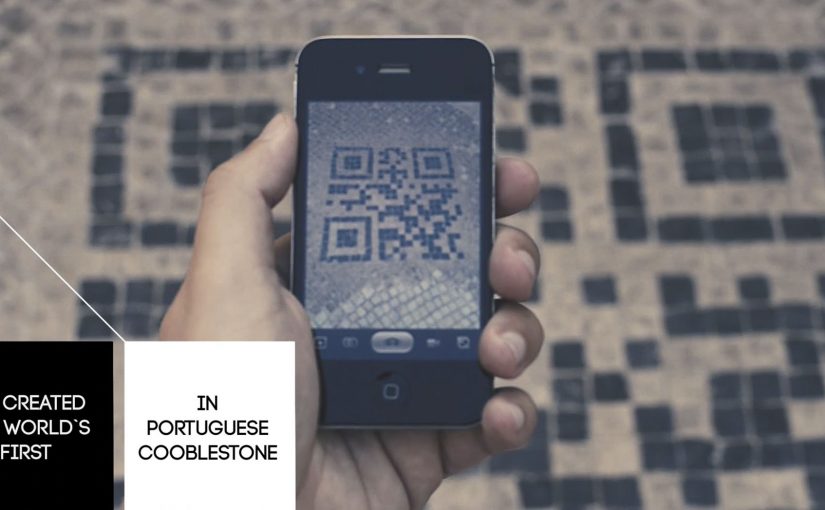
To get into the minds of tourists, Turismo de Portugal decides to fuse QR code technology with Portugal’s historical cobblestone tradition. The result is described as the first QR code made from Portuguese cobblestones.

The first QR code is embedded into the city ground in Lisbon, followed by an installation in Barcelona. Reported write-ups describe the campaign as successful enough to spark plans for similar cobblestone QR codes in other cities such as Berlin, Paris, Tokyo, New York, Vienna, Goa, Lima, and Oslo.

When street craft becomes the interface

The mechanism is simple. A familiar tourist behavior, looking down at the street and looking for cues, is turned into a scan trigger. The QR code is physically “native” to the place because it is built using the same black-and-white stone patterns people already associate with Portuguese streets, especially in historic areas like Chiado.

In destination marketing and city tourism promotion, bridging physical street culture to mobile content is a reliable way to convert foot traffic into deeper engagement. Destination brands should treat the street as the interface, not just the backdrop.

In European destination marketing, the most scalable activations turn street-level cues into a clear mobile doorway.

Why this lands with visitors

It does two jobs at once. It signals “authentic Lisbon” through material and craft, and it gives the tourist an immediate next step through their phone. The real question is how you turn a place’s own cues into a frictionless next step without making it feel like advertising. Unlike a poster or a billboard, the code is part of the ground people are already walking on, so discovery feels like finding something, not being targeted.

Extractable takeaway: If you want mobile interaction in public space, embed the call-to-action into something the place already owns. Local texture first, technology second. The scan should feel inevitable, not imported.

What to steal for your own place-based activations

  • Make the trigger belong to the environment. Use local materials, patterns, or rituals so the interaction feels contextual.
  • Design for tourist attention spans. The best street interactions reward a 5-second decision, not a long explanation.
  • Use “discovery” as the media buy. When people feel they found it, they are more likely to scan, share, and talk about it.
  • Plan for maintenance and legibility. Outdoor codes live or die based on wear, lighting, contrast, and camera-readability.

A few fast answers before you act

What is the Cobblestone QR idea in one sentence?

A QR code built into the street using Portuguese cobblestones, so tourists can scan a piece of the city itself to access content.

Why does making a QR code “physical” matter?

Because it turns a generic tech behavior into a place-specific experience. The scan feels like interacting with Lisbon, not with a random sign.

What makes this different from putting a QR code on a poster?

Placement and meaning. A poster is rented space. A street pattern is owned space. The medium carries authenticity before the message even loads.

What should the QR code open to?

A fast-loading mobile page that confirms you are in the right place and offers one clear next step. If the page feels generic or slow, the “found it” magic disappears.

What is the biggest execution risk?

If the code is hard to scan or the content behind it is weak, the novelty collapses. The physical build earns attention. The mobile experience must repay it.