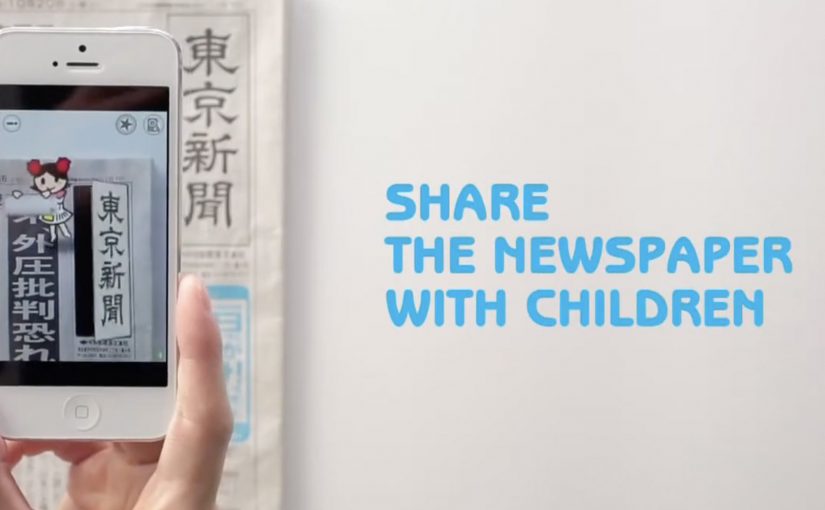
People in Tokyo who wear headphones, or simply want to try new ones, were treated to an augmented reality music festival from Sony Japan. Four popular local rock groups were turned into original AR performances, then “played” through band tour posters placed in busy locations. Sony-branded headphone trial stations were set up nearby so anyone could join in.
The loop is clean. Spot the poster. Scan it. Get a performance that feels like it is happening in your surroundings. Then step over and compare that moment on Sony headphones.
What makes this feel like a festival, not a tech demo
The execution is essentially a pop-up concert system distributed across the city. The posters act as stages. The phone acts as the ticket. The headphone stand acts as the product trial. That chain of touchpoints is why the experience reads as “festival” rather than “app feature.”
The mechanism: posters as portals
Instead of forcing people into a microsite or a branded app maze, Sony uses a familiar object. The tour poster. The poster becomes the launch surface for AR content. That matters because it removes the biggest friction in mobile AR. The “what do I point my camera at” question.
In supporting materials, the technology is described as Sony’s SmartAR and a smartphone app that recognises the posters and overlays 3D performance content into the live camera view. The mechanics stay invisible to the audience. They just see the band appear.
In dense urban retail markets, AR works best when it turns everyday street media into an immediate try-before-you-buy demo.
The real question is whether your AR trigger reduces friction enough that product trial becomes the next obvious step.
Why it lands for headphone marketing
Headphones are hard to sell with words. Most people cannot translate driver specs into feeling. This activation sells through a direct comparison. You hear a performance, then you hear it again through the product the brand wants you to try.
Extractable takeaway: A retail AR activation lands when the trigger is already in public view, the payoff is instant, and the path from wow-moment to product trial is one physical step away.
It also frames Sony as the host of the music moment, not just the logo next to it. That is a stronger association than “better sound.” It is “better access to the thing you love.”
The business intent behind the street setup
The intent is not just awareness. It is footfall and trial. The AR content pulls people in, but the trial stations convert curiosity into a product experience. If you can get someone to listen for 30 seconds, you can start building preference.
Steal this for poster-triggered AR trials
- Anchor AR to a physical trigger people already understand. Posters, packaging, signage, tickets.
- Make the payoff immediate. The first five seconds decide whether AR feels magical or annoying.
- Keep the bridge to trial short. If you sell hardware, put the demo within sightline of the trigger.
- Use content that earns replays. Music clips, reveals, limited drops, rotating “sets” work better than static overlays.
- Design for scanning in real conditions. Glare, crowds, bad signal, rushed users. Make recognition forgiving.
A few fast answers before you act
What is the Sony “Headphone Music Festival” idea?
It is a street-based AR activation where tour posters trigger AR music performances on a phone. Sony pairs that content with nearby headphone trial stations so people can immediately test the product while they are engaged.
Why use posters instead of geofencing or QR codes?
Posters provide a clear camera target and an obvious reason to scan. They also carry cultural meaning. A tour poster already signals music and discovery, so the AR layer feels natural.
What makes AR effective for selling headphones?
It creates a controlled listening moment in an uncontrolled environment. The activation gives you a reason to put headphones on right now and compare the experience immediately.
What is the biggest pitfall in poster-triggered AR campaigns?
Recognition friction. If the scan fails or the experience takes too long to load, people abandon it. The trigger must be reliable and the content must appear quickly.
How do you measure success for this kind of activation?
Track scans per poster location, completion rates for the AR experience, and trial-station interactions. If possible, connect trial interactions to store visits or product interest signals.