
Kalles Kaviar: Egg Timer iPhone App

Kalles Kaviar: Egg Timer iPhone App

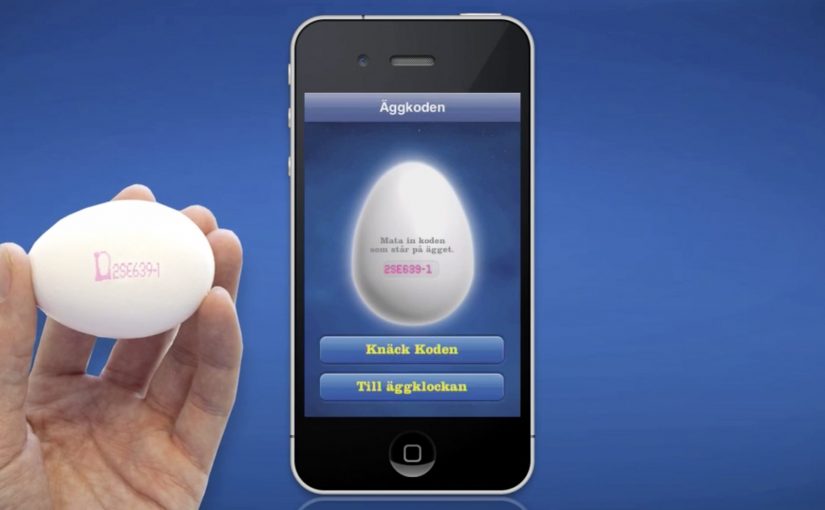
This egg timer iPhone app was created by CP+B for Swedish sandwich spread Kalles Kaviar.

The idea behind the app is to help users boil the perfect egg. It goes further than a simple countdown. It accounts for variables like egg size and how you like it cooked, and it even builds an iTunes playlist where the end of the music means your egg is ready.

The campaign is described as a hit with caviar and egg lovers. It reportedly passed 53,000 unique iPhone downloads and reached number three in Sweden’s iTunes list of the most downloaded free apps.

A breakfast brand that ships something useful

The clever move here is the product logic. Kalles is frequently eaten with sliced boiled egg, so the brand does not start by shouting about taste. It starts by making the egg outcome easier to get right, which makes the pairing more likely to happen again.

How the app turns boiling into a timed soundtrack

  • Input choices. The user selects preferences like softness, and the app adjusts timing accordingly.
  • Playlist as timer. Instead of watching the clock, you listen. When the playlist ends, the egg is done.
  • Extra detail for the obsessed. The experience is described as accounting for factors like altitude, and in some write-ups it is also credited with letting users enter the code printed on Swedish eggs to trace the farm.

In FMCG breakfast categories, small utility tools can turn a habitual pairing into a repeatable ritual and a sales lever.

Why it lands

It respects the moment. People boil eggs while distracted, usually in the morning, and they want confidence without effort. The playlist mechanic is memorable because it is a sensory shortcut, and it also turns waiting time into entertainment.

Extractable takeaway: If your product is most often consumed in a “pairing,” build utility around the pairing step, not around the product claim. Help the ritual succeed, and the product sells itself inside that ritual.

What it is really trying to grow

The real question is whether the utility increases the frequency of the Kalles-plus-egg pairing, not whether the app feels clever.

This is not primarily an “app idea.” It is a demand-shaping idea. By “demand-shaping,” I mean shifting how often the adjacent habit happens, not just which brand wins when it does. If more people boil eggs more often, Kalles has more occasions to be squeezed onto the table. Some coverage also credits the work with lifting egg sales in Sweden, which is a neat reminder that expanding the adjacent habit can be bigger than fighting for share in the core category.

Steal the pairing-first utility play

  • Attach utility to the highest-friction step. Fix the thing people get wrong or avoid.
  • Make the mechanic feel inevitable. A playlist that lasts exactly as long as boiling time is easy to explain and easy to trust.
  • Design for the real context. Morning routines reward hands-free, glance-free interaction.
  • Use delight as reinforcement, not distraction. The music is not decoration. It is the timer.

A few fast answers before you act

What is the Kalles Egg Timer app in one line?

A branded iPhone egg timer that uses your inputs to calculate boiling time and plays a music playlist that ends exactly when the egg is ready.

Why use a playlist instead of a normal countdown?

Because it reduces the need to watch the screen. The soundtrack becomes a passive, low-effort signal that fits cooking behaviour.

What brand problem does this solve?

It makes the product pairing easier to repeat. If the egg step becomes more reliable, the Kalles plus egg habit becomes more frequent.

What makes a branded utility app worth downloading?

It must do a real job better than a generic alternative, and it must fit naturally into a routine people already have.

What should you measure if you run a similar utility idea?

Downloads are not enough. Track repeat usage, time-to-task success, how often the utility is used per week, and whether it correlates with increased occasions for the core product.
Homeplus Subway Virtual Store: Mobile Aisle

Homeplus Subway Virtual Store: Mobile Aisle

A retail store that lives on a subway wall

Homeplus turns a familiar commuter moment into a shopping moment.

Instead of asking people to visit a store, Homeplus brings the store to where people already wait. In the subway.

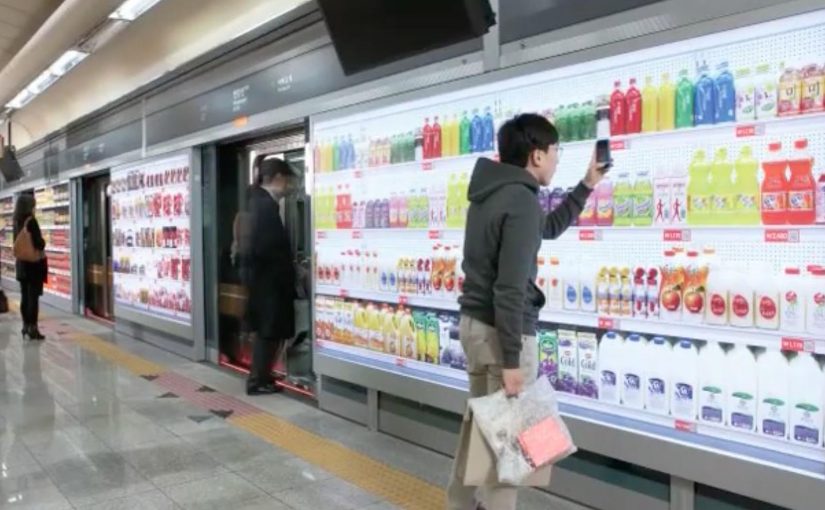
The virtual store appears as a life-size shelf display on station walls. Products are shown like a real aisle, complete with packaging visuals and clear selection cues.

The value is not novelty. It is time leverage. Shopping happens in minutes that normally get wasted.

How it works

The experience is deliberately simple.

A commuter scans product codes with a smartphone, adds items to a basket, and completes the order digitally. Delivery then happens to the home address.

Because the scan-to-basket flow is short, the order can be finished within a single wait for the next train.

That flow changes the meaning of convenience. The store is no longer a destination. It becomes an interface layer that can be placed anywhere footfall exists.

In high-density urban retail, the strongest convenience plays capture existing dwell time instead of trying to create new store visits.

Why this idea matters more than the technology

It is tempting to frame this as a QR-code story. That misses the point. This is the kind of retail innovation worth copying, because it turns context into conversion rather than chasing novelty.

Extractable takeaway: Treat customer dwell time as inventory. Put the simplest possible scan, pay, deliver flow inside a routine people already repeat.

The strategic innovation is contextual retail design. That means placing a purchase interface inside an existing routine, so the context provides the motivation.

Homeplus places the catalog where time is available, reduces friction to scan, pay, and deliver, and treats the physical environment as media and distribution at once.

The subway becomes a high-intent moment. People have time, they are idle, and they are already in a routine. Retail becomes a habit stitched into commuting.

What this signals for retail experience design

This concept highlights a shift that becomes increasingly important.

The real question is where your customers already have predictable micro-windows of time, and whether you can make buying fit cleanly inside them.

Retail experiences are not confined to stores or screens. They can be embedded into everyday environments where attention is naturally available.

For leaders, the question becomes where the best micro-windows of time exist in customers’ lives, and what a purchase flow looks like when it fits perfectly into those windows.

The real lesson. The aisle is a format, not a place

Homeplus shows that an aisle is a navigational model. It does not have to live inside a store.

Once that is accepted, the design space expands. Aisles can be printed. Aisles can be projected. Aisles can appear in transit, at events, or in high-dwell environments.

The pattern is consistent. Retail becomes more modular. Distribution becomes more creative. Convenience becomes a design discipline.

  • Design for dwell time. Choose environments where waiting is predictable and attention is naturally available.
  • Keep the interaction atomic. Scan, confirm, pay. Let fulfillment do the heavy lifting after the scan.
  • Make fulfillment boringly reliable. If delivery fails, the experience collapses because the shopper has no store fallback.

A few fast answers before you act

What is the Homeplus subway virtual store?

It is a life-size “aisle” display in a transit environment where commuters scan products with a phone and order delivery to home.

What is the core mechanic that makes it work?

A fast scan-to-basket flow that turns waiting time into a purchase moment, with fulfillment doing the heavy lifting after the scan.

What is the main prerequisite for repeating this model?

Operational reliability in fulfillment. If delivery fails, the experience collapses because the shopper has no store fallback.

Why is this more than a QR-code story?

The strategic innovation is placing a commerce interface inside a high-dwell routine, using the physical environment as both media and distribution.

What is the simplest way to judge if the concept is working?

If people can complete an order during a normal wait, and fulfillment consistently arrives as promised, the model earns repeat behavior.

T-Mobile: Angry Birds Live

T-Mobile: Angry Birds Live

Angry Birds, rebuilt at human scale

The strongest activations often take a screen-based behavior and make it public, physical, and shareable. T-Mobile’s Angry Birds Live is a clean example of that move.

Here, a live activation means an in-person brand experience designed to create a moment people want to film and share.

T-Mobile, together with Saatchi & Saatchi, capitalized on the Angry Birds fever with a viral video titled Angry Birds Live.

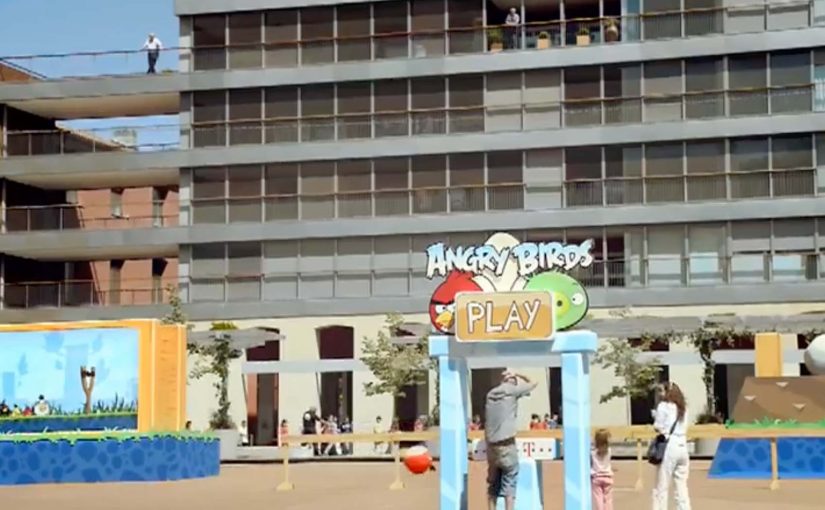
They built a human-scaled mockup of Angry Birds in a square in Barcelona. Lucky participants used the game on a smartphone to launch birds on their castle-smashing journey. The experience included authentic sound effects and exploding pigs, and the size of the crowd made it clear the spectacle worked.

How the smartphone became the controller for a real set

The mechanism was simple and instantly legible. The smartphone stayed the input device, but the output moved into the real world.

That pairing did two things at once. It kept the interaction familiar for participants, and it made the result visible for everyone watching. One person played. Everyone else experienced the payoff. Because the outcome was public, each tap created social proof in real time.

In mobile-first consumer marketing, keeping the input private but the payoff public is a fast way to turn play into social proof.

The real question is how you turn one person’s private input into a public payoff that many people can watch.

This pattern is worth copying when your interaction is familiar and the outcome is visibly consequential without extra explanation.

Why the spectacle pulled a crowd

People do not gather around an app. They gather around consequences.

Extractable takeaway: When you want a crowd, make the consequence public and immediate, not private and delayed.

Angry Birds already trained players to anticipate impact. By scaling the environment up and making destruction physical, the activation delivered the same emotional beat as the game, but with stronger social proof because it happened in front of a crowd.

What T-Mobile was really buying with this idea

The business intent was to borrow cultural momentum and convert it into attention that looked earned, not bought.

The activation created a story people wanted to film, share, and talk about. The brand got reach through the crowd, the recordings, and the viral video itself, rather than relying on a traditional media push alone.

What to steal for your next live activation

  • Move the payoff into public view. One participant can drive the action, but the outcome should entertain many.
  • Keep the interaction familiar. When the input is already known, more people are willing to step in.
  • Design for consequence. Sound, impact, and visible change make an experience watchable, not just playable.
  • Build for filming. If the best moments are obvious on camera, distribution happens naturally.

A few fast answers before you act

What was T-Mobile’s Angry Birds Live?

A live brand activation in Barcelona that recreated Angry Birds at human scale, with participants using a smartphone to launch birds at a physical set.

What was the core mechanism?

A familiar mobile game interaction controlled real-world outcomes, turning individual play into a public spectacle.

Why did it attract such a large crowd?

Because the results were physical, loud, and visible. People gathered around impact and consequence, not a screen.

What business goal did this support?

Capturing cultural momentum and converting it into earned attention, shareable content, and viral reach.

What is the main takeaway for brands?

Make one person’s action entertaining for many, and design the payoff to be obvious, physical, and easy to record.